
Table of Contents (9)
Surviving Resident Evil Village (Again) On Switch 2
I’ve finished Resident Evil Village three times now across different platforms, and I still grin like an idiot when Lady Dimitrescu ducks through a doorway built for mortals. This time around, though, the real horror wasn’t the castle, the lichens, or Mother Miranda. It was trying to keep a smooth frame rate and a decent grip on the Switch 2 in handheld mode.
I’ve spent a little over 20 hours with the Nintendo Switch 2 version of Resident Evil Village Gold Edition: one full campaign mostly docked on a TV, a second run in third-person dipping heavily into handheld, plus a chunk of the Shadow of Rose DLC. What I came away with is pretty simple:
Resident Evil Village is still a fantastic game. The Switch 2 port, though? It’s a compromise. A competent one on TV, and a frustrating one in your hands – made worse by the asking price when the PS5 version is routinely dirt cheap.
My setup and expectations going in
For context: I played this on a Switch 2 hooked up to a 55-inch 4K TV, mostly using a proper pad (think Pro Controller style), and then spent several evenings playing exclusively in handheld on the couch and in bed. I know Village very well from PS5, where I first cleared it at launch and again after the Gold Edition update.
So I wasn’t going in blind or expecting miracles. My main question wasn’t “Does Village hold up?” – I already know it does – but “Does the Switch 2 port preserve what makes Village great without feeling like a downgrade carnival?”
Docked? Mostly yes, with clear caveats. Handheld? That’s where the mask slips and you see the seams everywhere.
First hours docked: a surprisingly solid start… indoors
The opening stretch in the snowy forest and that first trek through the ruined village actually had me hopeful. Image quality is obviously pared back from PS5 – softer textures, more shimmering on distant geometry, reduced foliage density – but on a TV from a normal couch distance, it’s “good enough” horror atmosphere.
In tight spaces, the game feels very close to last-gen console versions. Ethan’s flashlight cuts through the darkness, particle effects from broken wood and dust still sell the grime, and character models haven’t been sacrificed to the resolution gods. The first shack you barricade during the lycan assault? It looked and ran fine docked; my main concern there was not getting my throat chewed out, not counting dropped frames.
The first real warning sign came right after that sequence. You know the moment: you limp out of the chaos, the music dies down, the camera pulls back and gives you a big, sweeping shot of the village with the castle looming in the distance. On PS5, it’s a “holy hell, this looks incredible” moment. On Switch 2 docked, I literally muttered, “Oof” out loud.
The frame rate tanks as the shot pans. What should feel like a triumphant, cinematic establishing shot instead judders along, like the console suddenly remembered it’s rendering snow, smoke, distance fog, a village full of geometry, and that ridiculous gothic castle all at once. The game is clearly targeting 60fps, but in open outdoor scenes it often feels like it’s hovering in the 40s, maybe dipping lower when there’s a lot of movement or alpha effects.
Indoor sections, corridors, and smaller spaces – the Dimitrescu castle, Heisenberg’s factory corridors, most of House Beneviento – are much steadier. There, Village on Switch 2 feels like a perfectly acceptable way to play: not razor sharp, but responsive enough that the horror and pacing still land.
Handheld horror: not the fun kind
Then I undocked the console.
Handheld is where the Switch 2 version really falls apart for me. The same performance dips that are tolerable on a TV suddenly feel amplified when you’re holding the screen 30cm from your face. Wide-open areas in the village, the path down to the river, and especially anything with lots of foliage or particle effects all stutter noticeably more in handheld. It feels like you’re living in the frame-time graph.

What makes it worse is that Village is dark – aggressively dark. This was a minor complaint I had at launch on PS5, but in handheld mode it can be a genuine problem. Even with brightness ramped up in the settings, playing in anything other than a dim room made big sections basically unplayable. On one train ride I tried to continue my save; between window glare and the game’s already crushed blacks, I could barely see the staircase in the castle basement, let alone the nasty surprises lurking there.
And then you have the controls. On a proper pad, Resident Evil’s classic setup – left stick to move, right stick to look, D-pad for quick weapon swapping – feels natural. On the Switch 2 in handheld, it felt cramped and “clinky” in a way I didn’t expect. The smaller sticks don’t have great fine control for aiming at distant targets, and trying to cycle weapons with the D-pad while your thumbs are doing double duty on the sticks led to a lot of fat-fingered mistakes.
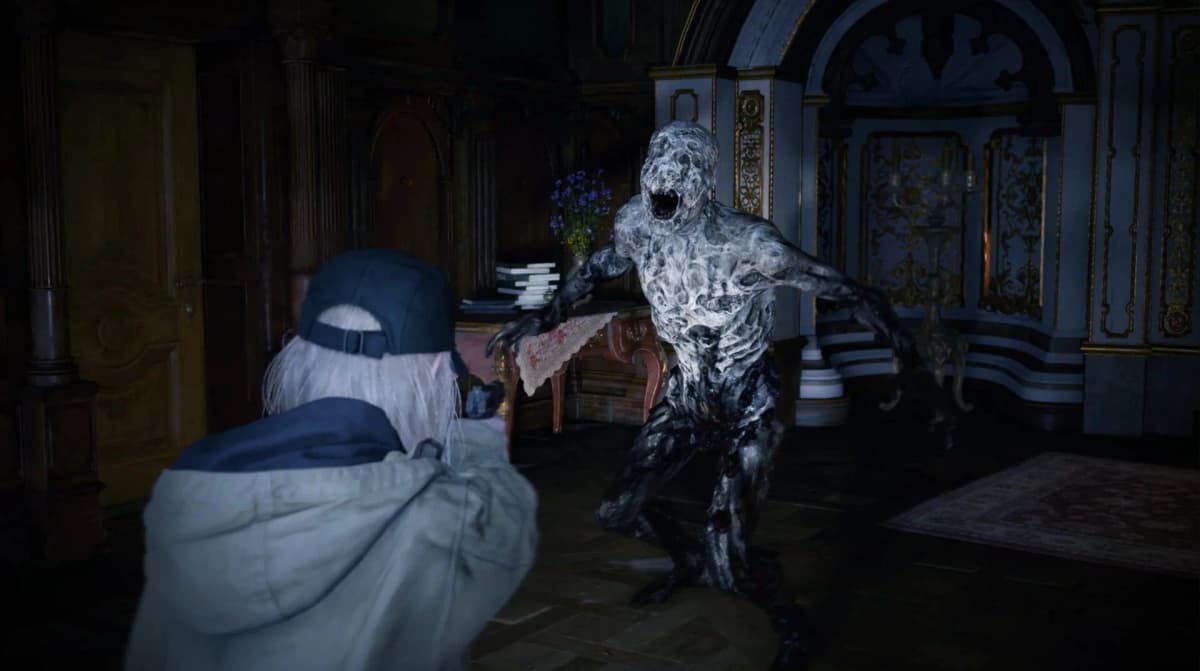
During the lycan ambush in the village (round two, once you come back later), I had this awful sequence where I tried to swap to the sniper rifle to pop a barrel in the distance. I fumbled the D-pad, switched to the knife instead, and watched Ethan hold up a tiny piece of metal against a mob of angry werewolf dudes. By the time I got the right gun out, the frame rate had nosedived again from all the enemies on screen, and my aim turned into mush. I survived, but it was the first time in Village I felt like I was fighting the hardware more than the game itself.
Could I eventually adjust? Kind of. After a few hours, muscle memory kicks in and you compensate. But the combination of heavier stutter, cramped controls, and the game’s oppressive darkness makes handheld feel like the worst way to experience Village, which is a real shame for a hybrid console port.
Graphics and performance: acceptable compromise, with clear limits
On the visual side, Capcom has clearly worked some magic to even get this running as well as it does. Docked, the game appears to be using dynamic resolution with some form of upscaling (a DLSS-style solution) to hit that 60fps target in lighter scenes. Texture quality is a step down from PS5, especially on walls and distant surfaces, and some of the volumetric effects and snow density are noticeably reduced outdoors, but the core art direction survives intact.
Lady Dimitrescu still looks imposing and immaculately animated. The castle interiors still drip with decadent detail. The village hub retains its mournful, rotting atmosphere. You don’t get the same crispness or the extra ray-traced reflections and shadows that you’ll see on a high-end machine, but if you’re sat on a sofa with a controller in hand, it genuinely works.
The problem is consistency. Anytime the camera swings wide, or you’re in an exterior area with lots of geometry – the path around Moreau’s reservoir is a repeat offender – the frame rate hitches. Not always for long, but often enough that you notice it, especially if you’ve played smoother versions elsewhere. Tech breakdowns online echo what I felt playing: interiors = mostly fine, exteriors = frame-time rollercoaster.
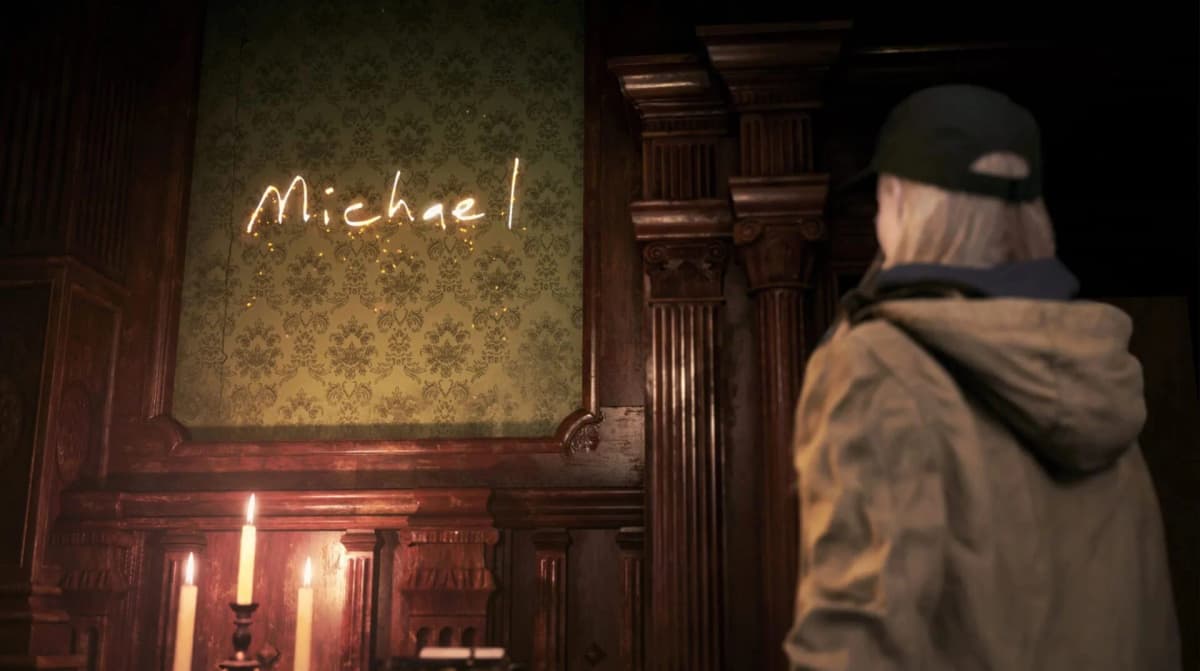
In handheld, both resolution and stability take a further hit. The smaller screen hides some of the softness, but you feel the stutter more clearly, and because you’re already wrestling visibility in dark areas, every hitch pulls you out of the moment. Survival horror relies on tension and control; the more unreliable the presentation becomes, the less scary and more irritating it gets.
The upside: loading is fast enough that deaths and retries never feel punishing, and I didn’t run into any crashes or major bugs. Technically, this is a stable port; it’s just one that’s stretching the hardware in exactly the spots where Village likes to flex.
Controls and feel: docked vs handheld is night and day
Using a decent controller docked, Village on Switch 2 feels pretty close to the console versions I’m used to. Aiming, walking speed, quick turns, blocking – all of that behaves as expected. The default sensitivity felt a bit sluggish at first, but a quick tweak in the options got me back to the headshot rhythm I had on PS5.
Handheld, small annoyances snowball. Tiny analog sticks plus a sometimes-wobbly frame rate make fine aiming harder than it should be. Sniping at distant enemies or lining up precise shots on weak spots becomes a minor chore instead of a power trip. Button placement for sprinting and blocking feels slightly less ergonomic too, simply because you’re wrapping your hands around the console instead of a pad with proper grips.
It doesn’t ruin the game, but it does constantly remind you that this horror experience was designed around a more traditional controller first. Some handheld ports manage to compensate with smart UI tweaks or control options; Village mostly just dumps the standard layout onto the smaller form factor and calls it a day.
Shadow of Rose and third-person mode: great content, uneven experience
On the content side, this Gold Edition is generous. You get the base game, the Shadow of Rose DLC, and the third-person camera option from the start. That’s a lot of Resident Evil in one package, and the extra perspective genuinely changes how some sequences feel.
I did my first Switch 2 run in first-person (for science) and then replayed chunks in third-person. Boss fights in particular benefit from the over-the-shoulder view, making some arenas easier to read and a bit less disorienting when the camera shakes. Shadow of Rose, which already leaned a bit more into action than pure horror, works nicely in third-person on a TV.
The catch: third-person play also makes the performance problems more obvious in handheld. Being more aware of your character’s full body and surroundings means you notice stutters in animation and camera movement that might have passed you by in first-person. During Shadow of Rose’s more chaotic late-game encounters, handheld felt like it was always one busy scene away from turning into a slideshow.
It’s a shame, because content-wise, this is the complete Village package. If you’ve never played it, you’re getting a ton of game here – just not in its best form.
The price problem: why I can’t recommend this version first
This is where the Switch 2 port really loses me.
On paper, getting Village plus all DLC and extra modes on a portable-capable Nintendo system sounds like a slam dunk. In practice, the port is technically weaker than the PS5 version and often runs worse than even some older hardware when things get busy – yet it’s launching at a premium price.
Meanwhile, Resident Evil Village on PS5 and PC is regularly available in sales for a fraction of that cost. You can often pick up the Gold Edition for what feels like pocket change compared to the Switch 2 tag. And those versions not only look better and run smoother, but they also avoid the handheld issues entirely.
If you only own a Switch 2 and have no access to other platforms, the equation changes. In that very specific case, docked with a good controller, this port is a perfectly fine way to experience one of the best modern Resident Evil games. But if you have literally any other option – PS5, PS4, Series X|S, PC – it becomes very hard to justify paying more money for a worse technical experience.
Who is this version actually for?
After finishing my time with the Switch 2 port, I ended up slicing the recommendation pretty cleanly:
- If you’ve never played Resident Evil Village and only own a Switch 2: It’s worth playing, but treat it like a “dock-only” game. Think of it as a home console title that happens to live on your Switch, not something you’re going to enjoy on the train.
- If you’ve already played Village elsewhere: The Switch 2 version doesn’t add anything meaningful beyond the novelty of running on a Nintendo handheld, and that novelty evaporates once the frame rate dips start.
- If you have PS5/PS4/Xbox/PC available: Get it there. It’ll be cheaper, smoother, and a better showcase of what the RE Engine can actually do.
I came into this port hoping for a “best of both worlds” scenario: console-quality Village when docked, and a slightly scruffed but still solid version in handheld for late-night sessions. What we actually got is more of a lopsided trade: a competent docked version chained to a handheld mode that feels like an afterthought.
FinalBoss // Gear
Level up your setup
01Best-selling Switch 2 gameson Amazon→02Switch 2 accessorieson Amazon→038BitDo controllerson Amazon→04Discounted game keyson Kinguin→Affiliate links · As an Amazon Associate, FinalBoss earns from qualifying purchases.
Want to Level Up Your Gaming?
Get access to exclusive strategies, hidden tips, and pro-level insights that we don't share publicly.
Ultimate Reviews Strategy Guide + Weekly Pro Tips