
Table of Contents (8)
The night the mansion betrayed me
I walked into the GameCube Resident Evil thinking I was safe.
I’d rinsed the 1996 original. Director’s Cut, PC ports, janky emulators on busted laptops – I knew the Spencer Mansion like my own flat. I could route it half-asleep: grab the sword key, bait the dogs, hit the armor key corridor, unlock the courtyard, hoard shotgun shells like a goblin. When Capcom dropped the 2002 remake, I thought I was about to enjoy a comfy, HD victory lap.
Instead, the mansion made it very clear, very fast: I was not welcome here anymore.
This is the thing people gloss over when they talk about Resident Evil’s remake. They call it “the definitive version,” they drool over the pre-rendered backgrounds, they call it “faithful but modernized.” That’s all true, but it misses the real magic: this game actively hates your nostalgia. It knows you think you’re smart because you beat the original. Then it takes that confidence, feeds it to a Crimson Head, and sends it sprinting back at you.
To me, the 2002 REmake isn’t just a better-looking Resident Evil. It’s Shinji Mikami turning his own classic into a final exam – a hostile, sadistic, brilliant test of whether you actually learned anything from six years of survival horror, or if you’ve just been coasting on muscle memory.
The original mansion was a tutorial; REmake turns it into a meat grinder
I don’t think enough people remember how clean the 1996 Spencer Mansion was. It’s iconic, sure, but by today’s standards it looks almost sterile. White walls. Big empty floors. Minimal clutter to keep those SGI workstations from bursting into flames trying to render a plant pot.
That starkness is part of why it worked. It was like wandering through the Overlook Hotel after the staff had evacuated. There was a weird, liminal emptiness to it – like a shareware Doom level that had somehow learned what pacing and atmosphere were.
Fast-forward to 2002, and Mikami’s team takes that blueprint and just drowns it in rot. The same basic layout is there, but the mood is completely different. The pre-rendered backgrounds are no longer just flat paintings; they’re detailed tableaus soaked in shadow and grime. Candlelight flickers. Lightning crawls across stained wallpaper. You can practically smell the mold coming out of your CRT.
And this isn’t just an aesthetic upgrade. The house feels old now in a way that changes the whole read of the place. In the lore, architect George Trevor built the mansion as this insane security system for Umbrella, not a cozy rich guy pad. The remake finally makes that obvious. It stops feeling like a weirdly empty rich person’s home and starts feeling like a trap that’s been quietly decomposing since 1967, still doing its job long after everyone forgot why it was built.
That’s the first sign this isn’t just a glow-up. The Spencer Mansion in resident evil’s remake game isn’t content to be a museum piece. It’s become hostile architecture – a physical exam paper you have to navigate under pressure, where every corridor and blind corner is designed to punish assumptions.
Crimson Heads: the mechanic that made me unlearn survival horror
The moment I realized this remake meant business was not the first zombie encounter, not the dogs, not even the snake. It was coming back through the tea room corridor, hearing that guttural roar, and watching a corpse I’d “safely” dealt with yank itself off the floor and sprint at me like it wanted revenge for every B-movie joke I’d ever made.
Crimson Heads are still one of the nastiest design twists I’ve ever seen in a horror game. On paper, the system is simple: most zombies you “kill” aren’t really dead. Leave the body intact, and after some time, they resurrect as faster, stronger, claw-swinging nightmares. You can stop it with a headshot or by burning the corpse with limited kerosene, but you’ll never have enough to clean the whole house.
Functionally, this does something genius: it takes your hard-earned survival horror habits and makes them dangerous. In the original, the optimal strategy was usually “conserve ammo, kill carefully when you must, clear challenging choke points.” REmake flips that table. Killing becomes a debt you now owe the mansion. Every corpse you leave behind is an IOU that might get cashed in an hour later when you’re low on health and just trying to run an errand for some stupid death mask.
Soon, your mental map of the mansion changes. You’re not just thinking, “Where’s the nearest safe room?” You’re thinking, “Which hallways have sleeping problems I created for myself? Which corridors are worth spending precious kerosene to sterilize? Which zombie do I deliberately leave alive because dodging is cheaper than killing?”
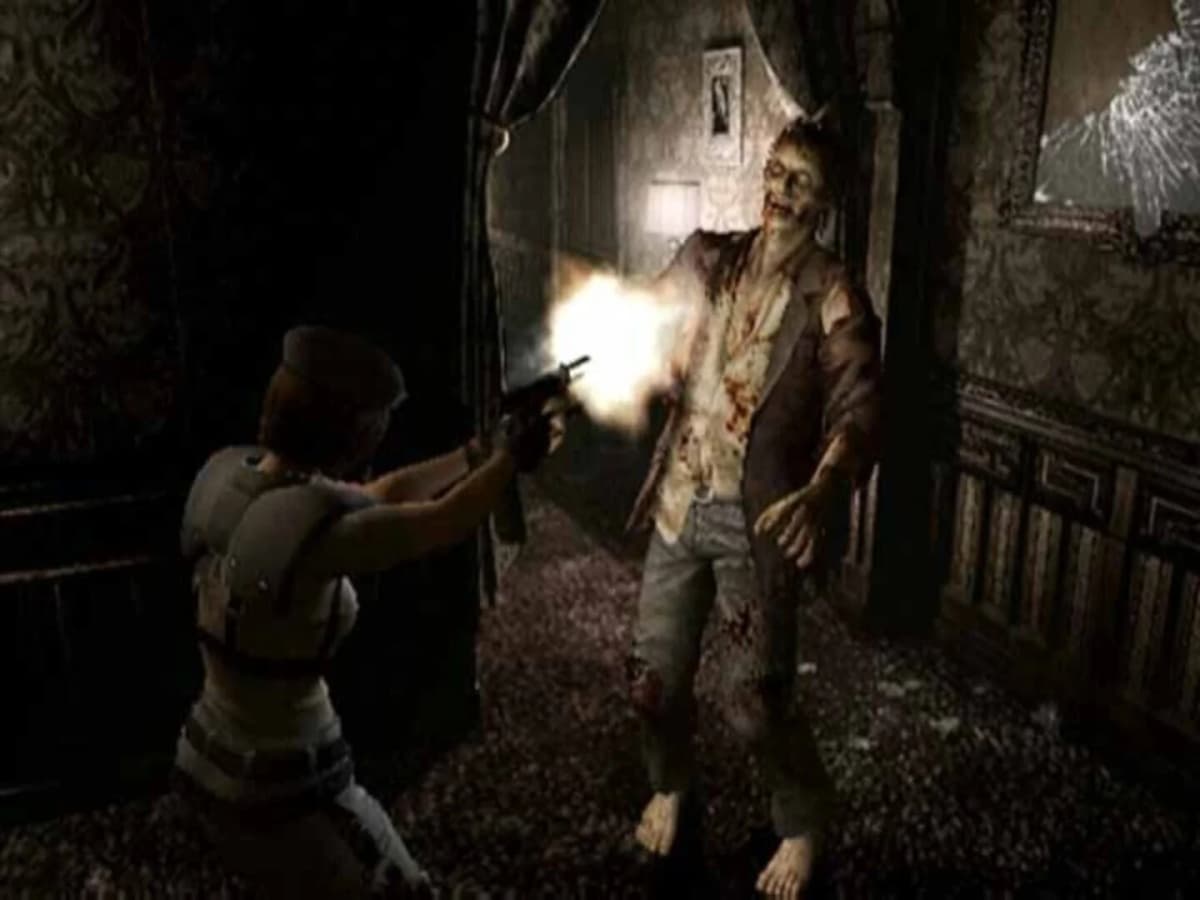
I’ve played a lot of horror since – from Dead Space to modern Resident Evil’s first-person revivals – and almost nothing has replicated that feeling of walking back through an area, genuinely unsure which version of an enemy is waiting for me. It’s not just fear of the unknown; it’s fear of your past decisions catching up with you.
The fact Mikami supposedly toyed with the idea of making every enemy invisible in the remake says it all about his mindset. Even though he ditched that idea (thank god), Crimson Heads are arguably worse. They’re not unfair; they’re just merciless. They say, “You learned to kill zombies? Cool. Now learn when not to pull the trigger.”
Inventory as horror, not housekeeping
Resident Evil’s inventory system has always separated the fans from the tourists. If you see those tiny item slots and immediately start doing Tetris in your head, you’re my kind of broken.
But in the original game, once you cracked the routing, inventory felt like a solvable puzzle. You knew when the shotgun became your mainstay, when to ditch certain keys, which rooms you’d never revisit. It was tight, but predictable. Resident evil’s remake takes the same framework and turns it into a constant low-level panic attack.
Now your Kevlar-thin pockets have to account for things like kerosene and lighters just to keep Crimson Heads under control. Not only are you juggling guns, herbs, and puzzle items, but you’re also budgeting for post-mortem fire management. Playing Chris with his six slots should come with hazard pay. Sure, you get a lighter and some defensive grenades, but that doesn’t change the fact that every choice feels wrong.
Do you bring the shotgun in case the corridor respawns something nasty, or extra kerosene to keep that corridor from becoming nasty in the first place? Do you lug around all four death masks to save one trip, or split them up in case you get cornered and need combat gear?
This is what I miss most in modern triple-A horror design. Inventory has turned into glorified backpack space – something you expand with skill trees and barely think about. In REmake, your inventory is part of the mansion’s cruelty. It forces you to make ugly compromises, and when those compromises backfire three rooms later, it feels fair because, deep down, you know you gambled and lost.
Hostile architecture: when the house hates you back
The genius of the Spencer Mansion is that it’s not just a clever map. It’s a character that learns your expectations and punishes them. The original did this in small ways – camera angles that hide dogs, hallways that funnel you into danger, doors that only open from one side. The remake doubles down and starts trolling you.
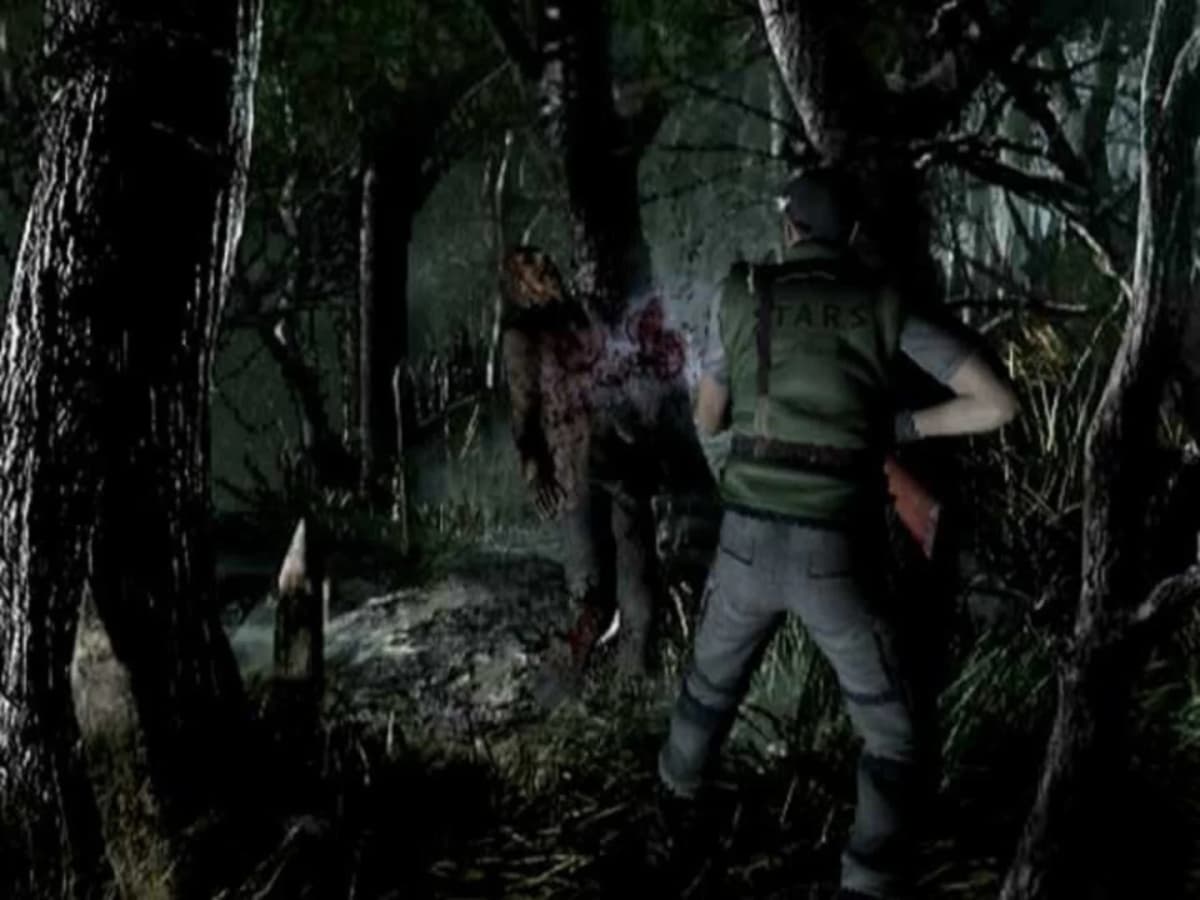
The most infamous bait-and-switch is the dog corridor. In 1996, you walk down that bland hallway, the windows shatter, and dogs explode through like they’re auditioning for every “Top 10 Jump Scares” list on YouTube. By 2002, everyone knew that moment. So REmake lets you stroll through unharmed. Nothing happens. You exhale. You think, “Ah, they spared us that cheap scare this time.”
Then, on your return trip, that’s when the windows shatter. The game waits specifically until you’ve relaxed. That’s not just cheap shock; that’s psychological warfare. It’s the designers looking straight at veteran players and saying, “We know exactly what you remember, and we’re going to use it against you.”
There are a dozen little moments like this. A door handle snapping off and forcing you to reroute through more dangerous territory. A puzzle that used to reward a powerful handgun now dumping a nest of snakes on your head. Armor key traps that are way nastier than anything in the original, literally trying to crush you between the walls for being greedy.
That’s the brilliance of the remake’s redesigned rooms and new areas like the graveyard and forest path: they don’t just pad the game out. They deliberately rewire your internal compass. You think you’re navigating the same place, but the routes, item placements, and risk zones are all just slightly wrong in a way that constantly destabilizes you.
Lisa Trevor: the mansion grows a conscience
One of the most important changes in the remake isn’t even a mechanic – it’s Lisa Trevor.
In the original game, the mansion’s backstory is mostly subtext and flavor text: diaries about researchers losing their minds, memos about the T-Virus, that iconic “itchy, tasty” note. It works, but it’s abstract. You don’t feel the human cost behind the bioweapon horror; you just read about it between boss fights.
REmake changes that by putting George Trevor’s daughter right in your path. Lisa is a walking tragedy – tortured by Umbrella’s experiments under the house for decades, her mutated blood basically becoming the bedrock of the series’ later viruses. And crucially, she’s unkillable. You can’t brute-force your way through this encounter. All the gunplay the game has begrudgingly allowed you up to this point? Useless.
Facing Lisa is like sitting the mansion’s thesis exam. It’s everything you should have learned condensed into one encounter: use the environment, prioritize evasion over fighting, manage space under pressure, respect the architecture. The graveyard, the catacombs, that torchlit altar – they’re not just cool set pieces. They’re test chambers proving you understand that in this place, running smart is braver than standing your ground.
And on top of that, Lisa reframes the whole building. Suddenly the traps, the hidden labs, the ornate nonsense puzzles – you’re not just thinking “video game logic.” You’re thinking about a real family lured into this ornate death maze, chewed up by the same design language you’ve been admiring. The mansion stops being a cool haunted house level and becomes a crime scene for corporate evil.
Modern horror learned the wrong lessons from REmake
Resident evil’s remake came out in 2002, right before horror design swerved hard into action. Resident Evil 4 rewrote the rulebook, and I love that game to bits, but there’s a reason so many later titles feel more like shooting galleries with spooky vibes than genuine survival horror.
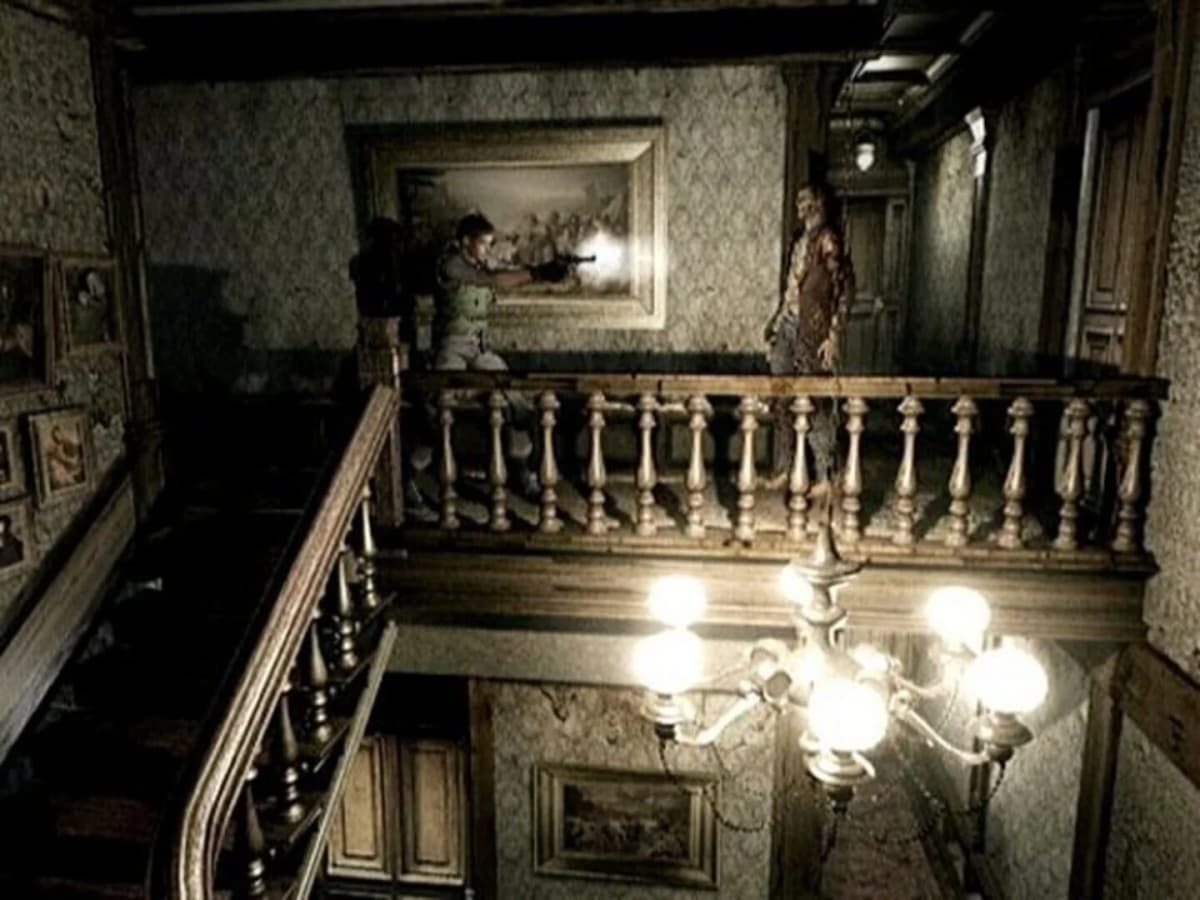
Everyone copied the over-the-shoulder camera. Everyone chased more dynamic combat. But very few studios looked at REmake and said, “Hey, maybe the map itself can be the main antagonist.” Or, “What if inventory pressure and backtracking risk are our actual horror systems, not just side effects?”
Even within the Resident Evil franchise, you can feel the tension. The later games have their moments – RE7’s Baker house is the closest Capcom has come to another Spencer Mansion, and Village toys with space and scarcity in cool ways – but that pure, hostile exam energy from REmake never fully returns. Crimson Head-style resurrection systems pop up here and there in games, but usually as one-off gimmicks, not as a philosophy baked into the entire campaign.
Which is wild, because this approach ages better than any lighting trick or 4K texture pack. The pre-rendered backgrounds of the GameCube version still look gorgeous because they were so meticulously composed, but even if they didn’t, the underlying design would hold up. It’s the mansion’s willingness to ambush your expectations, not just your character, that makes it timeless.
The question that haunts every new remake
We’re now in this bizarre era where Capcom is happily remaking its remakes, reimagining beloved entries like Resident Evil 2 and 4 for a new audience. And every time a new project leaks or gets announced, I see the same inevitable speculation: “Will they remake Resident Evil again?” As in: will they remake the GameCube remake?
Part of me wants to see what a modern RE Engine version of Spencer Mansion would look like. Dynamic shadows, ray-traced lightning over that iconic foyer, grotesque new creature models – the tech-head in me is absolutely curious. But the part of me that actually cares about survival horror is nervous.
Because once you’ve turned your own classic into a sadistic final exam, where do you even go from there? Do you soften the edges and make the mansion more accessible for a Netflix-conditioned audience who expects waypoints and forgiving autosaves? Do you sand down the inventory pressure, ditch Crimson Heads because they’re “too punishing,” and turn Lisa into a more traditional boss fight?
Or do you double down and make something even meaner – a game that doesn’t just weaponize your memories of 1996, but also your memories of 2002? A mansion that remembers every route, every cheese strategy, every safe corner we’ve clung to for the past thirty years, and systematically tears them all away?
That’s the legacy of Resident Evil’s remake that matters to me. Not just that it looks incredible, or that it “holds up,” but that it dared to turn comfort into discomfort, mastery into vulnerability. It proved a remake doesn’t have to be a museum or a reboot. It can be a gauntlet thrown at the feet of its own fans.
Thirty years on from the original and more than two decades since REmake, that’s the real haunted question hanging over every new project with the Resident Evil logo on it: will this game just remember what I loved, or will it have the guts to make me afraid of it all over again?
FinalBoss // Gear
Level up your setup
01Retro consoleson Amazon→028BitDo controllerson Amazon→03Capture cards (Elgato & more)on Amazon→04Discounted game keyson Kinguin→Affiliate links · As an Amazon Associate, FinalBoss earns from qualifying purchases.
Want to Level Up Your Gaming?
Get access to exclusive strategies, hidden tips, and pro-level insights that we don't share publicly.
Ultimate Gaming Strategy Guide + Weekly Pro Tips