

A yearly Resident Evil release schedule sounds sensible when reduced to a calendar. One major horror game every year gives players a dependable event, keeps the series visible, and prevents the familiar dead zone where a huge franchise vanishes long enough for its audience to wonder whether anyone inside the publisher still knows what to do with it. The problem begins when the schedule becomes the purpose. Capcom should want regular Resident Evil releases. It should not allow “regular” to become a demand for another remake at any cost.
That distinction matters because Resident Evil remakes carry a peculiar burden. They are safer investments than an untested horror project, easier to market than a fresh branch of the series, and supported by a built-in audience that already knows the locations, the enemies, the plot turns, and the broad shape of the campaign. Yet that familiarity also strips away the easiest forms of suspense. Players have already seen Raccoon City. They know the famous scenes. They have watched the boss encounters, puzzle solutions, and story beats replayed endlessly on YouTube and Twitch.
Under an annual plan, Capcom cannot treat that familiarity as a free pass. It has to treat it as a design problem. Every remake has to answer a more demanding question than “Will players recognize this?” The question is whether players will still feel a reason to pick up a controller after they already know where the story goes.
Table of Contents (5)
Shinji Mikami’s Standard Is the One Capcom Should Use
Shinji Mikami put the issue more clearly than most publishers ever do. In his conversation with Japanese YouTuber Eiko Kano, Mikami argued that a game has failed a basic test if someone can watch a full stream from beginning to end, feel satisfied, and never feel the urge to play it for themselves. That is an unforgiving standard. It is also the correct one for Resident Evil.
Streaming has changed the conditions under which games compete for attention. A player can watch a full playthrough before spending anything, absorb every plot twist from a creator’s reaction video, and learn every efficient route from a guide. Horror games are especially exposed because surprise has always been one of their most valuable currencies. A hidden corridor, an abrupt encounter, a puzzle answer, or a late-game revelation loses force once it has become thumbnail material.
Mikami’s point does not require developers to wage war on streaming or lock down every spoiler. That response would be futile and hostile to the audience. His standard shifts responsibility back where it belongs: on the game itself. If the only thing a Resident Evil remake offers is plot recollection and a sharper version of familiar imagery, watching someone else play becomes an adequate substitute. The player has already received the product’s central value.
Resident Evil needs systems that remain interesting after the secrets are gone. It needs combat that forces real decisions under pressure, level layouts that reward learning, resource management that creates tension without turning into busywork, and encounters that change according to what the player chooses to risk. A remake has to make controlling it feel materially different from observing it. Anything less turns a full-price release into a high-definition recap.
The Calendar Can Protect Quality, or It Can Hide Triage
Capcom’s argument for remakes has a practical logic. Alternating projects and spreading work across teams can reduce the pressure placed on any single development group. Remakes can also keep the franchise active between major original entries, giving players more frequent releases without forcing one team to produce an enormous new game every year. On paper, that is a healthier model than waiting through long, uncertain gaps.

The danger is that a stable release cadence can conceal permanent triage. Once a publisher decides Resident Evil must occupy a slot every year, every internal discussion changes shape. The useful question becomes less about which project has the strongest reason to exist and more about which project can be finished in time. That is where remakes turn from a creative opportunity into inventory management.
Masachika Kawata and Capcom’s production leadership face a straightforward constraint here. A franchise with several recognizable eras offers a tempting supply of material to revisit, but historical availability is not the same thing as a creative case. The existence of an older Resident Evil game does not automatically justify rebuilding it. A remake needs a clear answer for what modern hardware, modern player expectations, and modern design can reveal that the original could not.
Resident Evil 4 established the level of expectation that makes this difficult. It proved that a remake can be treated as a serious reinterpretation rather than a museum restoration. That achievement raised the bar for every future return. Players are no longer being asked to accept upgraded models and cleaner controls as sufficient evidence of ambition. They expect the remake to understand why the original worked, identify where its older design has become restrictive, and rebuild the experience with a point of view.
A yearly schedule makes that work harder because reinterpretation takes time. It requires experimentation, discarded ideas, internal debate, and room for a team to discover that its first obvious solution was wrong. A pipeline built around predictable annual delivery can support that process only when the teams have genuine separation, sufficient staffing, and the freedom to delay a project that has not found its own reason to exist. Without those conditions, the schedule stops protecting quality and starts manufacturing the appearance of stability.
Resident Evil Requiem Cannot Carry Every Expectation Alone
Resident Evil Requiem matters because it represents the forward-facing side of the franchise. A long-running series needs new entries that can create fresh places, fresh conflicts, and fresh mechanical ideas. It also needs room for smaller-scale experiments and side projects, including the kind of focused spin-off space associated with Revelations. An annual plan becomes unhealthy when the remake machine consumes so much attention that every other kind of Resident Evil project has to justify itself against a safer return to the past.
That would be the real cost of treating remakes as obligations. The franchise would still look active. It might even look unusually productive. Players would have a steady procession of releases, polished trailers, familiar iconography, and regular arguments about which old game deserves the next overhaul. Yet the range of what Resident Evil is allowed to be would shrink. The series would become more predictable in the shallowest sense: dependable release dates, dependable nostalgia, dependable revisits to territory already mapped by the audience.
Predictability is valuable when it means players can trust that Capcom has not abandoned the series. It becomes corrosive when it means every release must fit a known commercial category. Resident Evil has endured because it has repeatedly adjusted its structure, tone, and play patterns while retaining its tension around limited information and limited safety. A remake-heavy annual plan risks converting that flexibility into a production template.
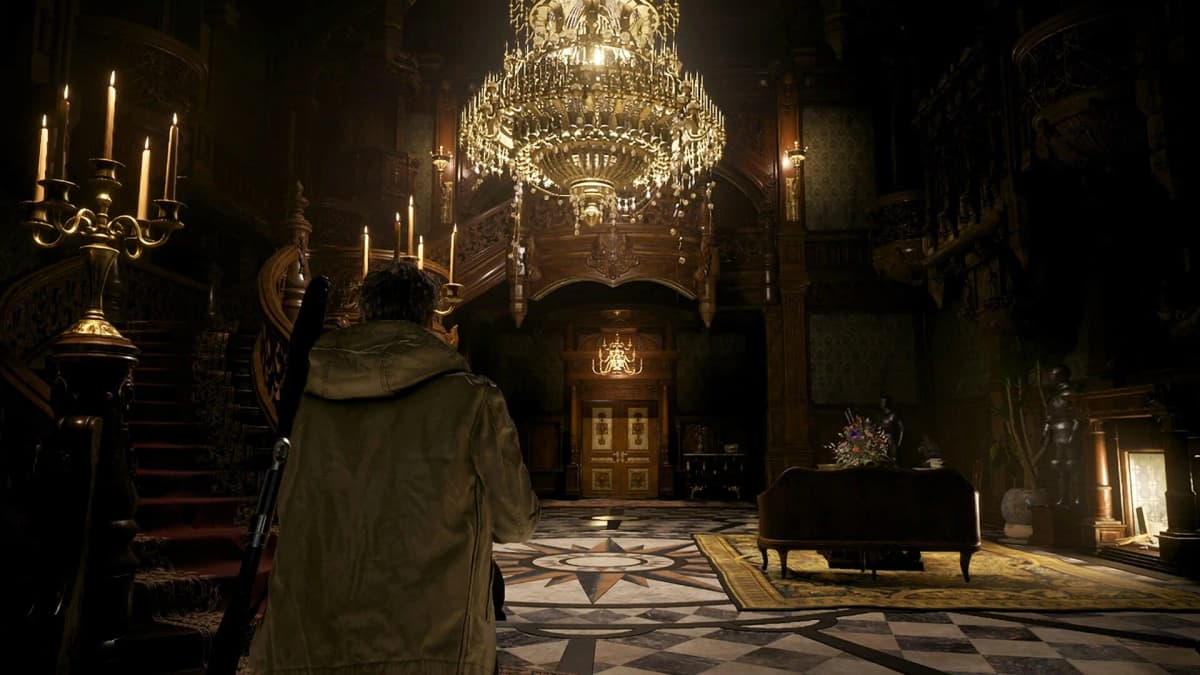
Streaming Makes Lazy Remakes Easier to Spot
The streaming issue sharpens the problem. Spoilers used to arrive through magazines, schoolyard conversations, message boards, and the occasional friend who could not keep a major twist to themselves. Now a player can encounter the entire game before launch through previews, reaction clips, lore explainers, and long-form streams. Resident Evil cannot rely on concealment alone, especially when players are already returning to stories they know.
That does not weaken the case for remakes. It strengthens the case for better ones. A strong remake gives viewers something they cannot receive second-hand: the tension of deciding whether to spend ammunition now, the discomfort of moving through a space with imperfect knowledge, the satisfaction of adapting when a familiar encounter behaves differently, and the physical rhythm of surviving a fight rather than simply witnessing it. Watching can communicate plot. It cannot reproduce responsibility.
This is why puzzles and plot twists still matter even in a streaming culture, as Mikami and Kano’s discussion makes clear. Their function has to extend beyond withholding information. A puzzle should alter the player’s relationship with the space. A twist should change what the player fears, suspects, or prioritizes. If those elements exist only to surprise an audience once, they are disposable. If they reshape the player’s decisions, they retain value after every spoiler has spread.
Capcom Needs a Release Mix, Not a Remake Quota
The sensible version of a yearly Resident Evil plan is a varied pipeline. One year can support a major new entry. Another can support a remake with a real design mandate. Another can make room for a smaller project that explores a different structure, scale, or audience. The release date can be consistent without every game being built from the same decision-making process.
- Remakes should move forward only when they have a specific gameplay purpose beyond visual modernization.
- Original entries such as Resident Evil Requiem should retain enough space to define the franchise’s future rather than merely bridge gaps between returns to the past.
- Projects in the Revelations mold should remain viable when they offer a sharper or stranger idea than the next obvious remake.
- Capcom should permit a gap when the alternative is releasing a game whose strongest selling point is that players remember it.
That last point is the one publishers dislike because it sounds like surrendering momentum. It is the opposite. A franchise loses momentum when players learn that a release is a calendar obligation. Once that suspicion sets in, trailers become audits. Every reused setting, every conservative redesign, every missing idea gets read as evidence that the project existed because a date needed filling.
Capcom has enough Resident Evil history to sustain frequent releases, and the audience has shown that it will turn out for a well-made remake. The company also has enough evidence to know that the standard is higher now. Resident Evil players will watch the streams, absorb the spoilers, compare each new return to the best recent remake, and decide whether the game offers an experience worth owning instead of merely witnessing. The yearly plan earns its value only when each release survives that test.
FinalBoss // Gear
Level up your setup
01Top-rated gaming headsetson Amazon→02High-refresh gaming monitorson Amazon→03Gaming chairson Amazon→04Discounted game keyson Kinguin→
Affiliate links · As an Amazon Associate, FinalBoss earns from qualifying purchases.
Want to Level Up Your Gaming?
Get access to exclusive strategies, hidden tips, and pro-level insights that we don't share publicly.
Ultimate Gaming Strategy Guide + Weekly Pro Tips