
Saros matters because it is not trying to out-Returnal Returnal. The important change is structural: Housemarque has taken the same basic loop of high-speed third-person bullet hell, then removed the all-or-nothing reset logic that made Returnal brilliant for some players and exhausting for plenty of others. That one decision changes how combat feels, how failure lands, and who this game is really for.
This is the sort of sequel-in-everything-but-name that tells you a studio actually listened. Not to the loudest people on social media claiming they wanted pain for pain’s sake, but to the much more useful signal underneath Returnal’s reputation: players loved the movement, weapon feel, and boss design, yet bounced off the friction of losing too much momentum after death. Saros appears built around that exact diagnosis.
Table of Contents (7)
Key takeaways
- Saros shifts from Returnal’s harsher roguelike reset structure to a more explicit roguelite model, with permanent upgrades funded by Lucinite that survive death.
- The new shield is not a minor defensive add-on; it changes the rhythm of every fight by letting players block and absorb incoming fire, then convert that into offense.
- Suspend Cycle returning from day one is a practical fix, not a headline feature, but it removes one of Returnal’s most avoidable pain points without killing run tension.
- Early critical consensus is strongest on combat and progression, but more divided on story pacing, narrative cohesion, and some balance issues around weapons and artifacts.
The biggest change is not the gunplay. It’s what death means now.
Most coverage will understandably lead with the combat because that is Housemarque’s signature. Fast movement, dense projectile patterns, boss encounters that want precision instead of panic, all of that is here. But the more meaningful design shift is what happens when a run collapses.
Returnal treated death as a near-complete account wipe for your current momentum. That created incredible tension, but it also created a very specific kind of fatigue. A bad run was not just a lesson; it could feel like a long commute back to the interesting part. Saros reportedly softens that through permanent progression tied to Lucinite and other persistent unlocks, meaning each failed attempt contributes to a broader build path rather than disappearing into the void.
That does not automatically make Saros easier. It makes it less wasteful. There is a difference, and roguelite design lives or dies on that distinction. If every death still asks for skill but also advances a long-term toolkit, players are more willing to experiment. They try riskier routes, stranger weapon combinations, more aggressive upgrades. A run becomes a test bed instead of a referendum on whether you just lost 90 minutes of your life.

If I were in the room with the PR rep, the question would be simple: how much of Saros’s difficulty is meant to be solved by player mastery, and how much is meant to be smoothed out by permanent stat growth? Because that balance decides whether this is a cleaner Housemarque evolution or a game that accidentally sands off the edge that made Returnal special.
The shield changes the combat language, not just the survivability
The other major shift is the shield mechanic. On paper, “there’s blocking now” sounds like a standard accessibility concession. In practice, it is more disruptive than that. Returnal’s combat identity was built around perpetual motion, aggressive dodging, and reading impossible-looking projectile spreads at speed. Saros keeps that readability, reportedly with clearer color-coded attacks, but adds a layer of deliberate absorption and conversion.
That matters because a shield that absorbs projectiles and feeds special attacks is not passive defense. It creates a new economy inside each encounter. Instead of treating enemy fire purely as threat, the player can treat some of it as future fuel. That introduces a cleaner risk-reward loop than a basic parry system would. Stand your ground at the right moment, spend shield power intelligently, then cash that in for burst damage or control. The trade-off, according to available reporting, is that heavier investment in shield utility can compete with raw offensive output. Good. It should. Otherwise the system is just free value.
This is also where Saros looks more refined than imitative. A weaker studio would have made “Returnal, but with a block button” and called it evolution. Housemarque seems to understand that if you add defense to a game this mobile, that defense has to feed back into aggression or it slows the whole machine down. The studio’s arcade instincts are still visible here.
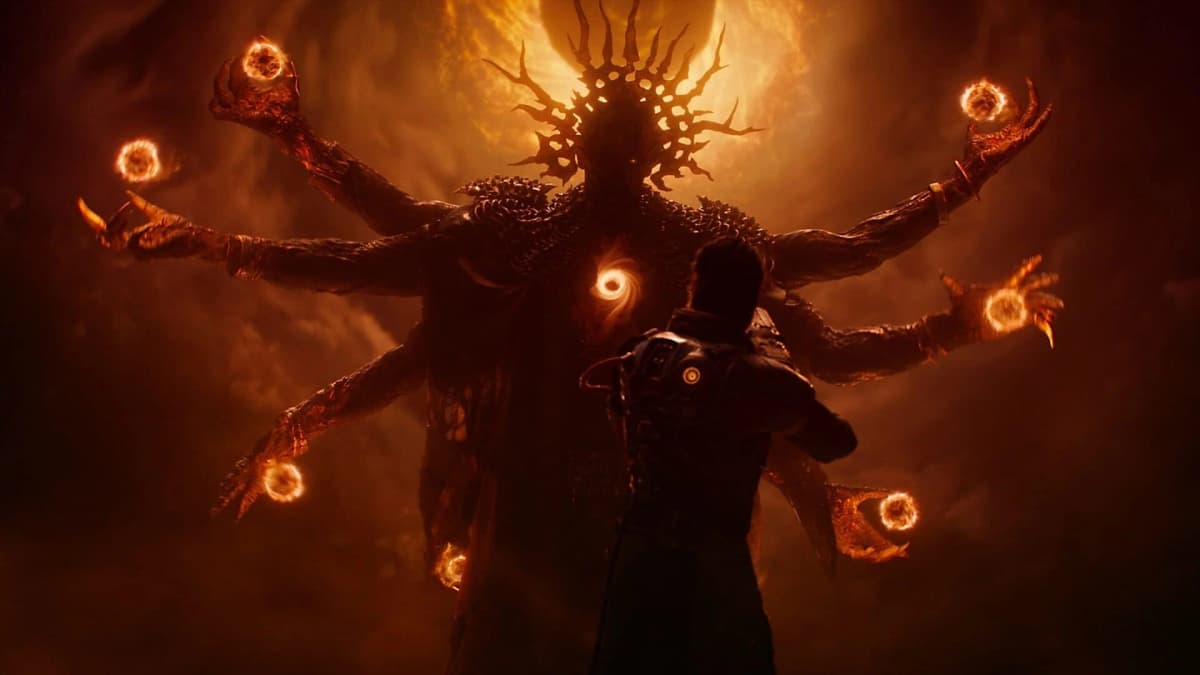
Housemarque is broadening the audience, and that comes with a cost
The clearest pattern in early reactions is that Saros is more approachable than Returnal. That is not a rumor. It is visible in the permanent progression, the presence of Suspend Cycle from the start, the more forgiving long-term structure, and what sounds like a more legible combat language. Some critics have praised that as the exact right call. They are probably right. Returnal was adored by its core audience, but it was also one of those games that critics often respected more consistently than the general player base finished.
Still, approachability is never free. Reviews appear notably less uniform once the conversation leaves combat. Several outlets praise the worldbuilding, atmosphere, and stronger character emphasis. Others argue the narrative is crowded, underconnected, or paced awkwardly. There are similar caveats around weapon variety and balance, with some critics describing standout fights and strong late-game bosses while also noting thinness in certain systems or loadout incentives.
That split is worth paying attention to because it suggests Saros may be one of those games where the core loop is excellent, but the surrounding framing does not land equally well for everyone. That would be a very Housemarque outcome, frankly. The studio has spent years being better at sensation than exposition. When it works, the mystery amplifies the combat. When it does not, it starts feeling like literary dressing on top of systems that were already doing the real heavy lifting.
The historical comparison here is obvious. This is the same move many action-heavy studios make after a breakout hit: keep the signature difficulty and style, then install better onboarding and stronger persistence so the audience can scale beyond the faithful. Sometimes that produces Hades-level elasticity. Sometimes it produces a cleaner but slightly blunter follow-up. Saros sounds closer to the first outcome than the second, but the reservations are real enough that it is not a victory lap.
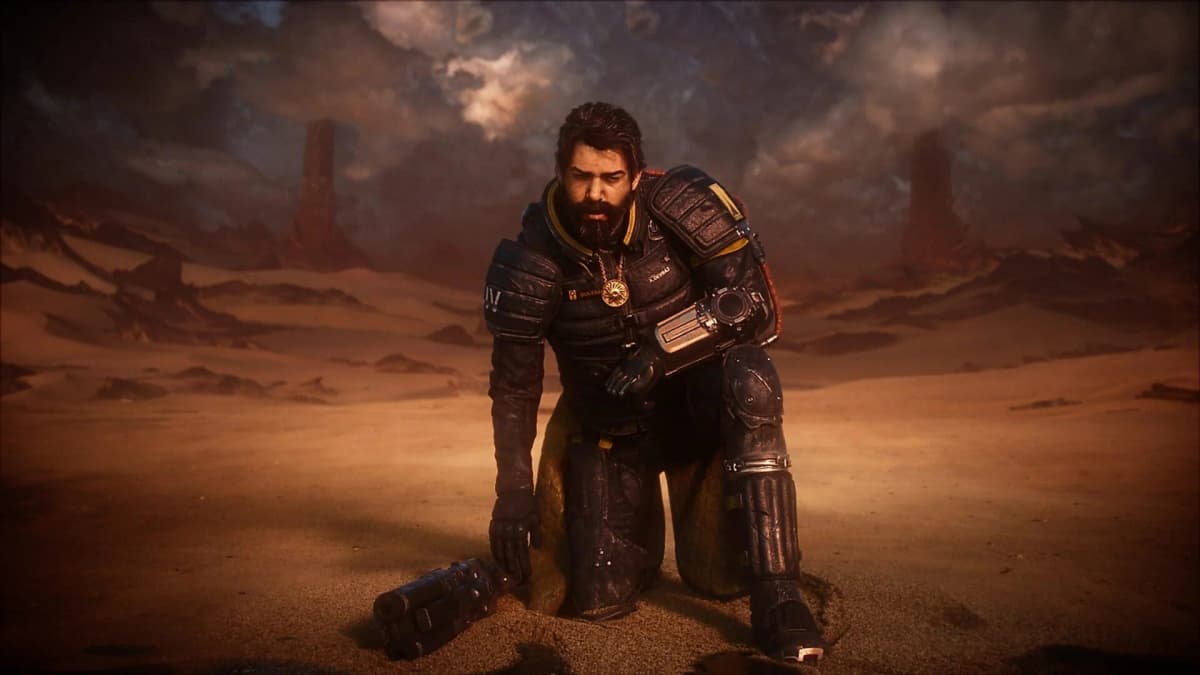
What the run structure seems to fix
One under-discussed improvement is convenience. Suspend Cycle returning means Saros avoids one of Returnal’s most unnecessary self-inflicted wounds. Players can step away mid-run without the game acting like real life is a design exploit. Crucially, death still carries consequence because suspends are not a reload loophole after failure. That is the right compromise. It respects both tension and adulthood.
There are also indications of larger and more varied biomes, faster traversal options, and some unlock structure that resembles metroidvania gating. If that holds up across the full arc, Saros may solve another familiar roguelite problem: the sensation that repeated runs are technically different but emotionally identical. More route variation and better mobility can do a lot of invisible work in making repetition feel like discovery instead of admin.
What to watch next
- How quickly permanent upgrades accelerate player power. If Lucinite progression starts trivializing early and mid-game pressure, the long-term balance will wobble fast.
- Whether the shield remains a meaningful build choice or becomes mandatory. The difference will tell you how healthy Saros’s combat sandbox really is.
- Post-launch balance patches around weapons, artifacts, and boss tuning. Multiple reviews hint that some combinations may outperform the rest too cleanly.
- How players talk about replay value after the first completion. Strong first-run momentum is not enough for a game built on cyclical structure.
TL;DR
Saros keeps Housemarque’s bullet-hell shooting intact, but the real change is that death now feeds permanent progression instead of mostly wiping the slate clean. The new shield system also reshapes combat by turning defense into a resource engine rather than a panic button. The practical takeaway is simple: if Returnal’s feel worked for you but its reset philosophy did not, Saros looks like the version of that formula built to stick.
FinalBoss // Gear
Level up your setup
01Best-selling PS5 gameson Amazon→02DualSense controllerson Amazon→03PS5 SSD upgrades (M.2 NVMe)on Amazon→04Discounted game keyson Kinguin→Affiliate links · As an Amazon Associate, FinalBoss earns from qualifying purchases.
Want to Level Up Your Gaming?
Get access to exclusive strategies, hidden tips, and pro-level insights that we don't share publicly.
Ultimate Editor's Pick Strategy Guide + Weekly Pro Tips