
Table of Contents (9)
TL;DR
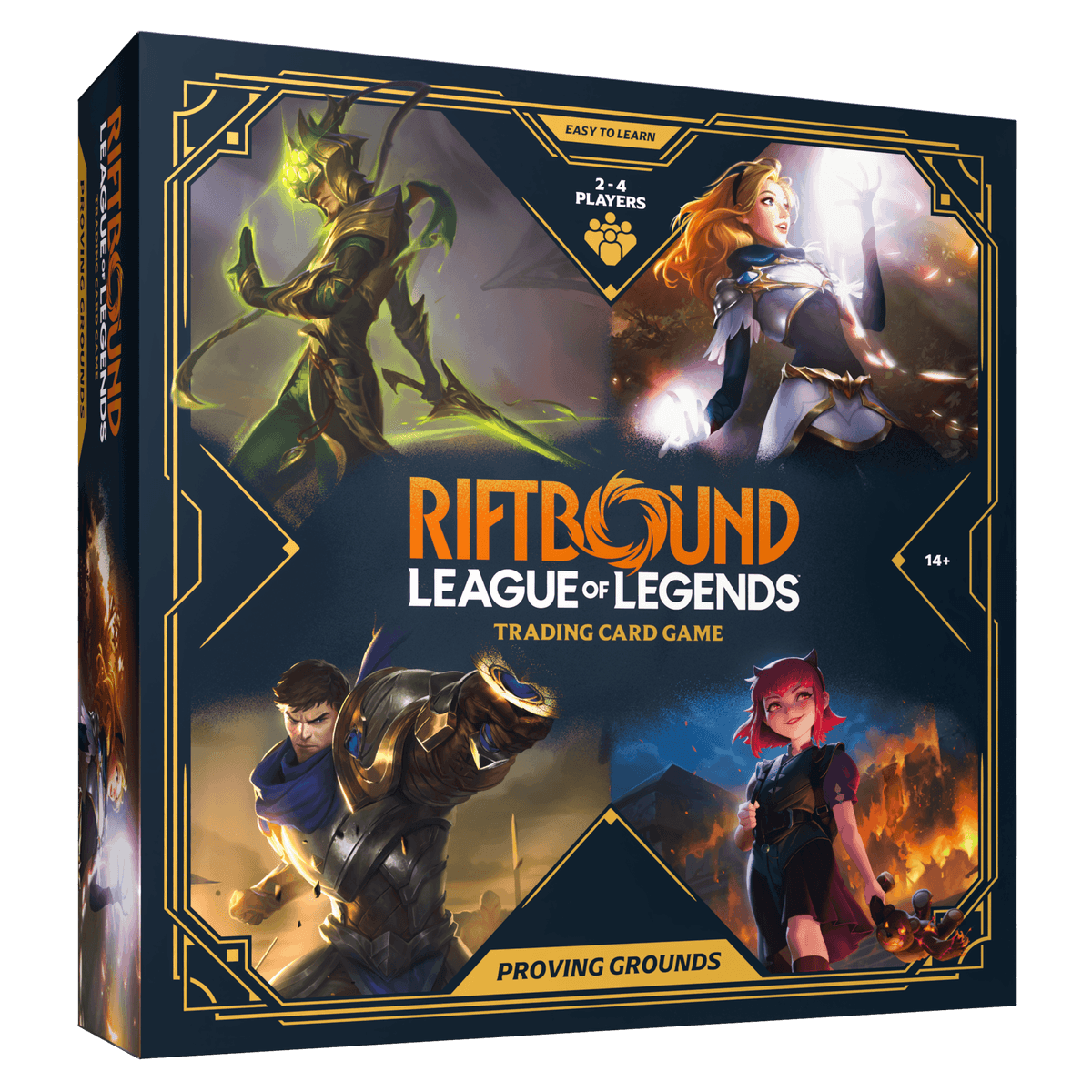
Riftbound, Riot’s new League of Legends trading-card game, tackles Magic’s biggest pain points with a single 40-card deck, a separate rune system, and an eight-point victory race that keeps everyone engaged.
Key Takeaways
- One 40-card deck works across 1v1, 2v2, and free-for-all—no more juggling multiple builds.
- A 12-card rune deck replaces land draws, all but eliminating mana screw and flood.
- Victory points via contested battlefields mean no early knockouts or spectator fatigue.
- Shuffle your deck once at setup—no more endless pile shuffles midgame.
- Riot’s roadmap includes a second set, organized events, and local-store support.
- Downside: small card pool for now and League flavor may not click for everyone.
Riftbound’s Core Pitch: One Deck, Any Table
Magic’s formats—from 40-card Limited to 100-card Commander—force you to maintain multiple decklists and sideboards. Riftbound throws all that out the window. You build one 40-card deck, and that’s your ticket to every table: a head-to-head duel, a 2v2 showdown, or a three- or four-player free-for-all. It’s like your favorite board-game expansion that scales seamlessly from two to six players, without any fiddly extra rules.
What this means in real terms is major accessibility. You still make meaningful deck-building choices—picking your “Legends” (champions like Jinx or Kai’Sa), deciding how aggressive to go, balancing rune colors—but you never pause to wonder, “Is this deck legal here?” That Jinx build you brewed for Friday night chaos? It’s the same one you bring to Saturday’s ranked local tournament.
Victory Points, Not Early Death
One of Magic’s most notorious issues is elimination. In multiplayer formats like Commander, someone inevitably falls behind and watches the rest of the game go on for another hour. Riftbound replaces life totals with a race to eight points. You earn points by capturing or holding specific battlefields—think of it as area-control grafted onto a TCG. No one gets knocked out, and every turn offers a chance to stage a comeback.
This scoring twist reshapes table dynamics. Sure, someone might draw heat from others when they’re at six or seven points, but the game ends the moment someone hits eight. That removes the awkward “kingmaking” epilogue you get in Magic, and it keeps players invested right up to the final battlefield flip.
The Rune System: A Smarter Take on Resources
Magic players know the frustration of mana screw (never drawing enough lands) and mana flood (drawing too many). Riftbound sidesteps both by moving resources to a separate 12-card rune deck. Each turn you “channel” two runes, giving you a predictable baseline of resources. Powerful spells add a “Power” cost, forcing you to recycle a rune to the bottom of the deck, which creates tension over whether to spend or save.
It’s a sweet spot between fully automated resource curves (everyone gets X per turn) and Magic’s full-variance land draws. You’re almost never helpless staring at unplayable cards, yet you still wrestle with timing big swings versus holding back to stay flexible. That micro-decision layer keeps turns interesting without turning the game into a mana roulette.
Less Shuffling, More Playing
Another quiet victory for Riftbound is its minimal deck-shuffling. You shuffle your 40-card deck—once. That’s it. No random tutors, fetch-style searches, or Demonic Tutor analogues that force midgame pile shuffles. The focus is on gameplay, banter, and those clutch moments, not on physically re-randomizing a 100-card brick every time someone digs for an answer.
Yes, you lose some of the “gotcha” moments where you pinpoint a single silver-bullet card, but Riftbound leans into broad synergies and dynamic positioning instead of surgical toolbox plays. The result? Faster turns, less downtime, and more table talk.
League of Legends Flavor: Legends, Lanes, and Big Moments
At its heart, Riftbound wants you to feel like you’re casting spells alongside the champions of Runeterra. Legends such as Yasuo, Kai’Sa, and Jinx come with abilities that echo their in-game personas—Yasuo excels at reactive plays, Kai’Sa thrives on burst combos, Jinx loves chaos and aggression. The battlefield itself mimics lanes: some objectives are higher-value or have special conditions, akin to pushing mid or rotating bot in the video game.
Watching a well-timed removal spell combine with perfect unit positioning and a Power-fueled champion ability to flip two battlefields is basically the card-game equivalent of landing a Baron steal after acing the enemy team. For League fans, it’s a huge draw; for newcomers, the mechanics are intuitive enough thanks to clear iconography and Riot’s clean art style.

Organized Play and Riot’s Support
Great design means little if you can’t find an opponent. Riftbound’s biggest test will be its organized-play ecosystem. Riot’s already acknowledged early supply hiccups and pledged to improve future print runs, which is a promising sign of transparency. A second set is on the roadmap, and Riot’s talking regional qualifiers, prize pools, and official events alongside grassroots support for local game stores.
Early chatter suggests monthly store kits, summer regional circuits, and a digital companion app for tracking game nights. If Riot follows through, Riftbound could build a competitive scene as robust as Legends of Runeterra or even challenge established TCGs by next year.
Conclusion
Riftbound successfully distills the essence of a TCG into a more accessible, faster, and socially engaging experience. By standardizing on a 40-card deck, separating resource mechanics into runes, and using point-based objectives, it sidesteps the biggest frustrations Magic players know all too well. Riot’s planned expansions and organized-play support further sweeten the deal—though the game’s small card pool and League-centric flavor might not click for everyone. All in all, Riftbound feels like a glimpse at what a modern TCG could and perhaps should be.
Bottom Line: If you’ve ever groaned at mana screw or dreaded a dozen shuffles midgame, you’ll find a lot to love here. Riftbound is a smart, polished twist on familiar territory that could reshape how we think about trading-card games.
FinalBoss // Gear
Level up your setup
01Graphics cardson Amazon→02Gaming laptopson Amazon→03High-refresh gaming monitorson Amazon→04Discounted game keyson Kinguin→Affiliate links · As an Amazon Associate, FinalBoss earns from qualifying purchases.
Want to Level Up Your Gaming?
Get access to exclusive strategies, hidden tips, and pro-level insights that we don't share publicly.
Ultimate Reviews Strategy Guide + Weekly Pro Tips