
The first flat race I threw away in Rival Stars Horse Racing looked safe until the final bend. My horse had room, the pace felt under control, and I was already thinking about the finish. Then the pack surged, my Sprint charge lagged behind, and the lead disappeared in a few strides. That moment explains the whole game better than any tutorial blurb: in Rival Stars, winning is not just about having a “better” horse. It is about matching breeding decisions to race execution. These Five Tips for Glory in Rival Stars Horse Racing are the habits that matter most if you want stronger foals, cleaner race plans, and fewer losses that feel random.
The short version is this: breed for a specific discipline, respect each horse’s preferred race position, treat Sprint as your real finisher, and practice jumps until penalties stop deciding races for you. If you do those things consistently, the game gets much less chaotic and a lot more predictable.
Table of Contents (7)
Quick checklist before you race or breed
- Check whether the horse prefers the front, middle, or back in flat racing.
- Breed for the event you actually plan to enter, not just the highest grade available.
- Use parent stats to solve a weakness such as low stamina, weak jump ability, or poor Sprint support.
- Remember that Flat Racing is the only discipline without jumps.
- Replay tracks and practice jump timing, because missed jumps cost time directly.
Tip 1: Match position preference first, because it feeds Sprint
If you only change one habit, make it this one. Current public guidance around the console release confirms that horses in flat racing have an inherent position preference: front, middle, or back. When you keep a horse in that preferred part of the field, it gains a Sprint charge rate boost. That matters because Sprint is the deciding weapon late in the race. A horse sitting in the wrong zone can feel fine for most of the run and still lose the race in the final push.
This is why some defeats feel unfair until you look at the race plan. A back-running horse forced to stalk the leaders burns its advantage. A front-preferring horse buried in traffic builds its finish too slowly. The game does not always scream this at you, but once you start reading races through Sprint generation, results make much more sense.
My rule is simple. If the horse prefers the front, keep it with the leading group without panicking and overcommitting too early. If it prefers the middle, sit in the pack and avoid constant repositioning. If it prefers the back, stay patient and let the final stages come to you. The common mistake is riding every horse like the same type. That works only until the finish line exposes it.
In practical terms, check the horse’s details before entering flat races and build your race plan around that preference, not around your own favorite style. Sprint is too important to ignore.
Tip 2: Breed for the discipline, not for the prettiest grade number
Rival Stars Horse Racing includes four racing disciplines: Flat Racing, Cross Country, Steeplechase, and Showjumping. Only Flat Racing removes jump mechanics entirely. That should immediately change how you think about breeding. One horse can be broadly useful, but the best breeding results come when you decide what job the foal is supposed to do before you pick the parents.
A lot of stables stall out because players keep chasing overall grade while entering mixed event types with whatever looks strongest on paper. That is not efficient. Cross Country asks more from stamina and control over longer, obstacle-heavy runs. Steeplechase and Showjumping put much more pressure on jump-related performance. Flat Racing leans harder on race position and Sprint timing. If your breeding choices do not reflect that, you end up with horses that are technically solid but constantly slightly wrong for the event.
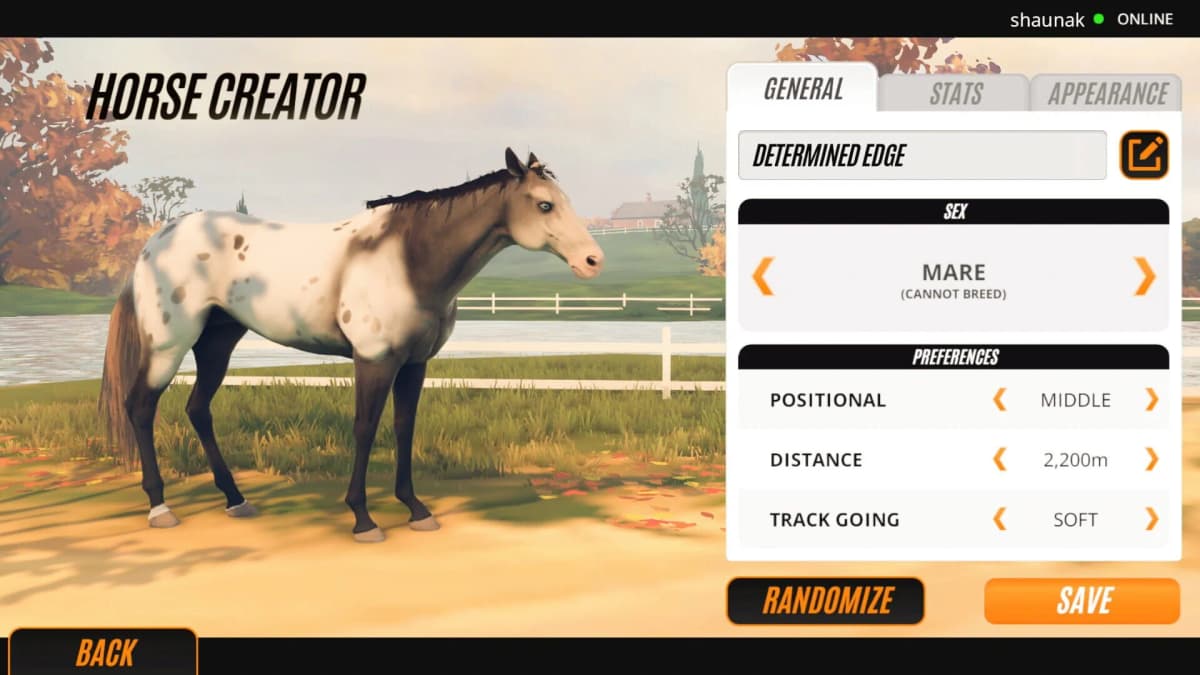
The public breed examples already point in that direction. Arabian horses are associated with stamina and agility for Cross Country. Selle Français are tied to Sprint Energy and Jump for Steeplechase. Knabstrupper are positioned as Show Jumping specialists. Even without full public stat formulas, the message is clear: breed with a discipline in mind. A specialist usually outperforms a generic “good horse” when the event starts leaning into its core mechanics.
If you want fewer wasted breedings, decide the target mode first, then choose parents that reinforce it. Do not do it the other way around.
Tip 3: Use parent stats to fix weaknesses, not just to stack strengths
Official guidance also emphasizes that parent stats matter in breeding, and that is the piece many players undersell. The trap is obvious: two high-grade parents look like the correct choice, so they get paired automatically. But if both share the same weakness, the foal can inherit a version of the same problem and your stable does not really move forward.
The better approach is to breed with a purpose. Ask which stat or trait is actually losing races for that bloodline. Are you fading late because stamina is weak? Are jump events falling apart because the horse clips obstacles? Are your flat-race finishes unimpressive because the whole line is better at surviving the pace than converting it into Sprint? Once you identify the real flaw, pick the second parent to patch that gap.
This matters especially early and mid progression, when you cannot afford to waste breedings chasing perfect all-rounders. A foal that clearly improves one important racing problem is more valuable than a foal that looks balanced but still does not have a real home in your stable. If one line is built for Cross Country and another gives you better jump support, use that knowledge. If a line is already fast enough but keeps emptying out late, stamina should move up your priority list.

Because the exact numerical breeding formulas are not fully detailed in public material, treat breeding as a controlled experiment rather than a guaranteed recipe. Keep notes on which pairings actually improve race results. Results on the track matter more than stable-screen optimism.
Tip 4: Crossbreeding works best when you balance grade against usable stats
Crossbreeding is one of the more interesting long-term systems in Rival Stars Horse Racing because it lets you build horses around combinations that suit your preferred discipline instead of accepting a single breed identity as destiny. The mistake is thinking crossbreeding is only about making a higher-ceiling horse. In practice, it is often about making a more coherent one.
The advice tied to the latest official tips is to balance grade versus stats when mixing lineages. That is exactly right. A slightly lower-grade parent with the right trait package can be the smarter choice than a higher-grade parent that adds nothing but a bigger number. This is especially true if you are trying to smooth out a stable weakness across several generations.
Say you have a line that already feels explosive in shorter efforts but keeps underperforming once jumps and stamina matter. A crossbreeding decision that adds endurance or jump support can improve actual race performance more than another small bump to a general grade. The same logic works in reverse: if your horses survive long events but never threaten in the finish, it may be time to pull in bloodlines that better support Sprint-oriented performance.
Before you confirm a pairing, run through three questions:
- What discipline is this foal for?
- What weakness am I trying to remove from the current line?
- Am I choosing this parent for usable race value, or just because the grade looks cleaner?
If you cannot answer those clearly, the pairing is probably not focused enough.
Tip 5: Practice jumps like a skill drill, because penalties erase breeding gains
Breeding matters, but it will not save a sloppy run in the jump disciplines. Cross Country, Steeplechase, and Showjumping all include jump mechanics, and missing jumps carries time penalties. That means clean execution is not optional. It is part of the build.
This is the section where a lot of players overrate horse quality and underrate repetition. A better horse can make an event more forgiving, but a missed jump still gives away time that is hard to recover. Flat-race habits do not transfer perfectly here, because you are no longer just managing pace and Sprint. You are managing rhythm. Good jump timing keeps momentum intact; bad timing turns a strong run into a scramble.

The useful feature here is replay and practice. Re-running the same track is not just for shaving seconds off a personal best. It teaches where nerves usually cause errors: awkward approach angles, late reactions before a sequence, or rushing a section because you are already thinking about the finish. The more familiar the obstacle rhythm becomes, the less likely you are to waste the horse’s breeding advantages on avoidable penalties.
This is also where stamina deserves more respect. In longer or more technical events, a horse that arrives at the late sequence tired is much easier to mismanage. Clean jumping and sensible stamina breeding support each other. If your jump races keep collapsing near the end, that is often not just an execution problem or just a breeding problem. It is both.
How the five tips fit together in one stable plan
The cleanest way to use all five tips is to build one specialist at a time. Pick a discipline. Choose a breed or crossbreed direction that naturally supports it. Select parents based on the stat gap you are trying to close instead of blindly following grade. Then, once the horse is on the track, ride it according to its preferred position and practice the course until execution stops costing free time.
That approach is slower than randomly pairing your best horses and entering everything, but it is much more efficient. You start seeing why a horse wins, why it loses, and what the next breeding decision should fix. Rival Stars becomes a game of informed tuning instead of guesswork.
If you follow these five rules, breeding and racing stop pulling in different directions. Your foals have a job, your race plans match the horse underneath you, and the final stretch becomes something you control instead of something that surprises you.
FinalBoss // Gear
Level up your setup
01Racing wheels (PC & PS5)on Amazon→02High-refresh gaming monitorson Amazon→03Gaming chairson Amazon→04Discounted game keyson Kinguin→Affiliate links · As an Amazon Associate, FinalBoss earns from qualifying purchases.
Want to Level Up Your Gaming?
Get access to exclusive strategies, hidden tips, and pro-level insights that we don't share publicly.
Ultimate Guide Strategy Guide + Weekly Pro Tips