
The fast answer for new players: start on Standard difficulty with the Summer 365 season, treat the Finnish-side maps as your training and banking ground, and do not cross into Vostok until you have two full backup kits stashed. Dying on the Finnish side only costs the gear you were carrying. Dying inside Vostok deletes your save — character, shelters and stash included. That single asymmetry is the whole game, and it is why patient players survive ten times longer than aggressive ones.
Road to Vostok hit Steam Early Access on 7 April 2026 as Build 1 – “Road” (v0.1.0.0), and that is still the current public build as of late July 2026: seven playable maps across three regions, multi-shelter claiming, dynamic world events and three difficulty modes. Everything below is written against that build, and you can find the rest of our coverage on the Road to Vostok game hub. If you want the wider context on what Early Access actually promises, we broke that down in Road to Vostok’s “single-player Tarkov” pitch.
Table of Contents (18)
Step 1: Pick the right difficulty and season before you spawn
Early Access shipped with three modes, and the difference between them is not a damage slider — it changes what you start with and where permadeath applies.
| Mode | What it changes | Who it’s for |
|---|---|---|
| Standard | Start with a basic shelter, a starting kit and neutral world conditions. Permadeath is confined to the Vostok zone. | Everyone learning the game |
| Darkness | Spawn at a random location with no shelter and no starting gear, with randomised starting vitals and time of day. | Second or third campaign |
| Ironman | Extends permadeath to all zones. One death anywhere ends the run. | Players who already clear Vostok runs consistently |
Then the season, which is a separate choice:
- Summer 365 — the whole year is summer. Removes cold pressure entirely. This is the learning setting; take it for your first campaign and don’t feel bad about it.
- Winter 365 — permanent winter, cold survival becomes a constant tax on your kit and time.
- Dynamic — all four seasons cycle. Described by the game’s own materials as the most realistic and most demanding option, and it is.
My recommendation for a first serious save: Standard + Summer 365. You will still die plenty. What you won’t do is die to a systems interaction you haven’t learned yet.
Also spend two minutes on controls before your first run. Crouch, lean and slow-walk are all things you use constantly and simultaneously while pie-peeking corners, so put them somewhere your left hand can reach without thinking — the defaults are workable but most players end up moving lean off the far edge of the keyboard.
Step 2: Understand exactly how death works in each zone
This is the number one thing new players get wrong, and it’s worth being precise about because guides written during the demo era describe it differently.
- Finnish-side zones (including Area 05): if you die, you lose only what you were carrying. Your character, your shelters and everything in your stash survive.
- Vostok zone: full permadeath. Dying there deletes the save file — character, shelters, and every collected item.
- Ironman mode: permadeath applies across all three regions, so the safe-side buffer above simply doesn’t exist.
The rhythm the game is pushing you toward follows directly from that:
- Use the non-permadeath side to build a deep stash, claimed shelters, and redundant kits.
- Treat every Vostok incursion as an expendable raid — assume the character and the kit are both gone if it goes wrong.
- Never carry gear into Vostok that you’re not genuinely ready to lose.
The run where this clicked for me was the first one I went in mentally prepared to lose everything. Duplicate armour, a spare rifle, meds and food were all sitting back at the shelter. Playing calmer measurably improved my survival odds — the panic decisions are what actually kill you in there.
Step 3: Claim shelters, and use more than one
Build 1 introduced multi-shelter support: you can claim multiple safehouses across the Finnish side rather than living out of a single base. That is a bigger deal than it sounds, because it lets you run forward operating bases — gear staged close to where you actually want to push, instead of hauling your net worth across three maps.
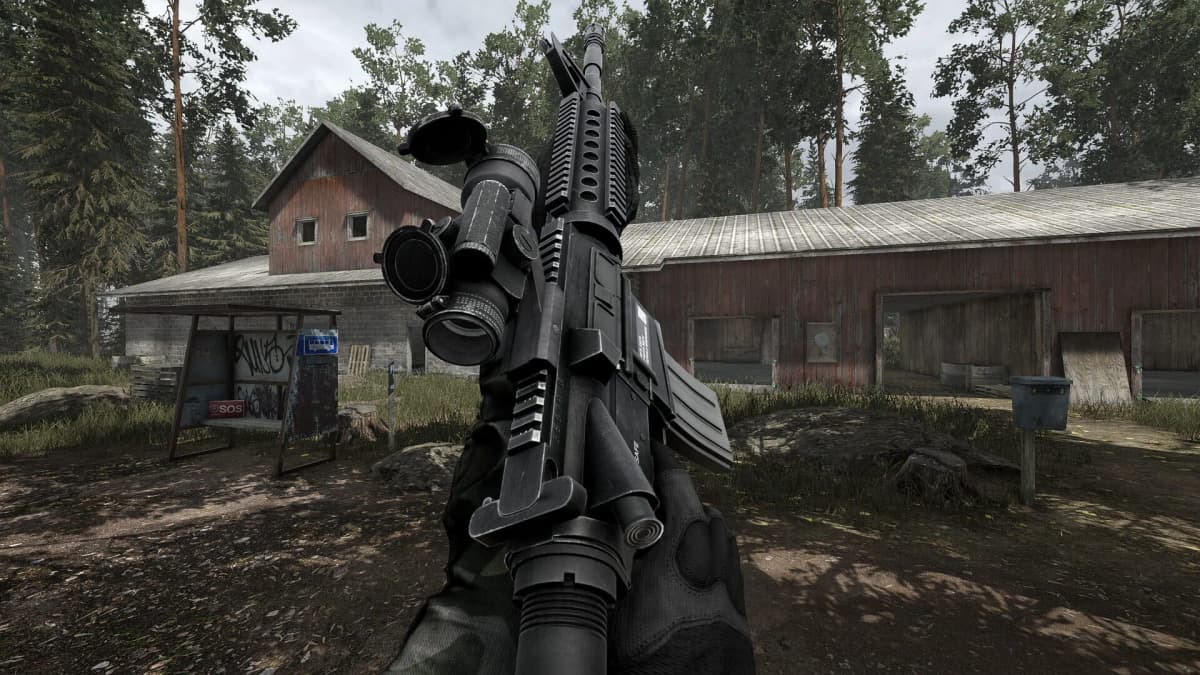
Shelters are also customisable — you can physically move furniture and place items on shelves, which sounds cosmetic until you start using shelf layout as an inventory system you can read at a glance.
- Claim a primary shelter early. The moment you find a decent interior with a bed and containers, treat it as home. Staying nomadic with everything on your back is how campaigns end.
- Containers are your bank. Stash rare weapons, armour and meds. Carry only what the current objective needs plus a small emergency buffer.
- Set up a forward shelter once you know which region you’ll be pushing into. Stage a second full kit there so a bad run costs you a trip, not a campaign.
- Sleep deliberately. Resting recovers fatigue and advances time, which interacts with loot availability and weather. Clear a couple of zones, go home, sleep, repeat.
Step 4: The survival stats that actually kill you
Road to Vostok tracks hunger, thirst, fatigue, mental state and health. They compound: let two of them slide and the third degrades faster, and untreated injuries like fractures add movement penalties plus passive damage on top.
Practical consequences:
- Food and water are core gear, not optional extras. Carry two in-game days’ worth on any run you expect to be long.
- Mental state is the one people ignore because it doesn’t have an obvious bar-shaped consequence. It does — it just shows up as everything else getting harder.
- Treat fractures immediately. A limping character in a zone with active patrols is a dead character.
Step 5: Movement, stamina and noise
Almost every early death is a movement problem, not a shooting problem. Two stamina pools matter:
- Body stamina — drains when you sprint or jump. Run it to zero and you slow to a crawl at the worst possible moment.
- Arm stamina — drains while you hold the weapon raised or aim down sights. Empty it and your aim sways badly.
Rules that changed my survival rate more than any gun upgrade:
- Short sprints between cover, never marathon runs across open ground.
- Don’t sit in ADS “just in case”. Keep the weapon lowered while waiting, aim only when you’re actually shooting.
- Listen constantly. Footsteps and gunshots carry a long way, and dynamic events mean patrol composition changes run to run — what was empty yesterday isn’t guaranteed to be empty today.
- Crouch-walk near buildings and likely patrol routes. Sprinting past a blind corner is how you eat point-blank buckshot.
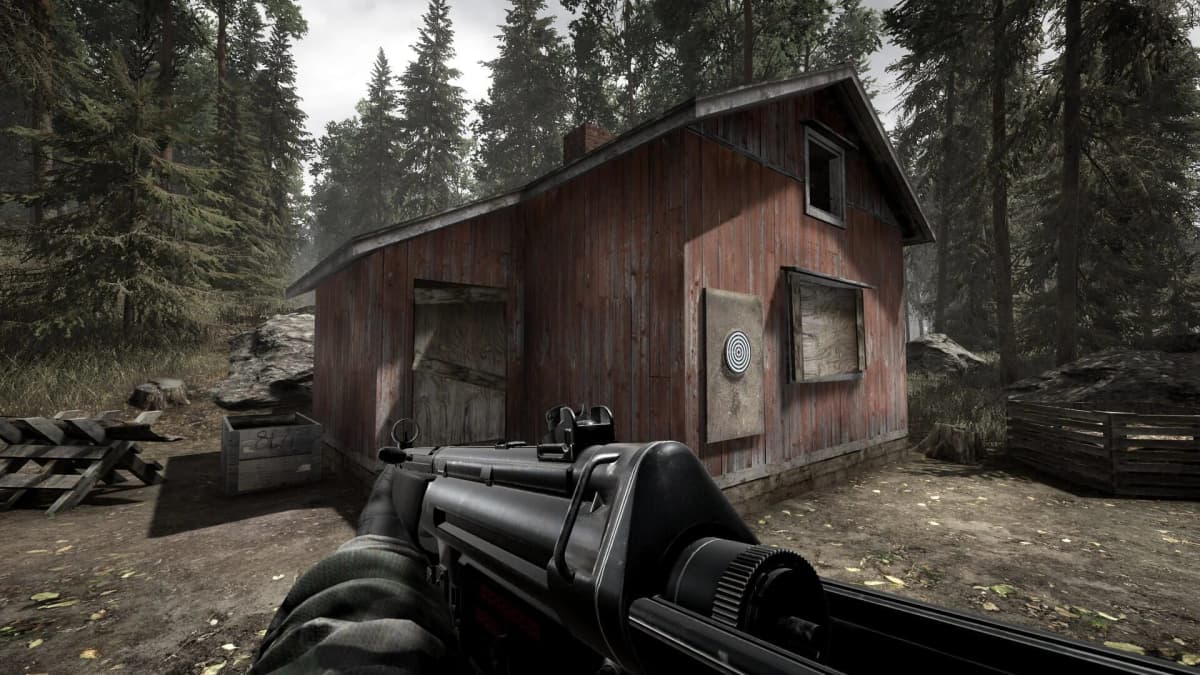
Step 6: Magazines, medical kit and hotkeys
Build 1 uses a grid-based inventory and realistic magazine management — you load rounds into magazines by hand. That means “reloading” in a firefight is really “swapping to a mag you already filled”, and if you didn’t fill it at the shelter, you don’t have it. Refill every magazine before you leave home. Every time.
Core medical loadout for any run worth doing:
- 2× medkits for raw health restoration after a fight.
- Bandages for light bleeding.
- Tourniquet for severe limb bleeds.
- Painkillers to stabilise aim and movement when you’re hurt but still need to extract.
Then bind them to quick slots and keep the layout identical across every run. The exact numbers don’t matter; the muscle memory does. The first time you stop a heavy bleed during an ambush without looking at your inventory, you’ll understand why this is on the list.
Step 7: Weapons and trading priorities
Weapon choice here is about control and stealth as much as damage. A workable beginner setup:
- Primary: scoped rifle. A semi-auto or bolt-action with even a modest optic lets you scout and engage at mid-range, which is far safer than close-quarters brawling.
- Secondary: shotgun. Devastating indoors and around tight corners. Pull it out when you know you’re clearing a building.
Trading priorities, in order: medical supplies first (surviving one heavy bleed beats any marginal gun upgrade), then ammunition for your one chosen calibre, then armour and a helmet, then utility — spare magazines, a simple optic, a suppressor. Sell duplicate low-tier weapons, heavy junk with good sale value, and ammo for calibres you’ve abandoned.
Two hard rules: stick to one or two calibres rather than juggling five, and keep a cash reserve at the shelter instead of blowing everything on one flashy rifle. Redundancy beats firepower in a game where you can lose the rifle at any moment.
Step 8: Planning your first Vostok incursion
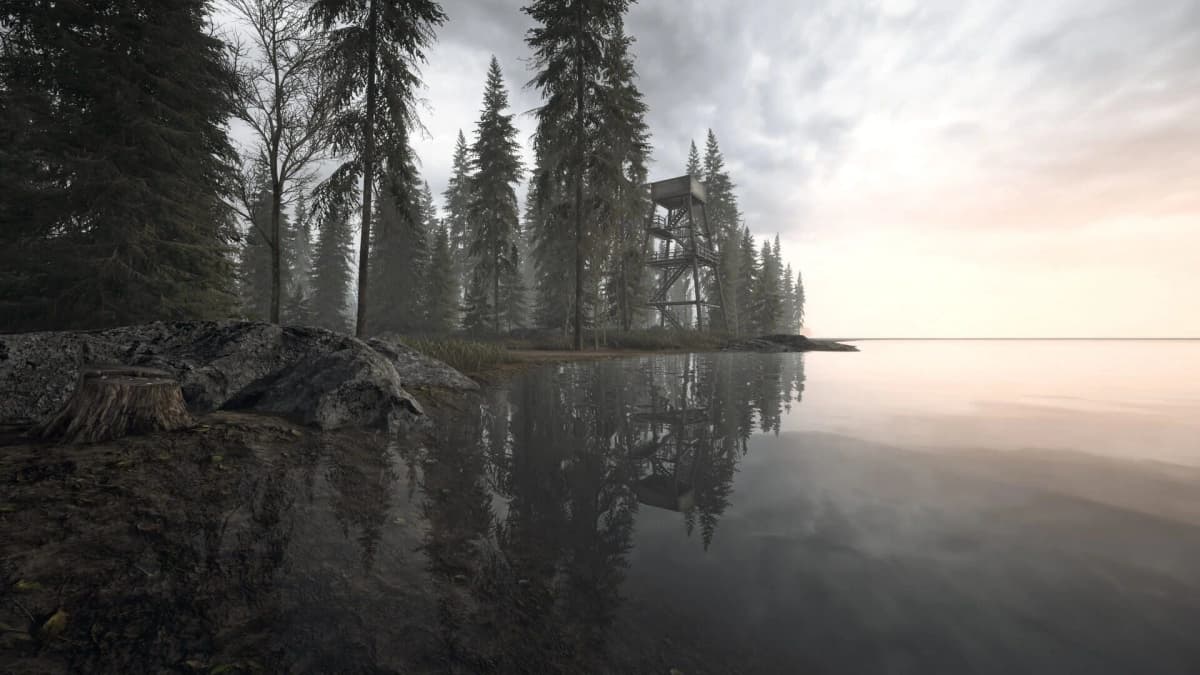
You’re ready when all three are true
- You have at least two full backup kits (rifle, armour, meds, food) stashed.
- You can run a couple of Finnish-side zones without dropping to critical health or stamina.
- You recognise how minefields are telegraphed and have stopped walking into them.
Minimum kit
- Suppressed or scoped rifle you’re genuinely comfortable with
- Vest and helmet, mid-tier at minimum
- Shotgun or reliable sidearm for close quarters
- 2× medkits, 1× tourniquet, bandages, painkillers
- 120+ rounds for the main rifle, all pre-loaded into magazines
- Food and water for at least two in-game days
Route and bail conditions
Before crossing, spend a few normal runs scouting the border-side maps: note likely exit routes, obvious minefields and danger zones, and buildings with good sightlines you can fall back to. Then commit to a plan with one primary objective, one primary exit, at least one alternate, and a hard time limit after which you leave no matter what the loot looks like.
If you’re detected and the area heats up, drop non-essential loot and move. Given that a Vostok death deletes the save, there is no stack of trade goods worth the trade.
Beginner mistakes that end campaigns
- Overloading. Full weight with no stamina margin. Carry one objective’s worth plus a reserve.
- Ignoring food, water and fatigue. They compound, and by the time it’s obvious you’re already in trouble.
- Staying in a zone too long. Dynamic events mean patrols and conditions shift under you. Set a timer and honour it.
- Fighting everything. If an engagement doesn’t move you toward the objective, bypass it.
- Entering Vostok with irreplaceable gear. Build redundant kits first.
- Not refilling magazines before leaving. The single most avoidable death in the game.
FAQ
What’s the current version of Road to Vostok?
Build 1 – “Road” (v0.1.0.0), released 7 April 2026. As of late July 2026 no numbered Build 2 has shipped; the developer’s 2026 roadmap places faction warfare, base fortification, advanced electricity and a gunsmith expansion later in the year.
Does dying always wipe my save?
No — only in the Vostok zone (or anywhere, if you chose Ironman). On the Finnish side you lose the gear you were carrying and nothing else.
Which season should a new player pick?
Summer 365. It removes cold as a variable while you learn maps, magazine management and patrol behaviour. Move to Dynamic once those are automatic.
How many maps are in Early Access?
Seven playable maps across three regions in Build 1: Village, School, Highway, Outpost, Minefield, Apartments and Terminal. The roadmap says each major update adds another.
Is there multiplayer?
No. The current Early Access build is single-player only — which is exactly the pitch, and why the game landed the way it did.
FinalBoss // Gear
Level up your setup
01Top-rated gaming headsetson Amazon→02High-refresh gaming monitorson Amazon→03Gaming chairson Amazon→04Discounted game keyson Kinguin→
Affiliate links · As an Amazon Associate, FinalBoss earns from qualifying purchases.
Want to Level Up Your Gaming?
Get access to exclusive strategies, hidden tips, and pro-level insights that we don't share publicly.
Ultimate Guide Strategy Guide + Weekly Pro Tips