
Table of Contents (7)
Roblox’s player-hours surge now equals PlayStation, Steam and Fortnite combined
This caught my attention because a platform built on user-created levels quietly crossed into territory most companies only dream about: Matthew Ball’s early-access 2025 report (covered by PC Gamer) pegs Roblox at roughly 10.3 billion monthly hours in 2025 – more time spent than on Steam, PlayStation and Fortnite combined. That’s not just a growth blip. It’s evidence Roblox is no longer a niche sandbox for kids and creators; it’s a mainstream attention magnet changing where and how people spend their gaming hours.
- Roblox reached roughly 10.3 billion monthly hours in 2025, per Ball’s report (PC Gamer).
- Daily active users jumped about 69% year-over-year to 150M+ DAUs in 2025.
- Roblox accounted for an outsized share of industry growth (67% of non-China growth, per Ball).
- Legal and moderation risks (e.g., a new Los Angeles County lawsuit reported by Steam News) complicate the platform’s trajectory.
Breaking down the numbers – what the reports actually say
Ball’s analysis, as reported by PC Gamer, is blunt: Roblox attracted more than 150 million daily active users in 2025 (a roughly 69% increase over 2024) and clocked more than 10 billion player-hours per month. To put that in context, third-party tallies for Steam and PlayStation sit at single-digit billions of monthly hours each, which is why Ball concludes Roblox’s total equals those platforms combined.
Internal company figures support the scale – Roblox itself reported about 151.5M DAUs in Q3 2025 and a Q3 engagement tally near 39.6 billion hours (which implies monthly averages higher than Ball’s annual number during peak quarters). Mobile is doing the heavy lifting: a large share of those hours come from phones, which explains how Roblox is outpacing console-centric platforms in raw attention even if spend per user differs.
Why this matters now
Game companies obsess over where attention flows, and Ball’s report suggests attention is consolidating on platforms that are social, mobile-first, and creator-driven. Roblox wasn’t just growing — it allegedly drove 67% of global (ex-China) games industry growth in 2025. That flips a familiar narrative: instead of traditional publishers dictating hits, a platform of creator-made experiences is capturing huge swaths of playtime and payments (Roblox reported tens of millions of monthly paying users and developer payouts in the hundreds of millions).
The real story: creators, hits and the attention economy
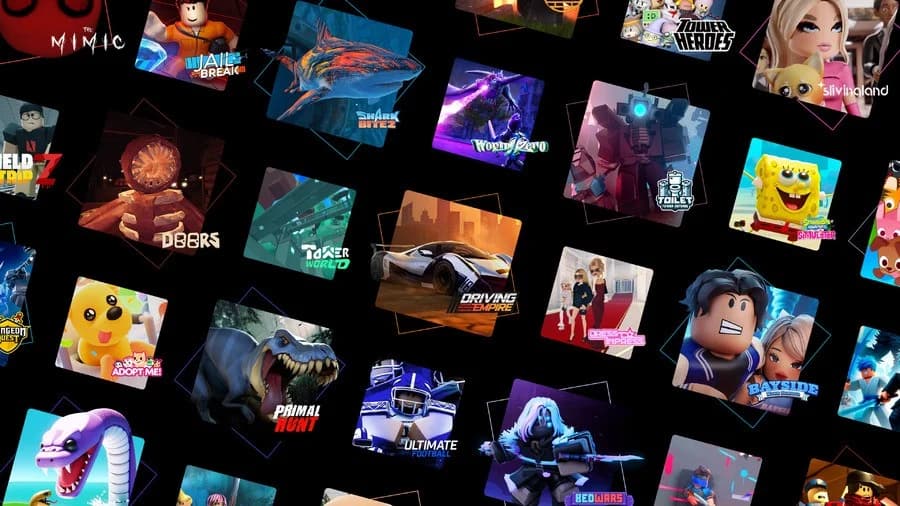
What turns a platform into a mainstream engagement powerhouse is not just technology but the ability for creators to spawn massive hits. Viral Roblox experiences like Grow a Garden (which accumulated hundreds of millions of hours) show single community-made titles can rival or exceed the catalogs of traditional publishers. That virality powers both player growth and developer earnings — and it changes how the industry judges a platform’s cultural reach.
The catch: moderation, legal risk and sustainability
Scale brings scrutiny. Steam News reported Los Angeles County has filed a civil suit against Roblox alleging failures to protect underage users — the latest in a string of legal challenges. Those cases don’t erase player-hours, but they raise real risks: stricter regulation or liability could force product changes, raise moderation costs, or damage brand trust — and that would ripple through creator incomes and ad/monetization strategies.
What gamers (and creators) should watch next
- Roblox’s upcoming earnings for Q4 2025 — confirmation of DAU/hour trends and monetization details will matter.
- How Sony, Valve and Epic publish comparable engagement metrics; a coordinated update could change the head-to-head story.
- Whether legal pressure forces safety changes that affect the social mechanics creators rely on.
- If viral formulas like Grow a Garden are repeatable or just one-off explosions.
The headline is simple: Roblox’s attention footprint is now comparable to some of the biggest names in games. That shift from “user‑generated hobby” to industry-scale time sink has big implications for how games are made, monetized and regulated. It’s a pivotal moment — not because Roblox suddenly became the only place to play, but because it proved a creator-first, mobile-first platform can command the same attention as decades-old consoles and distribution networks.
TL;DR
Matthew Ball’s 2025 figures (as reported by PC Gamer) show Roblox hitting ~10.3B monthly hours and 150M+ DAUs, matching PlayStation, Steam and Fortnite combined. That scale boosts Roblox from niche to mainstream — but legal and moderation questions mean it’s not a risk-free victory for the platform, creators, or players.
FinalBoss // Gear
Level up your setup
01Best-selling PS5 gameson Amazon→02DualSense controllerson Amazon→03PS5 SSD upgrades (M.2 NVMe)on Amazon→04Discounted game keyson Kinguin→Affiliate links · As an Amazon Associate, FinalBoss earns from qualifying purchases.
Want to Level Up Your Gaming?
Get access to exclusive strategies, hidden tips, and pro-level insights that we don't share publicly.
Ultimate Gaming Strategy Guide + Weekly Pro Tips