
At $1,299, a beautiful screen has to carry an awful lot of weight. ASUS’s ROG Xbox Ally X20 ships on October 15, 2026, for roughly $300 more than the Xbox Ally X. That price demands more scrutiny than an enthusiastic list of OLED specifications.
Table of Contents (5)
The unchanged chip decides the upgrade argument
The Ryzen AI Z2 Extreme, 24GB of memory and 1TB SSD carry over from the Xbox Ally X. Gaming performance remains essentially unchanged. That is the central limitation of this refresh, regardless of how attractive the surrounding hardware becomes.
I cannot recommend replacing an Ally X to get higher frame rates or more ambitious graphics settings. The X20 gives that owner no meaningful performance-based reason to move. Anyone judging the premium by how much better games run should keep the cheaper model at the top of their list.
The OLED makes a genuinely strong case
The 7.4-inch OLED replaces the Ally X’s 7-inch IPS LCD while retaining 1080p resolution and a 120Hz refresh rate. HDR and variable refresh rate are supported, with rated brightness of 600 nits in SDR and up to 1,400 nits in HDR.
Deeper blacks, stronger contrast and better HDR give the X20 its clearest advantage. I put much more value on those improvements than on the modest increase in screen size. They improve the quality of the picture throughout use, which makes the display a meaningful luxury rather than a decorative specification.
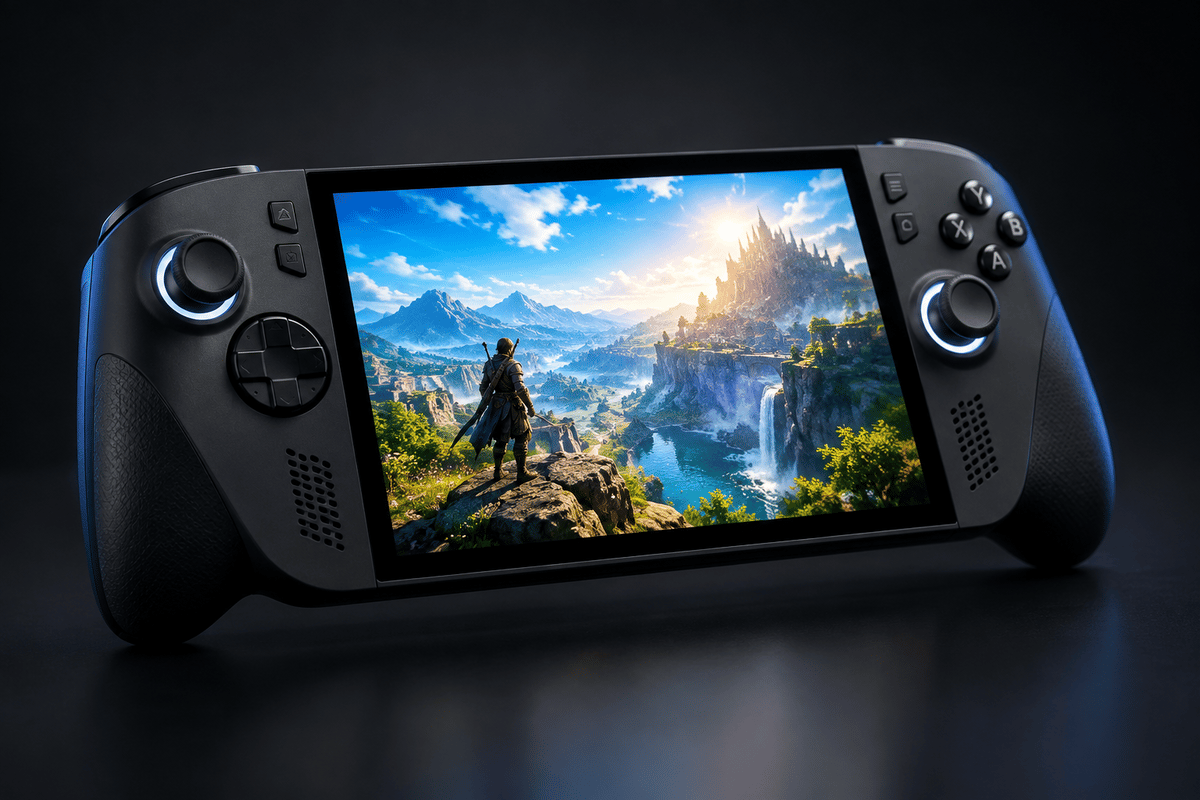
The larger panel comes from slimmer bezels rather than a higher resolution. That is a sensible choice, but it also defines the purchase: the premium buys a better-looking image at the same resolution. Decide how much that matters before treating OLED as an automatic upgrade.
Better controls and cooling, with extra weight
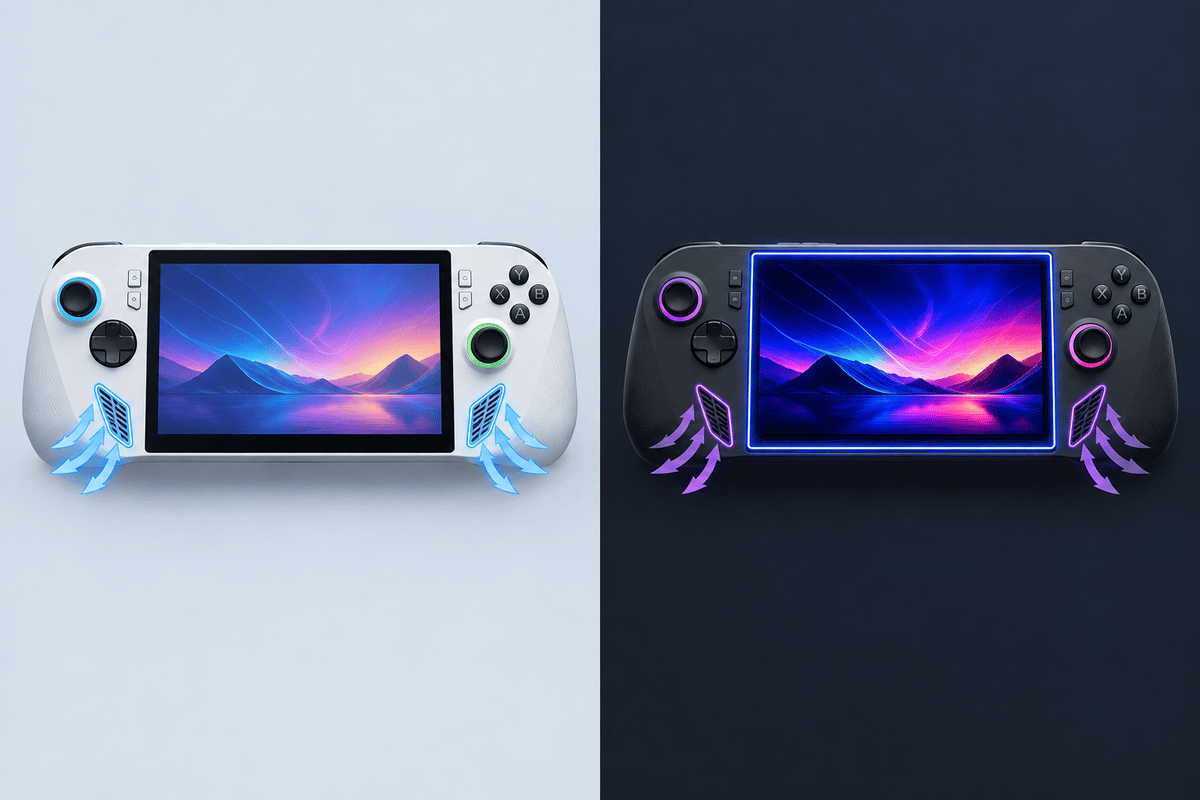
TMR joysticks use magnetic sensors to reduce drift risk. The transforming D-pad switches between four-way and eight-way layouts by pulling it up and rotating it 90 degrees. That configurable directional input is a useful refinement for buyers who care about the controls as much as the display.
The cooling fans grow from 30mm to 32mm, and cooling is improved. Credit is due for addressing thermal behavior. With gaming performance effectively level, though, I count this as better hardware refinement rather than a reason to pay for a faster machine.
Weight rises from 715g to 756g. The revised ergonomics are a strength, but anyone prioritizing a lighter handheld still has a reason to prefer the Ally X. A more comfortable design does not erase the additional mass.
Battery life and software still impose limits
The battery remains 80Wh. Demanding games put Turbo mode in the two-to-three-hour range, while lighter titles can reach four to six hours in Silent or Performance mode. The X20 so offers no compelling battery-capacity argument for replacing the older handheld. For longer sessions away from power, the choice of game and power mode still matters.
This is still a Windows 11 handheld. The Xbox Fullscreen Experience brings Xbox, Steam and other PC storefront games into a controller-friendly interface, but Windows 11 and Xbox Mode still need stability work. At this price, I expect the software experience to match the physical polish. That remains a weakness.
Existing owners should skip it; new buyers should be selective
Existing Ally X owners: keep your handheld unless its LCD is the specific limitation you want to remove. The X20’s display and controls are desirable, but replacing capable hardware to obtain them is difficult to justify. An OLED craving is a legitimate personal reason to upgrade; a performance expectation is not.
New buyers: the X20 makes more sense when you are choosing your first device rather than replacing one. I would recommend it to someone who places a high value on HDR, contrast and refined controls — and accepts that the extra money will not buy meaningfully faster games. For performance per dollar or lower weight, the Xbox Ally X remains the stronger choice.
Verdict: 7/10. The ROG Xbox Ally X20 is a good handheld with a pricing problem. Its OLED deserves enthusiasm; the upgrade proposition deserves restraint. Buy it for the premium screen and controls, not for a performance leap. Existing Ally X owners should sit this one out.
FinalBoss // Gear
Level up your setup
01Best-selling Xbox Series X|S gameson Amazon→02Xbox controllerson Amazon→03Top-rated gaming headsetson Amazon→04Discounted game keyson Kinguin→Affiliate links · As an Amazon Associate, FinalBoss earns from qualifying purchases.
Want to Level Up Your Gaming?
Get access to exclusive strategies, hidden tips, and pro-level insights that we don't share publicly.
Ultimate Reviews Strategy Guide + Weekly Pro Tips