
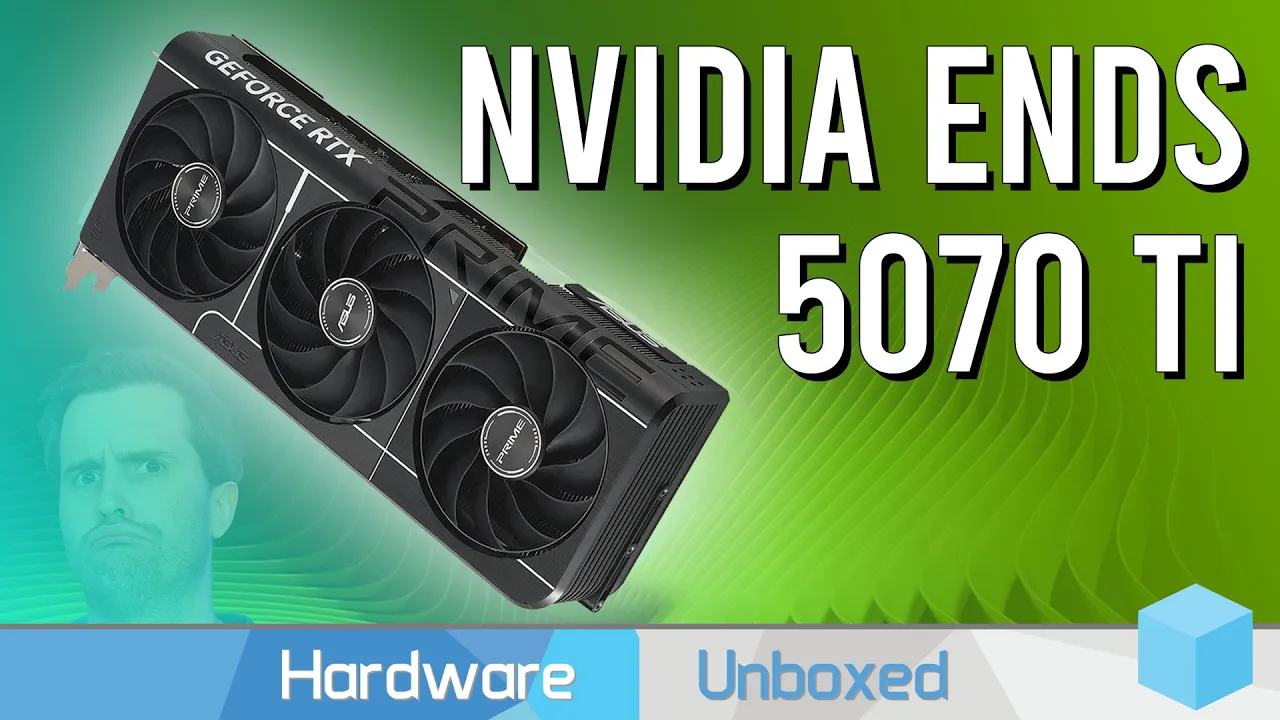
This caught my attention because the RTX 5070 Ti was the sweet spot for 1440p ray tracing and content creation – now that Nvidia AIB partners have marked it EOL, anyone planning an upgrade or workstation build needs a fast, practical shortlist backed by current stock and real-world performance.
Table of Contents (6)
RTX 5070 Ti Discontinuation: Top 12 Current Alternatives for Gamers and Creators
- Key takeaways:
- Nvidia labeled the RTX 5070 Ti (16GB) end-of-life due to RAM shortages; 12GB/8GB 50-series SKUs remain in production.
- We prioritized cards with ≥12GB VRAM, strong 1440p/4K performance, current driver support, and confirmed Q1 2026 availability.
- Top picks cover value (AMD RX 9070 XT), direct successor performance (RTX 5080), pro workflows (RTX 5090/RX 7900 XTX), and budget alternatives (Intel Arc B580 / RTX 5070 non-Ti).
{{INFO_TABLE_START}}
Publisher|Discover GPU Desk
Release Date|2026-01-15
Category|GPU buying guide / market update
Platform|PC (Windows/Linux)
{{INFO_TABLE_END}}
Why this matters
Nvidia’s EOL decision isn’t just supply drama – it reshapes the midrange GPU landscape. The 5070 Ti combined 16GB VRAM, strong ray tracing, and good price-performance: losing it pushes buyers toward newer, often more expensive silicon or toward AMD and Intel alternatives that now offer competitive VRAM and driver maturity. For creators, VRAM is the real bottleneck; for gamers, driver features (DLSS/FSR/XeSS) and availability now drive decisions more than raw spec sheets.
The 12 alternatives (quick guide)
- RTX 5080 (Founders / Asus TUF) – Direct successor: best 4K/1440p ray tracing, 16GB GDDR7, top performance if your budget stretches to ~$1,199.
- AMD RX 9070 XT (Sapphire Nitro+) — Best value raster performance and 16GB VRAM at ~$699; closes RT gap with FSR 4 for creators on a budget.
- RTX 5070 (non-Ti, MSI Ventus) — Practical midrange swap: 12GB GDDR7, similar 1440p perf at ~$599 and widely available.
- RX 7900 XTX — VRAM-heavy 24GB option for creators and texture-heavy 4K; often discounted below previous highs and strong at high-res workloads.
- RTX 5090 — Overkill pro card: 32GB GDDR7 for serious Unreal/3D workloads; expensive but future-proof for pro creators.
- Intel Arc B580 — Budget pick: 12GB, great 1080p/1440p efficiency for under $250; XeSS improved enough to be compelling value.
- RX 9060 XT 16GB — Entry RDNA4 16GB card that mirrors the Ti’s VRAM advantage at a lower price point — solid for creators who need capacity.
- RTX 4080 Super — Legacy high-end that now offers near-5070 Ti performance in many titles for bargain prices on new/used markets.
- RX 9070 (non-XT) — 12GB option that undercuts the Ti on price while leading in raster workloads; good multi-monitor gaming pick.
- RTX 5060 Ti (8GB) — Budget 1440p if you can accept 8GB and rely on DLSS; avoid the drying 16GB 5060 Ti SKUs that are EOL.
- Intel Arc A770 16GB (refresh) — Occasional blowout price; 16GB VRAM and matured drivers make it a strong budget creator/streamer option.
- RX 7800 XT — 16GB raster performer now often cleared at $499; great for VRAM-heavy titles and users on a midrange budget.
Analysis: who should pick what
If you want a straight-up successor that preserves or improves ray tracing and DLSS benefits, the RTX 5080 is the clear pick — but it costs a premium. AMD’s RX 9070 XT is the best value trade: similar or better raster performance and the VRAM to handle creative loads at a much lower price. For creators who regularly work with huge scenes or 8K proxies, the RX 7900 XTX or RTX 5090 are compelling for their VRAM headroom.
Budget buyers should consider the RTX 5070 (12GB) or Intel Arc B580: both offer current-driver support and stock availability. Used/legacy markets make the RTX 4080 Super and earlier high-end Ada cards attractive if you want raw raster power without the 50-series price tag. Be cautious about 8GB cards for new AAA titles that trend toward >10GB usage at high settings.
Practical upgrade action plan
- Match VRAM to your workload: 16GB is the safe sweet spot for modern creative apps and high-res textures.
- Check PSU headroom and connectors (high-end 50/90-series and 5090 demand robust PSUs — plan 750W+ for midrange, 1000W+ for top-end builds).
- Favor cards with active driver updates and community support; recent driver stability matters more than benchmark peaks.
- Sell your 5070 Ti while demand remains — used prices can offset much of a replacement’s cost.
- If you don’t need RT, consider AMD for better raster value; if RT+DLSS features are essential, Nvidia’s 5080/5070/4080 Super family remains preferable.
TL;DR
Nvidia ending RTX 5070 Ti production forces a market pivot: the RTX 5080 is the performance successor if you can pay up; AMD’s RX 9070 XT is the smartest value-for-performance alternative with 16GB VRAM; Intel and refreshed 12-16GB options fill the budget gaps. Prioritize VRAM and current driver support — the midrange has shifted, but it’s richer with viable choices than it first appears.
FinalBoss // Gear
Level up your setup
01Graphics cardson Amazon→02Gaming laptopson Amazon→03High-refresh gaming monitorson Amazon→04Discounted game keyson Kinguin→Affiliate links · As an Amazon Associate, FinalBoss earns from qualifying purchases.