
Table of Contents (7)
The RTX 5080 Finally Costs What Nvidia Promised – Mostly
This caught my attention because it’s the first time since launch we’re seeing the GeForce RTX 5080 at the $999 sticker in actual, click-and-buy listings in the US. Not “after rebate,” not “third-party seller with sketchy shipping,” but real listings: an Asus Prime RTX 5080 at Amazon for $999.99 (Prime-required, with a Borderlands 4 code) and an MSI Shadow 3X OC at Walmart for the same price. Given how often “MSRP” has felt like a fantasy number this generation, seeing two major retailers align at $999 is news that matters to PC gamers eyeing a serious upgrade.
Key Takeaways
- The RTX 5080 is finally at $999.99 at big US retailers, not just one-off drops – a sign pricing is normalizing seven months after launch.
- Performance is excellent at 1440p with path tracing and strong at 4K with DLSS 4; we scored it 8/10 in review testing.
- DLSS 4 multi-frame generation can inflate FPS counters but doesn’t magically fix input latency – great for cinematic single-player, less ideal for twitchy shooters.
- 16GB VRAM caps aspirations for 4K full RT/path tracing; it’s happier at 1440p with the flashy stuff cranked.
The Real Story Behind the Listings
Amazon’s Asus Prime hit $999.99 from a long-standing $1,264.99, and third-party marketplace sellers were averaging an eye-watering ~$1,439 since January. Walmart’s MSI Shadow 3X OC dropped from $1,359.99 to match the $999.99 price, and that MSI card ships with a mild factory OC (2,617MHz boost nudged to 2,640MHz) with a further optional 2,655MHz profile in MSI Center. In other words, the price was sticky high for months; it’s only now settling at what Nvidia “mooted” back at launch.
I’ve been side-eyeing 50-class pricing for a while. Nvidia set expectations at $999, but street prices rarely respected it — classic early-cycle scarcity plus a vacuum from AMD in this exact performance tier. Today’s dual-retailer drop looks less like a flash sale and more like the start of a proper market correction. The Prime-only gate at Amazon and the game bundle sweetener tell you inventory is moving, but not flying.
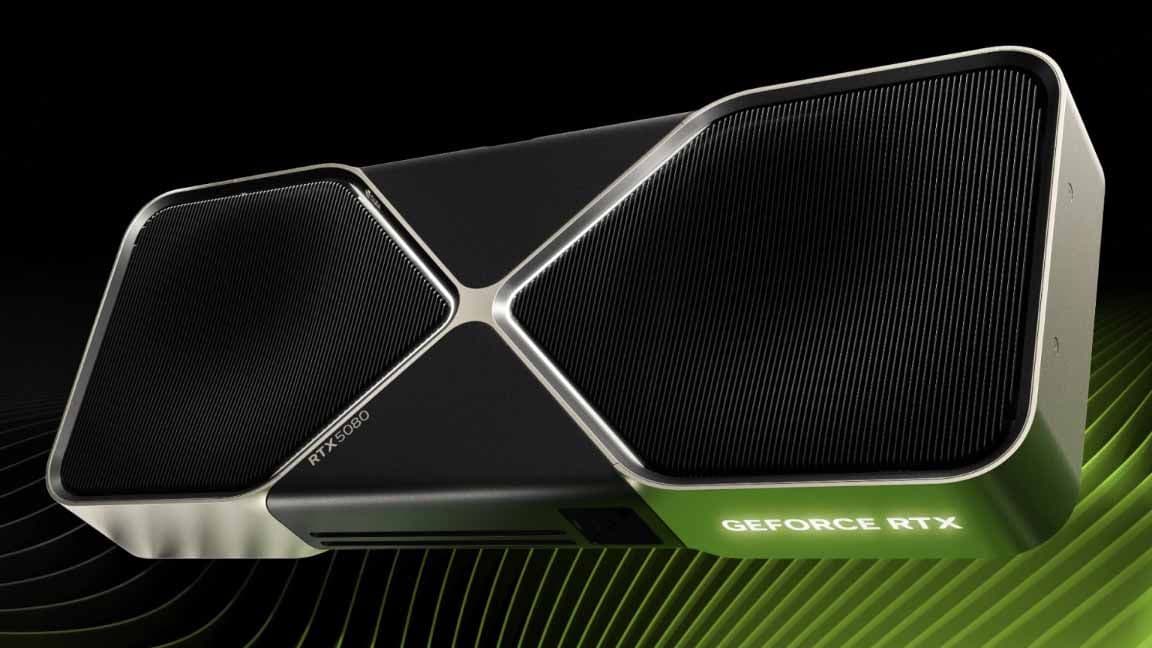
Performance: Where the 5080 Dominates (and Where It Doesn’t)
Think of the 5080 as roughly half a 5090 in practice and price — and that tracks in games. In Cyberpunk 2077’s Overdrive (path-traced) mode at 1440p, we saw 71fps with DLSS 4 on Quality, and that can rocket to 228fps with multi-frame generation on. Important caveat: frame gen looks silky and helps camera motion, but it doesn’t lower input latency the same way native frames do. If you’re grinding ranked Overwatch or Valorant, leave it off. If you’re soaking in Night City and photo mode? Flip it on and enjoy the spectacle.
Newer shader-heavy titles like Indiana Jones and the Great Circle hit ~90fps at 4K on Ultra with DLSS 4 in the mix, which is where the 5080 really earns its keep as a 4K-first card for modern AAA. On the sim side, F1 24 with all ray-traced bells and whistles goes ~84fps at 4K without leaning on DLSS — a nice reality check that not everything needs frame gen to be playable.
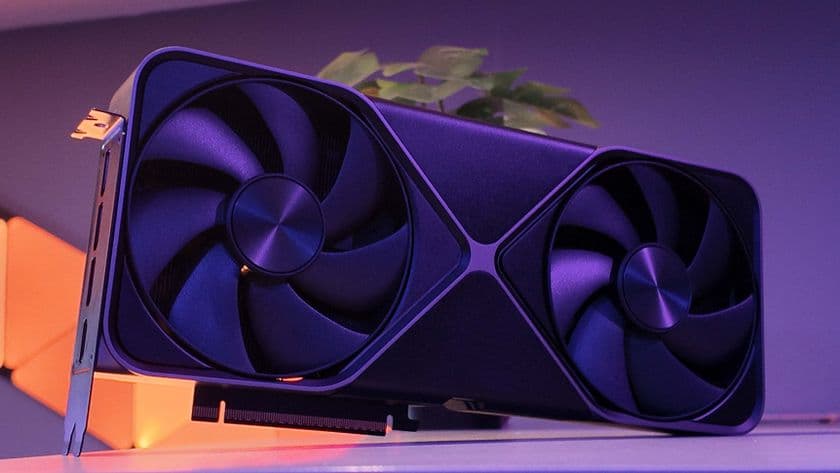
The limiter is memory. With 16GB VRAM, full-fat 4K path tracing is a stretch in some engines. At 1440p, though, you get the “showpiece” presets and smooth play: Cyberpunk’s Full RT averaged ~61fps with DLSS 4 Quality and scaled to ~177fps with frame gen. That’s the core 5080 proposition: unmatched 1440p with ray tracing maxed, excellent 4K with upscaling, and best-in-class DLSS 4 features — as long as you respect the VRAM ceiling.
5080 vs 5070 Ti: The Value Question
If $999 still makes your wallet recoil (fair), the RTX 5070 Ti remains the sensible 1440p pick for a lot of builds. It also carries 16GB VRAM and delivers strong 2,560×1,440 performance without the premium tax. The 5080’s advantage shows up when you push ray tracing hard, want 4K with DLSS 4, or plan to dabble in path tracing at 1440p. If your library is mostly esports and indie bangers, you won’t meaningfully feel the $200-$400 delta the way you would by putting that money into a faster CPU, a higher-refresh monitor, or a bigger SSD. If your library is Cyberpunk 2077, Alan Wake 2, and whatever’s next in the “RT-as-showpiece” pipeline, the 5080’s headroom pays dividends.

Why This Drop Matters Now
With AMD quiet in the upper tier, Nvidia’s had little pressure to hold MSRP. Seeing the 5080 finally stabilize at $999 suggests inventory and demand have met in the middle. Add the Borderlands 4 bundle and mild factory OCs, and you’re looking at the first moment the 5080 feels like a defensible buy rather than a begrudging splurge. It won’t turn 16GB into 20GB — so temper 4K path-tracing expectations — but for high-end 1440p and sensible 4K with DLSS 4, it’s the card to beat under a grand.
TL;DR
The RTX 5080 finally costs $999 at major US retailers, and that makes it the best sub-$1,000 pick if you want maxed 1440p RT or smart 4K with DLSS 4. Just remember: frame gen isn’t magic for latency, and 16GB VRAM keeps 4K path tracing in check. If you live at 1440p or don’t chase RT, the 5070 Ti still wins on value.
FinalBoss // Gear
Level up your setup
01Graphics cardson Amazon→02Gaming laptopson Amazon→03High-refresh gaming monitorson Amazon→04Discounted game keyson Kinguin→Affiliate links · As an Amazon Associate, FinalBoss earns from qualifying purchases.
Want to Level Up Your Gaming?
Get access to exclusive strategies, hidden tips, and pro-level insights that we don't share publicly.
Ultimate Gaming Strategy Guide + Weekly Pro Tips