
Gaming buyers owe Nvidia no loyalty to the top of its product stack. The RTX 5090 can remain an extraordinary piece of hardware while becoming an indefensible purchase at the price a seller wants for it. I care about the performance an upgrade buys, not preserving the privilege of owning the fastest GeForce.
AI demand gives Nvidia powerful reasons to focus elsewhere, and gamers have every reason to dislike the consequences. But turning every inflated RTX 5090 listing into evidence that AI companies have commandeered gaming hardware lets a shaky explanation distract from a straightforward buying decision: paying twice the launch price gets you the same graphics card.
Table of Contents (5)
The RTX 5090 price gap needs some basic arithmetic
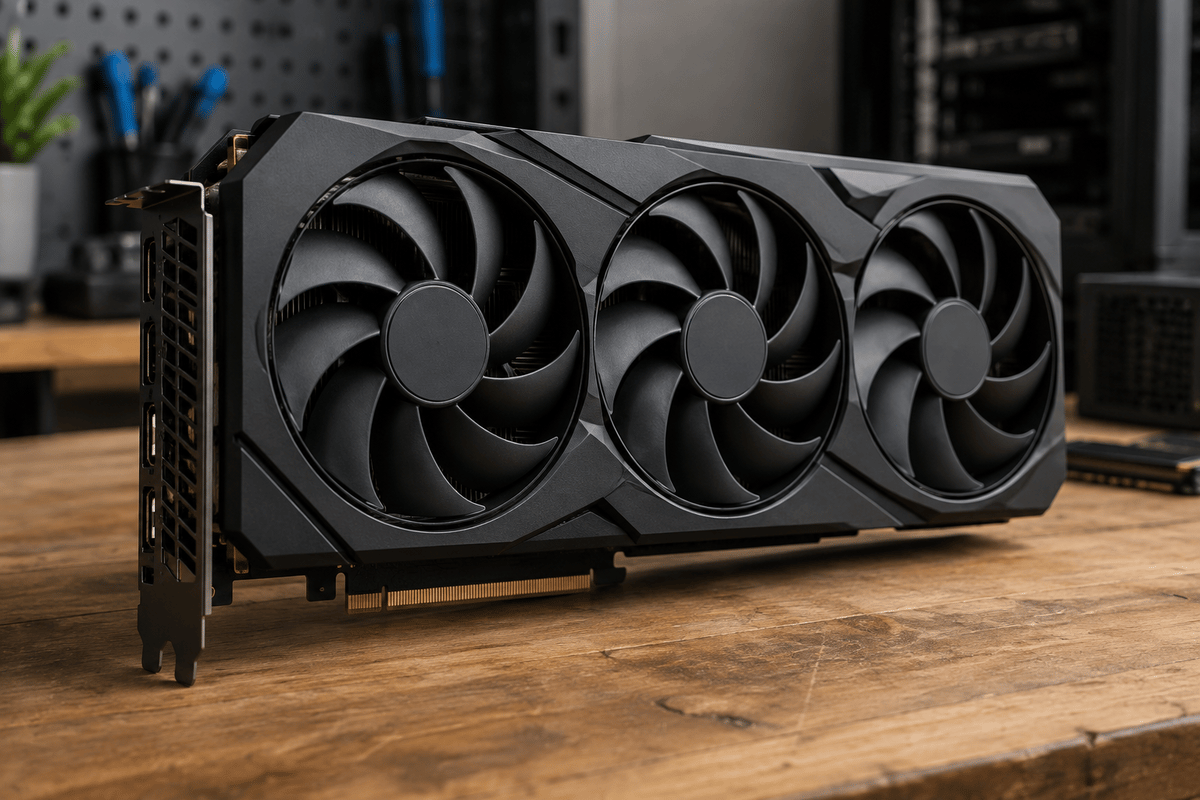
The RTX 5090 launched on January 30, 2025, with a US Founders Edition MSRP of $1,999. Its 32GB of GDDR7 and 575-watt power rating placed it firmly in enthusiast territory. Nvidia had already made maximum GeForce performance a luxury purchase before scarcity added another dollar.
That starting price matters because the premiums are enormous in absolute terms. Here is what the reported price ranges mean against the launch MSRP.
| Price level | Amount above $1,999 MSRP | What it means for a gaming buyer |
|---|---|---|
| $1,999 launch MSRP | $0 | Already a luxury-tier GPU purchase. |
| $2,500-$3,200 reported resale range | $501-$1,201, or approximately 25–60% | A substantial premium without a corresponding increase in performance. |
| $4,000–$5,000 reported extreme listings | $2,001–$3,001, or approximately 100–150% | The shortage premium alone exceeds the card’s entire launch MSRP. |
A listing is an asking price. It does not tell us how many cards sold at that figure, whether buyers accepted it, or what a reasonably patient shopper could obtain elsewhere. Secondary-market figures also mix different sellers, partner models, locations and sometimes bundles. Calling $5,000 “the RTX 5090 price” flattens all of that into a misleading headline.
The practical problem is still serious: reference-price availability has been poor. A $1,999 product that buyers struggle to find at $1,999 cannot be judged solely by the attractive number on its launch slide.
AI changes Nvidia’s incentives before it touches a retail card
The strongest argument about AI concerns the value of scarce capacity. Nvidia CEO Jensen Huang has put the price of a Blackwell B200 accelerator at roughly $30,000–$40,000. That is a radically different revenue opportunity from selling a $1,999 gaming flagship.
Those products have different costs and serve different workloads, so their selling prices cannot tell us the profit on either one. They do explain why I am skeptical that gaming supply will receive equal protection when resources become tight. Nvidia has an exceptionally valuable AI business competing for investment, supplier attention and manufacturing resources.
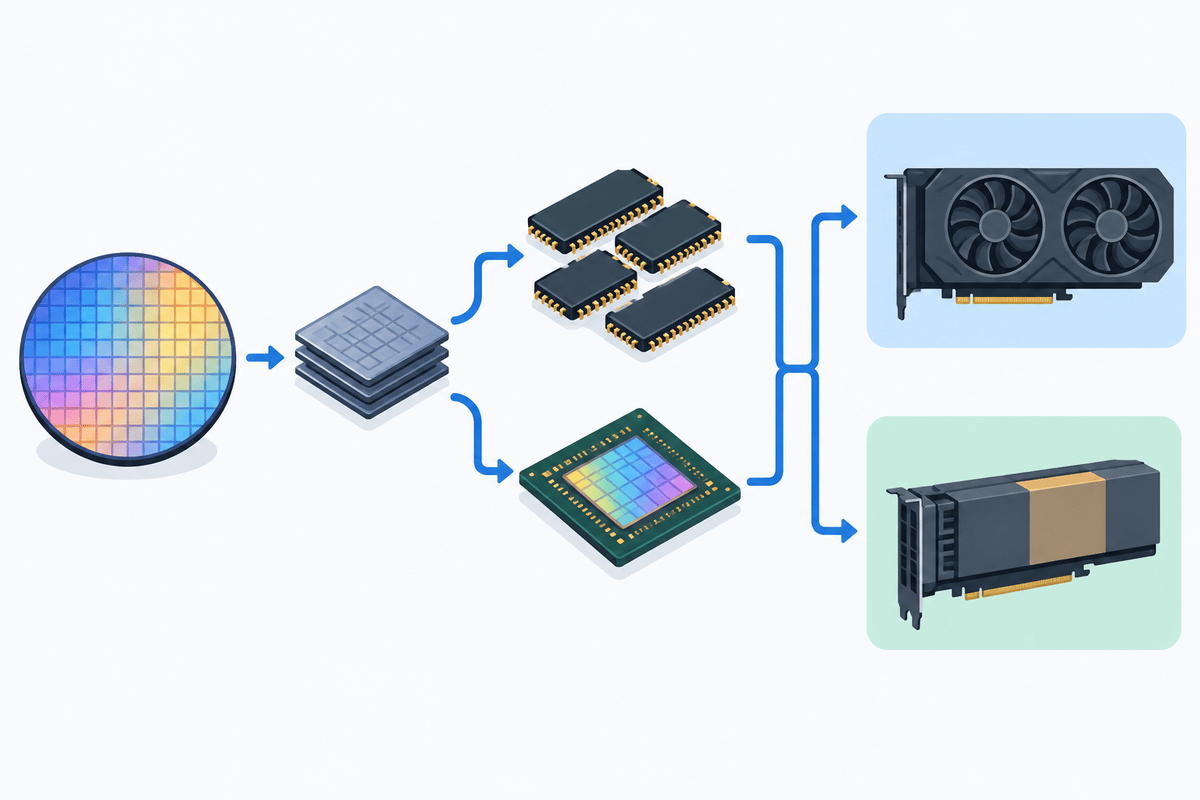
Memory makes the connection more complicated than the popular version suggests. Data-center AI accelerators use high-bandwidth memory, or HBM. The RTX 5090 uses GDDR7. These are different memory technologies; an HBM shortage does not automatically mean the same chips were taken away from a GeForce production line.
But HBM consumes substantially more wafer capacity per gigabyte than conventional memory. Expanding AI memory output therefore puts pressure on manufacturers’ capacity and allocation decisions. The wider semiconductor ecosystem also has constraints in fabrication, packaging, substrates and logistics. Different products can feel pressure from that ecosystem without sharing every component or production step.
That is enough to make AI demand relevant to gaming prices. It raises the opportunity cost of protecting gaming supply. It does not establish that Nvidia is redirecting finished retail RTX 5090 cards to AI customers, or that every unavailable card would otherwise have reached a gamer.
A useful AI card can still be a gaming GPU
I reject the claim that the RTX 5090 has effectively ceased to be a gaming card. Its appeal to local AI users and professional rendering workloads does not erase its gaming capabilities. The same 32GB memory capacity can be valuable to buyers with very different priorities.

That overlap can make an uncomfortable market for players. Someone buying hardware for productive work may evaluate the price against time saved or income earned. A gaming buyer is evaluating the improvement to an evening at a particular resolution and frame rate. Those buyers can reach very different conclusions about the same price tag.
But a plausible incentive is not a measurement of bulk purchasing. Stories about pallets of GeForce cards going into AI servers cannot, by themselves, explain the entire retail shortage. Treating that explanation as settled would give Nvidia’s own product positioning, limited reference-priced stock and reseller behavior an undeserved pass.
The player-facing result is bad enough without exaggeration: the fastest gaming card competes for resources and buyers beyond gaming, while the price a player can obtain may bear little resemblance to the advertised starting point.
Nvidia cannot make the launch price someone else’s problem
Not every RTX 5090 was supposed to cost $1,999. Board partners sell different coolers, factory overclocks and designs, and those models can carry legitimate premiums. The Founders Edition price is a starting point, not a promise covering every version.
Still, a better cooler does not automatically make a $1,200 premium sensible. Nor does a third-party seller’s markup become reasonable because the underlying GPU is fast. The extra money needs to buy something the player values. Scarcity alone offers no additional frames, memory or useful capability.
Nvidia says it continues shipping GeForce products and is working with suppliers to maximize memory availability. That is welcome, but my standard is practical availability at defensible prices. The launch MSRP loses much of its usefulness as a buying guide when the cards shoppers can obtain sit far above it.
The sensible upgrade has a price ceiling
I would consider an RTX 5090 around $1,999–$2,200 for a buyer specifically chasing maximum 4K performance, demanding ray tracing or a workload that benefits from its 32GB of VRAM. That is a modest premium over an already expensive baseline. It also assumes the rest of the system can accommodate the chosen card’s size and power requirements: the 575-watt rating belongs to the GPU, not the whole PC.
At $2,500–$3,200, the purchase needs a much stronger justification. For gaming alone, I would move down the RTX 50-series stack before spending another $501–$1,201 on scarcity. A high-refresh 1440p target or less demanding 4K setup deserves a comparison at those exact settings, rather than an automatic jump to the flagship.
The strongest exception is a buyer whose paid work benefits enough to recover the premium. That calculation can be rational. It also demonstrates why gaming buyers should resist adopting a professional buyer’s spending logic for their own upgrades.
Waiting carries no guarantee of a cheaper restock. If the current card already delivers acceptable performance, however, waiting avoids paying thousands extra for no additional hardware. At $4,000–$5,000 for gaming use, I would keep the existing GPU or choose a lower-tier replacement.
FinalBoss // Gear
Level up your setup
01Graphics cardson Amazon→02Gaming laptopson Amazon→03High-refresh gaming monitorson Amazon→04Discounted game keyson Kinguin→Affiliate links · As an Amazon Associate, FinalBoss earns from qualifying purchases.
Want to Level Up Your Gaming?
Get access to exclusive strategies, hidden tips, and pro-level insights that we don't share publicly.
Ultimate Gaming Strategy Guide + Weekly Pro Tips