
Table of Contents (10)
The short answer: best GPU pairings for a Ryzen 7 5700X
After spending way too many evenings swapping GPUs in and out of my Ryzen 7 5700X rig, the pattern became really clear: this CPU absolutely loves 1440p with mid-to-upper tier cards, and it really doesn’t make sense to go crazy with a 4090 unless you’re focused on 4K only.
If you just want the quick recommendations before the deeper breakdown:
- Best 1440p sweet-spot (AMD): Radeon RX 7800 XT – excellent 1440p performance, 16GB VRAM, matches the 5700X almost perfectly.
- Best 1440p sweet-spot (Nvidia): RTX 4070 Super – high FPS at 1440p, strong ray tracing and DLSS 4, minimal waste on a 5700X.
- “Stretch” high-end option: RTX 4070 Ti Super – good if you dabble in 4K, but expect some CPU bottlenecks at 1080p.
- Value 1440p/1080p hybrid: Radeon RX 7700 XT – great if you want cheaper 1440p now with room to grow.
- Budget-friendly pairing: Radeon RX 6750 XT – still a very capable 1440p/1080p card, especially if you find it discounted.
The rest of this guide is how I arrived at those picks, what they feel like in real games, and how to avoid the CPU bottlenecks I ran into when I over-bought on GPU power.
My 5700X test setup (and why 1440p is the sweet spot)
I’ve kept a Ryzen 7 5700X system as my “secondary” PC specifically to test GPUs on an older-but-still-relevant CPU. The rough spec:
- CPU: Ryzen 7 5700X (stock, with a decent 240mm AIO)
- Motherboard: B550 board with PCIe 4.0
- RAM: 32GB DDR4-3600 CL16
- Monitor: 27” 1440p 165 Hz + a 1080p 240 Hz side panel
- Games: Cyberpunk 2077, Doom Eternal, Warzone, CS2, plus a few AAA single-player titles
What finally clicked for me after testing both 1080p and 1440p is how differently the same GPU behaves with this CPU at different resolutions:
- 1080p (especially with a 240 Hz target) tends to be CPU-limited in many titles. The 5700X can feed a mid-range GPU easily, but cards above the RTX 4070 / RX 7800 XT tier start to “wait” on the CPU in fast, CPU-heavy games.
- 1440p shifts a lot more work to the GPU. Here, the 5700X holds up very well, and cards like the RX 7800 XT or RTX 4070 Super get to stretch their legs without the CPU getting in the way in most titles.
- 4K is almost always GPU-limited. The 5700X can still work here, but it makes less sense to chase 200+ FPS; you’ll usually be happy in the 60–120 FPS range depending on the card.
So I’ve ended up treating 1440p as the “native habitat” of the 5700X. That’s the resolution where the CPU still feels modern, and where it justifies a serious GPU without wasting money.
Best overall match: Radeon RX 7800 XT on a Ryzen 7 5700X
When I first dropped an RX 7800 XT into the 5700X system, it felt like the combo the CPU was always meant to have. Frame rates at 1440p jumped into that 100+ FPS territory in demanding games with high settings, but I didn’t see the tell-tale signs of heavy CPU bottlenecking that I got with very high-end cards.
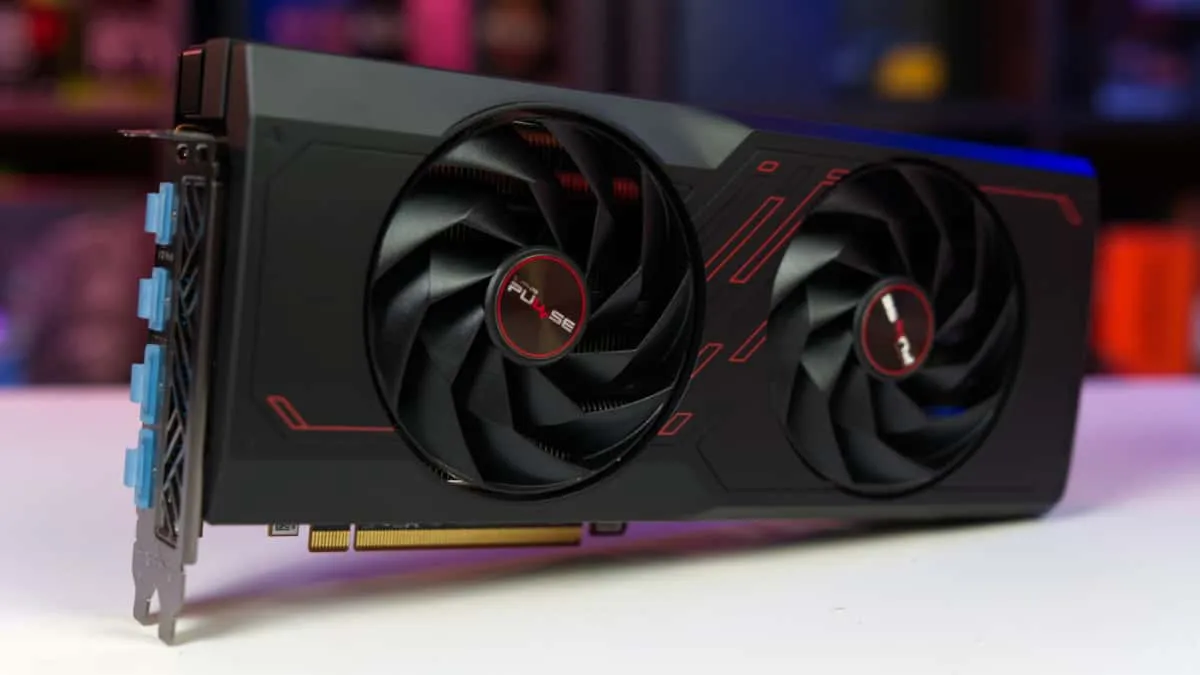
- Resolution target: 1440p high/ultra
- What it feels like: Smooth 100–140 FPS in many modern games with FSR upscaling where needed
- VRAM: 16GB – reassuring for heavier texture packs and future games
On the 5700X, the RX 7800 XT sits in that sweet zone where:
- The GPU is doing most of the work at 1440p.
- The CPU stays busy but not maxed out on a few threads.
- You don’t feel like you’re paying for potential you can’t use.
Don’t make the mistake I did early on and chase a top-end flagship “just in case.” With the 7800 XT, my 1440p experience was barely any worse than with much more expensive 4K-class cards on this CPU, especially once I tuned settings sensibly instead of forcing max everything.
Nvidia route: RTX 4070 Super vs RTX 4070 Ti Super
I tested both a 4070-class and a 4070 Ti Super with the 5700X, and this is where the balance question really matters.
RTX 4070 Super – better balanced for 5700X
The RTX 4070 Super hits very similar 1440p numbers to the RX 7800 XT, with noticeably better ray tracing performance and DLSS 4 frame generation as a bonus. Benchmarks I ran lined up with wider testing: triple-digit FPS in most modern games at 1440p with upscaling on, and very high FPS at 1080p where the CPU allows it.
- Pick this if: You want strong 1440p performance with ray tracing on and you play games that support DLSS.
- Bottleneck risk: Mild at 1080p in CPU-heavy titles, but generally fine at 1440p on the 5700X.
RTX 4070 Ti Super – when it’s worth stretching
The RTX 4070 Ti Super is where I started to feel the CPU ceiling on this platform. At 1440p and especially 4K, it’s fantastic: ultra settings, ray tracing, DLSS, and still high frame rates. But when I dropped down to 1080p on a 240 Hz screen, the GPU often had headroom while the 5700X was already tapped out.
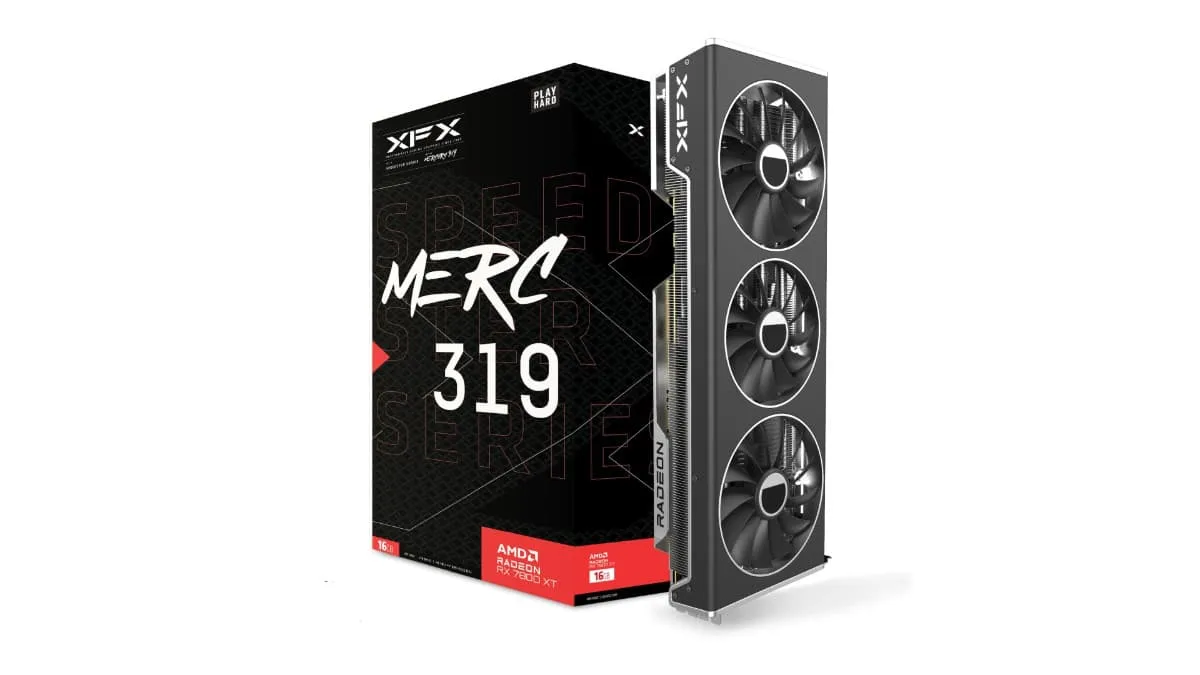
- Pick this if: You want to dabble in 4K now or plan to upgrade to a higher-res monitor soon, and you’re okay with some CPU bottleneck at 1080p.
- Avoid if: Your main goal is ultra-high refresh 1080p; the CPU will limit you before the GPU does.
The key lesson from testing both: for a pure 1440p-focused 5700X build, the 4070 Super usually makes more financial sense. The 4070 Ti Super only really pays off if you’re serious about 4K or want maximum ray tracing headroom for the next few years.
Ryzen 7 5700X + RX 7700 XT: the value 1440p pairing
The RX 7700 XT is the card I underestimated the most. On paper it looks like an awkward middle child, but on the 5700X it ended up being one of the most sensible “value” combos I tried for 1440p.
- Resolution target: 1440p high (mix of high/medium in the heaviest titles)
- Performance feel: Typically 80–120 FPS at 1440p with sensible settings and FSR 3 in heavier games.
- Why it works so well: The 5700X can easily keep it fed, even at high refresh 1440p, without the CPU falling behind.
Compared to the 7800 XT, you give up some headroom and VRAM (12GB vs 16GB), but in actual gameplay on this CPU, the difference felt smaller than the price gap in many regions. If your budget is tight but you still want 1440p to feel “next gen” compared to 1080p, this pairing is a smart move.
Budget-friendly: RX 6750 XT still makes sense
When I dropped down to the RX 6750 XT, the whole system started to feel “balanced budget” instead of “maxing 1440p,” but in a good way. This is where the 5700X shows it doesn’t need the latest GPU to deliver a smooth experience.
- Best use case: 1080p ultra or 1440p high/medium, especially in fast-paced shooters.
- Performance feel: High frame rates in esports titles like CS2 and Rainbow Six at 1080p, and solid 60–100 FPS at 1440p in many AAA games with tuned settings.
- Bonus: Being an older RDNA 2 card, prices can be very attractive on sale or second-hand.
The only real downside I hit was weaker ray tracing compared to Nvidia’s offerings and the newer RDNA 3 cards, but for a budget-conscious 5700X build aimed at high-refresh 1080p or “good enough” 1440p, it still earns its place.
What actually bottlenecks a Ryzen 7 5700X?
I learned this the hard way by borrowing a friend’s RX 7900 XTX and later an RTX 4080 for testing. On paper it sounded amazing; in practice, at 1080p it was like owning a hypercar you only ever drive in city traffic.
- At 1080p: GPUs at or above RX 6800 XT / RTX 4080 levels are often heavily CPU-limited in modern titles on the 5700X, especially if you’re chasing 200+ FPS.
- At 1440p: The bottleneck eases, but you’re still not using the full potential of a 4090-class GPU with this CPU in many games.
- At 4K: Those monster GPUs finally make more sense, but by then you’re in a price bracket where a platform upgrade (to a newer CPU and board) starts to look tempting anyway.
The practical takeaway: with a 5700X, I’d stop around the RTX 4070 Ti Super / RX 7800 XT tier for gaming. Anything above that is more about bragging rights than actual, noticeable gains at 1440p.
How to choose the right tier for your 5700X build
When I help friends tune their 5700X builds, I usually walk them through this quick decision path based on the testing I’ve done:
- You mainly play competitive shooters at 1080p 144–240 Hz
Focus on a mid-range GPU (RX 6750 XT, RX 7700 XT, RTX 4060 Ti, RTX 4070). Your limits will usually be the CPU and your aim, not the GPU. - You want “buttery” 1440p in single-player and mixed titles
Target the RX 7800 XT or RTX 4070 Super. These are the best-balanced cards for a 5700X in 2026. - You want 1440p now, 4K later, without changing GPU soon
Stretch to an RTX 4070 Ti Super or keep an eye on price drops of higher-tier AMD cards, but accept some CPU bottleneck in lighter games at low resolutions.
In all cases, remember that the 5700X is still an 8-core, 16-thread CPU that holds up well once you’re out of the ultra-high-FPS-at-1080p niche. Matching it with a sensible mid-to-upper-tier GPU gives you a system that feels fast now and doesn’t waste money on performance you can’t see.
FinalBoss // Gear
Level up your setup
01Graphics cardson Amazon→02Gaming laptopson Amazon→03High-refresh gaming monitorson Amazon→04Discounted game keyson Kinguin→Affiliate links · As an Amazon Associate, FinalBoss earns from qualifying purchases.
Want to Level Up Your Gaming?
Get access to exclusive strategies, hidden tips, and pro-level insights that we don't share publicly.
Ultimate Guide Strategy Guide + Weekly Pro Tips