
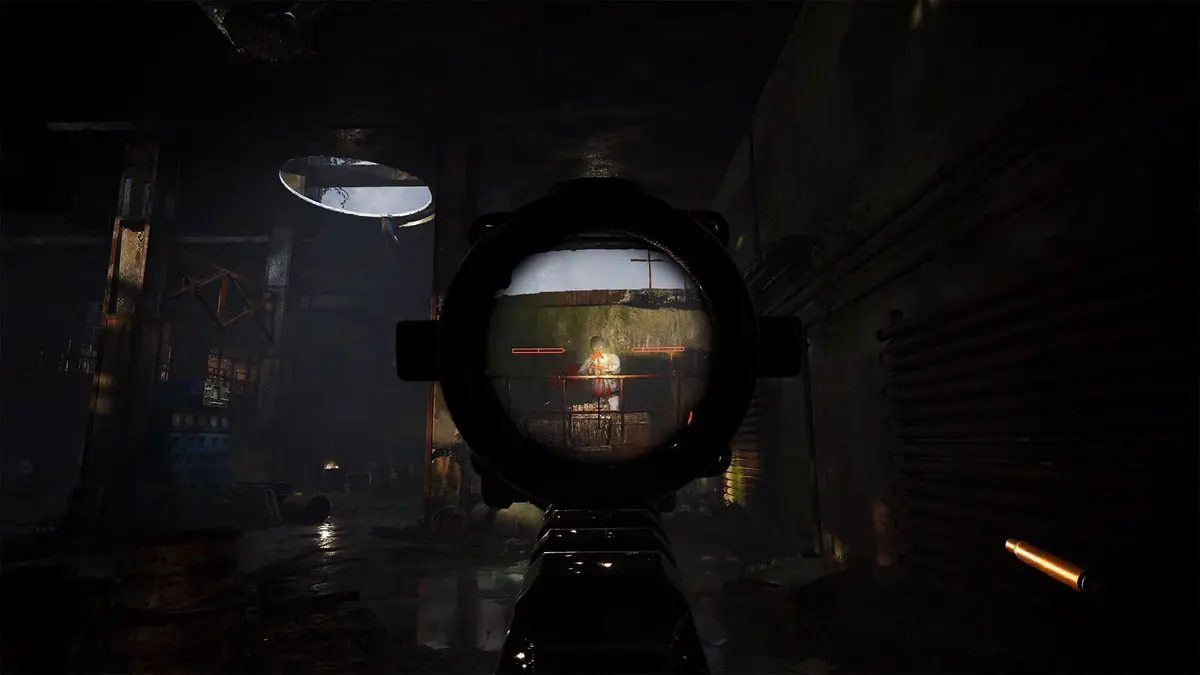
Two things landed on 20 August 2026. Cost of Hope, a paid story expansion for S.T.A.L.K.E.R. 2: Heart of Chornobyl at $29.99, €29.99 or £24.99, free with the Ultimate Edition. And Update 2.0, Back to the Zone, free, which moves the game onto Unreal Engine 5.5.4 and rewrites how the Zone behaves when you aren’t looking at it. Most of the conversation treats the DLC as the headline. It isn’t. Update 2.0 is the headline; Cost of Hope is the reason you’ll reinstall to see it.
Table of Contents (6)
The Iron Forest Is the Best Space GSC Has Built Since Launch
You get pointed at the Slag Heap, you talk to Chatterbox, he sends you toward the Iron Forest. The gates open mid-mutant-attack and you’re asked to help before anyone has explained what the place is. Small thing, right tone: this is a region with its own problems, not an extension of the map with a marker in it.
And it’s substantial: over twenty marked points of interest, five-plus side quests, two working hubs, stashes and environmental puzzles threaded between them. The one you’ll remember is Chief’s bunker, where Chief dances to classical music while running a private stash and a trading post, with a guide called Beethoven handling fast travel. The second hub belongs to Freedom, and it’s the first time in this game that Freedom feels like a faction with an address rather than a set of quest-givers.
The Iron Forest also lets go of you. When the first act ends the story asks you to wait roughly four in-game hours and points you at Rostok — and when you arrive you overhear Freedom soldiers discussing what just happened back in the forest. That costs GSC almost nothing and it’s the difference between a DLC in a corner of the map and one that belongs to the same world. Later stretches push you back across Zaton, and some of that is padding.
Mavka and Zulu Do the Work the Base Campaign Wouldn’t
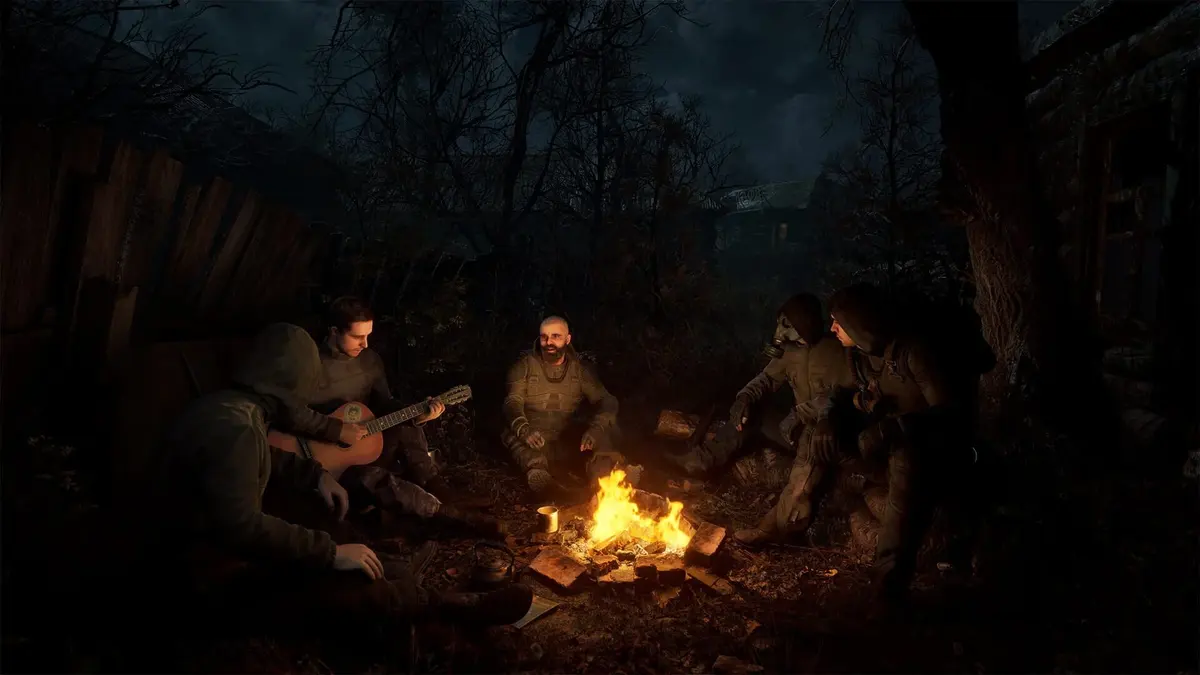
The English voice acting is on a different level to the base game and the facial animation has had a pass. Mavka is the reason: funny, charming, genuinely nasty when the situation asks. Zulu is the hot-headed counterweight, harder to like early, and the tension between them is the spine of the whole thing. Duty and Freedom split over a technology hidden in the Zone — one side thinks it could heal the world, the other thinks the world needs protecting from it — and you don’t need a decade of series knowledge to follow the argument.
There’s a real split on whether the choices pay off — one read is that the cast is thin, personalities are faction badges, and the half-truths people feed you never resolve; the other is that both endings land and the cast is the best thing here. I’m on the second side with a caveat: the writing works because Mavka and Zulu are written, and the further you get from those two the more the first criticism bites. Several important characters are underused, and the open war between Duty and Freedom ignites far too late.
The fork arrives in a quest called The Destructive Power of the Mind, around eight hours in. Make manual saves in separate slots when Mavka and Zulu are both on screen; don’t trust an autosave. Each route runs another four to eight hours. Freedom has the better missions and rewards; Duty has the stronger supporting cast. Once you commit, the other side shoots on sight, which gives the decision presence in the world instead of a line in an epilogue.
SIRCAA, Lymansk, and the Rooms You Can’t Go Back To
The second half gets experimental. SIRCAA mixes mercenary firefights with movement challenges built around rotating fans, and one water section floods while an anomaly closes in behind you — the most creative set piece GSC has built in years. Lymansk goes elsewhere: rooms rearrange after you leave and return, and it tips into actual horror. The jump scares are cheap and the puzzles slow the campaign, but the place is superb.
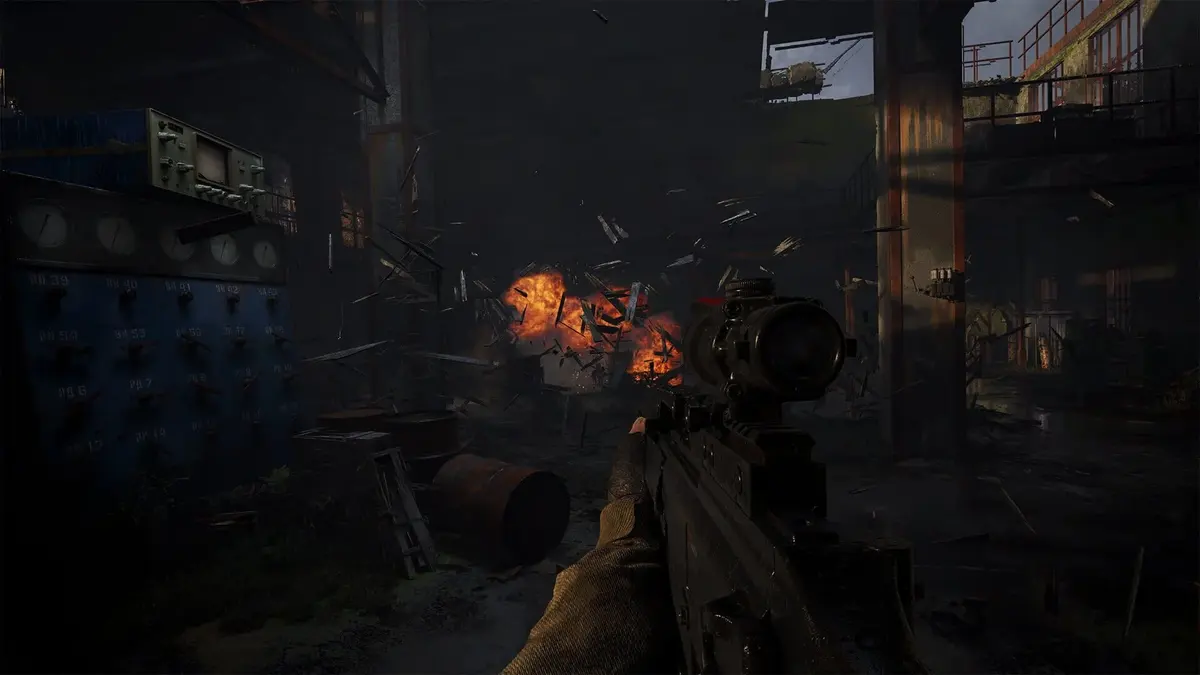
The Radiowave Institute pulls the threads together, with returning faces and a mutant GSC kept out of the marketing entirely. X-16 is bigger than you remember, with encounters pushing close to twenty mutants at once — exciting, and also trading S.T.A.L.K.E.R.’s slow dread for crowd control. The structural complaint is simple: Lymansk and the Radiowave Institute are campaign locations, not permanent regions, and given the work visibly in them, that’s a waste. The Chornobyl Nuclear Power Plant is the showstopper and arrives far too late; its interior is recreated room by room and you’re inside it for a fraction of the runtime.
The new hazards beat the new guns. The Flare anomaly turns up in the Iron Forest and again at the CNPP, blowing the screen out in yellow and changing how you cross a space, and one faction route weaponises it against the other. A later mission drops you into a red mist that stops mutants tracking Skif by scent while also being lethal, the best risk-reward idea in the package. Nearer the end an anomaly grabs Skif outright, drains him and seals routes. The Svarog detector you earn through the campaign has a readable display and long range, and doubles as a story tool. The Kadaver is the marquee new mutant: it charges, it jumps, two heavy melee hits end you — legible after two fights, and mostly scripted rather than roaming.
Update 2.0 Is the Thing That Actually Changed
A-Life 2.0 is why this update matters. The simulation radius has been pushed out, so skirmishes happen outside your view and resolve without you — walk over and you find the aftermath. Enemies no longer materialise behind you; they walk in from somewhere. Best example of what that unlocks: sheltering from an emission, a hostile Ward member runs into the same building, recognises you, opens fire, and everyone else inside assumes you’re the threat and starts shooting too. Total chaos out of the most routine action in the game. Add the Clear Sky-style faction territory war and the Zone finally has business of its own. It isn’t clean — stalkers still sink into the ground on patrol — but the direction is clear.
The fog is the other big one and it isn’t cosmetic. It drains the colour out of everything and genuinely makes people and creatures harder to see and hear — them as well as you, so stealth is viable in places it wasn’t. The map-wide foliage rework is more contentious: some regions look extraordinary, others got too vibrant, and the bright flowers next to rusted containers at the Slag Heap are a step too far. The relit bases are the same trade — far easier to navigate, far less oppressive, and the Zone loses a little for it.
The four new guns — the Arev assault rifle, the GP3A, the SKP designated marksman rifle and the Fora submachine gun — are Update 2.0 additions, not DLC rewards; Chief stocks all four and the same kit turns up at Yaniv. The SKP is the standout, alongside a new 3x Western scope and Eastern red dot, and the A-91 carried by the expansion’s new enemy types has a distinct enough sway and attachment set to be more than a reskin. Most of the actual DLC weapons are variants of existing platforms, so don’t buy for the arsenal.
Performance is the quiet win. A 4080 Super gains roughly ten percent and pushes up to 115fps at 4K with DLSS balanced and 2x frame generation, and the traversal stutter is mostly gone. A Ryzen 7 7800X3D with an RX 7800 XT clears 70fps at 1440p with headroom to raise textures and volumetric lighting while holding a locked 60 without frame generation, and FSR 4 on balanced is a far better fidelity-per-frame deal than before. An RTX 5090 at 4K max sits above 100fps, the CNPP’s Duty-versus-Freedom set pieces being the heaviest load. Console numbers aren’t in yet.
What Is Still Wrong With It
LOD popping is still bad, and the black silhouette line that loads vegetation ahead of you on a slope survived the engine change. Interior-to-exterior transitions still blow the exposure out both ways. Mavka and Zulu’s hair flickers and shifts colour under some lighting, group movement is awkward, cutscenes are janky. Late-game mercenaries in high-tier helmets eat multiple headshots, and your companions stand in your firing line as often as they help. And of the twenty-plus side quests scattered around, some vanish as the campaign advances.
Is $29.99 Fair
Yes, and the eight-to-ten-hour figure doing the rounds measures the wrong thing: eight hours is where the faction decision lands, not where the expansion ends, and each route adds four to eight more. A normal first playthrough runs fifteen to twenty hours, and the second route takes it close to thirty. That’s Phantom Liberty territory for half the price, with better writing than any questline in the base campaign. If you already like this game, buy it. If you bounced off S.T.A.L.K.E.R. 2 over the travel or the mutant packs, none of that has been redesigned — but install Update 2.0 anyway, because it’s free and it’s the better argument.
S.T.A.L.K.E.R. 2: Cost of Hope
It’s an 8 because the Iron Forest, Lymansk and the CNPP are the best-built spaces in this game and Mavka and Zulu are the first characters in it worth listening to — and it isn’t a 9 because the fighting underneath all of that is still bullet-spongy mercs and mutant packs GSC never redesigned. Fifteen to twenty hours for a first run, close to thirty if you go back for the other faction route, at $29.99. Add the free Update 2.0 on top and this is comfortably the best the Zone has ever been.
- Iron Forest: 20+ POIs, five side quests, two hubs
- Mavka and Zulu, and the voice acting behind them
- A-Life 2.0 finally generates its own chaos
- Lymansk’s shifting rooms and the flooding water sequence
- Fog that hides you as well as them
- Lymansk and Radiowave Institute can’t be revisited
- CNPP arrives far too late in the campaign
- Mercs in high-tier helmets eat multiple headshots
- Duty-Freedom war only ignites in the final hours
- LOD pop-in and blown interior-to-exterior exposure remain
Install Update 2.0 first — it’s free, and it’s the bigger change. Then buy Cost of Hope, because it’s the only thing that will actually get you back out to the Iron Forest to see what the Zone does now.
FinalBoss // Gear
Level up your setup
01Top-rated gaming headsetson Amazon→02High-refresh gaming monitorson Amazon→03Gaming chairson Amazon→04Discounted game keyson Kinguin→Affiliate links · As an Amazon Associate, FinalBoss earns from qualifying purchases.
Want to Level Up Your Gaming?
Get access to exclusive strategies, hidden tips, and pro-level insights that we don't share publicly.
Ultimate Reviews Strategy Guide + Weekly Pro Tips