
Table of Contents (8)
Waking up broke, bloody, and weirdly excited in Tyndalston
The moment Samson McCrae stepped out of prison and into Tyndalston’s sickly yellow streetlights, something clicked for me. This wasn’t another sprawling “do everything forever” open world. It felt tighter, meaner – like someone took the vibe of Max Payne’s New York, jammed it into a mid-budget brawler, and said: “You’ve got a debt to pay and not nearly enough time.”
I’ve spent a handful of in-game days with Samson: A Tyndalston Story on PC, enough to feel the rhythm of its debt-driven loop and, more importantly, enough to get my nose broken a few times. It comes from Liquid Swords, a studio led by folks who previously worked on Just Cause and Mad Max, but this isn’t their attempt at another chaos-in-a-continent sandbox. This is a compact, deliberately scoped crime story that lives or dies on three pillars:
- Brutal, weighty melee combat
- Chunky, risk-reward driving
- A day-by-day mission loop built around a growing debt
On paper that sounds almost modest compared to the usual open-world checklist. In practice, that focus is exactly what makes Samson stand out.
Tyndalston: a small UE5 city that feels lived-in, not bloated
The first surprise is how good this thing looks for a non-AAA project. Unreal Engine 5 gives Tyndalston a grimy, fluorescent sheen – that very ‘90s, nicotine-yellow glow that older office lights and corner-store signs used to have. It’s not a postcard city. It’s cracked concrete, wet asphalt, and old brick that looks like it’s absorbed too many bad nights.
Samson’s character model sells the tone: heavy coat, tired eyes, the kind of broad-shouldered silhouette that makes sense once you start throwing haymakers. Cars have that boxy, late-20th-century charm; nothing sleek or futuristic, just anonymous sedans and burly muscle that feel ripped from VHS action tapes.
What you don’t get is size. Tyndalston isn’t a massive sprawl of districts. At least in the slice I played, you’re moving through a relatively tight chunk of city – a few blocks of apartment-lined streets, clubs, gas stations, and industrial corners. There aren’t crowds of chatty NPCs or endless side diversions. No jazz clubs to buy or real estate empires to build. And that’s the point.
The city is more stage than sandbox: driveable, explorable, dotted with small interaction points (notes in Samson’s apartment, signs you can slam your car through for a tiny nitro refill), but ultimately there to serve the day-to-day grind. It reminds me less of modern GTA and more of those early-2000s cities that suggested more than they showed – enough ambience to feel real, not enough bloat to waste your time.
The budget seams are visible if you look for them. Big story beats are delivered via voiced motion-comic panels rather than full mo-capped cinematics, and the voice acting is… fine. Serviceable, occasionally stiff, never so bad it ruins a scene but definitely not on the level of top-tier crime dramas. It fits the mid-budget grindhouse angle, even if I occasionally wished for a bit more punch in the performances.
Debt, days, and decisions: living inside Samson’s mission loop
Samson’s central hook is simple and mean: you owe dangerous people a chunk of cash after a robbery in St. Louis went sideways. Your sister Oona kept you alive by cutting a deal, and now every sunrise in Tyndalston arrives with a bill. Miss the daily payment and things escalate fast.
The game structures this through a day-night cycle broken into segments: afternoon, evening, and night. Each job you take eats up time and draws from a limited pool of Action Points, so you’re constantly weighing options. Do you take a high-payout but risky gig that might chew through your car and your health, or a safer, shorter job that leaves space for one more hustle before bed?
On my second in-game day, that tension really sank in. I had three potential jobs on the board:
- Rough up the manager of a club called Chubs
- Shadow a bookie named Dave to see who he’s betraying
- Go after a pair of late-paying drivers and wreck their cars
Shadowing Dave sounded stealthier and more interesting than another straight-up brawl, so I burned my afternoon following his beat-up ride through traffic, keeping just enough distance that he wouldn’t spook and trigger a fail state. When he finally landed at his little side-operation spot, the “investigation” turned into exactly what you’d expect: fists, floorboards, and a couple of bruised associates.
By the time I got paid out, the clock had rolled into evening. I’d spent most of the day on one job and now had to pick between the remaining two. Going after the dodgy drivers promised more cash, but my car was already limping from earlier abuse and I knew repairs would cut into my payday. Do I eat the cost now and gamble on a smoother run, or squeeze one more mission out of a nearly dead ride and hope it holds together?
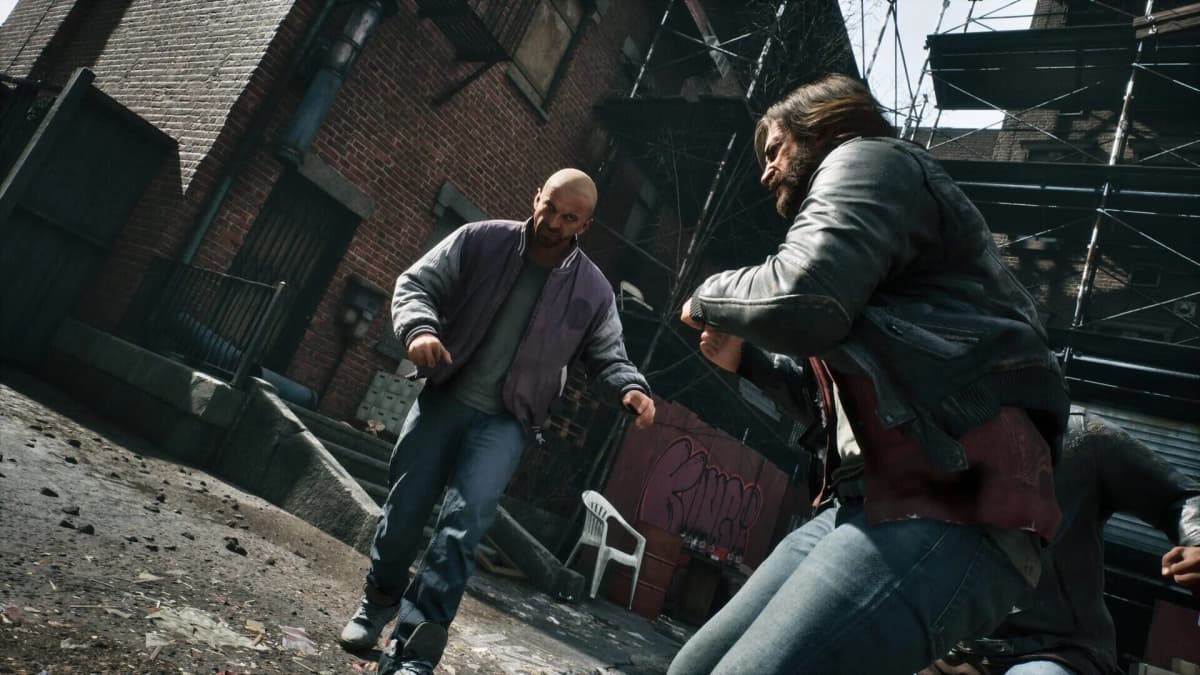
That’s the loop at its best: this constant juggling of risk, wear-and-tear, and the relentless, ticking debt. Samson isn’t about drowning in icons; it’s about a few carefully chosen jobs each day that actually matter. Every failure stings because you’ve wasted precious time and Action Points, not just lost a bit of XP.
Fists first: heavy, lethal melee that actually respects contact
The absolute star of the show so far is the melee combat. If the Batman: Arkham games set the gold standard for smooth, combo-based brawling, Samson deliberately swerves in another direction. This is chunkier, slower, and far more grounded. Every swing feels like it carries weight, and crucially, people don’t soak up a dozen hits like rubbery punching bags.
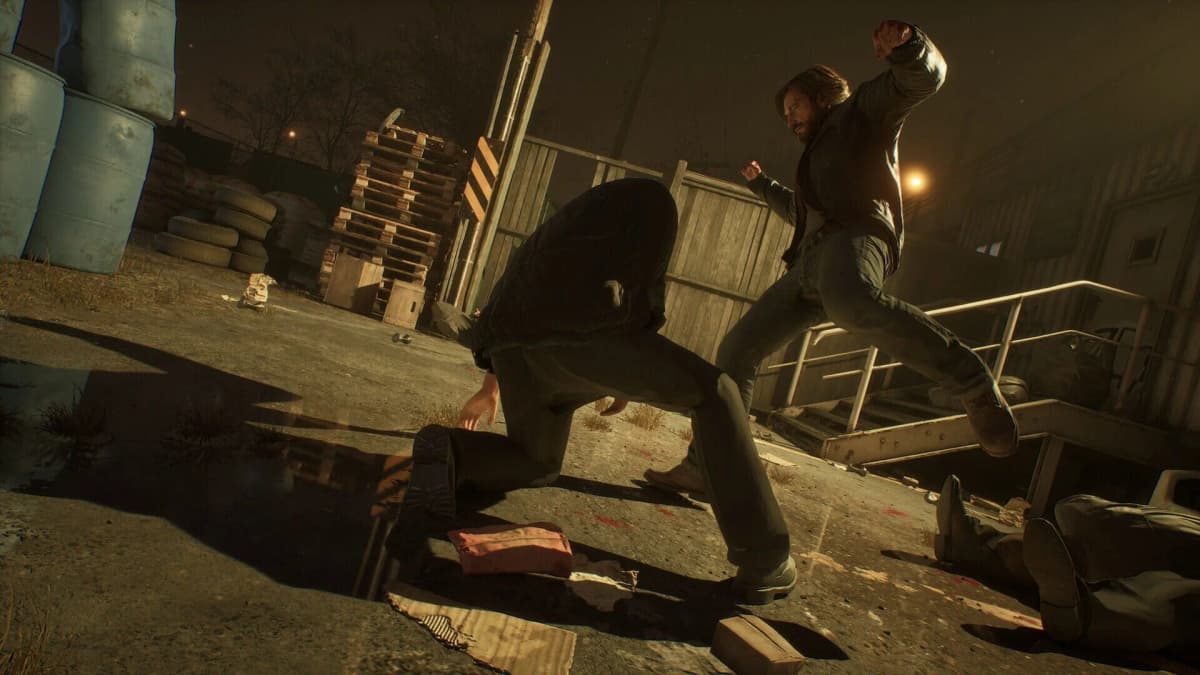
The first time I landed a charged heavy punch on a club goon in Chubs, Samson’s fist connected with a sickening crunch, and the guy just crumpled. One hit. His face smeared with blood, fight over. Not every enemy goes down that quickly – tougher types can absolutely take a beating – but the fact that one-hit knockouts are even on the table changes how you play. You’re not just thinking about building combos, you’re looking for moments to line up those decisive crushers.
Mechanically it’s a mix of light and heavy strikes, dodges, and parries. Parrying in particular feels great: nail the timing and Samson shoves attackers off-balance, opening them up for a counter that genuinely looks and feels nasty. Mess up and you eat damage that matters. There’s no sense that Samson is a superhero; he takes hits as brutally as he dishes them out, and a couple of sloppy mistakes can turn a simple hallway scrap into a desperate scramble.
Sitting on top of this is an adrenaline system. Landing blows and fighting cleanly fills a meter; trigger it and Samson enters a short, souped-up state where attacks hit harder and the flow shifts in your favor. It’s not some flashy devil-trigger transformation – more like ratcheting the tension up to 11 for a few heartbeats. I found myself saving it for moments when I was outnumbered in tight spaces, turning what could’ve been a slog of trading blows into a quick, vicious cleanup.
There are also hints of improvised brutality. Certain environments let you batter enemies around destructible scenery, and the way walls chip or props splinter under duress feeds that ‘90s action movie fantasy. From what I played, guns stayed holstered or outright absent, and honestly, I didn’t miss them. The whole design leans into closing distance, reading attacks, and putting someone down fast. Introducing firearms later might make sense narratively, but I’d be perfectly happy if Samson remains a punch-first, shoot-maybe kind of game.
Driving like it’s 1995: chunky cars, nasty crashes, meaningful repairs
When you’re not caving in skulls, you’re behind the wheel of period-appropriate clunkers. Samson’s own ride is a big ‘70s-style muscle car – the sort of two-door beast that looks like it drinks gas for sport. Handling sits squarely in the arcade camp: you’ve got a dedicated side-slam move for ramming, a nitro boost for those “I really need to end this chase now” moments, and a handbrake that lets you whip the tail out around corners once you get a feel for its heft.
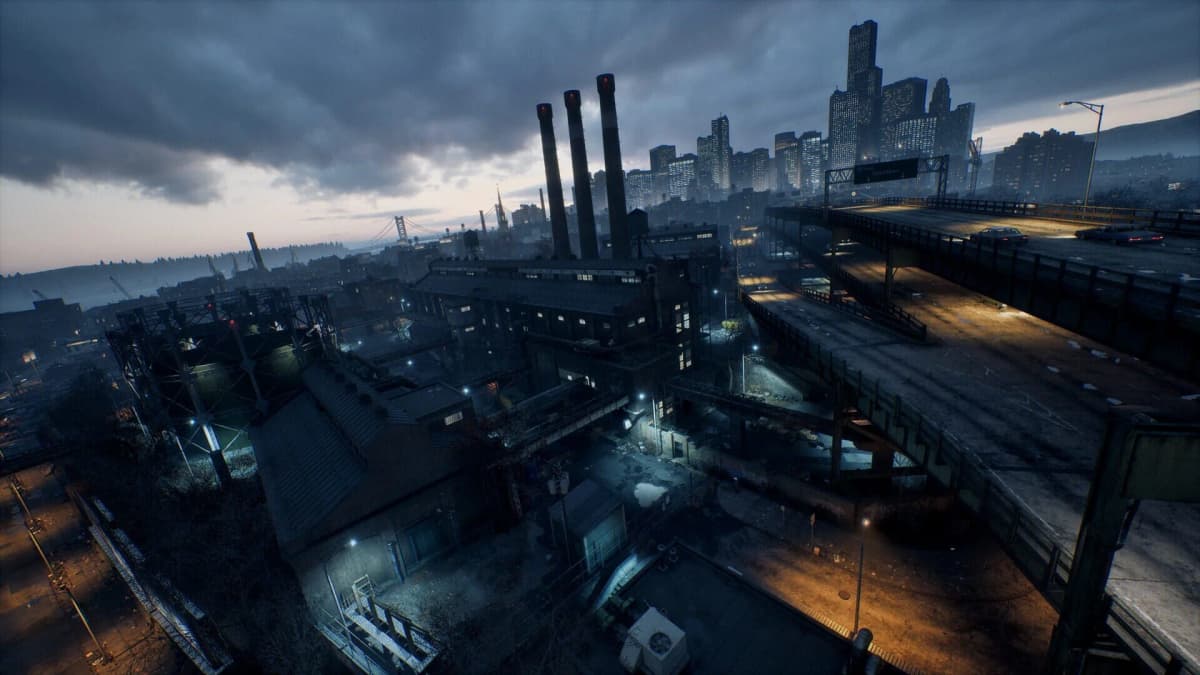
The cars feel heavy in a good way. They lean, they screech, and when they hit something, they don’t just politely bounce off. There’s a part-based damage system under the hood, so you progressively tear bumpers and panels off rather than instantly exploding. Smashing into a target at speed can total them in spectacular fashion, but it’s entirely possible to cripple your own car in the process.
One mission made that painfully clear. I was tasked with stopping two debt-dodging drivers. I’d already abused my car earlier in the day, which turned out to be a mistake. I slammed the nitro and body-checked the first target on a freeway on-ramp, sending both our cars crunching into the barrier. His vehicle was finished. So was mine. The second car tore off into the city while I stood there in the wreckage, swearing at myself for not hitting the gas station before accepting the job.
On the retry, I did the smart thing: spent some precious cash on repairs at a service station first, then took the contract. Same ramp, similar hit, different outcome. This time my reinforced monster stayed barely intact long enough to run down car number two. That tiny decision – repair now and earn later, or risk failure to save money – is where driving and the debt loop meet in a satisfying way.
Crucially, the driving doesn’t feel like filler. You’re not just commuting between map markers; the car is both a weapon and a resource that can sabotage you if you treat it like a disposable toy. It’s closer to Mad Max’s road combat than Just Cause’s airy stunt-vehicles, but grounded in tighter city streets instead of wide-open wasteland.
Four stats, four ways to be Samson
Underneath all the punching and ramming sits a light RPG layer that does more than just creep numbers upward. Every bit of XP you earn from jobs and fights can be funneled into four core attributes:
- Instinct – boosts your adrenaline capabilities
- Tactics – increases your maximum health
- Aggression – bumps up raw damage output
- Cunning – improves finesse-based bonuses
In practice, this lets you tune what kind of brawler Samson becomes. I initially dumped points into Aggression and Tactics, turning him into a brutal, durable slugger who could trade blows and come out on top. That made early missions easier, but I quickly felt the absence of Instinct when my adrenaline meter crawled up at a snail’s pace.
Shifting a few levels into Instinct changed the feel of encounters. I was triggering my boosted state more often, ending fights faster, and taking fewer hits overall. You could just as easily lean into Cunning and play a more evasive, opportunistic Samson who dodges and counters rather than soaking punishment.
It’s not the deepest progression system in the world – at least early on – but it dovetails nicely with the core loop. Taking better jobs, surviving tougher fights, and choosing where to invest your growth all feed back into whether you can keep up with that daily debt. I’m curious how far it stretches across a full campaign, and whether later upgrades meaningfully alter movesets or just fatten stats, but the foundation is promising.
Where the seams show: budget, repetition, and unanswered questions
For all the praise, Samson absolutely wears its budget on its sleeve. The motion-comic storytelling gets the job done but rarely wows. The voice work ranges from decent to forgettable. And the slice of city I saw, while nicely detailed, doesn’t exactly scream variety just yet.
The structure raises questions too. That debt loop is brilliant for a few in-game days, but a full campaign lives or dies on mission variety. I enjoyed tailing Dave the bookie, shaking down the club manager, and running down deadbeats, yet there’s always the risk that “drive there, punch them, get paid” could start to blur together over 15+ hours.
There are hints of branching and consequences – some jobs only appear at specific times of day, some cost you money instead of paying out, and the world supposedly reacts to your choices – but I didn’t get far enough to really test how flexible that system is. Do different employers remember how you treated them? Can you meaningfully change who controls parts of Tyndalston? Those are big question marks.
Technically, what I played felt solid enough for a UE5 title, and the visual jank other games on the engine struggle with wasn’t front and center in this slice. Still, without hammering the late-game or busier areas, it’s impossible to say how stable the whole thing will be at launch.
And then there’s the elephant in the room: guns. So far, Samson is a purely melee-and-metal experience, which I loved. Whether firearms appear later, and how they interact with this heavy, grounded combat, could either elevate the stakes or dilute what makes the game special. The preview doesn’t answer that yet.
Who Samson: A Tyndalston Story is really for
If your favorite part of open-world games is wandering aimlessly, collecting trinkets, and getting lost for dozens of hours, Samson probably isn’t going to scratch that itch. This isn’t a second life in a supercity. It’s a focused, systems-driven crime story where every day is about a handful of decisions and the bruises that follow.
On the other hand, if you:
- Miss the grim, grounded tone of early-2000s crime games
- Prefer weighty, lethal melee over number-spongy enemies
- Enjoy the pressure of time management and resource juggling
- Like cars that feel like battering rams instead of toys
…then Samson is absolutely worth watching. At $24.99 on PC and with a release date set for April 8, it’s positioned as a mid-priced, mid-scope alternative to bloated blockbusters. From what I’ve played, that lane suits it incredibly well.
FinalBoss // Gear
Level up your setup
01Top-rated gaming headsetson Amazon→02High-refresh gaming monitorson Amazon→03Gaming chairson Amazon→04Discounted game keyson Kinguin→Affiliate links · As an Amazon Associate, FinalBoss earns from qualifying purchases.
Want to Level Up Your Gaming?
Get access to exclusive strategies, hidden tips, and pro-level insights that we don't share publicly.
Ultimate Reviews Strategy Guide + Weekly Pro Tips