
Table of Contents (10)
Samsung’s new M70H and M80H matter for one simple reason: Mini LED is finally showing up at prices that don’t feel ridiculous
Samsung’s latest M70H and M80H TVs are worth paying attention to because they answer a very practical buyer question: how much do you really need to spend to get into Mini LED, decent HDR features, and variable refresh rate support for gaming? The short version is surprisingly straightforward. If all you want is an affordable 4K TV with better backlighting than bargain-bin edge-lit sets and you mostly play at 60fps, the M70H is the interesting one. If you actually care about 120fps console modes, smoother PC gaming, and not buying something you’ll outgrow in six months, the M80H is the smarter buy.
A $349.99 Mini LED TV from Samsung is the kind of number that makes you stop and check whether a spec sheet got cropped wrong. That starting price applies to the 43-inch M70H, and it’s the headline for a reason. Samsung has spent plenty of time selling people on premium display tech, but this launch pushes Mini LED into far more normal territory. The mid-range M80H, starting at $699.99 for a 55-inch model according to Samsung’s launch positioning, matters for a different reason: it adds a native 144Hz VRR panel, which immediately makes it more relevant to gamers than the cheaper set.
There’s also a timing angle here that makes this more than a vague “coming soon” announcement. The newly announced models are broadly available now on Samsung’s website, with the notable exception of the upcoming M90H. So this isn’t one of those product reveals where the interesting model exists only as a slide in a keynote deck. If you’re shopping right now, these TVs are part of the conversation right now.
The specs that actually affect the buying decision
Before getting lost in branding, this is the part that matters. Not all Mini LED TVs are created equal, and Samsung’s own lineup makes that obvious. The M70H and M80H share the broad idea of more advanced backlighting at lower prices, but they split hard on refresh rate, gaming focus, and how aggressively Samsung is positioning them against pricier models.
Specifications
One important note on the M80H price: Samsung’s launch messaging places the 55-inch model at $699.99, but broader independent confirmation of the full size-and-price ladder was limited at the time these models were announced. That doesn’t invalidate the headline number, but it does mean buyers should treat that starting price as launch-positioning rather than fully mapped market reality until all sizes settle in.
The real story is not just “Samsung made cheaper TVs”
What makes this launch interesting is that Samsung is not simply cutting prices on generic 4K sets. It’s attaching Mini LED branding to the part of the market where people usually start doing uncomfortable math. You know the drill: do you buy the cheaper TV and accept weaker HDR, worse blacks, and obvious motion compromises, or do you stretch your budget by a few hundred dollars and end up rationalizing the purchase for weeks? The M70H and M80H are Samsung’s attempt to make that stretch feel smaller.
That said, budget Mini LED is still budget Mini LED. The fact that these sets use Mini LED backlighting does not automatically put them in the same class as Samsung’s pricier QN-series Mini LEDs. Launch reporting around the M-series points to a more modest approach here, including the absence of the quantum-dot enhancement Samsung uses to separate its more premium Neo QLED lineup. In plain English, that means you should expect the M70H and M80H to benefit from finer backlight control than a basic LED TV, but not to deliver the same color volume, brightness headroom, or overall HDR swagger as the higher-end models sitting a few rungs up the ladder.
This is the key trap buyers need to avoid: “Mini LED” tells you the backlight technology, not the whole quality story. Processing, local dimming behavior, peak brightness, panel quality, color performance, and input options still decide whether a TV feels cheap, balanced, or genuinely impressive. Samsung knows that, which is why the M80H exists at all. It’s there for buyers who need more than a headline spec.
The M70H is affordable in the right way, but it is not a secret esports TV
The M70H’s job is obvious: pull people into Samsung’s Mini LED ecosystem without asking them to start at an aspirational price. At 43 inches for $349.99, it instantly becomes relevant for bedrooms, dorm rooms, apartments, office-gaming hybrids, and anyone who thinks today’s giant-TV obsession has gone a little too far. Not every gamer wants a 65-inch screen dominating the room. A smaller 4K panel with better-than-basic backlighting can make a lot of sense.
But the refresh ceiling matters. A lot. The M70H tops out in the 50/60Hz class, with VRR up to 60Hz. That sounds decent on a feature card, and to be fair, it is better than having no VRR at all. Variable refresh rate around that range can still help smooth out the ugly little hitches that show up when a game bounces between, say, 45 and 60fps. For current-gen console players who spend most of their time in 30fps fidelity modes or 60fps performance modes, that’s not meaningless.
Where the M70H stops being exciting is when you look at what modern gaming systems can actually output. PlayStation 5 and Xbox Series X both support 120Hz modes in a decent number of games. You’re not getting that here. If a shooter, racer, or multiplayer game offers a 120fps option, the M70H is not the display that lets you enjoy it. So while Samsung can absolutely say this TV has gaming features, the honest framing is simpler: this is a living-room TV with gaming manners, not a gaming-first screen.
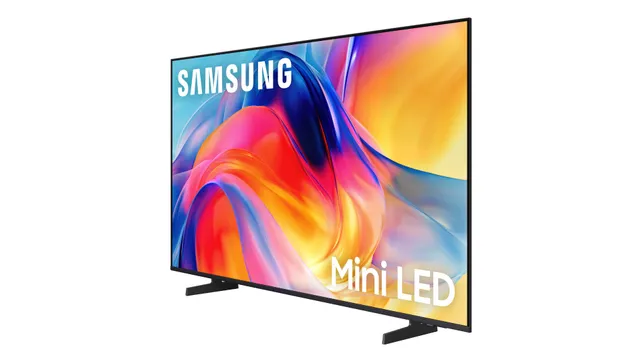
For Nintendo Switch owners, the picture changes quite a bit. The current Switch ecosystem is overwhelmingly 60Hz territory anyway, and for that audience the M70H makes a lot more sense. A 43-inch M70H in a smaller room could be a pretty sensible setup for Mario Kart, Zelda, indie games, streaming apps, and general everyday use. The combination of 4K output handling, Mini LED backlighting, and VRR support is much easier to appreciate when you’re not chasing high refresh rates to begin with.
The M70H is not a cheap M80H. It’s a different value proposition entirely: better backlighting at a low price, with just enough gaming support to avoid feeling outdated on day one.
The M80H is where Samsung starts speaking more fluently to gamers
If the M70H is the “I want Mini LED without spending too much” model, the M80H is the one that starts making competitive sense for people who actually care about frame rate. The upgrade from a 60Hz-class panel to a native 144Hz VRR panel is not a small checkbox change. It fundamentally changes who the TV is for.
For PlayStation 5 and Xbox Series X owners, the immediate benefit is obvious even if those consoles top out below 144Hz. A 144Hz-capable panel is comfortably positioned for 120Hz gaming, which means the M80H is the model that aligns with the better performance modes in supported games. If you like running Call of Duty, Fortnite, Halo, or racing titles in higher-frame-rate settings, this is the kind of TV that actually lets you use the features those systems advertise. The M70H does not.
For PC players, the gap is even wider. A 144Hz panel with VRR support is simply more flexible. It gives you more room for high-refresh gaming, smoother motion in general desktop use, and a setup that doesn’t immediately feel like a compromise if you’re connecting a gaming rig. Launch coverage also points to FreeSync support on the M80H, which is exactly the kind of thing you want to see at this level. It suggests Samsung knows this model will end up doing double duty as both a TV and a giant gaming display for some buyers.
The other part that makes the M80H more interesting is the mention of enhanced image processing compared with the M70H. That might sound like vague showroom language, but processing really does matter on TVs in this tier. Motion handling, upscaling quality, tone mapping, local dimming behavior, and how a set treats compressed streaming content all live and die by processing choices. On a TV that might spend its day switching between YouTube, a sports stream, a PS5 session, and a movie at night, that matters more than people often admit.
If I were choosing strictly for gaming, the M80H is the model that deserves attention. It is the one that looks less like Samsung testing the waters and more like Samsung trying to land a real hit in the mid-range.
Mini LED at this price still comes with asterisks, and that’s fine as long as you notice them
Mini LED is useful because it allows finer backlight control than a conventional full-array LED design with fewer zones. That can improve contrast, reduce the washed-out look that plagues cheaper TVs, and give HDR content a little more shape and punch. In games, that matters more than spec-sheet warriors sometimes admit. Bright HUD elements, dark corridors, neon signage, explosions, starscapes, cave interiors, nighttime driving-these scenes look dramatically better when the backlight isn’t just blasting the whole panel the same way.
But cheaper Mini LED implementations usually make their compromises somewhere. Sometimes it’s fewer dimming zones. Sometimes it’s weaker peak brightness. Sometimes it’s blooming around bright objects on dark backgrounds. Sometimes it’s just more conservative picture processing. Samsung’s M-series looks designed to give buyers a taste of Mini LED’s strengths without erasing the reasons the company can still charge more for its QN-series sets.
That matters for expectations. If you buy an M70H expecting flagship HDR fireworks, you’re setting yourself up for disappointment. If you buy it expecting a meaningful step above the kind of flat-looking cheap 4K TV that turns every dark scene into a gray soup, then it becomes a lot more sensible. The same logic applies to the M80H. Its 144Hz panel makes it far more attractive for gaming, but it doesn’t magically turn it into a top-tier home theater flex piece.
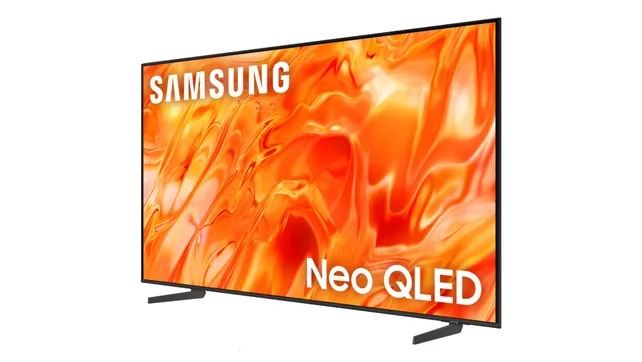
There’s nothing wrong with that. Honestly, the display market would be less confusing if more companies just admitted what tier a product actually belongs to. Samsung’s lineup separation is pretty readable here: M-series for lower-cost Mini LED access, QN-series for buyers who want the fancier color stack, stronger image ambition, and less compromise.
The three-HDMI-port limitation is the kind of annoyance that becomes a daily problem
One launch detail that deserves more attention than it will probably get in marketing copy is the HDMI count. Reporting around the M70H and M80H points to three HDMI inputs, not four. That might sound minor until you map it onto an actual living-room setup.
A lot of gamers are already juggling more hardware than TV makers seem to imagine. PS5. Xbox Series X. Switch. Maybe a soundbar. Maybe a streaming box because the built-in apps are fine until they aren’t. Maybe a gaming PC or handheld dock. With only three HDMI inputs, you run out of convenience very quickly. Even a relatively normal setup can hit the wall fast.
This is one of those cases where the spec doesn’t sound dramatic, but the real-world impact is immediate. A TV can have good gaming features and still become irritating if you’re constantly swapping cables or buying an HDMI switch to compensate for something that should have been handled at the factory. On a 43-inch budget TV, that tradeoff is easier to forgive. On a mid-range 55-inch gaming-oriented model, it’s harder to shrug off.
Three HDMI ports in 2026 feels less like a design choice and more like a quiet tax on anyone with more than one hobby. If your setup is simple, you’ll live with it. If your setup is not simple, factor the annoyance into the price before telling yourself the deal looks amazing.
Which model makes sense for actual console and TV use
The easiest way to think about these two TVs is not by brand hierarchy but by usage pattern.
- M70H makes sense if your budget is tight, your room is smaller, you care more about getting decent picture quality for everyday use than chasing 120fps modes, and your gaming is mostly Switch, story-driven console games at 60fps, or casual multiplayer.
- M80H makes sense if you own a PS5 or Xbox Series X and actually use performance modes, if you want a TV that won’t bottleneck a gaming PC, or if you’d rather spend more now than replace a “good enough” TV too soon.
- Neither is ideal if you need lots of HDMI ports, expect premium-tier HDR performance, or want the least compromise possible in Samsung’s lineup rather than the best value point.
There’s also a room-size angle here that shouldn’t get buried under gaming talk. A 43-inch M70H at $349.99 is genuinely relevant because compact TVs with decent gaming specs are weirdly under-served compared with the endless parade of 55- and 65-inch deals. For bedroom gaming, desk-side console setups, or smaller apartments, that size-and-price combo could be the whole story. Not everyone wants their TV to look like it was selected by a suburban real-estate developer.
On the other hand, the M80H’s starting point at 55 inches feels much more conventional, and that actually works in its favor. It’s easier to imagine as the main living-room display. It’s the one you buy when you want your movie nights, sports, streaming, and console gaming all served by the same screen without feeling like gaming got treated as an afterthought.
Buy now, or wait for deeper reviews and the rest of the lineup?
If the question is whether these models are worth watching immediately, yes. They are. Samsung putting Mini LED into sub-$350 and roughly $700 launch territory is a meaningful shift in how people will shop the brand. That part is real today, not theoretical.
If the question is whether you should hit the buy button without waiting for measurements, that depends on what kind of buyer you are. For the M70H, the pitch is simple enough that it mostly lives or dies on expectations. If you want affordable Samsung branding, smaller-size availability, better-than-basic backlighting, and 60Hz gaming with VRR, you already know what you’re shopping for. For the M80H, the case for waiting on deeper testing is stronger because mid-range gaming TVs live in a brutally competitive zone. Motion handling, local dimming behavior, input latency, and HDR impact will decide whether it merely sounds good or actually is good.
The upcoming M90H is worth knowing about, but it’s not really the story yet. It’s coming later, and giant-screen buyers are playing a different game anyway. For most people looking at this launch, the relevant question is whether Samsung’s cheaper Mini LED sets finally offer enough to matter. The answer is yes, with one important split: the M70H matters because it’s affordable, and the M80H matters because it might actually be the sweet spot.
FinalBoss // Gear
Level up your setup
01Top-rated gaming headsetson Amazon→02High-refresh gaming monitorson Amazon→03Gaming chairson Amazon→04Discounted game keyson Kinguin→Affiliate links · As an Amazon Associate, FinalBoss earns from qualifying purchases.