
Saros is Housemarque quietly admitting what a lot of players already knew: Returnal’s combat ruled, its structure didn’t. This time, the studio is bending its beloved bullet hell to serve the player instead of daring them to quit.
- The new Soltari Shield turns bullet hell into resource farming – standing in fire is now a viable strategy, not just a mistake.
- Eclipse phases and shorter runs target Returnal’s pacing problem without gutting the tension.
- Permanent lucenite upgrades promise real roguelite progression, but risk sanding down the pure, skill-first edge.
- Saros looks like “Returnal for people who bounced off Returnal” – if Housemarque nails the tuning, this could be their breakout.
Table of Contents (6)
Housemarque finally stops pretending the pain was the point
Returnal picked up awards and hardcore love, but it also built a reputation as a game that punished curiosity. Long, fragile runs, minimal persistent progression, and bosses you had to re-clear if you dared to put the controller down for the night. If you bounced, you weren’t alone.
Preview coverage of Saros paints a very different philosophy. Runs are reportedly closer to 20 minutes, levels are more direct, and there are shortcuts to bosses once you’ve proved you can beat them. There’s also lucenite, a persistent currency you keep between deaths that unlocks permanent upgrades and options.
This isn’t Housemarque selling out; it’s Housemarque finally respecting your time. The studio’s always been about razor-sharp arcade gameplay. Saros looks like an attempt to put that arcade loop in a structure more people will actually finish, instead of admire from a distance.
The tension point is obvious: the more you guarantee long-term power, the more you risk making early hours feel like a slog through underpowered runs just to “get to the real game.” That’s the line Saros is walking with lucenite.
The shield flips bullet hell psychology on its head
The most radical change isn’t the meta, it’s the moment-to-moment combat. Saros gives you the Soltari Shield – a dome you trigger (preview builds use R1) that blocks and absorbs incoming projectiles. Those bullets don’t just disappear; they’re converted into energy to charge heavy “power weapons” like rocket barrages and bullet swarms.
In other words: the thing that used to kill you is now ammo.
This completely rewires bullet-hell instincts. In Returnal, survival meant playing keep-away – constantly circling, diving through gaps, and treating dense patterns as red-hot floor lava. In Saros, early hands-on reports describe players sprinting into predictable bullet streams, popping the shield, soaking damage, then dumping that energy back as massive counterattacks.
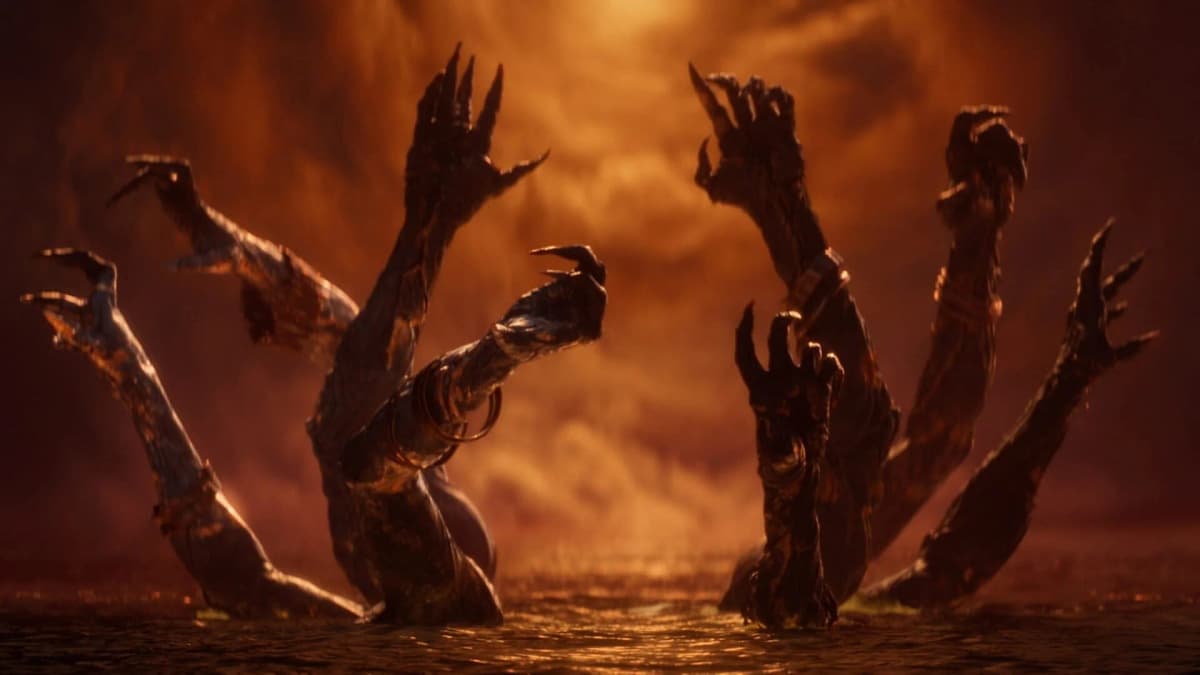
It’s still a dance – you can’t just turtle forever. The shield has limits, cooldowns, and things it doesn’t solve: melee swipes, lasers, unavoidable hazard spam. But the mental model changes from “never get hit” to “get hit my way.” Good players will read patterns and decide which barrages to eat, which to dodge, and when to turn a boss’s big move into free fuel.
Housemarque calls this a “bullet ballet” in previews, and for once the marketing line isn’t completely cringe. If Returnal felt like a constant emergency, Saros looks more like controlled choreography: block, absorb, retaliate, reposition. DualSense haptics and positional audio apparently lean into that rhythm, making the shield’s impact and the charged power shots feel distinct in the chaos.
The question I’d put to Housemarque’s designers: how easy is it to abuse this? If optimal play turns into standing in the middle of the arena face-tanking everything on cooldown, the whole bullet-hell identity collapses. The tuning between “aggressive” and “braindead safe” is going to define how high the ceiling really is.
Eclipse phases and lucenite: smart roguelite, or long-term grind?
The other big systemic changes are about keeping runs fresh and deaths meaningful. Eclipse phases are global shifts that periodically twist the biomes – think lighting changes, enemy behaviors, encounter tempo, and possibly environmental hazards all mutating as the story’s cosmic eclipse deepens.
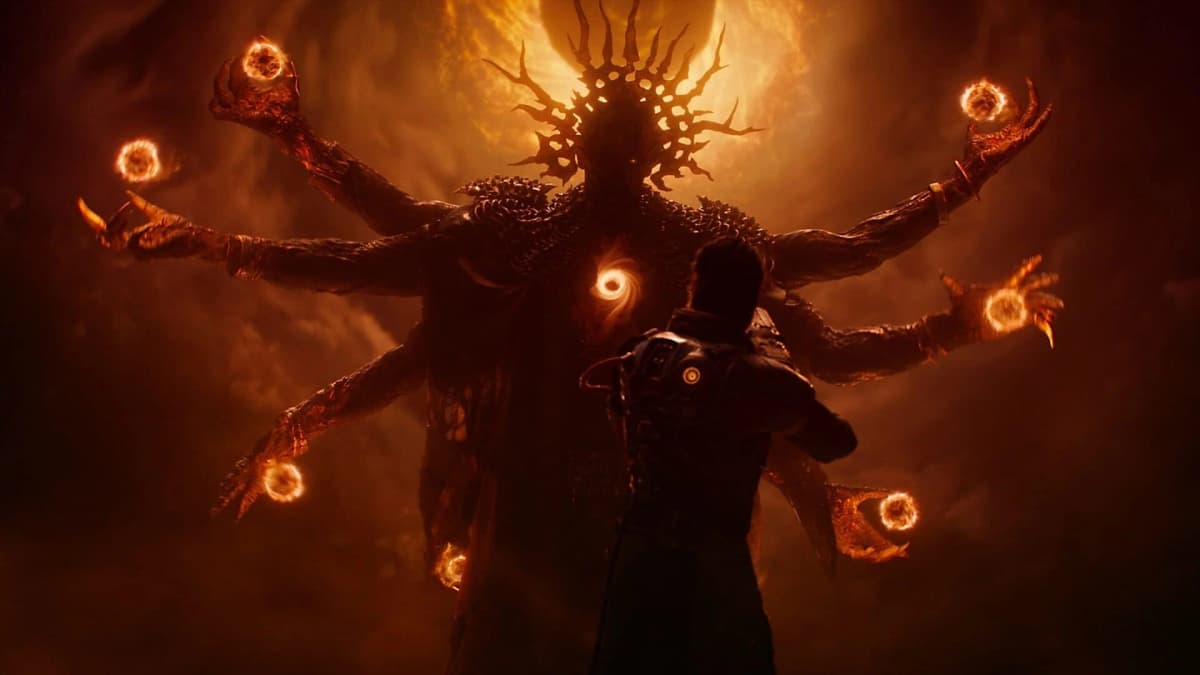
In practice, that means you’re not just re-running the same hallway with slightly different room order. A zone you breezed through one run might be nastier under a different Eclipse, or reward different risk-taking. For a studio often accused of repetition once you “solve” a combat loop, that’s a useful pressure valve.
Then there’s lucenite. Between runs, you use this permanent resource to unlock and upgrade things – more options, modifiers, power tweaks. Hands-on previews describe it as smoothing out the feeling that you’re smashing your head against a wall for nothing. Even a failed attempt pushes your account forward.
That’s the modern roguelite contract Hades and others have nailed: you play, you die, something tangible improves. The risk is when that “something” stops being variety and starts being raw power. If lucenite buys flat stat bumps that stack infinitely, Saros becomes a grind treadmill masquerading as a skill game. If it focuses on sidegrades, new toys, and mild safety nets, it can preserve that Housemarque edge while still feeling generous.
Right now, previews lean toward the optimistic read: a sense of progress without neutering difficulty, plus options to jump back to bosses once beaten. But until players hit hour 20 and we see whether late-game encounters still demand precision instead of just “more numbers,” this is a design bet, not a proven win.
Accessibility without losing the fear factor
Multiple hands-on reports say the magic trick Saros pulls off is this: people who bounced off Returnal “clicked” with Saros in minutes, without it feeling easy. More straightforward arenas, clearer objectives, and those ~20-minute runs mean you can make progress on a lunch break instead of booking a session around the possibility of losing an hour to one bad mistake.
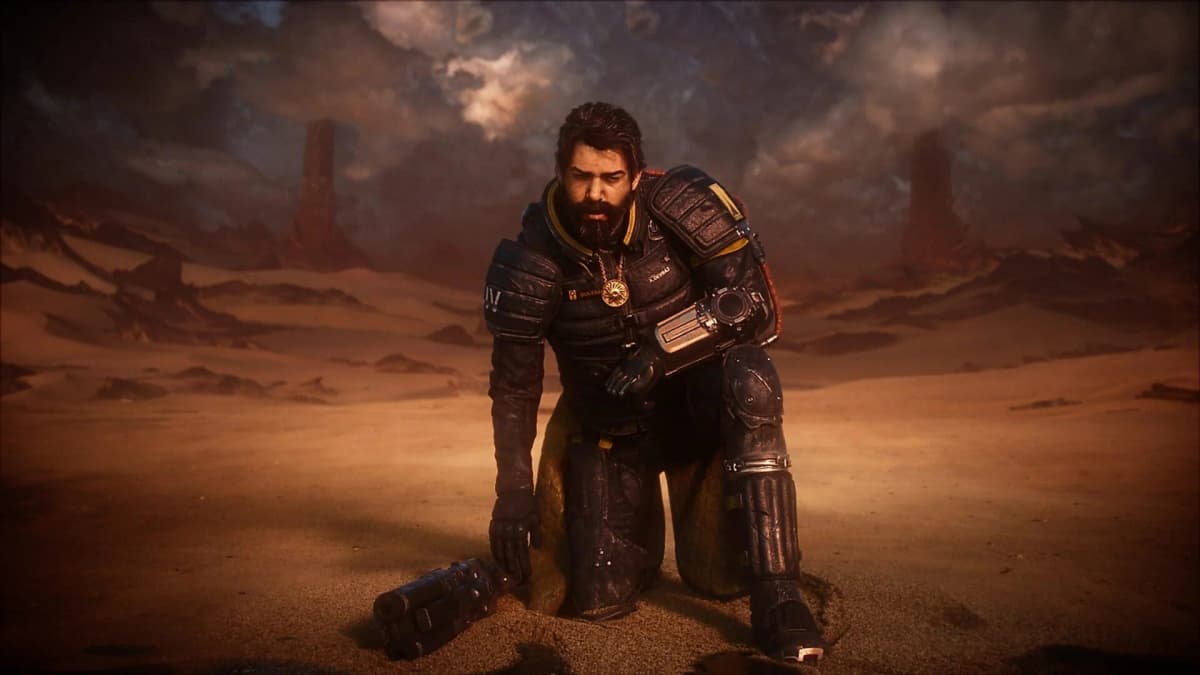
At the same time, the footage looks every bit as chaotic as Returnal at full tilt. Bosses fill the screen with layered patterns, enemies teleport and flank, and everything is tuned for constant motion. This is still a PS5-exclusive Housemarque shooter, not a casual mode slapped on a prestige project.
The uncomfortable truth is that most people never saw Returnal’s best stuff because the on-ramp was brutal. Saros looks like the studio asking a different question: not “how far can we push you?” but “how far will you come with us if we meet you halfway?”
The answer is going to depend on details: how generous shield timings are, how steep lucenite costs feel, whether Eclipse phases stay interesting after the tenth repeat, and how often the game lets you feel clever instead of merely surviving.
What to watch next
- Launch difficulty discourse – when Saros hits PS5 on April 30, 2026, watch whether players say “too soft” or “Returnal 2.0.” Either extreme means the tuning missed.
- How meta progression scales – if lucenite unlocks flatten the challenge curve after a week, the hardcore crowd will bail fast.
- Shield-centric exploits – the first dominant “stand in bullets and win” build will tell us how tight the combat design really is.
- Run length in practice – if those 20-minute runs creep up to 45 once you’re deep in, we’re back in Returnal territory.
- Post-launch support – new Eclipse variants or modifiers could keep this alive much longer than Returnal’s relatively static loop.
TL;DR
Saros takes Housemarque’s Returnal formula and rebuilds it around a projectile-absorbing shield, shifting Eclipse phases, and permanent lucenite upgrades. The goal is clear: keep the bullet-hell intensity while fixing the punishing structure and lack of progression that pushed many players away last time. If the shield stays skill-based and lucenite doesn’t turn into a grindy power creep, this could be the studio’s most accessible – and best – game yet.
FinalBoss // Gear
Level up your setup
01Best-selling PS5 gameson Amazon→02DualSense controllerson Amazon→03PS5 SSD upgrades (M.2 NVMe)on Amazon→04Discounted game keyson Kinguin→
Affiliate links · As an Amazon Associate, FinalBoss earns from qualifying purchases.
Want to Level Up Your Gaming?
Get access to exclusive strategies, hidden tips, and pro-level insights that we don't share publicly.
Ultimate Gaming Strategy Guide + Weekly Pro Tips