
Table of Contents (10)
Neon fumes, anime drama, and the first race that sold me on Screamer
The thing that finally convinced me Screamer was doing something different wasn’t the twin‑stick drifting, or the cyberpunk tracks, or even the weapons. It was a race about twenty minutes in, where the camera cut away from my car mid‑lap, slid into another racer’s cockpit for a fully voiced argument, then snapped back to my perspective without a single loading screen or hard cut.
I was mid‑drift as Hiroshi Jackson – the textbook hot‑blooded protagonist – when the story jumped to Aisha, one of his rivals. The race never stopped. The other cars kept tearing through the city at ridiculous speed, commentary blaring over the PA, and the scene played out like a sports anime episode happening in real time on the track. Thirty seconds later I was back in control, same position, same speed, no jank.
In that moment, Screamer felt like something I’d been waiting for without realising it: a proper story‑driven arcade racer that doesn’t treat “narrative” as a menu wrapper around a bunch of disconnected events. The race is the cutscene, and Polygon Pictures’ stylised sequences just stitch the chaos together.
I’ve grown up on the usual suspects – Burnout, WipEout, Mario Kart, the old Ridge Racer games — and most modern racers either chase hardcore sim numbers or party racer vibes. Screamer goes in another direction: it wants you to care who’s in these cars, then hands you a control scheme demanding enough that you actually feel like you’re driving at the edge of control for them.
A 15-20 hour Tournament that actually teaches you to drive
Almost all my time with Screamer went into its Tournament mode, the 15-20 hour story campaign that doubles as an extended driving school. That sounds dry, but the pacing is anything but.
Instead of dumping a huge control diagram on you in the first race, Screamer feeds mechanics in over a dozen chapters. First you just steer and drift. Then it layers in manual shifting via the right stick. Then come the Sync and Entropy meters, then Strikes (your offensive abilities), then character‑specific passives that quietly change how you approach a track.
Every handful of races you also swap perspective between factions. You’re not just “Player 1 with different paint jobs” — you’re swapping whole teams, cars, and abilities. One chapter might have you running with a corporate superteam that leans on raw speed and clean driving; the next shoves you into a Yakuza‑style crew where your toolkit leans harder on aggression and calculated risk.
This structure saves Screamer from the usual arcade racer problem where you learn everything in an hour and then just repeat for ten more. Here, my thirteenth hour still had me internalising a new passive ability and finally “getting” why one team’s car wanted a very specific drifting rhythm.
The flip side is that this mode loves its dialogue. Between races you get fully voiced scenes, a lot of banter on the grid, and mid‑race chatter. If you enjoy anime melodrama you’re in for a treat; if you mainly want more races, there are moments where the story leans a little too hard on its own lore and faction politics. I enjoyed most of it, but a couple of late‑game scenes started to feel like someone holding the race hostage so they could finish a monologue.
Dual‑analog drifting: the control scheme that nearly broke my brain
Screamer’s headline mechanic is its dual‑analog control system, and it took my muscle memory a solid evening to stop rebelling.
On a pad, the left stick handles steering. The right stick is effectively your drift axis — you flick or hold it in the direction of the corner to break the rear loose and carve that exaggerated anime racing line. Acceleration and brake sit on the triggers, but if you try to play this like a traditional arcade racer — constant throttle, steer with the left stick only, tap brake for corners — the walls will chew you up.
Early on, I was pinballing between barriers on a neon highway track. The game had just introduced the dual‑stick drift, and my brain kept insisting the second stick was for camera control. Every time I tried to line up a corner, I’d instinctively nudge the view instead of the car’s slide and lose the line.
The turning point came on a tight urban circuit with a nasty S‑bend right after a tunnel. The race objective pushed me to hit a certain average speed, which meant I couldn’t just brake to safety. After half a dozen failed attempts, I finally forced myself to do what the game wanted: ease off the throttle before the bend, give the right stick a decisive flick into the corner, then subtly countersteer with the left while feathering the trigger.
Suddenly the car carved through the S‑bend like it was on rails, Sync meter climbing, soundtrack surging. That one corner sold me on the dual‑analog approach. Once it clicks, the feeling of intentionally pitching the car sideways with one thumb while catching it with the other is incredibly satisfying, like controlling a perpetual, high‑speed powerslide.
It’s not completely forgiving. The hardest tracks — the S‑ and SS‑rank layouts the campaign eventually throws at you — are brutal combinations of chicanes, narrow bridges, and hairpins that demand proper control of both sticks. There are still corners I can’t nail consistently. But when it works, Screamer delivers a sense of physicality and deliberate car placement that’s rare in this genre without ever becoming sim‑heavy.
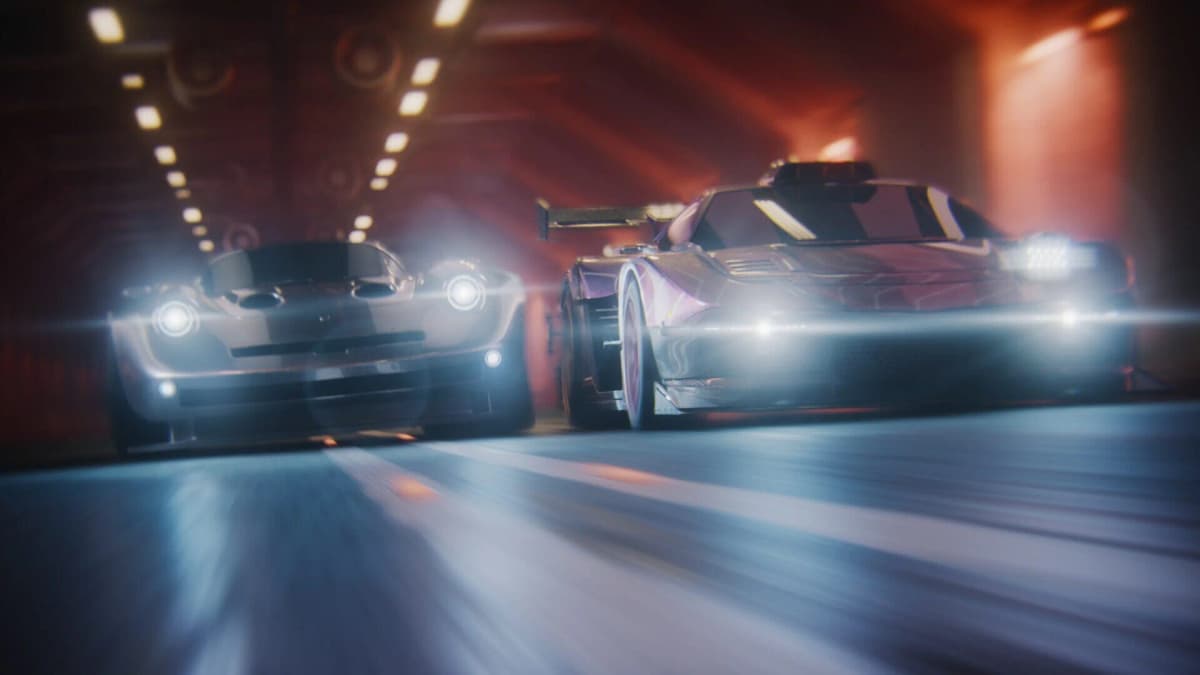
One important note: this was clearly built for a controller. The game technically supports keyboard, but after a couple of curiosity races on WASD I went straight back to my pad and never looked back.
Sync, Entropy, and the joy of weaponised racing
Underneath the satisfying drift model sits Screamer’s other big idea: a pair of linked resources — Sync and Entropy — that turn every lap into a balancing act between clean driving and outright violence.
Sync builds through “good” driving: nailing gear shifts, holding drifts, clean cornering, drafting opponents. Fill one bar and you can trigger a Boost, a short, savage burst of speed activated with a well‑timed shoulder button press. Hit it in the sweet spot of the on‑screen prompt and you get an extra‑strong version.
Normally, the mention of QTEs sends a shiver down my spine, but these Boosts are fast enough that they simply become another layer of car control. You’re not pulled into a separate minigame; you’re judging when in a straight you can safely trigger one, tapping the button in time with a tiny shrinking ring, then bracing as your car catapults forward. It’s closer to active‑reload in Gears of War than a traditional cutscene button mash.
Entropy is the dark mirror of Sync: you gain it by being aggressive. Drafting into an opponent and executing a Strike slams your car into theirs in a burst of stylised destruction. Land the hit and their chassis goes flying, the race briefly dips into slow‑motion carnage, and your Sync meter rewards you for your ruthlessness.
Because the two meters feed into each other, races develop a rhythm. Burn Sync for speed, build Entropy for offence, cash that Entropy in to delete an opponent, earn a big chunk of Sync back from the successful Strike, repeat. It never quite reaches the chaos of Mario Kart’s item roulette, but it has the same delicious, petty thrill of picking your moment to ruin the leader’s perfect lap.
The best part is how much this system ties into the character passives. Every racer has some little twist: one might gain extra Sync from long drifts, another leans harder into Entropy generation from Strikes, another spends less meter per Boost. One of my favourites was Hina from the J‑pop idol faction Strike Force Romanda. Her separate Hype gauge fills as she drifts; hit 100% and she gets a free Strike, turning her into a drifting missile on tight city tracks.
Across the full roster, this means the same circuit can feel wildly different depending on who you pick. A flowing, high‑speed track favours Sync‑heavy drivers who can chain Boosts; a cramped, multi‑lap city route becomes a demolition derby where Entropy‑focused bruisers shine. The game even communicates this reasonably well through character bios and stats, so you’re not picking blind.
Multinational cast, translators, and Polygon Pictures flair
Mechanically, Screamer had me after a few hours. What surprised me was how invested I became in its cast.
Multinational cast, translators, and Polygon Pictures flair
Mechanically, Screamer had me after a few hours. What surprised me was how invested I became in its cast.
🎮 Get This Game at the Best Price
Compare prices instantly and save up to 80% on Steam keys with Kinguin — trusted by 15+ million gamers worldwide.
*Affiliate link — supports our independent coverage at no extra cost to you

There are five main factions, each a trio of racers with their own agenda, from idol groups to corporate enforcers to the Kagawa‑Kai, a Yakuza‑style organisation chasing the tournament’s absurd cash prize. Over the course of the Tournament, the story hops between them, gradually painting a picture of a world where corporate sponsorships and outlaw crews coexist on these impossibly dangerous circuits.
One detail I loved: characters regularly speak in their native languages, with the script treating universal translators as standard tech. You’ll have a French driver exchanging barbs with an English‑speaking rival, or a Japanese crew arguing over radio, and the game just rolls with it. It gives the whole thing a pleasingly multinational flavour instead of feeling like “Anime World, But Everyone’s From One City.”
The voice work is strong across the board, with recognisable names in the mix and a lot of energy poured into mid‑race radio chatter. Noboru Sato, the former Screamer champion racing with a prosthetic after a horrific crash, ended up as my favourite. His PTSD and reluctance to return to the circuit could easily have become overwrought, but the performance sells both his fear and the weight behind every time he forces himself back into the driver’s seat.
Polygon Pictures’ animated cutscenes stitch major chapters together. They’re short bursts rather than full‑length episodes, and you can see the budget limits compared to their big anime productions, but they add a welcome sense of occasion. Big rivalries and betrayals get a proper visual payoff instead of just talking heads.
The actual in‑race presentation holds up beautifully. Cars and tracks opt for sharp stylisation over realism: exaggerated neon lighting, bold colour blocking, UI elements that look like they’ve been ripped from a sci‑fi heads‑up display rather than a motorsport broadcast. Pair that with a pounding electronic soundtrack — thudding basslines in city races, glitchier tracks for night circuits, some vocal bangers for faction‑specific story beats — and Screamer ends up feeling more like a playable music video than a sterile racing sim.
Difficulty spikes, pre‑launch fixes, and the AI problem
Not everything in the Tournament is smooth sailing. Screamer’s difficulty curve has teeth, and a couple of events drew blood in ways that felt less “fair challenge” and more “AI designer had a bad day.”
Most of the campaign escalates nicely: you get time to learn each new mechanic, then the tracks start demanding you actually use it under pressure. But sprinkled through are specific missions where the AI suddenly turns into rubber‑banding monsters. One race in particular had me stuck for nearly an hour; I was nailing drifts, chaining Boosts, executing near‑perfect laps, and still watching one rival car magically rocket back into contention every time I built a gap.
Before embargo I compared notes with other reviewers and found out that in at least one of these trouble spots, the AI was effectively tuned to assume you discovered a specific shortcut — a route the objective text never mentioned. I brute‑forced it with sheer persistence and a lucky final lap, but it left a sour taste.
The good news: that particular mission was patched just before launch, and it’s now much more in line with the surrounding events. The better news: the developers already have a broader difficulty‑balancing update on the way aimed at ironing out remaining spikes and unfair rubber‑banding behaviour. Obviously I can’t judge a patch that isn’t out yet, but knowing it’s on the roadmap takes some sting out of my roughest moments with the game.
Even after the fix, Screamer remains a challenging racer. On default settings it expects you to actually engage with its systems — to use Boosts aggressively, to pick racers that suit specific tracks, to accept that sometimes the correct move is to take an opponent out rather than try to pass them cleanly. That’s part of why I like it, but players coming in from ultra‑forgiving kart racers will hit a wall if they ignore the tools the game hands them.
Modes, performance, and living with Screamer beyond the story
Once the credits rolled on the Tournament, I bounced around the other modes to see how well Screamer holds up when the story isn’t carrying it.
Quick Race lets you mix and match cars, tracks, weather, and rulesets to your heart’s content, which is where the game really opens up as a pure arcade racer. Time trials exist for chasing perfect lines; elimination‑style events and checkpoint modes scratch that old‑school arcade itch. There’s online multiplayer, plus four‑player split‑screen on console if you want to turn your living room into a neon demolition derby.
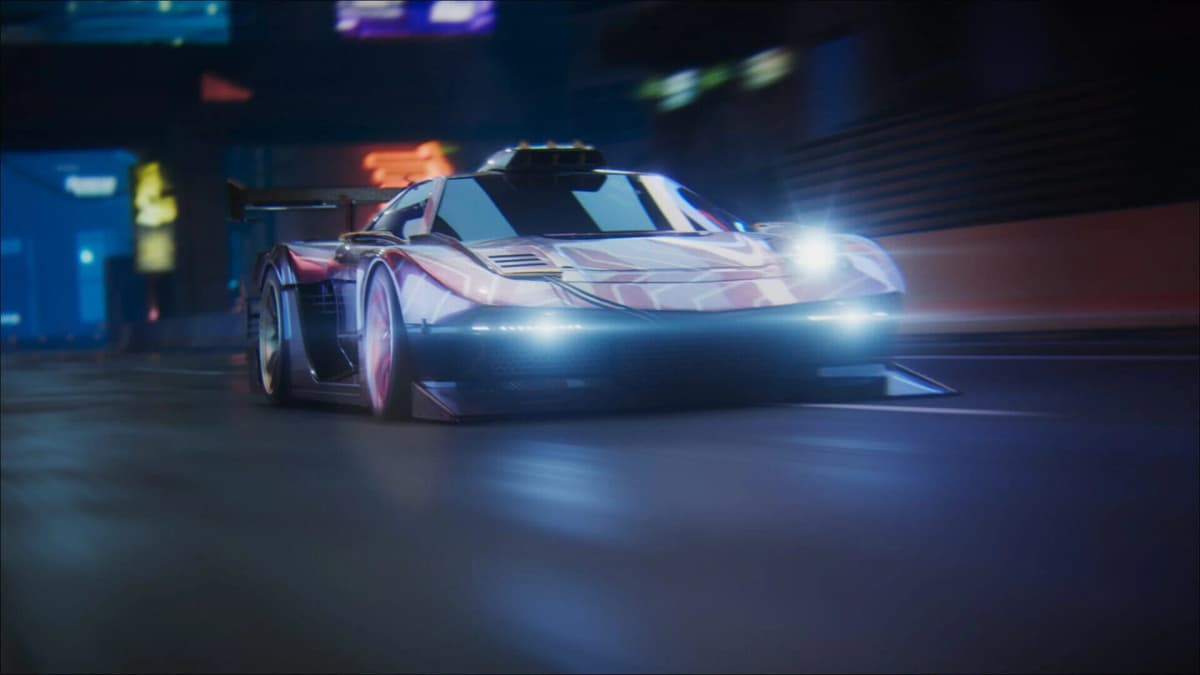
The core handling model survives the transition just fine. With the story out of the way, I found myself revisiting favourite circuits just to see how far I could push a particular team’s car with all the mechanics fully unlocked. Lines I’d scraped through in the campaign suddenly became opportunities to experiment with riskier Strikes or more aggressive Boost timing.
On the technical side, my time was split between a PS5 and a mid‑range PC. Both versions ran smoothly, prioritising 60fps racing with only the occasional hiccup when a lot of effects exploded at once. On console, DualSense support pulls a bit more immersion out of the handling — adaptive triggers tightening under heavy braking, subtle vibrations when you push a drift too far toward the edge of control.
Accessibility and assists are reasonably robust. You can tweak difficulty, steering assists, camera shake, and HUD clutter. Screamer doesn’t go as far as some modern racers in letting you totally rewrite its controls or slow the action dramatically, but it isn’t a “git good or go home” situation either; easing off the AI strength and turning on more driving aids makes a noticeable difference.
Who Screamer is really for
Screamer sits in a slightly awkward but interesting spot in the genre. It’s absolutely not a sim — nobody is worrying about tyre compounds or fuel weight here — but it also isn’t a lightweight party racer you can fully master in a single evening.
If you like the idea of Initial D-style drifting fused with the nastiness of a combat racer, with enough systems depth to keep you engaged for tens of hours, Screamer fits that bill better than anything I’ve played in years. The dual‑analog handling and Sync/Entropy dance give it a personality that doesn’t feel borrowed from older classics, even though you can clearly see the arcade lineage.
Players who live for detailed car tuning or realistic physics will probably bounce off the stylised handling and anime‑heavy presentation. Likewise, if long, talky story scenes sound like a chore, the Tournament might test your patience, even if you can skip a lot of it to get back to the racing.
But for anyone who’s been craving a racer that cares as much about characters and spectacle as it does about lap times, Screamer is a rare thing: a new arcade racing IP with the confidence to be weird and the mechanical chops to back it up.
FinalBoss // Gear
Level up your setup
01Racing wheels (PC & PS5)on Amazon→02High-refresh gaming monitorson Amazon→03Gaming chairson Amazon→04Discounted game keyson Kinguin→
Affiliate links · As an Amazon Associate, FinalBoss earns from qualifying purchases.
Want to Level Up Your Gaming?
Get access to exclusive strategies, hidden tips, and pro-level insights that we don't share publicly.
Ultimate Reviews Strategy Guide + Weekly Pro Tips