
Table of Contents (9)
A razor-sharp racer hiding under a pile of neon chaos
Screamer looks like a joke at first glance – the kind of “maximum neon, maximum yelling” arcade racer that you stick on at a party, mash the throttle, and bounce off some walls until somebody suggests something else. The wild anime cutscenes, the fluorescent cars, the blaring soundtrack… it screams style-over-substance.
Then you pick up the pad and realize this thing expects you to drive. Properly. While also juggling boost, weapons, gear shifts, and a drifting system that uses both analog sticks at once. Screamer isn’t just loud; it’s demanding, sometimes to a fault, and way more interesting than its “Mario Kart in a cyberpunk rave” aesthetic suggests.
I played Screamer on PS5, mostly in Performance mode, splitting my time between the story Tournament, custom Arcade races, online, and a glorious four-player split-screen night on the couch. By the end I was exhausted, impressed, and slightly angry – in that way only a good arcade racer can make you.
Learning to steer with two sticks and no mercy
The thing that immediately makes Screamer feel alien is the twin-stick driving. Left stick does light steering, but the right stick controls your drift angle. You’re not just turning; you’re swinging the rear of the car out like you’re manually puppeteering weight transfer.
On my first race I tried to drive it like Ridge Racer. Big mistake. Tap the brakes, flick the left stick, wait for the magic. Instead, I understeered straight into a wall like a shopping trolley on black ice. The game really means it when it says: you must use both sticks or you’re not playing Screamer, you’re just crashing in Screamer-branded environments.
Once it clicked, though, it felt amazing. You approach a medium-speed corner, nudge left with the steering, then push the right stick sideways to kick the tail out. The car snaps into this exaggerated, pendulum swing and you’re suddenly sideways, wheels screaming, engine howling. You feather the throttle, tap the stick angle to tighten the line, and if you do it right, you exit the turn dead-straight with a chunk of boost in your pocket.
It’s not perfect. A few of the cars exaggerate that pendulum motion so much they feel like driving a car made of jelly. There were a couple of vehicles I just stopped selecting because every corner became a fight against their wobbly rear end. But with most of the roster, there’s that lovely moment where your hands and the analogue sticks start doing the work before your brain consciously thinks about it.
Add on top a semi-automatic gearbox – you’re nudging up and down gears to keep revs in the sweet spot – and Screamer starts feeling closer to Wipeout crossed with a driving sim than your usual “hold R2 and vibes” arcade racer. The cars are still wildly over-the-top, but the inputs and timing they ask of you demand genuine concentration.
Boost, combat, and the constant resource juggle
Then the game throws its second big idea at you: a linked boost-and-combat system. Names differ slightly between menus and UI, but the gist is simple – one meter is for going fast, one meter is for hitting people, and using one tends to feed the other.
Boost liberally and you generate “charge” for offensive Strikes. Land Strikes and race aggressively, and you open up powerful overdrive states where you’re practically a neon missile. But it’s not a flat system; every character slices those meters into different segments, with varying strengths in attack, defense, and speed. Some can pop off lots of cheap mini-boosts; others save everything for one huge, terrifying power play.
On paper it sounds messy. In practice, once the tutorial missions stop hand-holding you, there’s a great mental rhythm to it. You’re mid-pack, coming into a chicane you actually understand. You know your driver’s second boost segment is small but refills quickly, and that you need three chunks in your combat meter to arm that homing Strike. Do you burn a boost now to defend your line, or wait, risk getting bumped, and bank enough juice to nuke the guy in front on the next straight?
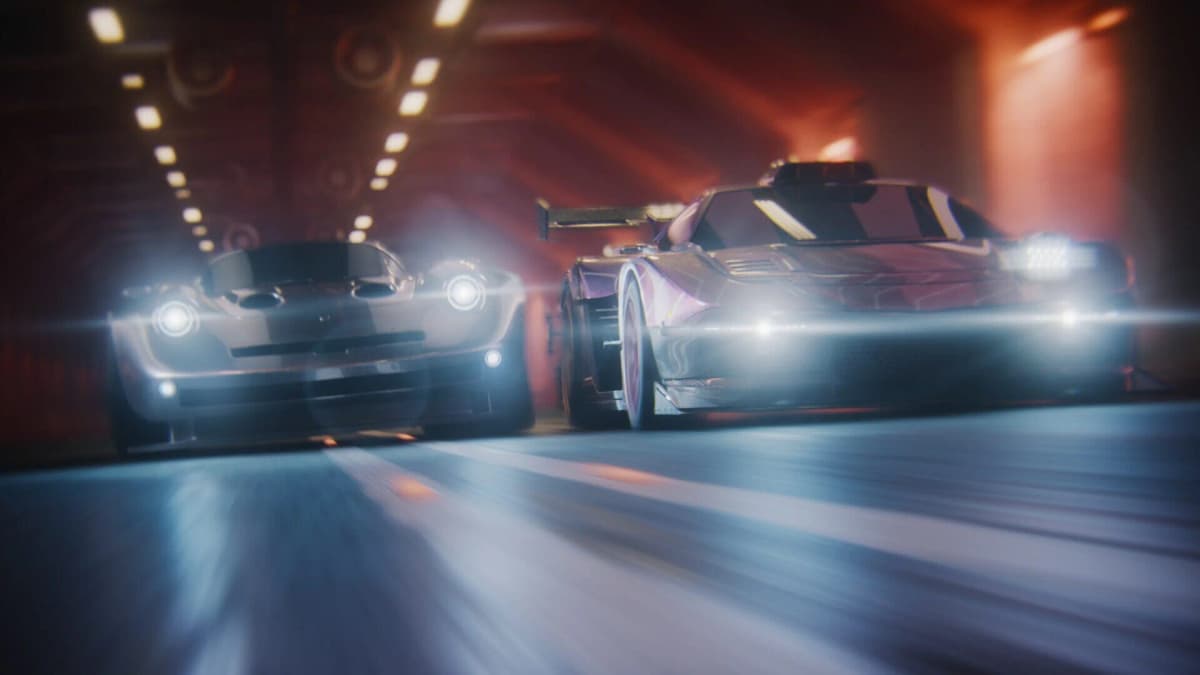
The best races I had in Screamer felt like improv fighting game rounds at 200 miles per hour. I’d feint an overtake just to bait an opponent’s defensive Strike, survive it by a hair, then slam them back into an outside wall as my own meter ticked over into the final segment. It’s satisfying in a very different way to Mario Kart’s roll-the-dice item boxes. Here you can see how your choices and rhythm of driving build towards the moment you fire.
It’s also where the game gets occasionally cruel. Some characters have deliberate drawbacks baked into those meters. One guy, for instance, has immense offensive potential when he’s in a special Strike state… but if he so much as brushes a wall while powered up, he explodes. That’s funny on gentle, flowing tracks. It’s miserable on tight hairpin-heavy circuits where the margin for error is razor thin.
The tracks: open joy vs twisty frustration
Screamer’s track list is big and eclectic, but it’s also where the game’s design feels most uneven.
When the tracks open up – big, sweeping corners, long neon straights under rain-slick skyscrapers, gentle S-bends you can float through in a single controlled slide – the game absolutely rips. These are the moments where the twin-stick drifting feels natural rather than forced, and where you can thread together drifts, boosts, and Strikes into that hypnotic arcade flow. There’s one night-time city circuit in particular, drenched in reflections and holographic billboards, that could have come straight out of a ’90s OVA. Every time it came up in the rotation, I grinned.
Then you hit the tighter, more technical tracks and the pace dies. Screamer is weirdly bad at going slow. At low speeds the cars feel soggy and heavy, and on routes that string endless switchbacks together you spend more time nursing the brake and wrestling grip than doing the cool sideways dance the game clearly wants to be about.
One story mission on a super-twisty circuit had me chasing a dog in a car – yes, really – where the objective was simply to land a single successful attack. That mutt drove a perfect line through every bend like it had the track hard-coded into its DNA. Even with clean laps I never quite closed the gap. In the end I parked on the racing line, waited for it to lap me, and zapped it as it went past. Mission complete, zero satisfaction. It felt like I’d broken the script rather than solved the challenge.
That kind of design crops up a few too many times. Another race demanded I win and take out two specific rivals from the “Green Reaper” team. Sounds simple, but they don’t always sit in second and third, so you end up deliberately letting half the grid overtake you just to fish for the right targets, while trying not to waste your precious attack meter on the wrong cars. To top it off, the Green Reaper crew doesn’t show up with green icons in the HUD; they’re blue. It feels arbitrary, like you’re fighting UI quirks, not opponents.
Tournament mode: smart tutorial, shaky difficulty curve
All of this funnels through Screamer’s big story-driven Tournament mode, which is where the game forces you to start. You boot up, watch an anime intro, and before you even see the main menu you’re knee-deep in scripted races and character banter.
Tournament mode: smart tutorial, shaky difficulty curve
All of this funnels through Screamer’s big story-driven Tournament mode, which is where the game forces you to start. You boot up, watch an anime intro, and before you even see the main menu you’re knee-deep in scripted races and character banter.
🎮 Get This Game at the Best Price
Compare prices instantly and save up to 80% on Steam keys with Kinguin — trusted by 15+ million gamers worldwide.
*Affiliate link — supports our independent coverage at no extra cost to you

There’s a good idea in there: the early missions gently layer in mechanics, from basic drifting to meter management and more advanced Strike tricks. Given how alien the controls can feel at first, a structured onboarding is absolutely the right call. But the Tournament’s difficulty spikes are all over the place. On standard difficulty, I breezed through some late-game races on my first attempt, then got stuck on a mid-campaign gimmick mission for twenty minutes because the objective design was weirdly strict.
It doesn’t help that the game hides a ton of its best content behind that first stretch of story. You can’t fully access the broader Arcade options or really see how flexible Screamer is as a sandbox until you’ve chewed through a few talky chapters. I can easily imagine players bouncing off during yet another pre-race argument between characters they don’t know yet, never realizing there’s a fantastic quick race mode and four-player split-screen just a couple of button presses away.
Anime story and characters: gorgeous, overstuffed, endlessly chatty
Visually, the collaboration with Polygon Pictures absolutely shows. The cutscenes are sharp, well-directed, and genuinely look like they belong to a real seasonal anime. Cars could have driven straight off a ’90s VHS cover: wild aero kits, pop-up fins, bright sponsor logos, tiny details like retractable brake lights. There’s clear affection in how each machine is drawn and modeled.
The problem isn’t how it looks; it’s how much of it there is, and how little space there is to breathe. The story throws you into the middle of a world that feels like we’re joining in around season four. Five three-person teams, a masked organizer, absurd prize money, corporate conspiracies, personal dramas, extended lifespans… and the game expects you to care about all of it immediately.
In theory I like the concept: a global cast of racers, each speaking their native language, all magically understanding each other thanks to a universal translator chip. In practice, with subtitles off at the start (I assumed setting the game language to English would just disable English subs, not every subtitle entirely), I missed entire early conversations because half the cast simply wasn’t speaking English. Once I realized and flipped subs back on, I was already behind on who hated who and why.
Even after I caught up, I never really bonded with the cast. The narrative constantly hops between all five teams, so there’s no single anchor to latch onto. Characters are either brooding and weighed down by past trauma, or turned up to eleven and shouting every other line, and the script leans hard on melodramatic bickering. Before some races I genuinely just hammered the skip button because I’d hit my daily quota of anime angst.
The irony is that Screamer feels like an adaptation of an anime that doesn’t exist. If I’d watched three seasons of “Screamer: Neon Overdrive” before picking this up, I’d probably love hanging out with this ridiculous cast. Coming in cold, they mostly slow down what the game actually does best: the racing.
Modes, multiplayer, and accessibility: where Screamer quietly shines
Once you’re free of the Tournament funnel, Screamer opens up. Arcade mode is the real gem: a big, tweakable sandbox where you can create the version of the game you want to play.
You can change power meter fill rates, force everyone into a constant overdrive state, disable offensive attacks entirely for pure racing, or crank up AI aggression. You can turn what’s normally a busy combat racer into a high-speed time trialnerd’s dream, or the opposite: an explosive party game where every straight becomes a missile exchange.
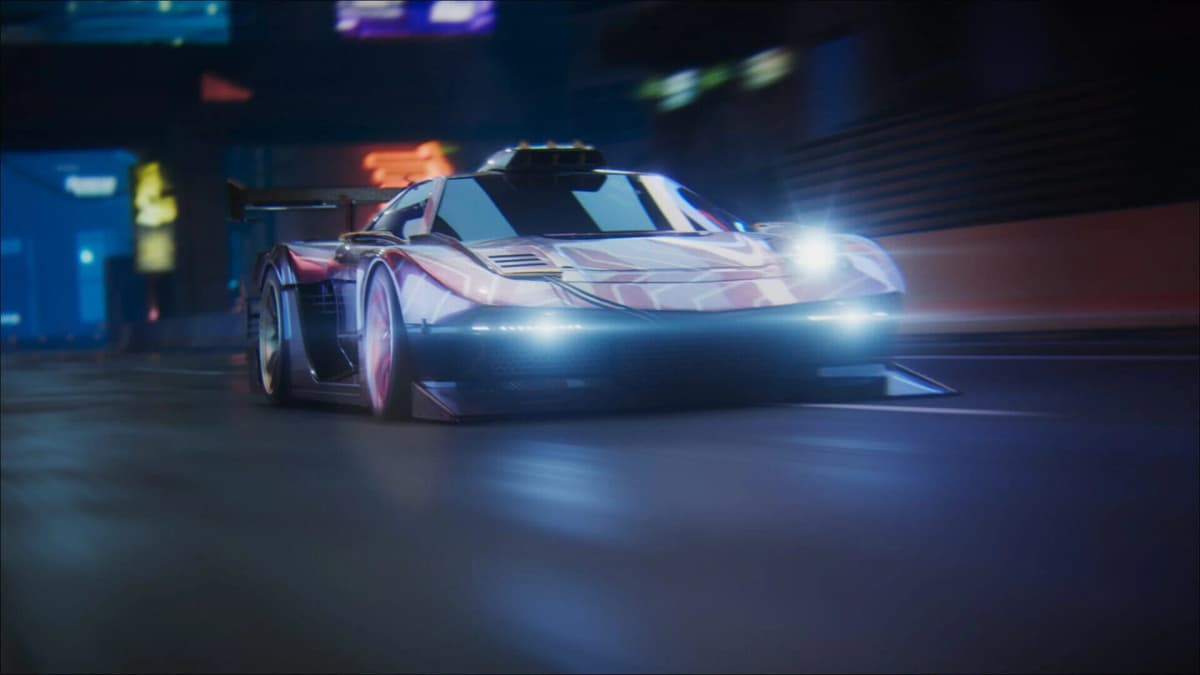
Online worked smoothly during my sessions, though population will obviously depend on the player base long-term. The standout for me, though, is something most big racing games quietly stopped caring about: local multiplayer.
Four-player split-screen in 2026 feels almost rebellious. I had three friends over, threw everyone into Arcade races with toned-down combat and slightly slower game speed (more on that in a second), and within two races people were trash-talking like it was an N64 night. Watching four cars swing sideways through the same neon corner, meters crackling, Strikes going off like fireworks – that’s Screamer at its best.
The accessibility suite deserves real credit for making that kind of couch chaos viable across different skill levels. You’ve got colorblindness filters, an adjustable offline game speed slider that literally slows the whole world down without changing physics, and fully remappable controls – including layouts meant for one-handed play. Given how central dual-stick driving is to the design, that last bit is especially thoughtful. Milestone clearly put work into making sure more people can actually engage with the systems they built.
On PS5, Performance mode felt solid – mostly 60fps in my experience, even when the screen was full of explosions and effects. The DualSense implementation leans into engine vibration and tire scrub without turning your hands numb, which helps sell that sense of traction when you’re trying to hold a long drift.
FinalBoss // Gear
Level up your setup
01Racing wheels (PC & PS5)on Amazon→02High-refresh gaming monitorson Amazon→03Gaming chairson Amazon→04Discounted game keyson Kinguin→
Affiliate links · As an Amazon Associate, FinalBoss earns from qualifying purchases.
Want to Level Up Your Gaming?
Get access to exclusive strategies, hidden tips, and pro-level insights that we don't share publicly.
Ultimate Reviews Strategy Guide + Weekly Pro Tips