
Table of Contents (8)
Screamer made me rethink what a racing game can be… and then reminded me why balance still matters
Screamer is the first racing game in a long time that made me put the controller down, not because I was bored, but because I needed a second to process what it was trying to do. It’s part racing game, part anime season, part weird arena fighter where you attack rivals with your car. That alone earns it attention.
On PC with a standard Xbox-style controller plugged in, my first thirty minutes felt like trying to drive a car where the steering wheel and the handbrake are fighting over control of the same axle. The left stick steers, the right stick controls your drift, and your brain has to split those jobs cleanly or you’re just pinballing off neon guardrails.
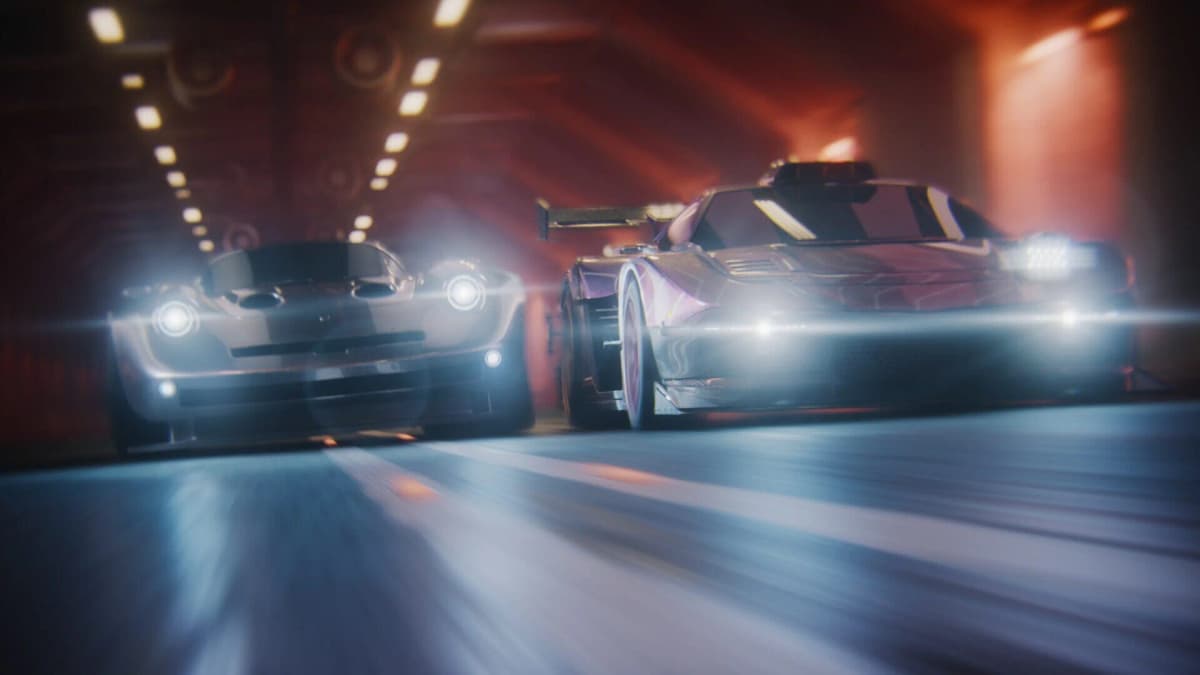
Once that twin-stick drift finally clicks, though, Screamer feels incredible. The sense of speed, the way the car weight shifts under you, the neon-soaked circuits flying by – it’s the kind of thing that makes you instinctively lean into corners in your chair. And then the game quietly nudges you and says, “Actually, the real game is about managing boost and attacks,” and the traditional racing part gets shoved into the back seat.
An anime racer that actually commits to the bit
Most “story” in racing games is an excuse to paste some FMV cutscenes between time trials. Screamer goes way further. Its Tournament mode is a full-blown anime production: stylized cutscenes, big character archetypes, factions, betrayals, idol groups, gruff execs, and half the cast talking in different languages with subtitles.
The wild part is that, for a good chunk of the early game, Screamer is comfortable sidelining the actual racing so you can marinate in its cast. You’ll sit through long conversations about sponsorships, rivalries, and personal baggage, and the game drip-feeds mechanics over several acts instead of throwing you into a feature dump from race one.
This pacing pays off at first. By the time the campaign really starts ramping up, you don’t just recognize names on the grid – you know who hates who, whose team is hanging by a financial thread, and which manufactured pop group is one bad race away from imploding. When you line up against a rival you’ve watched scheme for an hour, winning that race actually feels petty and personal in a way most racers never even aim for.
Does it get talky? Absolutely. There are stretches where I was itching to get back on track while yet another side character chewed through a monologue. But I’d still take Screamer’s overblown anime melodrama over the bland, faux-gritty stories you get in a lot of big-name racers. At least this one has a personality and commits to its tone instead of apologizing for it.
Twin-stick drifting: awkward, then addictive, then… sidelined
The real mechanical swing for the fences is Screamer’s control scheme. Steering on the left stick, drifting on the right sounds like a gimmick until you realize how tightly it’s tuned. You’re not just holding a trigger to slide; you’re actively placing the tail of your car, adjusting your drift arc mid-corner with the right stick while the left controls the front wheels.
The first few races were chaos for me. I’d go to counter-steer with the left stick and accidentally overcorrect with the right, or vice versa, and spin out like a clown. But somewhere around the first handful of proper circuits, the muscle memory rewired, and the whole thing snapped into focus. Fast esses stopped being scary and turned into this flowing rhythm where I’d flick the right stick, catch the slide, and chain corner after corner, riding a perfect line.
It feels different from any other modern arcade racer. There’s a tactile satisfaction in wrestling those two sticks into agreement, especially once you switch off some of the assists and let the car really move under you. When Screamer gets out of its own way and just lets you race, the twin-stick drifting earns its existence completely.
The problem is that the game slowly makes that sensation less central than it should be. The deeper you go into the Tournament, the more races stop being about carving a perfect line and start being about how aggressively and efficiently you’re feeding its boost and attack systems. You still need to drive well, but “well” increasingly means “in a way that fuels the meters” rather than “in a way that respects the corner.”
Boost, strikes, and the shift away from “real” racing
Screamer runs everything through a linked boost-and-attack loop. Drive hard, drift cleanly, stick close to rivals, and you build your boost gauge. Spend that boost at the right time and you not only slingshot yourself forward, you also feed a separate offensive meter that powers up strikes – essentially weaponized abilities that let you harass or disrupt other racers.
Used well, this creates a surprisingly tactical layer. You’re constantly weighing questions like: do I burn boost just to stay on someone’s bumper so I can land a strike and refill more later? Do I hold it for a giant exit burst out of the last corner? Is it worth risking a sketchy drift line for faster meter gain?
There’s a nice fighting game energy to it. Land a clean combo of drifts and boosts and attacks and you feel unstoppable, like you’re running a set-play you’ve labbed for hours. Miss a strike at the wrong time, or whiff a boost and slam into a barrier, and the punishment is brutal. You’ve wasted resources and handed the AI free space.
The flip side is that Screamer gradually pushes you into playing the meters more than the track. Once the Tournament really leans on these systems, raw driving lines and old-fashioned racecraft matter less than how well you juggle your abilities. It turns into a game of “maximize your gauges, chain your attacks, hope the physics and AI don’t clown you,” with the lovely twin-stick drifting reduced to just one of several ways to fuel your real win condition.
If you’re the type of player who loved the combat racing in things like Blur or Split/Second, that trade might feel fine. If you came to Screamer because the drifting looked sick and you wanted a pure high-speed flow state, the increasing focus on ability management can feel like the game slowly erasing its most interesting sensation.
When balance spins out: the wild difficulty rollercoaster
This is where Screamer really burns its tires. The difficulty tuning in the Tournament is all over the place, and that inconsistency undercuts everything the game does well.
One late Act 1 event practically broke me. From the starting line, the AI rocketed off so fast that they were hundreds of meters ahead before I reached the first braking zone. I wasn’t missing corners, I wasn’t smashing into walls – they just vanished up the road. My only route to victory was to drop the difficulty to Easy and execute a near-perfect run: nail every shortcut, never mis-time a boost, land every strike. I scraped through, but it felt like brute-forcing a badly tuned challenge, not overcoming a fair test.
One late Act 1 event practically broke me. From the starting line, the AI rocketed off so fast that they were hundreds of meters ahead before I reached the first braking zone. I wasn’t missing corners, I wasn’t smashing into walls – they just vanished up the road. My only route to victory was to drop the difficulty to Easy and execute a near-perfect run: nail every shortcut, never mis-time a boost, land every strike. I scraped through, but it felt like brute-forcing a badly tuned challenge, not overcoming a fair test.
🎮 Get This Game at the Best Price
Compare prices instantly and save up to 80% on Steam keys with Kinguin — trusted by 15+ million gamers worldwide.
*Affiliate link — supports our independent coverage at no extra cost to you

Then, barely a couple of races later, I found myself winning by absurd margins, comfortably coasting across the line with hundreds of meters to spare while barely paying attention. Same difficulty, same general skill level, wildly different experience. Screamer swings from “are you kidding me?” to “okay, this feels like baby mode” with almost no warning.
It’s not just raw speed differences, either. Some tracks are designed around aggressive use of shortcuts and boost lines, which the AI seems to read perfectly while you’re still learning their layouts. Others feel like they were built for one specific playstyle – heavy strike usage, or a particular drifting rhythm – and if you haven’t specialized into that approach yet, you get punished hard.
The result is that Screamer pushes you toward a narrow “correct” way to play. There are so many overlapping systems – twin-stick drift, boost, strikes, additional abilities – that it can feel like the game expects an extra thumb or two. Most players will naturally gravitate to the path of least resistance, which usually means focusing on boost and attack economy at the expense of everything else.
You can see the potential for something incredible if Milestone tightens the screws. Better difficulty curves, more consistent AI behavior, and track design that supports multiple viable strategies instead of one magic route would do wonders. The bones are here for a competitive scene where execution, meter management, and track knowledge all matter. Right now, it feels like a brilliant ruleset trapped in a slightly chaotic tabletop campaign.
PC performance, modes, and how it feels outside the story grind
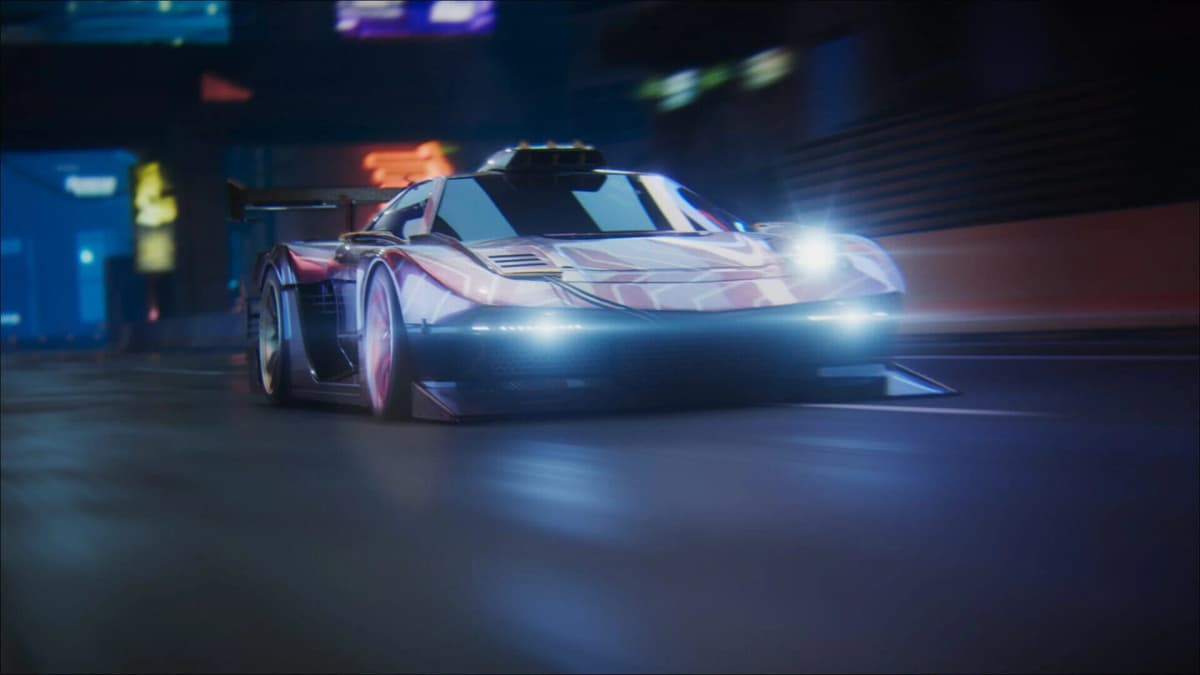
Step away from the Tournament for a bit and Screamer feels far more relaxed and enjoyable. On PC, performance has been smooth in my time with it, with crisp visuals and that neon anime aesthetic really popping at higher frame rates. The UI is clean enough once you internalize what all the meters mean, and the cars have a satisfying heft that shows up even more clearly in free races where you’re not locked into story objectives.
The extra modes help. Quick races let you tweak difficulty and assists to taste, so you can actually live in that sweet spot where the twin-stick drifting shines without the Tournament’s more punishing spikes. There’s proper split-screen if you want to drag friends into the chaos locally, which feels like a small miracle in 2026, and a decent variety of tracks and characters to experiment with once you’ve unlocked them in the main mode.
Accessibility-wise, Screamer does at least try. You can lean on assists if the handling feels overwhelming, remap controls, and tone the difficulty down. The issue is that the core balance means even “Easy” doesn’t always behave consistently. You might blitz one event, only to smack face-first into a brick wall in the next, even when you haven’t changed a single setting.
Still, if you treat the Tournament more as an unlock conveyor belt and spend real time in the other modes, Screamer starts to feel like the arcade racer its trailers promised. The twin-stick drifting is more front-and-center when you’re not bound to a particular story objective or weirdly tuned event, and you can actually appreciate how good the game feels moment-to-moment without a balance issue constantly jabbing you in the ribs.
Who Screamer is really for
If your ideal racer is something like Forza Horizon – big open worlds, light story, lots of cars, and handling that mostly wants you to relax – Screamer is going to feel like a slap in the face. This is dense, systems-heavy, and unashamedly weird in how it ties its mechanics together.
On the other hand, if the words “anime combat racer with twin-stick drifting and a resource loop” sound like a design doc you’d write as a dare, there’s real gold here, provided you have patience for rough edges. Screamer rewards people who enjoy labbing systems, learning tracks down to the shortcut, and re-running the same event until every drift, boost, and strike is placed with intent.
I also think it’ll resonate with players who actually like when a racing campaign leans hard into narrative. The multinational cast, the language mixing, the larger-than-life drama – that stuff gives Screamer a flavor that straight-laced racers can’t match. Even when I was annoyed at a particular difficulty spike, I still wanted to see what dumb rivalry or overblown monologue the next act would throw at me.
FinalBoss // Gear
Level up your setup
01Racing wheels (PC & PS5)on Amazon→02High-refresh gaming monitorson Amazon→03Gaming chairson Amazon→04Discounted game keyson Kinguin→
Affiliate links · As an Amazon Associate, FinalBoss earns from qualifying purchases.
Want to Level Up Your Gaming?
Get access to exclusive strategies, hidden tips, and pro-level insights that we don't share publicly.
Ultimate Reviews Strategy Guide + Weekly Pro Tips