

At the Vanderboom estate, I found domestic work acquiring an uneasy rhythm. One small task would send me to another room, another room would put a useful object in my inventory, and that object would lead to a puzzle whose answer lived somewhere between household routine and ritual. Servant of the Lake earns its best moments from that friction. The game makes ordinary service feel precarious, then gradually lets the strangeness take over.
That is the central appeal of this compact Rusty Lake adventure: its mystery has texture. The estate is a place of chores, secrets, strange requests, and increasingly uncomfortable implications, all filtered through the familiar point-and-click language of inventory items, room-by-room inspection, and symbolic solutions. I came away charmed by its nerve and its tactile mobile design, even when its puzzle logic pushed too hard against the line between mysterious and needlessly obscure.
Table of Contents (6)
A house where every chore carries a threat
Servant of the Lake launched on August 13 for PC through Steam and itch.io, alongside iOS and Android. It is a point-and-click adventure set at the Vanderboom estate, where the player works as a servant for the family over three days. That premise gives the game an immediately useful structure: there is always a job to do, a room to revisit, an item to locate, or a strange instruction waiting to be understood.
The work begins in recognizably domestic territory. Family portraits need attention, laundry needs handling, and coffee beans need grinding. Then the estate starts revealing the kind of expectations it has for its servant. Experiments, cleanup, and more sinister forms of assistance enter the picture, turning the basic rhythm of chores into dark comedy. The material remains disturbing without pushing the presentation into outright grotesquerie, which gives the game a peculiar charm rather than a purely oppressive mood.
That tonal control is where the game does its most important work. The Vanderboom house does not need grand speeches or constant shocks to feel wrong. Its menace comes from the way routine tasks become loaded with implication. A simple request becomes a chain of objects, mechanisms, and uneasy discoveries. The game keeps asking me to treat the bizarre as part of the job, and that deadpan commitment makes the oddness land.
The story is set decades before Rusty Lake: Roots and features Aldous, William, and Alexandra Vanderboom. That connection gives existing Rusty Lake players another piece of the family’s dark history to examine. More importantly, the setting stands on its own as a contained mystery. The estate has enough personality that it never feels like a mere backdrop for locks and inventory gates; it is the source of the game’s best jokes, its worst discomfort, and its strongest sense of place.
Touch controls suit the mystery
Mobile is the most natural place to meet this particular kind of weirdness. On iOS and Android, Servant of the Lake uses drag-and-drop touchscreen controls for its point-and-click interactions. Opening windows and doors, rotating dials, sliding curtains, and signing names all fit the format because they ask for direct manipulation rather than a detached cursor command.
That tangible approach matters because this is a game built around small acts of interference. The player moves from room to room, collects items, and applies them to puzzles. Touching, dragging, turning, and placing objects makes those actions feel like part of the fiction. The estate becomes more immediate when I am physically moving its pieces around instead of simply selecting an action from a distance.
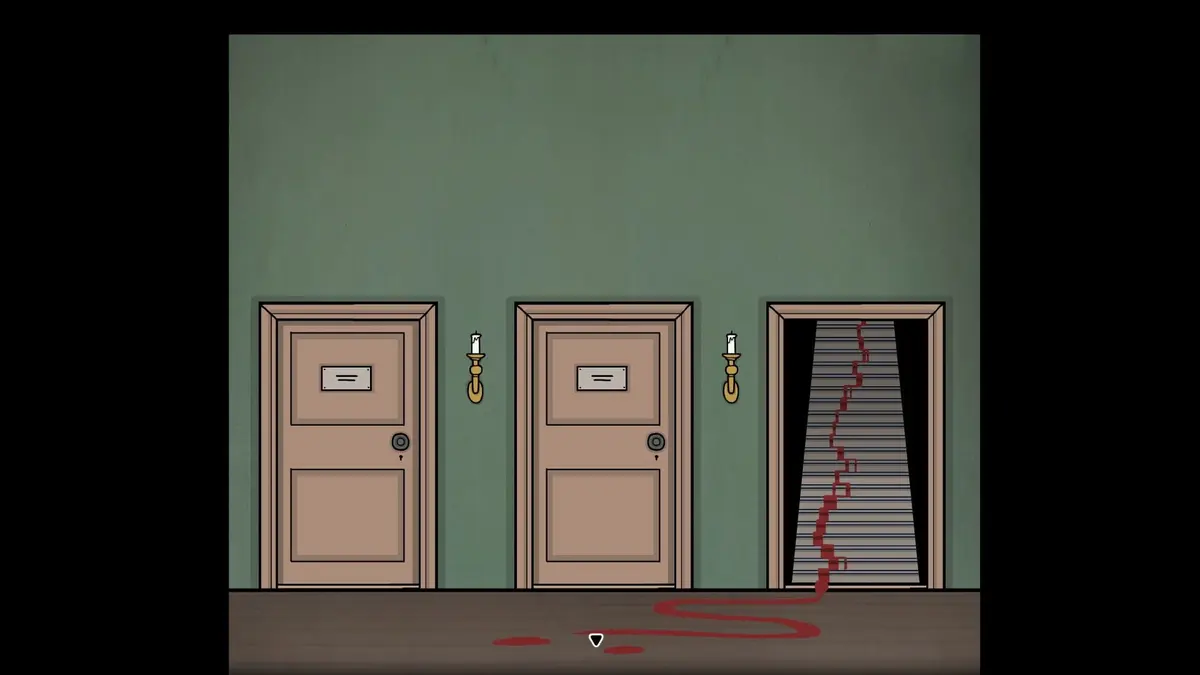
The room presentation also keeps the focus in the right place. Scenes are uncluttered and avoid pixel-hunting, so progress usually depends on interpretation rather than hunting for a single invisible hotspot. That is a major strength for a mobile point-and-click game. Small screens can turn visual clutter into friction quickly, while Servant of the Lake gives its objects room to matter.
Japanese text support is also available. The result is a game whose interface feels made for deliberate poking and prodding, with a presentation that respects the player’s attention even when the puzzle design occasionally tests their patience.
The puzzles are clever until they become vague
The puzzle design has a clear foundation. Players search for tools, rebuild broken objects, interpret numbers and shapes, and connect inventory items to the estate’s many mechanisms. When those pieces align, the game is satisfying in the best Rusty Lake fashion: an answer feels strange enough to be memorable, yet rooted enough in the environment that the solution has a real click of recognition.
Several challenges are straightforward and approachable, particularly when the game clearly communicates what a room needs from the player. The strongest puzzles encourage observation without turning every object into a suspect. Their multi-step structure gives the estate momentum; one answer opens a fresh problem, then that problem reveals another corner of the house and another layer of the story.
The rougher puzzles ask for a more abstract leap. A clue can carry meaning that is difficult to identify before the game has established its pattern, and the guidance can be hard to parse until that pattern finally becomes clear. These are the moments where the game risks exchanging mystery for friction. I never object to a puzzle asking me to pay attention, but I do object when the route from clue to conclusion feels arbitrary.
That inconsistency changes the recommendation. Players who enjoy trial-and-error deduction, symbolic puzzle language, and the occasional use of a hint will have enough patience for the game’s stranger demands. Players who want every solution cleanly signposted may hit a wall, especially on mobile, where repeated backtracking through rooms can feel more laborious than it does on a PC screen.
The right approach is to meet Servant of the Lake on its own terms. Treat the estate as a symbolic space as much as a physical one. Pay attention to recurring shapes, object relationships, and the game’s darkly comic logic. Keep a hint or walkthrough within reach if a late solution starts draining the mood rather than building it. The game remains much better when its mystery is allowed to keep moving.
Short enough to stay sharp
The three-day structure is divided into morning, afternoon, and night, with several tasks completed in sequence. That schedule gives the adventure a welcome sense of forward motion. Rather than throwing the entire estate open and leaving the player to wander without purpose, the game gives each stretch of the story a job, a set of problems, and a reason to revisit what came before.

The main story is estimated at roughly four to five hours, which feels appropriate for this style of mystery. Servant of the Lake does not need a vast runtime to make its setting memorable. Its strongest asset is concentration: a contained estate, a narrow role, a family with a dark history, and a steady escalation from mundane service to unnerving ritual.
That compact shape also protects the game from its own puzzle unevenness. An obscure step can still interrupt the flow, yet the adventure does not spend so long repeating itself that one frustrating solution defines the whole experience. The strange scenes, hands-on interactions, and escalating atmosphere regain the spotlight quickly enough.
Who should enter the Vanderboom estate
Servant of the Lake is a worthwhile buy for Rusty Lake fans and for players who put atmosphere ahead of immaculate puzzle clarity. Anyone drawn to eerie estates, tactile point-and-click interaction, symbolic deduction, and dark humor will find a lot to enjoy here. The game is especially easy to recommend to someone looking for a self-contained mystery that can be finished over a few sessions rather than another sprawling commitment.
Mobile players are also getting a version that understands the value of touch. The drag-and-drop interactions reinforce the fiction instead of feeling like a mouse-first design squeezed onto a phone. That directness helps the game’s stranger moments feel more personal, more physical, and more appropriately invasive.
Players who prioritize crystal-clear puzzle logic should wait or skip it. The estate is rewarding when its clues and mechanics speak the same language; it is irritating when they do not. Anyone unwilling to consult guidance, revisit rooms, or tolerate a solution that feels more intuitive in retrospect than in the moment should spend their time elsewhere.
Bottom line
Servant of the Lake succeeds because it understands that a good point-and-click mystery needs more than locks and inventory items. It needs a place worth touching, a tone worth following, and enough bizarre conviction to make every household task feel faintly dangerous. The Vanderboom estate has all of that. Its tactile mobile controls are a genuine strength, its short format keeps the story focused, and its odd humor gives the darkness a personality.
The puzzle rough edges keep it from joining the genre’s most elegant adventures. Some solutions invite satisfying deduction; others demand too much faith in the game’s private logic. Still, the atmosphere outweighs the frustration for players who enjoy a little symbolic mess in their mysteries. Servant of the Lake earns a 7/10: a charmingly warped point-and-click adventure that I recommend to mood-first puzzle fans, with a clear warning for anyone who needs every clue to play fair.
FinalBoss // Gear
Level up your setup
01Top-rated gaming headsetson Amazon→02High-refresh gaming monitorson Amazon→03Gaming chairson Amazon→04Discounted game keyson Kinguin→Affiliate links · As an Amazon Associate, FinalBoss earns from qualifying purchases.
Want to Level Up Your Gaming?
Get access to exclusive strategies, hidden tips, and pro-level insights that we don't share publicly.
Ultimate Reviews Strategy Guide + Weekly Pro Tips