
Table of Contents (7)
Sneaking Back Into Edo Japan On Switch 2
Shadow Tactics: Blades of the Shogun is one of those games I thought I’d already “finished” with. I beat it on PC back in 2017, bounced off the original console version’s clunkier controls, and mentally filed it away as “a classic I respect, but don’t really need to revisit.” Then the Switch 2 port landed… and I ended up losing late nights all over again to the same damn patrol routes and straw-hat guards.
I went in curious more than excited: could a 2016 real-time tactics game really feel at home on a modern handheld? After about three missions on Switch 2, playing curled up on the couch in handheld mode, I had my answer. Shadow Tactics hasn’t just aged well; with the way this port runs and the new mouse option, it almost feels like the game finally found the hardware it was secretly waiting for.
If you’ve somehow missed it until now, Shadow Tactics is basically “feudal Japan Commandos.” You control a small squad of specialists in real-time, sneaking through dense levels, abusing vision cones and guard routines, and saving every 30 seconds as your perfect plan collapses because you forgot about the one guy on the balcony. It’s meticulous, tense, and deeply satisfying in that particular “one more try” way that wrecks sleep schedules.
On Switch 2, what you’re getting is fundamentally the same game that wowed PC players a decade ago – same mission design, same cast, same clever tools – wrapped in a surprisingly smooth, handheld-friendly package: 4K/30 docked, 1080p/30 in handheld, faster loading, and optional mouse-style controls that change how precise you can be on a console.
How The Stealth Puzzles Actually Feel To Play
My first hour back with Shadow Tactics reminded me why this genre almost vanished for a while: it’s unforgiving. The opening missions walk you through the basics – how cones of vision work, how noise propagates, how to hide bodies in wells or behind doors – but very quickly, the game stops holding your hand and expects you to internalise everything.
Once you clear the tutorial stretch (which still runs a bit long), every map becomes a dense puzzle box. A typical scenario on Switch 2 went like this for me:
- I paused the game and slowly panned the camera around a snow-covered fort, reading guard patterns like a rhythm game.
- I tagged a few key enemies, noting which ones wore straw hats (immune to distractions) and which carried torches (bad news for hiding in bushes).
- I traced routes in my head: thief through the shadows, samurai up the main path as a last resort, sniper on the rooftop for insurance.
- Then I unpaused, took two steps with the wrong character, and blew the entire operation in three seconds.
This is where the design really shines: failure is fast and funny, and getting back into the action is nearly instant on Switch 2. Quick saves and quick loads are mapped sensibly to the shoulder buttons; I got into a rhythm where I’d tap save almost unconsciously before trying something spicy. When it goes wrong, you rewind and adjust one tiny part of the plan. It feels more like iterating on a solution than brute-forcing a stealth game.
The missions themselves are still excellent. One early highlight is a nighttime infiltration of a coastal fortress, where you can either:
- Go classic ninja and snake through side paths and rooftops, never raising an alarm.
- Or use your samurai, Mugen, to carve a noisy path through clustered guards, then cover his mess with your spy’s disguises and diversions.
On PC, I remember getting stuck and googling “optimal routes.” On Switch 2, I found myself much more open to experimenting, partly because the game runs smoothly and reloads are snappy. It’s easier to try a reckless idea when you know you’re not sitting through a 15-second load each time.
The Shadow Mode That Makes You Feel Like A 4D Chess Ninja
The mechanic that still elevates Shadow Tactics above most of its peers is the signature “shadow” system – basically a queued command mode. At any time, you can pause the action, assign a single action to each of your currently active characters, and then trigger them all simultaneously.
On Switch 2, this is mapped to a single button press, and it’s more intuitive than I remember from the PS4 version. I’d hit the shadow button, flick through my squad with the d-pad, and set up lovely little murder ballets:
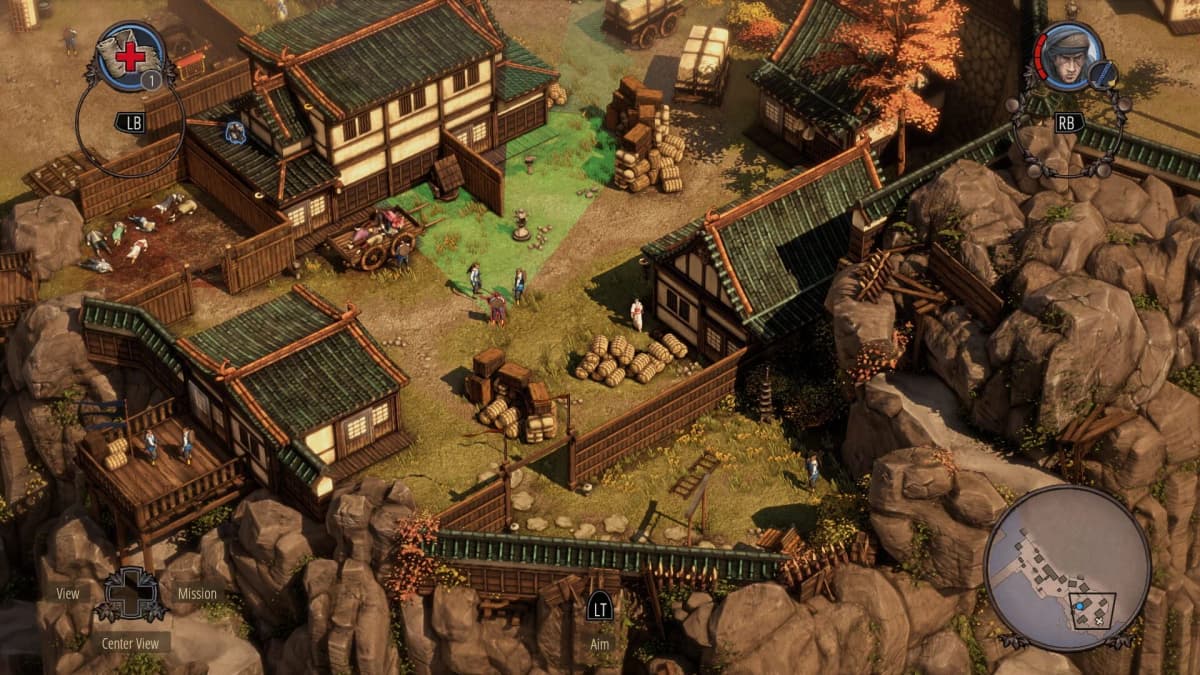
- Aiko tosses a sneezing powder bomb to briefly blind two guards.
- Hayato darts out of a bush to silently dispatch the third guard facing a different direction.
- Yuki drags a body into the reeds and plants a trap on a patrol route, ready for the next unlucky soul.
Then I’d sit back, hit “execute,” and watch the whole thing unfold in a few grim seconds. The best compliment I can give this system is that it frequently made me feel much smarter than I am. When the timing clicks and every enemy drops exactly where you predicted, it’s intoxicating.
The port helps here because input lag and performance genuinely matter for this style of play. Docked at 4K/30, timing feels solid; in handheld at 1080p/30, I never had a moment where I blamed the hardware instead of my own impatience. The game doesn’t chase 60FPS, but it stays stable, which is way more important in a tactics title built around precise multi-character coordination.
One mission about 10 hours in really sold me again on how strong this system still is. You’re assaulting a heavily manned bridge, with overlapping vision cones everywhere. My first attempts were traditional stealth: isolate, distract, kill. After about 40 minutes of slow progress, I got annoyed, switched to shadow mode thinking, “Fine, let’s just choreograph a disaster.”
Two retries later, I had a flawless triple takedown chain that cleared half the bridge in one synchronized burst – and I didn’t touch YouTube. That feeling of home-grown cleverness is the core of Shadow Tactics, and it’s completely intact on Switch 2.
Characters You Remember, Story You Probably Won’t
My memory of Shadow Tactics’ plot before this replay was basically “some political intrigue, someone’s a traitor, there are castles.” Replaying it on Switch 2 didn’t really change that. The overarching story is fine – competent feudal drama that keeps you moving from one exotic location to another – but it’s not something I’ll be thinking about in a year.
What has aged much better are the characters themselves, and the way the game uses gameplay moments to sell their personalities. Mugen, the wooden-legged samurai, is still the big-hearted straight man of the group; Hayato is your grumpy ninja professional; Yuki’s childish enthusiasm makes her sadistic trap-setting feel almost cute; Aiko’s calm precision threads everything together.
The strongest writing isn’t in cutscenes (which I skipped on my second playthrough) but in the incidental barks and small conversational beats mid-mission. There’s something charming about hearing your squad comment on each other’s approaches as you solve problems your own way. It almost feels like the characters are acknowledging the weird, borderline-psychopathic perfectionism these games pull out of you.
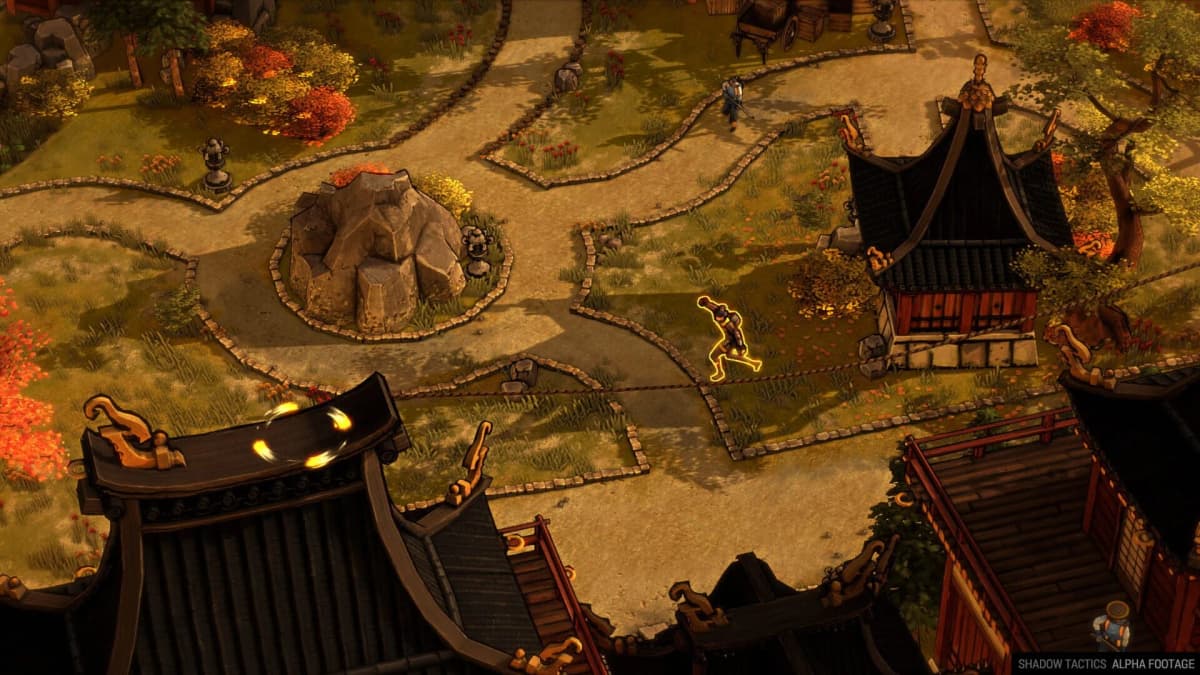
Still, if you’re here for a sweeping narrative, this isn’t that. It’s a great cast in a serviceable story, and that’s enough. The real arc is yours: that slow transformation from bumbling through a courtyard one corpse at a time to orchestrating a flawless, bloodless run through a tightly guarded estate.
Port Quality: Performance, Controls, And Mouse Mode
Let’s talk about the actual Switch 2 specifics, because that’s what nudged me back into this world.
First, performance. This port targets 4K/30 when docked and 1080p/30 in handheld, and across a couple of dozen hours I didn’t see anything that made me raise an eyebrow. Frame pacing felt consistent, even during heavier particle effects like storms or crowded interiors. Given the game’s age, that shouldn’t be shocking, but considering how spotty some Switch-era ports were, it’s still a relief.
Loading times are where I felt a real difference compared to the older console version. Jumping into missions, reloading after a mistake, or restarting to chase optional badges all felt snappier. When you’re save-scumming this hard, shaving seconds off each reload genuinely changes your relationship with the game – you experiment more because failure isn’t as punishing on your time.
Control-wise, there are two main ways to play:
- Traditional controller setup – Movement on the left stick, camera on the right, radial menus and shoulder shortcuts for skills.
- Mouse mode – Turn your right Joy-Con (or equivalent) into a pointer, with click-style selection and movement.
The regular controller scheme is much better than I remember from PS4. Target snapping is smarter, contextual prompts are clearer, and most actions are reachable with a couple of quick button presses once the muscle memory sets. For almost the entire campaign, this is how I played – it just felt right for lounging handheld on the couch.
Mouse mode is the interesting new toy. Flicking that on gives you something closer to the original PC experience, especially when you’re docked. Selecting specific tiles, tagging enemies, or dropping traps in tight spots becomes easier. I used it for a few of the more intricate missions with lots of civilian pathing and overlapping lines of sight, and I immediately felt a bump in precision.
The trade-off is comfort. Holding the Joy-Con in pointer mode for long sessions still isn’t my favourite thing, and I ultimately found myself defaulting back to regular controls for relaxed handheld play. But the key point is this: unlike most console tactics ports, you’re not locked into a single “pad or nothing” approach. If a mission is giving you trouble, you can swap to mouse-style controls, tighten everything up, then go back to normal.
Little Frustrations: Camera, Tutorial, And Handheld UI
For all my praise, this isn’t a flawless package.
The camera is still a bit of a fidgety beast, especially with the default sensitivity in handheld mode. On my first evening, I kept overshooting when rotating around buildings or zooming in to check guard vision. You can tweak this in the options, and I strongly recommend you do; once I slowed it down a notch, things felt much more controlled. There are also handy snap buttons to rotate in fixed increments, which I leaned on constantly.
Second, that tutorial stretch. Shadow Tactics frontloads a lot of information – each character gets their own introduction, each with mechanics that interact in subtle ways. On a fresh save, it took me a solid few hours before the game removed most of the training wheels and let me loose in fully open-ended missions. I appreciate clarity, but on a replay, I was itching for a “veteran mode” that skips or compresses some of this.
UI-wise, the game mostly holds up on a handheld screen, but there are moments where things feel busy. In portable 1080p, overlapping vision cones, enemy icons, and objective markers can get cluttered when you zoom out. I found myself zooming in more often than I remembered doing on PC, just to be sure I wasn’t misreading a patrol’s path. It never crossed into “unplayable,” but if you have weaker eyesight, you’ll probably prefer docked play for the more complex maps.
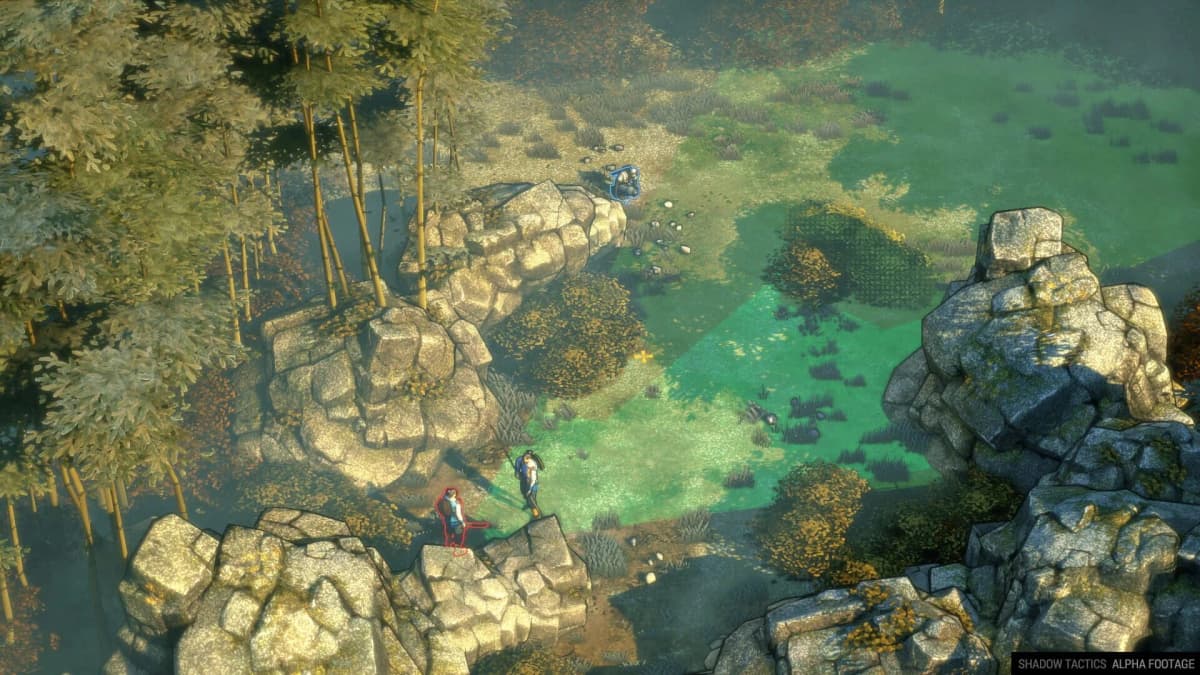
These are nitpicks, though, especially in the context of how much this port gets right. By the time I was midway through the campaign, the only real friction left was the one baked into the design: Shadow Tactics expects patience and attention. If those aren’t in your toolkit, no amount of frame-rate stability will save you.
Who This Is For On Switch 2
As someone who grew up on Commandos and Desperados, Shadow Tactics has always felt like the modern standard-bearer for this style of real-time tactics. The Switch 2 version doesn’t change that; it just makes it easier to fit into your life.
If any of this sounds like you, the port is an easy recommendation:
- You love stealth games that reward planning more than twitch reflexes.
- You enjoy figuring out systems and abusing them until the whole level feels like it’s dancing to your tune.
- You have fond memories of isometric tactics games and want something deeper than a lightweight indie stealth puzzler.
- You play a lot in handheld and want a meaty, 25–30+ hour campaign you can chip away at in focused sessions.
If, however, you’re looking for something more action-heavy or forgiving, Shadow Tactics probably isn’t going to magically click on Switch 2 just because it runs well. You will fail constantly. You will reload hundreds of times. Sometimes you’ll spend 20 minutes cracking a problem only to realise you missed a simpler route just off-screen. For me, that’s part of the charm – the game asks you to really learn its levels – but it’s not a “throw it on for five minutes while half-watching TV” experience.
FinalBoss // Gear
Level up your setup
01Best-selling Switch 2 gameson Amazon→02Switch 2 accessorieson Amazon→038BitDo controllerson Amazon→04Discounted game keyson Kinguin→Affiliate links · As an Amazon Associate, FinalBoss earns from qualifying purchases.
Want to Level Up Your Gaming?
Get access to exclusive strategies, hidden tips, and pro-level insights that we don't share publicly.
Ultimate Reviews Strategy Guide + Weekly Pro Tips