
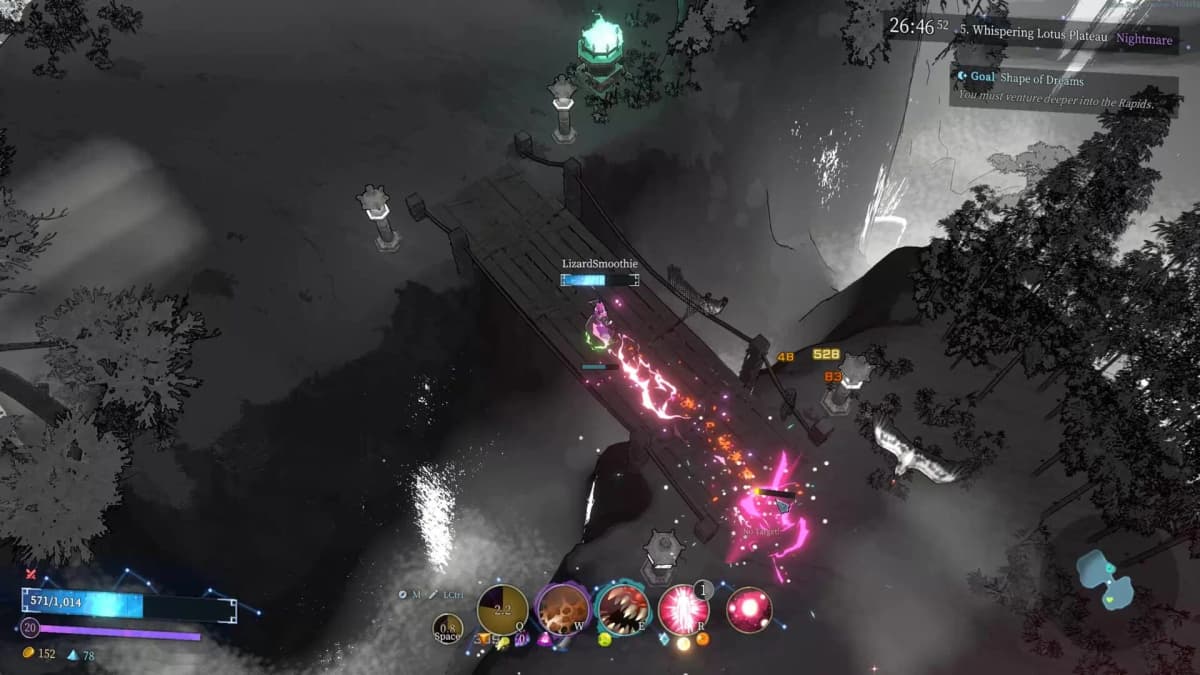
The most reliable way to tune a roguelite demo is to stop treating it like a static advertisement and start running it as a live experiment. Shape of Dreams, the co-op action roguelite from Lizard Smoothie and NEOWIZ, provides the clearest recent example of this approach working at scale. By combining live player analytics with rapid patch cycles, the team turned early Steam demo data into concrete changes that helped drive over 100,000 sales and 30,000 concurrent players within 24 hours of launch, eventually surpassing half a million copies sold. The lesson is straightforward: instrument your build, define your churn points, and ship targeted fixes fast enough that your next demo wave validates the changes.
Table of Contents (13)
What Shape of Dreams Proved About Demo Strategy
Shape of Dreams launched with immediate momentum. Within its first week, the game moved over 300,000 units on Steam, peaked at 45,000 concurrent users, and hit #4 on the Steam Global Top Sellers chart. That success was not accidental. NEOWIZ and Lizard Smoothie issued Day 1 hotfixes that adjusted progression pacing, reduced enemy HP and damage on Easy and Normal difficulties, and increased Stardust rewards. Those changes directly addressed friction points identified during the demo period, proving that the team was reading both quantitative data and qualitative feedback in real time. The result was a smoother onboarding experience that kept players inside the core loop long enough to generate replayability and monetization signals.
The Four Metrics That Matter
Demo analytics often drown teams in noise. Focus on four pillars that directly predict whether a roguelite will survive past its first weekend: concurrent users (CCU), retention curves, average playtime per session, and precise churn points. CCU tells you whether your marketing and Steam discovery loop are working. Retention curves show whether players come back after their first death. Playtime reveals if they are reaching the core loop at all. Churn points tell you exactly where they quit.
Shape of Dreams suggests three specific signals to embed inside these pillars. First, measure hook rate: how many players who finish the tutorial reach the end of their first run or first boss. If this number sits below 40 to 60 percent, your onboarding is too steep. Second, track replayability signals: do players start a second run, swap characters, or return the next day. For a high-skill roguelite demo, a Day-1 return rate between 25 and 35 percent is a strong indicator that the loop is sticky. Third, monitor monetization intent: wishlists, Discord joins, and follows. These actions predict purchase behavior better than raw CCU spikes.
From Numbers to Patch Notes
Data is useless if it cannot reach your build pipeline. Shape of Dreams demonstrates a clear translation layer. When analytics showed players dying too often before understanding the systems, the team did not just lower global difficulty. They targeted Easy and Normal enemy HP and damage values while increasing Stardust rewards to make early progression feel fair. This is the difference between a blind nerf and a surgical fix.
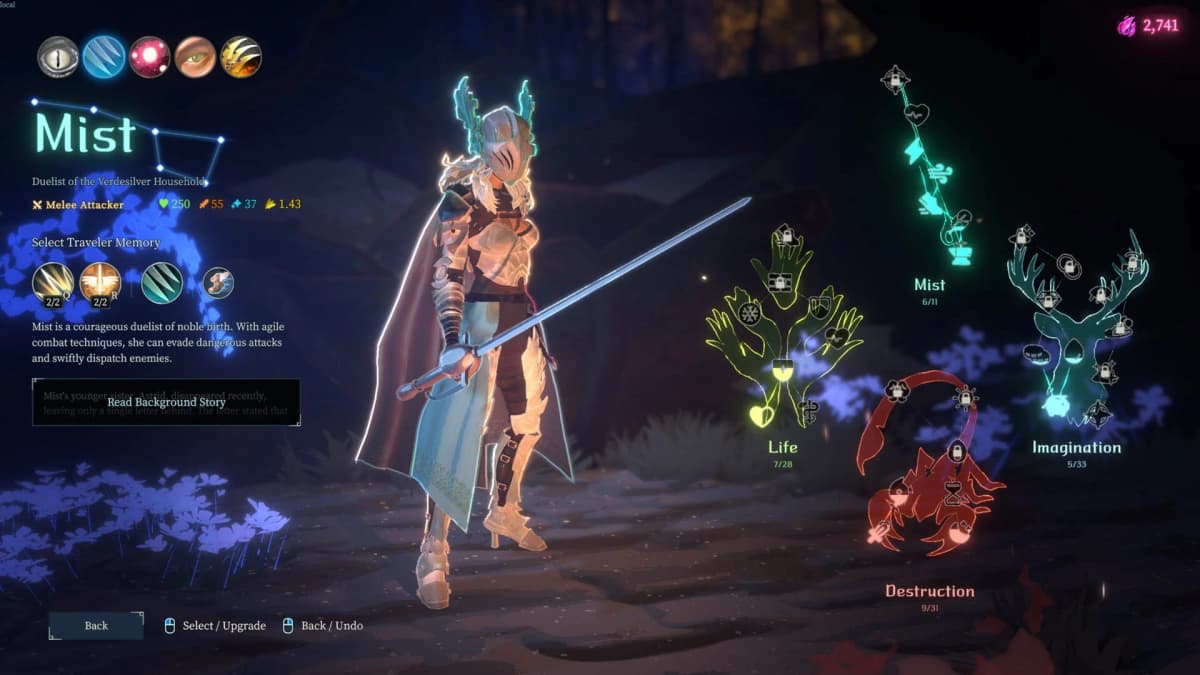
Use this hierarchy when converting findings into tasks. If churn clusters in the first ten minutes, check your control scheme. WASD and mouse support is now baseline for PC roguelites; any ambiguity here kills hook rate. If players clear the demo but never restart, the meta-progression is probably invisible or unrewarding. Add a clear unlock or carryover resource that persists between runs. If Day-1 retention is low, look at death-rate frequency and recovery time. Roguelites live on the tension between failure and the desire to try again. When failure feels cheap or recovery takes too long, players switch games.
Validate With the Next Demo Build
Every fix is a hypothesis until the next wave of players tests it. Treat your updated demo as an A/B test against the previous build. Keep the measurement window consistent: compare the first seven days of the old demo against the first seven days of the new one. Look for delta in hook rate, session length, and Day-1 return rate. If you moved the tutorial choke point and hook rate climbs, the fix worked. If you added meta-rewards and replayability stays flat, the reward is either too small or the core combat is not satisfying enough to sustain it.
Step-by-Step Implementation
Step 1: Instrument the Demo Before Marketing
Build telemetry into the demo that tracks session start, tutorial completion, first death, first boss encounter, run restart, and session end. Tag these events by difficulty and input method. Add events for control scheme selection and menu dwell time; if a player opens the settings menu three times in the first minute, they are likely fighting default binds. You need to know if controller players last longer than keyboard players, or if Easy mode retains better than Normal. Do not rely on Steam surveys alone; internal event logs expose churn points that store page data cannot.
Step 2: Define the Funnel With Hard Thresholds
Set explicit targets. Require that 40 to 60 percent of tutorial finishers reach the first boss or run end. Demand a 25 to 35 percent Day-1 return rate for a high-skill roguelite demo. Expect a meaningful percentage of players to wishlist or join your community hub after their second session. These thresholds are not arbitrary; they mirror the performance window that separates demos with strong full-release conversion from those that generate wishlists but never convert to purchases. If the metric is missing, the problem is specific enough to address.
Step 3: Build a Tight Feedback Loop
Run Steam Community threads, Discord channels, and Reddit alongside your telemetry. When Shape of Dreams players reported progression friction, the developers cross-referenced that sentiment with death-heatmaps and reward pacing data. Qualitative feedback tells you what feels wrong; analytics tell you where it is actually breaking. Neither works well alone.
Step 4: Ship Targeted Fixes, Not General Buffs
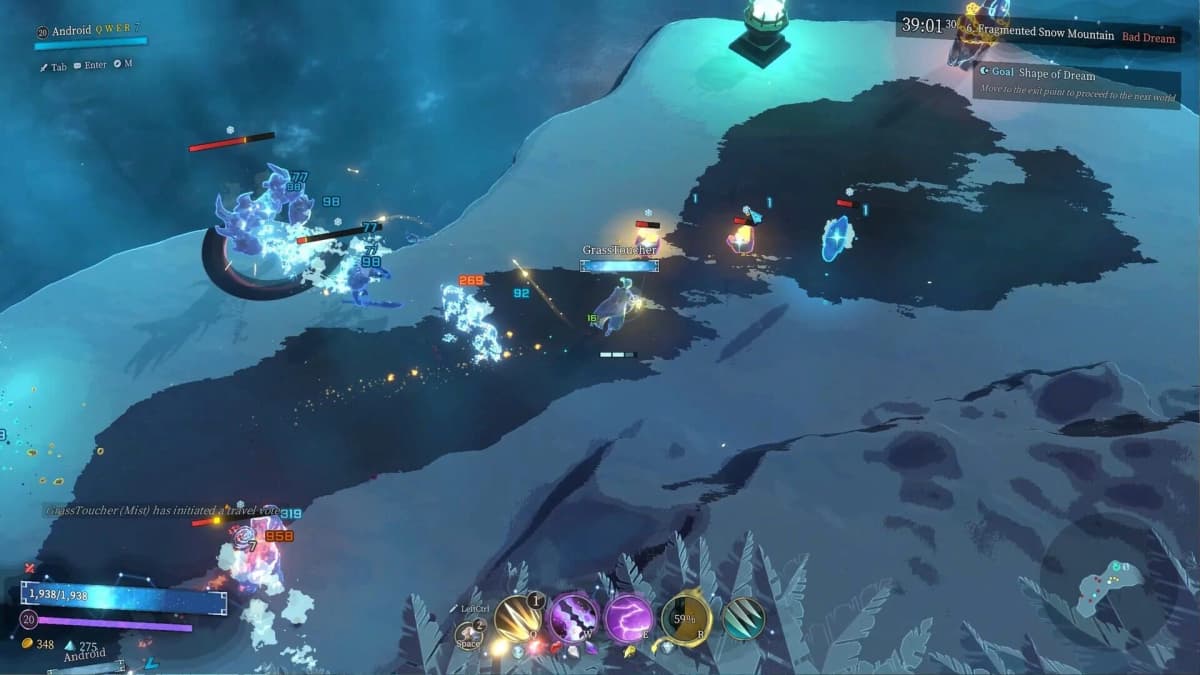
Avoid sweeping changes. If players are quitting at a specific encounter, adjust that encounter’s timing or telegraphing before you touch global damage numbers. If progression feels slow, increase the specific currency that gates the first unlock rather than showering the player with resources. Shape of Dreams increased Stardust rewards specifically to address early progression, not to break the economy. Precision preserves the design intent while removing friction.
Step 5: Measure the Delta
After deploying the patched demo, compare cohorts. Segment players who downloaded the original build versus the update. If hook rate climbs but monetization intent stays flat, you may have fixed onboarding without selling the long-term value. If both move, you have a build worth scaling into your full release marketing push.
Common Mistakes to Avoid
- Waiting for full release to tune: The demo is your cheapest laboratory. Fixing onboarding after launch burns review score momentum you cannot reclaim.
- Tuning for the loudest feedback: A vocal minority may demand easier bosses while your data shows the real churn happens in the tutorial. Trust the funnel first.
- Ignoring platform expectations: PC players expect full WASD and mouse rebind support. Missing this signals a lack of polish before they ever judge your combat.
- Neglecting replayability signals: A demo with high CCU but low second-run rate is a fireworks show, not a sustainable product. Watch the loop, not just the launch.
Context in the Roguelite Market
Shape of Dreams entered a crowded field alongside titles like Warm Snow and Deep Rock Galactic: Survivor. What separated its demo strategy was speed. While many indie teams treat the demo as a one-off festival build, Lizard Smoothie treated it as a live service onboarding ramp. Publisher NEOWIZ, whose portfolio includes DJMAX RESPECT, provided infrastructure for rapid deployment, but the methodology applies to solo developers as well. The tools are available on Steam; the discipline to act on the data is what matters.
Bottom Line
Turn your roguelite demo into a tuning instrument. Track CCU, retention, playtime, and churn. Map those numbers to hook rate, replayability, and monetization intent. When the data points to friction, ship a targeted fix-adjust a control scheme, rebalance a specific difficulty tier, or accelerate a specific currency-and then measure whether the next cohort behaves differently. Shape of Dreams proved that this cycle drives sales and concurrent player peaks. Your demo should do the same.
FinalBoss // Gear
Level up your setup
01Graphics cardson Amazon→02Gaming laptopson Amazon→03High-refresh gaming monitorson Amazon→04Discounted game keyson Kinguin→
Affiliate links · As an Amazon Associate, FinalBoss earns from qualifying purchases.
Want to Level Up Your Gaming?
Get access to exclusive strategies, hidden tips, and pro-level insights that we don't share publicly.
Ultimate Guide Strategy Guide + Weekly Pro Tips