
Version 1.0 is usually where an automation game plants a flag, declares itself complete, and lets the community do the rest. Shapez 2 is doing something slightly more interesting. Its full release on April 23, 2026 doesn’t just add the expected polish pass, mod hooks, and achievement layer; it changes the game’s long-term logic with Manufacture Mode, a system built around permanent industrial scale instead of the old “feed the machine and move on” rhythm.
That is why this launch matters. Not because Shapez 2 has technically left Early Access after more than a year and a half, though it has. Not because it has already sold more than 700,000 copies and is sitting on a 97% positive Steam user rating, though those are real numbers and unusually strong ones for a factory game this abstract. It matters because tobspr Games looked at a formula that was already working and decided 1.0 should push harder on commitment, scale, and replayable mastery rather than coast on goodwill.
Table of Contents (7)
Key takeaways
- Manufacture Mode is the real story of 1.0. It replaces the old end-goal structure with a more permanent mega-factory challenge built around rebuilding and optimizing the Vortex Platform.
- Official Steam Workshop integration is not filler. For a systems-heavy automation game, full mod support is a serious longevity play, especially now that the base game has stabilized.
- The revamped tutorial and Classic Mode tweaks matter more than the trailer-ready features, because onboarding is where minimalist factory games usually lose curious players.
- This release reads less like a finish line and more like the point where Shapez 2 defines what kind of automation game it wants to be after the Early Access experiment.
Manufacture Mode turns a clean puzzle box into an industrial planning game
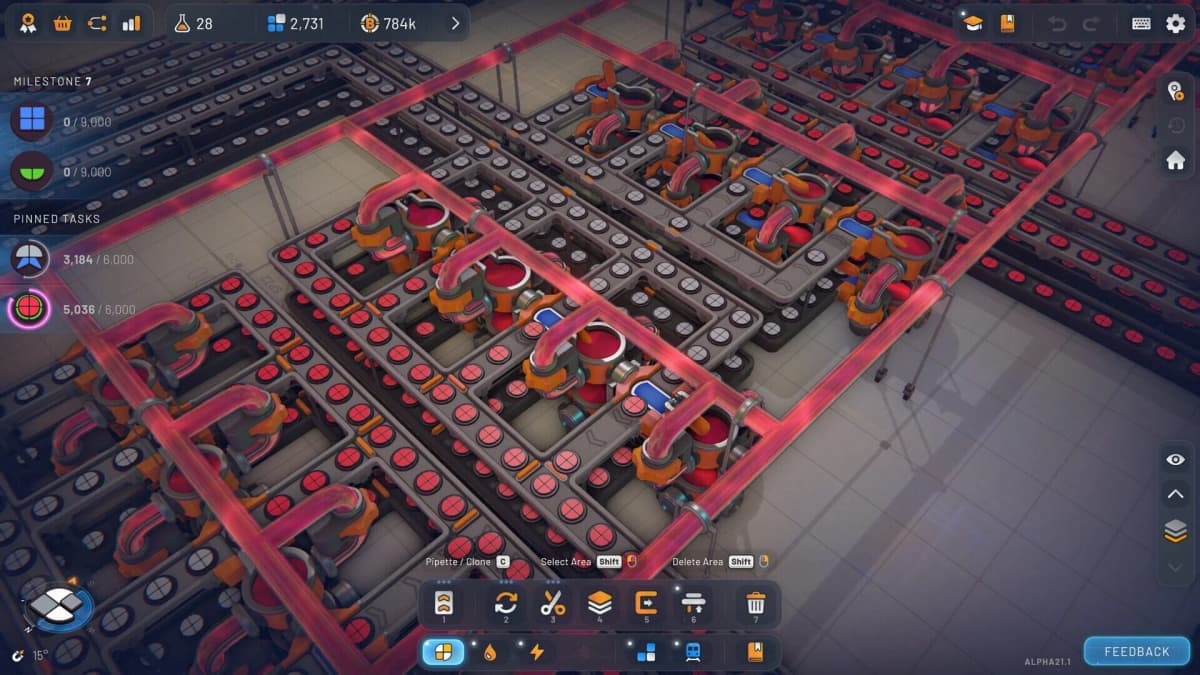
The press-friendly headline is that Shapez 2 now has a new mode. The more important detail is what that mode asks from the player. Manufacture Mode shifts focus toward rebuilding the Vortex Platform through large-scale, permanent production chains, with alternate methods such as trains and spiral expansion feeding the process. In plain terms: this is less about solving a neat shape-processing problem and more about constructing infrastructure you actually have to live with.
That sounds subtle until you think about how factory games tend to divide their audience. One group wants elegant throughput puzzles. The other wants the late-game madness: rail routing, systemic bottlenecks, sprawling logistics, and the satisfaction of a machine that keeps running because you designed it properly three hours ago. Manufacture Mode is a direct nod to the second group.
It also addresses a common issue in automation design. A lot of games in this space have a strong early and mid-game loop, then hit a point where scale becomes either tedious or ornamental. You are technically building bigger, but not for a meaningfully different reason. By reframing the top-end objective around sustained manufacturing and alternative network planning, Shapez 2 is trying to make endgame scale feel like a different discipline, not just more of the same.
If I were in front of the PR rep, the question would be simple: how much of Manufacture Mode is genuinely new decision-making, and how much is a more elaborate resource sink for players who were already going to optimize everything anyway? That distinction decides whether this is a great 1.0 feature or just a very attractive treadmill.
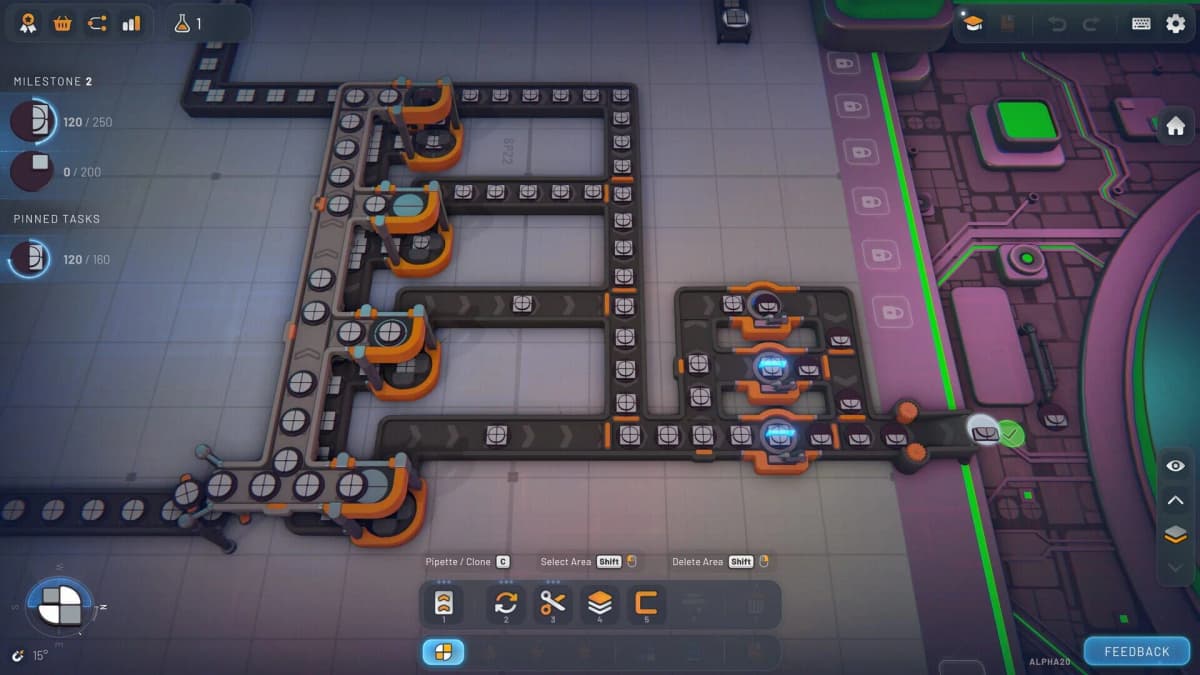
The smartest 1.0 additions are the least glamorous ones
Mod support will get attention because it always does, and achievements are an easy box to tick for a full release, but the rebuilt tutorial may end up doing more practical work than either of them. Factory games routinely underestimate how hostile they look to new players, especially when their systems are visually clean enough to appear simple while hiding ugly layers of production logic underneath.
Shapez 2 has always traded on readability. Shapes are shapes. Belts are belts. Inputs and outputs are legible in a way that most conveyor-belt sicko games are not. But readability is not the same thing as onboarding. The moment a player has to think in ratios, routing, multi-step transformations, and spatial organization, the abstraction stops feeling elegant and starts feeling like homework if the teaching is off by even a little.
So yes, the revised tutorial belongs in the same sentence as the flashy 1.0 additions. It is not decorative. It is structural. The same goes for Classic Mode tweaks and performance improvements. These are the kinds of changes that determine whether a launch surge converts into a healthier long tail or just spikes, flatlines, and hands the rest of the job to Steam reviews.
This is where tobspr looks more disciplined than a lot of indie studios graduating from Early Access. Plenty of teams use 1.0 to celebrate survival. They stack on one or two headline features, call it a complete package, and quietly leave old friction points in place because those are harder to market. Shapez 2 appears to have spent that capital on foundations as well as features. That is less glamorous and more useful.
Steam Workshop support is a content strategy, not a community favor
Official modding support via Steam Workshop is the other major signal in this release, and it deserves to be read correctly. This is not just tobspr being generous to a creative player base. It is a deliberate way of extending the design space of a game whose whole appeal is system expression.
Automation communities are unusually good at self-sustaining ecosystems. Give them a stable ruleset, good tools, and a distribution platform that removes friction, and they will spend years building challenges, quality-of-life adjustments, alternate scenarios, and absurd optimization toys. That matters more here than it would in a more authored game because Shapez 2 is fundamentally a framework for solving production problems. Mods don’t sit on top of that framework; they multiply it.
There is also a business reality underneath the nice community story. Full release is where many indie games face the awkward question they avoided during Early Access: what now? If your game is mechanically rich but aesthetically minimal, your post-1.0 roadmap cannot rely forever on spectacle. Workshop support buys time, keeps the active user base engaged, and reduces pressure for the studio to personally invent every future reason to return.
That is not cynical. It is smart. The factory-automation space has trained players to expect longevity. Factorio set one standard, Satisfactory set another, and every game in the lane now gets judged on whether it can become a hobby, not just whether it can fill a weekend. Shapez 2 obviously occupies a more abstract, puzzle-forward corner of the genre, but the expectation still lands: players want depth, extensibility, and room for self-directed obsession. Workshop support is how you tell them the doors are staying open.
The uncomfortable question is whether 1.0 makes the game broader or just deeper
There is one point the launch framing understandably does not dwell on. Features like Manufacture Mode, larger-scale production goals, and expanded optimization pathways make the game more robust for its core audience. They do not automatically make it more appealing to people who bounced off the genre in the first place.
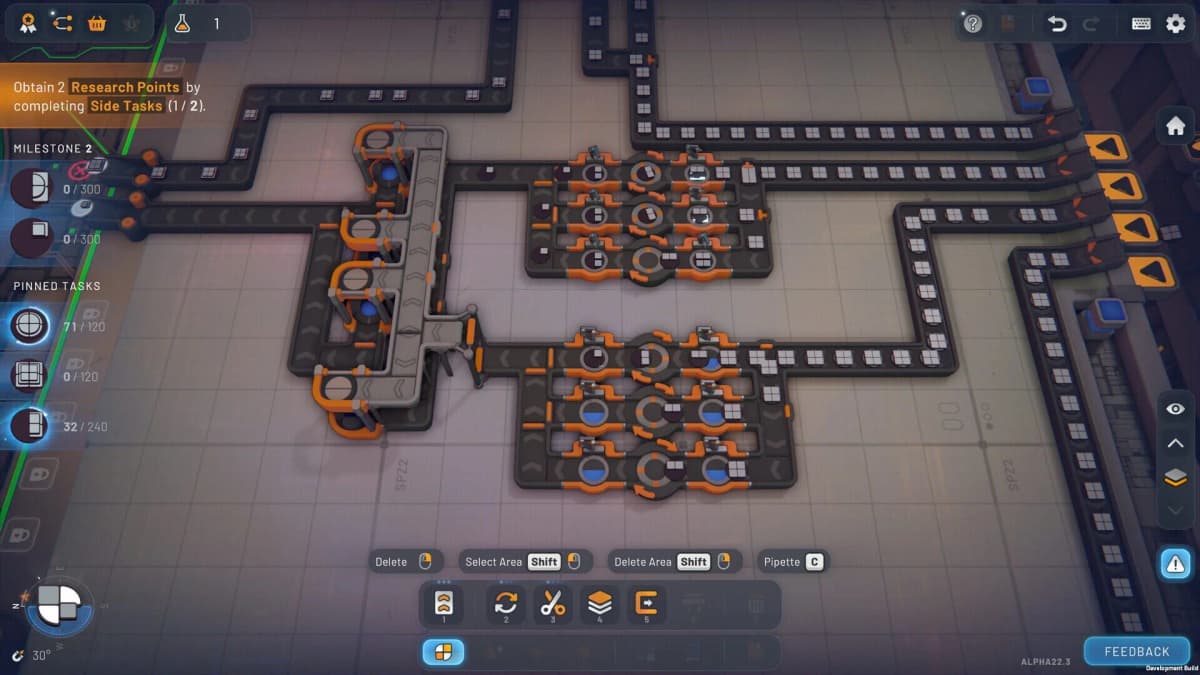
That is not a flaw, but it is worth saying out loud because “biggest update yet” can hide a very specific kind of growth. According to coverage around the launch, Shapez 2 also brings visual and audio upgrades alongside performance improvements. Those help. The 4Gamer write-up, translated broadly, also frames the game as the kind of automation swamp that is absorbing and occasionally frustrating, with its expanded three-dimensional design deepening the sandbox feel while increasing complexity. That tracks. More freedom and more scale are good for committed players; they are not magic for everyone else.
So the honest read is this: 1.0 likely makes Shapez 2 a better and more complete version of itself, not a fundamentally different sales pitch. If you already enjoy production-line logic, throughput puzzles, and the weird meditative panic that comes from realizing one badly placed module has poisoned an entire chain, this release looks excellent. If you need heavy narrative framing, handcrafted mission spectacle, or the tactile charm of a more literal factory sim, the cleaner presentation may still feel clinical by design.
That design purity is part of the appeal. It is also a hard limit. Most studios would rather not say that during launch week. It is still true.
What to watch next
- First, watch how quickly the Steam Workshop ecosystem fills out over the next few weeks. Not just volume, but what kinds of mods appear: content packs, scenario design, quality-of-life fixes, or full systemic rewrites. That will reveal how flexible the toolset really is.
- Second, watch player response to Manufacture Mode specifically. If the community treats it as the default “real” way to play endgame, then tobspr successfully redefined the game’s long-term structure. If it is treated as an optional curiosity, the old progression loop may still be the main attraction.
- Third, keep an eye on whether the improved tutorial meaningfully broadens the audience. On Steam, that usually shows up less in raw review score and more in the language of new-player reviews: fewer notes about confusion, more notes about clarity and momentum.
- Finally, watch post-1.0 support cadence. The studio has signaled future content beyond full release. The question is whether that support sharpens the new industrial-scale identity or starts scattering into miscellaneous feature creep, the traditional enemy of tidy automation design.
TL;DR
Shapez 2 launched version 1.0 on April 23, 2026, exiting Early Access with Manufacture Mode, Steam Workshop support, achievements, Classic Mode tweaks, and a rebuilt tutorial. The important part is that 1.0 pushes the game toward permanent large-scale factory planning instead of just polishing what already existed. The next real indicator is whether Manufacture Mode and Workshop support become the center of the game’s long tail rather than nice launch-week bullet points.
FinalBoss // Gear
Level up your setup
01Graphics cardson Amazon→02Gaming laptopson Amazon→03High-refresh gaming monitorson Amazon→04Discounted game keyson Kinguin→Affiliate links · As an Amazon Associate, FinalBoss earns from qualifying purchases.
Want to Level Up Your Gaming?
Get access to exclusive strategies, hidden tips, and pro-level insights that we don't share publicly.
Ultimate Editor's Pick Strategy Guide + Weekly Pro Tips