
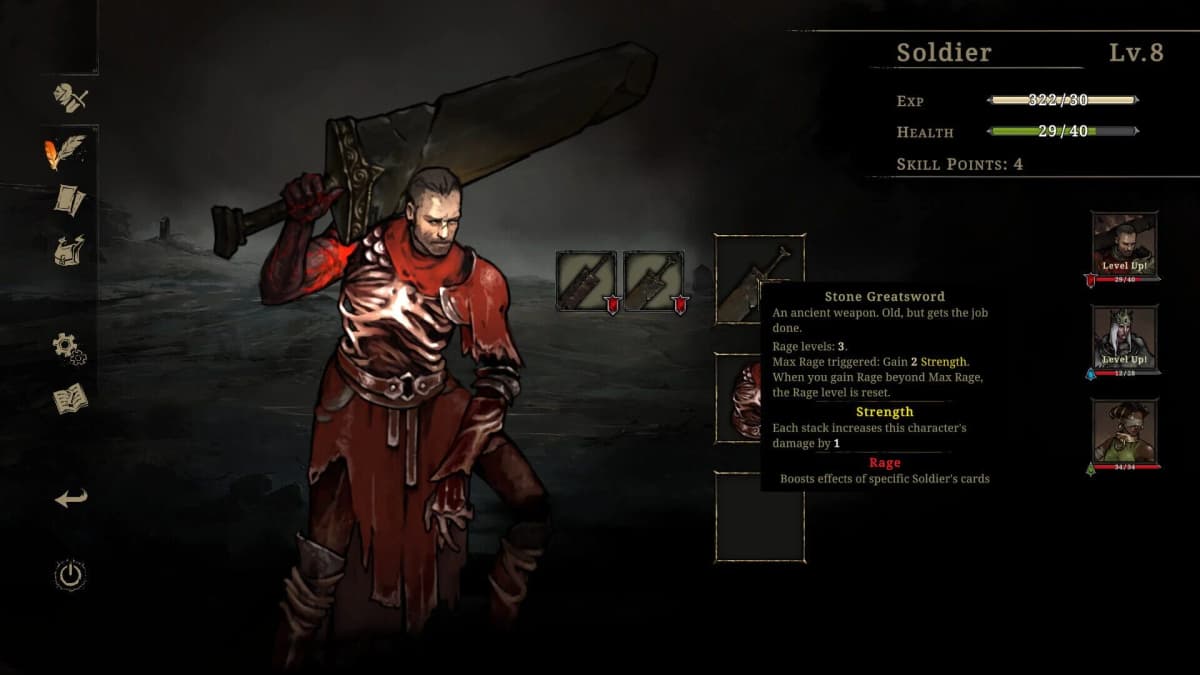
Shards of Order’s early progression is built around one combat rule: the best card is the one that gives your party control of the next dangerous enemy turn. Start by prioritizing Lev for immediate damage and stabilization, add Ayla for Quiver-based arrow pressure and flexible targeting, then develop Thade’s Rot and Time Counter disruption. That three-part plan gives the shared deck answers for the situations that end early runs: an enemy about to act, a target that needs pressure from range, and a turn that must be delayed before it snowballs.
The Time Counter system can look like a simple countdown at first, but it is the structure holding every fight together. Card damage matters, upgrades matter, and character swaps matter, yet all of those decisions become stronger when they are made with the visible enemy counters in mind.
Table of Contents (12)
Why Early Combat Revolves Around the Time Counter
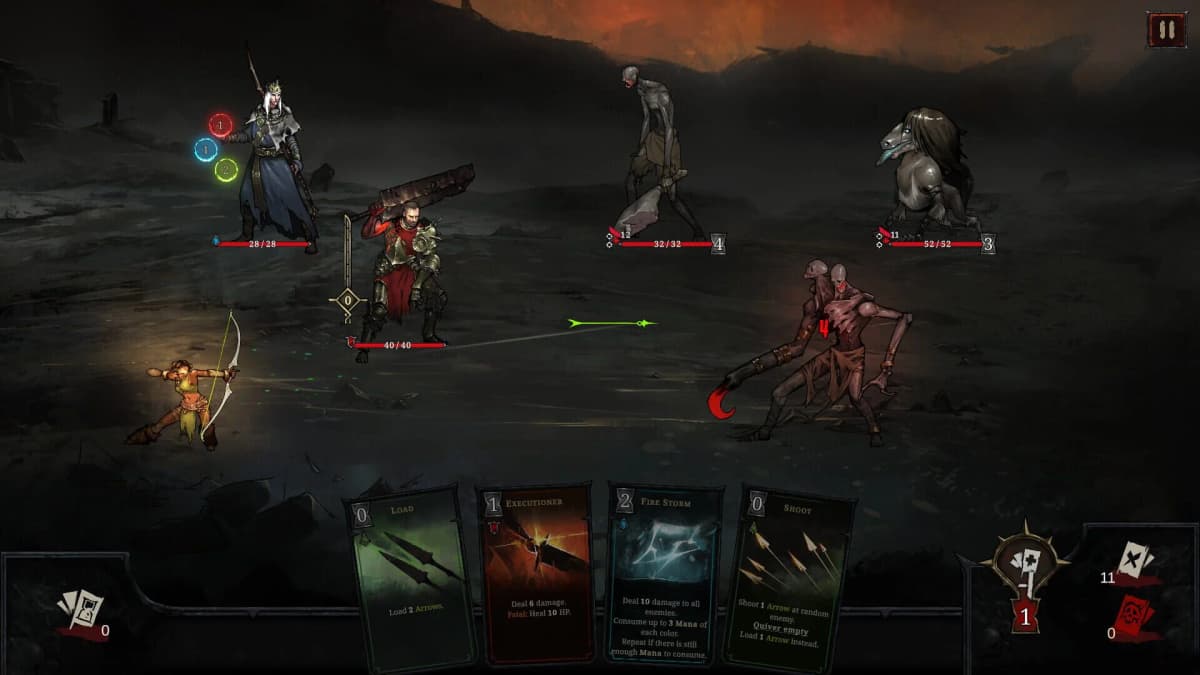
Every enemy in combat has a visible Time Counter, while every card has a Time Cost. Playing a card changes the timing on the field, creating a constant trade-off between acting now and protecting the party from what is about to happen next.
Use the enemy closest to acting as your first reference point. A high-health target can wait if another enemy is about to resolve a dangerous turn. Early encounters become far more manageable once target priority follows timing instead of health bars alone.
Use this combat order before committing a card
- Check which enemy Time Counter is closest to resolving.
- Decide whether that enemy needs immediate damage, ranged pressure, or a Time Counter debuff.
- Play setup cards only after the next dangerous enemy action is covered or pushed into a safer window.
- Reassess the counters after each card instead of repeating the same attack sequence automatically.
Common early mistake: spending a strong damage card on the most durable enemy while a weaker enemy is about to act. The fight then becomes harder because the party has traded its safest response window for damage that did not solve the immediate problem.
Time Counter manipulation is especially valuable when an encounter has multiple enemies. Removing one target is useful, but delaying or disrupting the enemy that would act first can protect the entire party and give your next shared-deck cycle more room to work.
How the Shared Deck Changes Your Starter Card Choices
The party uses a shared deck, so cards played for Lev, Ayla, and Thade affect the options cycling into reach for everyone else. Early unlocks work best when they create distinct jobs instead of loading the deck with several cards that compete for the same urgent moment.
Think of the early deck as a compact tool kit. Lev covers immediate pressure. Ayla creates and spends ranged pressure through her Quiver and arrows. Thade changes the timing of the battlefield through Rot and Time Counter debuffs. Each role supports the others because a delayed enemy turn gives Ayla time to prepare, while Lev can remove a threat before it becomes worth slowing.
- Lev: immediate damage and basic stabilization when an enemy has to be answered now.
- Ayla: Quiver-filling arrow mechanics, ranged pressure, and flexible target selection.
- Thade: Rot and Time Counter debuffs that slow or disrupt future enemy turns.
A balanced early deck has a cleaner recovery path after a bad draw or an awkward counter position. If the deck contains only long-term setup, the party can lose control before those cards pay off. If it contains only direct damage, it can run out of safe ways to manage several approaching enemy turns.
Best Early Card Priorities for Lev
Lev should receive the first priority because he provides the party’s most immediate damage and basic stabilization. His early value comes from cards that make reliable use of Strength and Rage damage scaling, especially when the current enemy Time Counter demands a direct answer.
Prioritize Lev cards that keep his damage package dependable rather than overly conditional. The goal is to have a response that can remove pressure from the board when Thade has not yet created a safe delay and Ayla has not yet built up her Quiver.
What Lev’s early cards should accomplish
- Convert Strength and Rage scaling into damage that matters immediately.
- Give the shared deck a reliable answer to an enemy close to acting.
- Reduce the need to spend every turn on slower setup.
- Work well when an encounter has changed card costs and the party needs a simple, direct line.
Pay attention to Time Cost when evaluating Lev’s upgrades. A stronger attack is only a clear upgrade when its timing still lets the party handle the next enemy counter. In early progression, a slightly less explosive card can be more valuable if it preserves control of the field.
Best Early Card Priorities for Ayla
Ayla gives the shared deck its ranged pressure and targeting flexibility. Her early card priorities should support the Quiver-filling arrow mechanic while leaving the party able to answer whichever enemy is becoming dangerous first.
Quiver setup is strongest during a safe timing window. Build it after Lev has removed an urgent threat or Thade has created breathing room through a debuff. Once Ayla has arrows ready, she can apply pressure where it is most useful instead of waiting for the fight to become comfortable.
How to use Ayla without falling behind on tempo
- Fill the Quiver when the nearest enemy turn is already controlled.
- Use arrow pressure against the enemy whose timing makes it the priority.
- Favor flexible targeting when several counters are approaching at different speeds.
- Let Lev handle the immediate emergency when Ayla’s current card is mainly setup.
Ayla’s strength is that she prevents the deck from becoming too dependent on one kind of answer. Lev can solve a problem through immediate force; Ayla helps the party pressure the correct target at the correct time. That distinction matters whenever the Time Counter order forces the party to change targets mid-fight.
Best Early Card Priorities for Thade
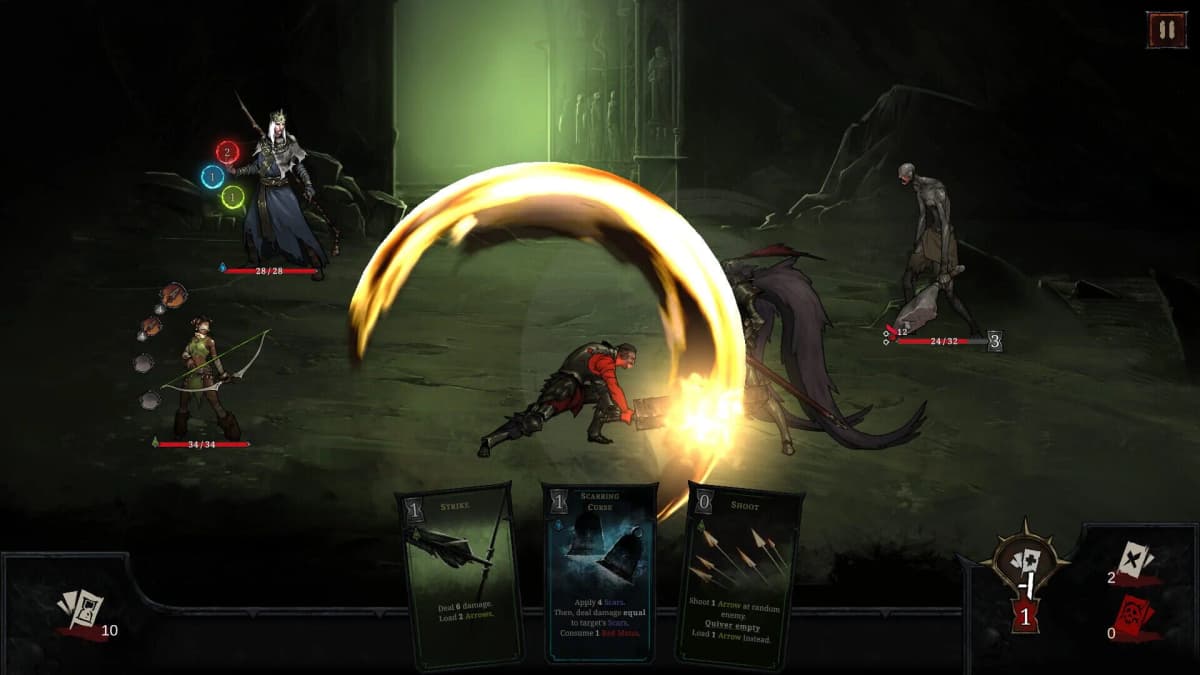
Thade’s early value comes from Rot and Time Counter debuffs. His cards are the best fit for fights that become dangerous because enemies are about to act in sequence, especially when the party needs to create a safer future turn rather than simply deal more damage right now.
Prioritize Thade unlocks that support slowing or disrupting the enemy field. These cards work best when they are used before opponents begin chaining actions together. Waiting until the counters are already overwhelming can leave Thade with fewer useful timing windows and force Lev to spend valuable damage cards defensively.
When Thade should take priority
- Several enemies are approaching their turns at once.
- The party needs time to build Ayla’s Quiver or prepare a stronger follow-up.
- Lev cannot remove the immediate threat efficiently enough on his own.
- A Time Counter debuff will create a safe turn for the shared deck to cycle into better answers.
Rot and Time Counter cards are not substitutes for Lev’s front-loaded damage. They make that damage more efficient by ensuring the party gets to use it before the enemy field takes over. The strongest early combat turns often begin with Thade changing the timing, then use Lev or Ayla to capitalize on the window that creates.
Revive Planning and Character Swap Timing
Revive options give the party a way to recover from a character falling in combat, but they should be treated as insurance rather than the center of the plan. A revive helps most when it restores the party’s ability to contest the next dangerous enemy turn. It does far less when the enemy Time Counters are already left unchecked.
After using a revive option, return to the same priority order: identify the enemy about to act, decide whether to remove or delay that threat, and only then resume setup. The temptation is to chase damage immediately after recovering a party member, but the safer line is usually the one that stabilizes the Time Counter order first.
Character swaps follow the same principle. Swap when the incoming character can solve the current timing problem or capitalize on a safe window already created. A swap made only for long-term value can be costly if an enemy is about to resolve and the active character is the one holding the immediate answer.
- Confirm that the closest enemy counter is covered before making a setup-focused swap.
- Swap to Lev when immediate damage is the cleanest way to stabilize.
- Swap to Ayla when ranged pressure or flexible targeting will answer the right enemy.
- Swap to Thade when delaying or disrupting an approaching enemy turn creates the larger advantage.
Using This Plan Through Breathless Sands
The Breathless Sands route is where these early decisions start demanding consistency. The progression moves from the Purged Village through the Cathedral of Order and into the Breathless Sands, combining dialogue choices, combat encounters that can change card costs, and puzzle or checkpoint sequences.
During this section, the route includes recovering Water and Eye Stones, cleansing cursed armor, opening the Wine King’s Pyramid, and facing the timed Wine King battle. The details change from encounter to encounter, but the combat plan remains stable: account for altered card costs, keep an immediate answer available, and use Time Counter control to stop the field from getting ahead of the party.
Card-cost-changing encounters deserve special attention. Recalculate the timing before repeating a familiar line, because a card that was safe in the previous encounter may now move the counters into a much worse order. This is exactly where a deck with Lev’s direct pressure, Ayla’s ranged flexibility, and Thade’s disruption provides more reliable options than a deck built around one character alone.
The Wine King’s timed fight puts extra value on cards that contribute quickly. Enter with a plan that can produce immediate damage, apply ranged pressure to the relevant target, and disrupt enemy timing when the battle begins to tighten. Long setup sequences are far less forgiving when the encounter itself is imposing a time limit.
Early Progression Checklist
- Read the visible Time Counters before choosing a target.
- Prioritize the enemy closest to acting over the enemy with the largest health pool.
- Build Lev around dependable Strength and Rage-scaled damage.
- Use Ayla’s Quiver and arrows during windows where the next enemy turn is already safe.
- Use Thade’s Rot and Time Counter debuffs before enemy actions begin to snowball.
- Keep the shared deck balanced between immediate damage, ranged pressure, and timing control.
- Reassess every combat line when an encounter changes card costs.
- Use revives and swaps to restore control of the next enemy turn.
FinalBoss // Gear
Level up your setup
01Top-rated gaming headsetson Amazon→02High-refresh gaming monitorson Amazon→03Gaming chairson Amazon→04Discounted game keyson Kinguin→
Affiliate links · As an Amazon Associate, FinalBoss earns from qualifying purchases.
Want to Level Up Your Gaming?
Get access to exclusive strategies, hidden tips, and pro-level insights that we don't share publicly.
Ultimate Guide Strategy Guide + Weekly Pro Tips