
Table of Contents (11)
Why 100 Million Players Is More Than a Vanity Metric for Siege
When Ubisoft announced that Rainbow Six Siege crossed the 100 million player mark in February 2026, it wasn’t a vanity stat—it was the payoff for a decade of relentless live-service work. Since its launch in December 2015, Siege has avoided splashy rebrands or miracle overhauls. Instead, Ubisoft leaned into disciplined quarterly content drops, constant balancing, and a steadily maturing esports ecosystem. Now, ten years on, growth—not just maintenance—is the rare outcome in AAA live service.
Key Takeaways
- Siege’s longevity stems from rigorous live-ops: regular seasonal content, urgent bug fixes and a thriving competitive circuit.
- Acquisition plays—Siege X relaunch, Free Access, Rainbow Six Mobile and the Tencent/Vantage partnership—aim to funnel new players without diluting core tactics.
- Free-to-play invites moderation and monetization challenges; Ubisoft balances a “taste-test” funnel with gated ranked access to protect competitive integrity.
- Tencent-backed Vantage Studios supercharges global reach—especially in China—but external influence over balance warrants scrutiny.
A Decade of Steady Growth
Siege began life as a niche tactical shooter—a sharp departure from run-and-gun titles of the mid-2010s. Ubisoft Montreal committed to live-ops from day one, rolling out four seasons in Year 1, each adding two operators and tweaks to the flagship House map. By 2020, consistent content and balancing lifts had grown the player base to 70 million. From 2020 to early 2026, Siege added another 30 million—an average of 5 million new players per year. That steady pace is almost unheard of in AAA shooters past launch week.
Key inflection points include:
- Operation Chimera (2018) launching the Road to SI (Six Invitational) with integrated ESL partnerships.
- Operation Phantom Sight (2019) overhauling user interface and adding low-spec PC support to widen the funnel.
- Siege X relaunch (late 2025) modernizing the decade-old client with performance optimizations and graphic updates.
- Rainbow Six Mobile global debut on February 27, 2026, complete with 5v5 maps and Operator Deimos, creating a parallel pipeline for acquisitions.
Esports as a Growth Engine
Unlike most shooters that lean on seasonal cosmetics and battle passes, Siege’s esports framework has doubled as marketing. Ubisoft’s annual Six Invitational tournaments—featuring pro teams from around the world—routinely pull in six-figure peak viewers on Twitch. The 2025 Six Invitational prize pool stood north of $2 million, while regional Majors across Europe, North America and Asia boosted visibility.
François-Xavier Deniele, Ubisoft’s VP of Marketing and Esports for Siege, summed up the approach to GamesIndustry.biz: “For us, your car is always running. We never park Siege for an off-season—every update, bug fix and tournament feed into the same ecosystem.” That relentless cycle has cemented Siege’s reputation among competitive fans and kept it top-of-mind for casual players watching pro streams.
Onboarding and Acquisition: The Quiet Engine
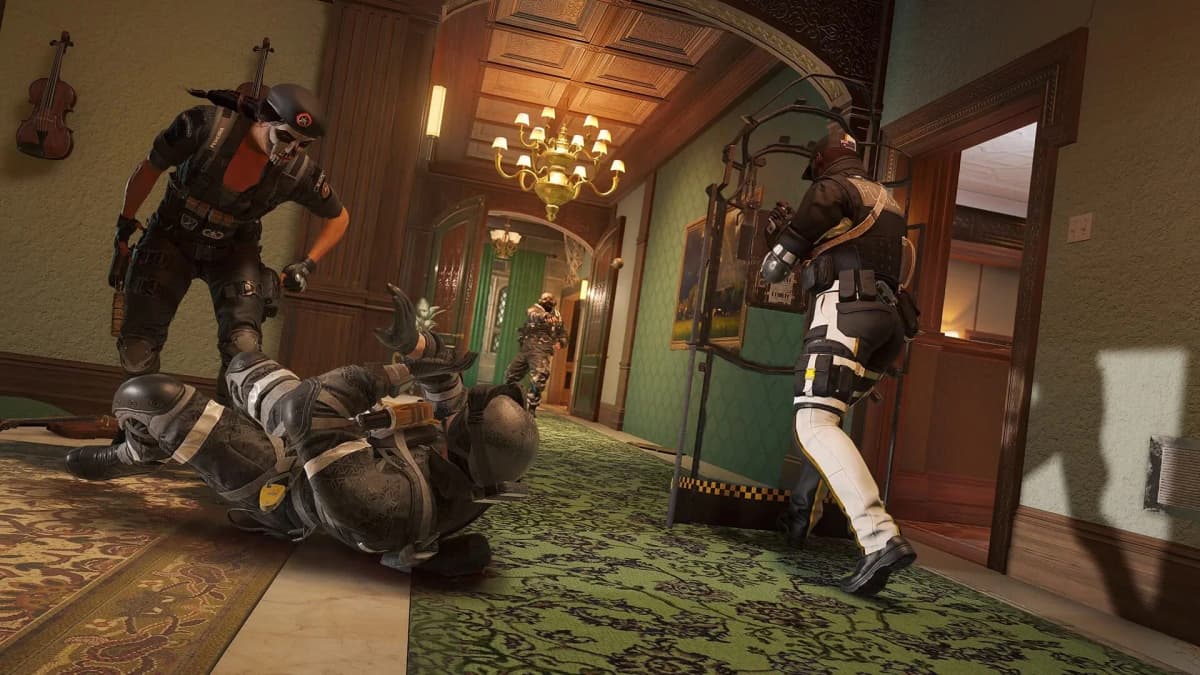
Ten years in, Siege’s largest hurdle is welcoming newcomers into a game built for veterans. The deep operator pool—each with unique gadgets and maps designed around destructible environments—can overwhelm first-timers. Ubisoft’s solution is twofold. First, Siege X restricts initial operator access: new players start with a curated subset of five entry-level operators before grinding or purchasing the rest. Second, Free Access (“taste-test funnel”) grants a time-limited trial of the full operator roster, while ranked play remains gated behind a paid unlock.
This dual approach hedges the risk of trial junkies—players who jump in for free weekend events then vanish—against diluting competitive integrity. Deniele admits free-to-play spikes registrations but also spikes moderation tickets. “We’re OK with sacrificing some short sessions if it means unlocking markets that won’t buy a $40 client upfront,” he says. With Rainbow Six Mobile now live on iOS and Android, Ubisoft effectively tapped a second channel for fresh recruits, hoping mobile-to-console conversion eases the pressure on PC and console servers.
The Uncomfortable Trade-Offs
Opening the gates wider comes at a cost. Managing a live-service shooter requires non-stop sprints: content teams run on a quarterly cycle, while devOps squads are on call to patch exploits and balance shifts. Free-to-play raises moderation challenges—abusive language or cheating attempts jump—and a partial paywall for ranked matches forces designers to carefully tune progression economies.
Then there’s the Tencent-backed Vantage Studios partnership, announced in late 2025. Vantage brings fresh funding, engineering capacity and China market expertise. But entrusting a slice of creative control in a game where balance is sacrosanct invites questions. Can outside stakeholders reshape Siege’s finely tuned meta? Will revenue-sharing expectations conflict with a fair competitive arena? Ubisoft’s leadership insists Vantage won’t compromise integrity, but it’s a signal the community will watch closely.
Lessons from Live-Ops Discipline
Siege’s trajectory wasn’t built on single big events—it came from doing the small things right, repeatedly. A look back at the last ten years shows:
- Over 40 seasonal content drops adding new Operators, maps, or major map reworks.
- More than 1,200 bug-fix patches and balance updates, averaging three per month.
- A competitive ecosystem spanning amateur leagues to the Six Invitational, maintaining hundreds of thousands of unique viewers per season.
- Community-voted modes like Wildcards Siege (Dec 2025) that let players tweak matchmaking rules, proving Ubisoft listens.
Other live-service shooters have faltered trying to chase the next big gimmick. Siege doubled down on incremental upgrades, empowering its esports scene to pull in fresh eyeballs—and then funneling those viewers into the live player base.
What Questions Remain?
While 100M players is a powerful headline, the real story unfolds in retention and monetization metrics. My top question for Ubisoft’s PR team: “Beyond installs, what conversion and Day-28 retention benchmarks will decide if Free Access and Mobile truly deliver sustainable growth?” Without those numbers, high registration counts could mask a revolving door of trial fervor.
Industry reports peg healthy Day-28 retention for top live-service shooters at around 30–35%. If Siege’s Free Access conversion falls below 15%, or if mobile cross-play cannibalizes PC spending rather than complementing it, growth may plateau.
Signals to Watch Next
- Mobile Launch Metrics (Feb 27, 2026): regional adoption rates—especially China performance via Vantage partnership.
- Siege X and Free Access (Q2–Q3 2026): Day-28 and Day-90 retention, plus conversion from free trial to purchase/ranked.
- Esports Health: sponsorship uptake, club revenue shares and whether tournament prize pools keep climbing.
- Community Sentiment: matchmaking quality, moderation statistics and toxicity reports post-F2P onboarding.
Conclusion
Hitting 100 million players underscores that Rainbow Six Siege’s ten-year journey wasn’t luck—it was the result of relentless live-ops discipline, sustained esports investment and cautious onboarding strategies. Ubisoft’s latest pushes—Siege X, Free Access, mobile launch and the Tencent/Vantage tie-up—are logical next steps. But the true test will lie in conversion and retention metrics, esports health and community balance.
TL;DR
Rainbow Six Siege’s climb to 100M players proves live-service rigor pays off. Steady content, esports scaffolding and dual-track onboarding (Siege X + Free Access) built a durable growth engine. Now, conversion, Day-28 retention and competitive integrity will determine if Siege’s next phase sticks.
FinalBoss // Gear
Level up your setup
01Top-rated gaming headsetson Amazon→02High-refresh gaming monitorson Amazon→03Gaming chairson Amazon→04Discounted game keyson Kinguin→Affiliate links · As an Amazon Associate, FinalBoss earns from qualifying purchases.
Want to Level Up Your Gaming?
Get access to exclusive strategies, hidden tips, and pro-level insights that we don't share publicly.
Ultimate Gaming Strategy Guide + Weekly Pro Tips