
Game intel
Silent Hill f
Hinako's hometown is engulfed in fog, driving her to fight grotesque monsters and solve eerie puzzles. Uncover the disturbing beauty hidden in terror. Silent…
I went into Silent Hill f with my guard up. I’m one of those people who still has a save file parked by the apartment staircase in Silent Hill 2 because I love revisiting that exact sensory dread-radio crackle, rust, fog you can taste. So when Konami said “1960s rural Japan, red spider lilies, high schooler protagonist,” my first reaction was equal parts curiosity and “don’t you dare.” After about 15 hours on PS5 (Pulse 3D headset, Story difficulty first, then a chunk on Hard to test combat), I came away surprised by how much this game got under my skin-not in the jump-scare way, but in that slow, splinter-under-the-nail kind of way. It’s messier than the classics, especially when you’re forced to fight, but it’s got a deceptive gravity that had me thinking about it long after the credits.
What struck me immediately wasn’t fear; it was melancholy. Hinako Shimizu-the soft-spoken center of it all—stumbles through Ebisugaoka with that teenage posture I recognize: the kind you wear to take up less space at home and in hallways that punish eye contact. Her two orbiting stars, Shu and Rinko, feel reassuring in the opening stretch, but the game quickly turns that comfort into a trick. They’re present in scenes, then conveniently not there when the knife twists. I kept asking myself around hour five: are they slipping from Hinako’s life, or is she slipping from theirs? It’s the first sign that Silent Hill f isn’t interested in a greatest-hits carousel; it’s playing a different tune, and it’s unsettling in a way I stopped expecting from this series.
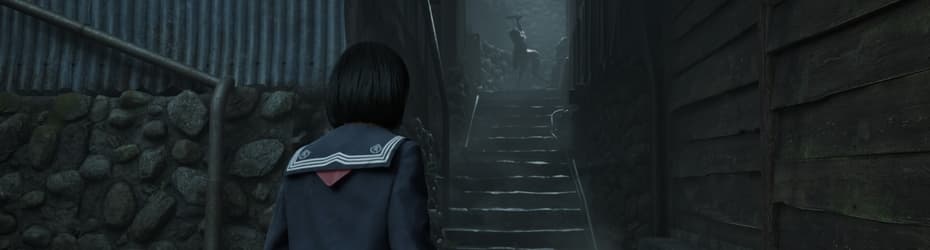
Ebisugaoka sells itself almost immediately. The verticality of those narrow kinkotsu alleys, the sheet metal roofs, cables webbed overhead—there’s a tactile, lived-in feel that reminded me of poring over the Silent Hill 2 town map, just with more switchbacks and dead-end stairwells. Someone on the design team loves corners and ambush angles, and it shows. The fog we all associate with the franchise is here, but it’s adulterated by the crimson creep of those lilies, as if the environment itself is documenting its own infection. It’s the first time since the old games that I found myself scanning every street sign and wooden plaque and thinking, “I’ll know this route by heart soon.”
Then there’s the Other World, which flips the old industrial grime into a shrine-strewn limbo. Torii gates stack like vertebrae into the distance, red on red on shadow. Instead of rusted metal floors, you’ve got weathered wood and ritual objects that feel like they should be sacred, not murderous. It’s less jangly than the series’ previous transformations and more hypnotic, in a cult ceremony way. The decision to lean into Japanese folklore doesn’t feel like an excuse for new wallpaper—it becomes the logic the game runs on.
By the end of my first session (about three hours), I wasn’t scared. I was uncomfortable. That might sound like a backhanded compliment, but it’s this game’s core strength. Ryukishi07 writes scenes that start normal and end wrong: a classmate’s smile lingers a beat too long, a casual joke lands like an accusation, a room you know well suddenly has one extra chair. I kept thinking of the way Ju-On weaponizes domestic spaces—how it stretches a hallway until it doesn’t feel like a hallway anymore. Silent Hill f lives in that stretch. When it goes spooky, it’s rarely in your face. It lets your brain do the math and then watches you suffer through the sum.
Akira Yamaoka’s score and sound work are the accomplices. The radio is basically retired; in its place, 3D audio becomes the paranoia. I learned to dread the creak of wood—the scarecrow-things (Kashimashi) broadcast themselves like puppets with bad joints—and I loved that the music slips in with traditional vocals and old instruments, then thins out until you’re left with air and a distant rattle. With the Pulse 3D headset, I caught phantom footfalls behind me that were probably just pipes. “Probably” is where this game lives.
Here’s where my patience frayed: combat. Hinako is not a fighter, and the systems reinforce that. On paper, I like it. Melee weapons degrade fast (you can repair them), your stamina evaporates if you commit to a swing or sprint at the wrong time, and “winning” often means escaping or skirting enemies instead of clearing them. Those ideas fit the character and the story. In practice, too many encounters happen in closed-off arenas with “clean this area” vibes, and the control feel doesn’t support that structure. On Story difficulty, it’s bearable because the damage and resource pressure is low. On Hard, it becomes the kind of attritional grind that makes you resent the game for making you prove you’re scared by dying a lot.
The concentration gauge—tied to Hinako’s mental state—promises perfect counters if you commit at the right moment. When it works, it’s gratifying: time slows, you redirect a grasping limb, and the space opens up to sprint past. But it’s inconsistent enough that I never built reliable muscle memory. Around hour nine, I got penned in by a duo of Kashimashi near the terraced rice fields, burned half my inventory on mistimed counters, and ended up kiting them around stone lanterns like a bad dream of a Souls fight that forgot to bring the tight controls. After that, my rule became: if a space can be traversed, traverse it; if a space is a box, leave as fast as you can. The game seems to know this too, because it rewards sneaking and pathfinding more than brawling. I wish it leaned into that even harder, ditching the arena cleans entirely.
What silently carried the tension for me wasn’t the enemies; it was the economy. You carry what you can, and it’s never enough. Red capsules patch you up quick, bandages do the long-term work, and that tiny inventory keeps you honest. The altars—places to rest, pray, and offer—are brilliant narrative glue. Do you part with a valuable item to replenish your health and sanity? Or hoard it because there might be something worse one alley over? The “faith” points you earn from offerings feed into upgrades like max stamina, but those upgrades feel earned because you parted with something real to get them.
In my first five hours, I played like a dragon sitting on a pile of shinies. I refused to offer the good stuff. Then a Torii-lined stretch in the Other World punished that greed with a gauntlet I couldn’t brute force. I caved and made an offering I’d been saving “for later,” watched Hinako steady herself, and felt the relief. It’s a small arc—trusting in a system you’re conditioned to distrust—but it made the act of kneeling at an altar matter, not just for stats, but for rhythm. I still wish the game explained the offering-to-faith relationship a touch clearer in the first hour; it’s a cleaner idea than the tutorial makes it sound.
Silent Hill f is at its best when it’s making you think instead of swing. Two sequences stuck with me. The first is a fog-laden rice field dotted with scarecrows. You’re told so little that you start projecting intentions onto inanimate bundles of straw. The solution emerges when you notice a subtle pattern that ties back to a childhood memory Hinako can barely face. The moment the “why” clicks, the “how” follows, and it hits harder than any shriek. The second is an abandoned school crawl that mirrors Hinako’s daily routines: desks and clocks and a music room that feels like it remembers her better than she remembers herself. It scratches that Silent Hill 2 itch—not by imitation, but by weaponizing the mundane.

Not every puzzle lands. A couple feel like padlocks placed to stall your forward motion instead of test your perception. But the batting average is good, and—crucially—they’re almost all contextualized by Hinako’s headspace. When a lock opens, you learn something about her, not just the architecture.
These creatures linger. The Kashimashi puppets, the school-uniformed Ayakakashi, the thrashing Ara-abare—none of them look like they belong in the rusted boiler rooms of old Silent Hill, and that’s the point. They belong to Ebisugaoka, to its rites and its failures. Covered and threaded by red spider lilies, they carry that wabi-sabi rot-beauty: imperfect, transitory, incomplete. I liked looking at them even when I hated fighting them. The art team found a disturbing elegance in the way the infection flowers over skin and wood.
The themes, meanwhile, occasionally slip from invitingly cryptic into “okay, but what are you actually saying?” territory. That’s part of Ryukishi07’s style: he trusts the player to infer. I usually appreciate that, and I mostly did here. Still, a handful of late-game beats felt too hermetic for their own good—like watching a beautiful dance through frosted glass. I expect Reddit to have a field day diagramming it all, and I’m not above joining those threads. The game supports multiple endings (I saw one that felt painfully human; hints suggest a much goofier “UFO” out there somewhere), and the dozen-ish-hour runtime makes a second pass tempting if you’re the type to chase closure. Or, more likely, debate the lack of it.
On the micro level, Silent Hill f oscillates between sublime and stiff. Sneaking through kinkotsu alleys with a sliver of health, watching a red bloom crawl over corrugated metal in the periphery—that’s the good friction. Being funneled into a fenced courtyard for a three-wave clear with a stamina bar that empties like a cheap flashlight—that’s the bad. The map and notes are serviceable, the save/rest altars are placed thoughtfully, and the UI keeps quiet. When you’re exploring, the game respects your curiosity. When you’re pushed into a fight, you feel like an understudy shoved on stage with two rehearsals and a dull prop sword.
On PS5, the 3D audio is the headline—play with a good headset if you can. Footsteps layer convincingly, and there’s a spatial clarity that makes silence feel like a trap. Haptics are restrained: soft taps on the DualSense during rainfall, a stiffer pulse when a lily tendril snags your ankle. I had a couple of brief hitches when an area “bloomed” mid-encounter, but nothing that tanked a run, and I didn’t encounter crashes. Load times from altar to alley were quick enough that dying didn’t add insult to injury.
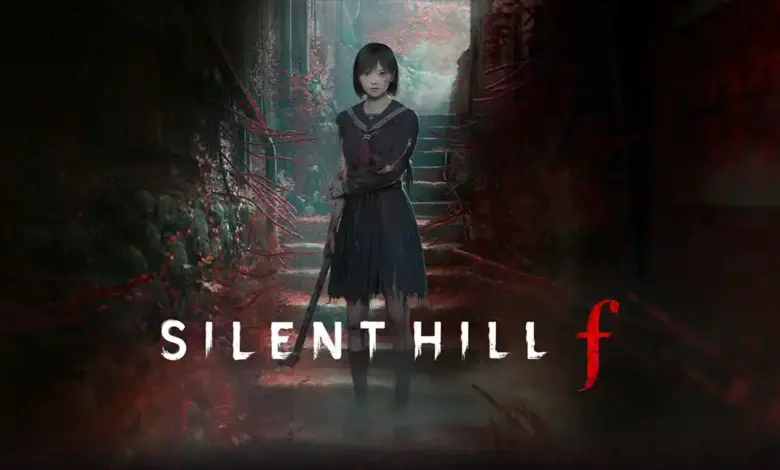
Visually, the art direction does heavier lifting than raw tech flex. The fog is painterly rather than volumetric show-off, and the lilies provide the color story you’ll remember. Facial animation sells the teen cast better than I expected—small, embarrassed glances, half-smiles. Sometimes the camera nicks geometry in tight corridors, and occasionally an interaction prompt wants you two inches to the left for no good reason. Minor snags in an otherwise cohesive presentation.
Around hour ten, I hit a small shrine perched above the town, just as evening light stopped pretending it wasn’t red. Hinako knelt to offer something I’d stubbornly kept since the early game. Wind slid through the bamboo. No monsters, no puzzles, just breath and the quiet suggestion that holding on was hurting more than letting go. It’s rare for modern horror games to give you a beat like that, unscored and un-spectacled. Silent Hill f trusts mood over mechanics when it can—and when it does, it’s special.
Two tweaks would elevate this dramatically without betraying its identity. First, reduce or rethink the arena clears. Let the game celebrate escape over extermination. Make “I lived” the win state, not “I cleaned the room.” Second, shore up the counter timing for the concentration gauge and telegraph enemy tells better. Keep Hinako clumsy—that’s the point—but give me reliable systems so failure feels earned, not fussy. Everything else—the offerings, the exploration cadence, the localized folklore—already sings.
Silent Hill f isn’t the series returning to its American hometown; it’s a pilgrimage somewhere older and stranger. It trades the blunt-force dread of sirens and steel for a creeping uncertainty that fits Ryukishi07’s sensibilities and lets Yamaoka’s audio work haunt every alley. The combat won’t win many converts, and a few symbolic swings whiff into indulgence, but the town, the cast, and the ritual logic of its systems create a space I genuinely wanted to inhabit. By the time credits rolled on my first ending, I didn’t want resolution so much as another walk through Ebisugaoka, to find the corners I’d missed and test which truths still held up in the fog.
It’s not the franchise’s scariest entry. It might be its most quietly confident.
Silent Hill f is a bold, folkloric reinterpretation with atmosphere to spare and combat that too often gets in its own way. If you can meet it where it stands—kneeling at an altar, listening more than swinging—you’ll find something worth carrying with you.
Score: 8/10
Get access to exclusive strategies, hidden tips, and pro-level insights that we don't share publicly.
Ultimate Reviews Strategy Guide + Weekly Pro Tips