
Silent Hill f made me fall in love with the fog again (even when it choked me)
TL;DR: Silent Hill f’s gorgeous 1960s Japan setting, tense stealth-focused combat, and haunting puzzles make this PS5 exclusive a worthy revival—even when its systems bite back.
Table of Contents (8)
Guarded hope and a familiar chill
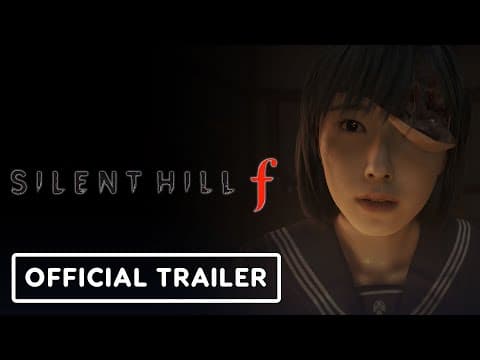
I approached Silent Hill f the way you tiptoe into a fog bank—uneasy, curious, determined not to get burned. A decade of franchise heartbreak had taught me skepticism: Silent Hill 2 and 3 were masterpieces, Downpour was a slog, and Silent Hills flickered out like a dying candle. Yet the promise of “1960s Japan, schoolgirl Hinako, beauty in horror” piqued my interest enough to press New Game on PS5 (version 1.0 with the day-one patch, Performance mode). Headphones strapped on, OLED glowing, I stepped into a convenience store bathed in torchlight and a wall of crimson fungus that seemed to breathe with me. Ten minutes in, when a marionette of meat staggered from the fog and Hinako shivered, my first thought was, “This is gorgeous.” My second: “Is this Silent Hill?”
1960s Ebisugaoka: New town, old ghosts
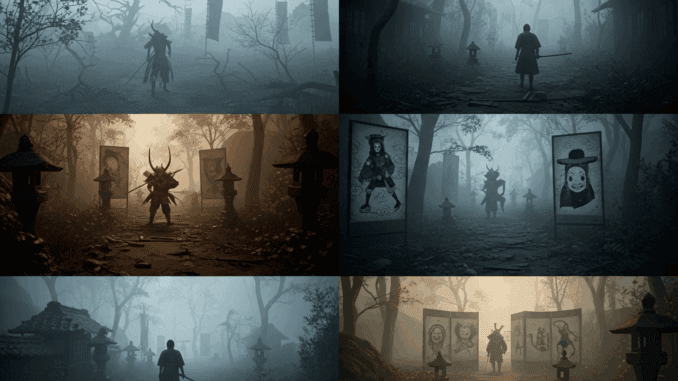
Silent Hill has always been as much a feeling as a place, and f trades the Rust Belt’s industrial gloom for Ebisugaoka, a fictional Japanese suburb wedged between a shrine and a shuttered arcade. You’ll drift down lantern-lit shopping streets, rifle through a school staff room—finding a cracked physics trophy beside confiscated manga—and push through cedar groves that feel as thick as molasses. Then the red bloom arrives: spores, roots, blood—everything rots in symmetrical horror. Under HDR, the vermilion fungus pooling beneath street lamps looks like spilled ink, grotesquely beautiful and deeply intentional.
Despite the locale swap, the series’ explorer’s rhythm holds. Maps are deceptive mini-mazes but the actual path is linear: wander, double back, unlock a new door, find a note that reframes a hallway. I kept thinking “classic SH,” even as shrine bells replaced church chimes.
Yet it takes a few hours before Silent Hill f shows its teeth. The psychological slippage—“what’s real?”—only snaps into place around hour three, in a seemingly innocuous school courtyard scene that tilts your trust in Hinako’s narration. From there, the ground under your feet shifts in disquieting, familiar ways.
Combat is ambitious and often aggravating
Hinako doesn’t tote a pistol in her sundress. She starts with a rusty pipe and picks up blunt implements—no guns. The goal is vulnerability: every swing saps stamina, misses sting. On paper, I loved it. In crowded corridors, though, the endurance meter drains greedily and the lock-on snaps at infuriating moments. Skirmishes with two kashimashi (jerky puppet-like nightmares) often felt like I was wrestling the camera more than horror itself.
Stealth is the saving grace. My first real “aha” moment came in a flooded basement with an ayakakashi patrol. After a panic-swing left me clipped, I hugged shadows, hit L2 to trigger Hinako’s concentration—time-slow at the cost of mental health—and timed a perfect parry to slip past. That felt pure SH: you’re no hero, just a survivor getting smarter.
The sanity gauge doubles as a buffer. Low sanity makes basic enemies feel vicious, while spending mental health to fuel concentration can give you a clutch edge. I loved the risk-reward balance, especially when a stamina-taxed dodge could save me—if I was merciless with my mental reserves. Weapon degradation and finite repair kits fuel tense moments: once, near the end of Chapter 4, my spear snapped mid-fight and I kitten-kited through a two-enemy lock-in. It worked, but it wasn’t thrilling.
Resource logic and shrine mechanics
You’re always one bad corridor from empty pockets. Red pills patch wounds fast, bandages stop bleed, full kits reset your condition, and repair kits keep your weapons intact. Consumables double as shrine offerings. At each shrine—the only manual save points—you can sell undesired items and trinkets for faith. Combined with the ema plaques you collect, you invest faith to boost Hinako’s stamina, health, or sanity, or to craft amulets that tweak your build. Deciding whether to cash in that last repair kit or stash it for an upgrade is deliciously cruel.
Nightmare zones and structural scaffolding
Interspersed with the real-world are the nightmare zones: red, puzzle-heavy arenas drenched in fungal rot. Early puzzles—like decoding a darkened school corridor by counting wind-chime beats—cleverly use sound, space, and analog era texture. But by Chapter 5 the blueprint reveals itself: exploration, shrine, nightmare puzzle, a story beat, then escape or boss. Even when a late-game area flips the layout on its head, the designer’s checklist hums just beneath the surface, slightly deflating the dread.
Some puzzles drift into opaque territory, especially those relying on ema inscriptions where nuance got lost in translation. I brute-forced one logic sequence only to uncover its intention in a missed note. It’s not pervasive, but enough to remind you that “ambiguous” can sometimes mean “careless.”
A bestiary that dazzles but repeats
Creature design is top-tier unsettling. Kashimashi are stuttering dolls of flesh and wood; ayakakashi pivot like corrupted scarecrows; oi-omoi move just fast enough to unnerve; ara-abare feel like rooms given form. Every model, from mushy footfalls to insect hums, sells expensive polish. Yet the roster is finite, and variant reuse in the back half saps some of their shock value.
Boss encounters are restrained—thankfully avoiding garish, weak-point exposés in bright arenas—but also underwhelming. A mid-game shrine skirmish hints at thematic depth, then settles into predictable pattern dancing. Given the love lavished on design, I craved more context shifts. Still, that cartilage-snap counter sound on New Game Plus is gut-churning every time.
Writing that worms into your ribs
Ryukishi07’s influence—unreliable memories, gossip as weapon, intimacy twisted into terror—runs deep. Hinako begins as a lonely kid crushed by unseen forces; by midway, you doubt her narrator’s truth; by the finale, you trust no one. This is small-town horror at its core: shame, rumor, betrayal made physical. A scene on a footbridge, where Shu’s version of events clashes with Hinako’s, plays differently if you’ve pieced together stray notes—and the game never confirms which read is “correct.” It’s deliciously mean.
Multiple endings let the story breathe. My first run ended in harsh mercy; the second loop (about eight hours, given you know the layouts) unlocked new dialogue and reframed earlier betrayals. None are wild revolutions—don’t expect divergent routes—but if the tone grips you, that replay is worth it. I preferred the “less clean” ending—it matched the game’s thesis: wounds this old don’t heal tidily.
Performance, audio, and the hardware grind
I tested on PS5 Digital Edition (version 1.0 day-one patch) in Performance mode at 4K. Interiors hit a steady 60 fps; open streets with heavy fog and multiple enemies dipped into the high 40s. Nothing broke the game, but the drop is noticeable if you’re watching.
Audio is the MVP. Soundstage remains razor-sharp—floorboards creak right, wet breaths hiss left, wind chimes whisper clues behind you. With the Pulse 3D headset, threat direction was as clear as the threat itself. The soundtrack stays sparse, letting incidental noise carry dread before stabbing you with dissonant strings or a choral swell when nightmares encroach. It’s less anthem, more bruise—and I loved that.
Haptics are subtle but smart. Hinako’s heartbeat thrums through the DualSense when sanity dips; the first time it synced with my pulse in a cramped stairwell, I laughed—manipulated and terrified. Adaptive triggers add another layer—as you swing your weapon, resistance tightens when stamina runs low, reinforcing Hinako’s exhaustion. It’s subtle but potent, reminding you with every blow that survival comes at a cost.
FinalBoss // Gear
Level up your setup
01Top-rated gaming headsetson Amazon→02High-refresh gaming monitorson Amazon→03Gaming chairson Amazon→04Discounted game keyson Kinguin→Affiliate links · As an Amazon Associate, FinalBoss earns from qualifying purchases.
Want to Level Up Your Gaming?
Get access to exclusive strategies, hidden tips, and pro-level insights that we don't share publicly.
Ultimate Reviews Strategy Guide + Weekly Pro Tips