
Silent Hill: Townfall understands a truth too many horror games forget: fear needs room to breathe. St. Amelia’s fog does not merely decorate this first-person nightmare. It blocks routes, buries threats, swallows landmarks, and turns a short walk through a fishing town into a test of nerve. The island is the star here, and it is good enough to carry a few heavy weaknesses.
The hot take is simple: Townfall is one of the strongest modern arguments for keeping survival horror slow, mean, and uncomfortable. It makes a handheld CRT television into its defining mechanic, puts its faith in static and silence over spectacle, and lets puzzles govern the rhythm. The result is an engrossing mystery with a real identity. The problem is that Simon Ordell, the man at its center, remains far less compelling than the place punishing him.
- St. Amelia is exceptional: the 1996 Scottish island setting turns fog, abandoned boats, boarded homes, memorial sites, and shuttered shops into a dense horror landscape.
- The CRTV is Townfall’s best idea: its frequencies, static, encoded broadcasts, and enemy tracking make puzzle-solving part of the tension rather than a break from it.
- Stealth has teeth: crouching, leaning from cover, hiding in wardrobes, and tracking sound-sensitive monsters create pressure, even when patrols become too mechanical.
- Combat is deliberately miserable: breakable melee weapons, scarce ammunition, and limited healing make escape the smart choice.
- Simon is the weak link: his past with Richard and Zoe matters to the plot, yet his own inner life remains too thin for the ending to hit as hard as the setting deserves.
Table of Contents (7)
St. Amelia Is the Real Lead Character
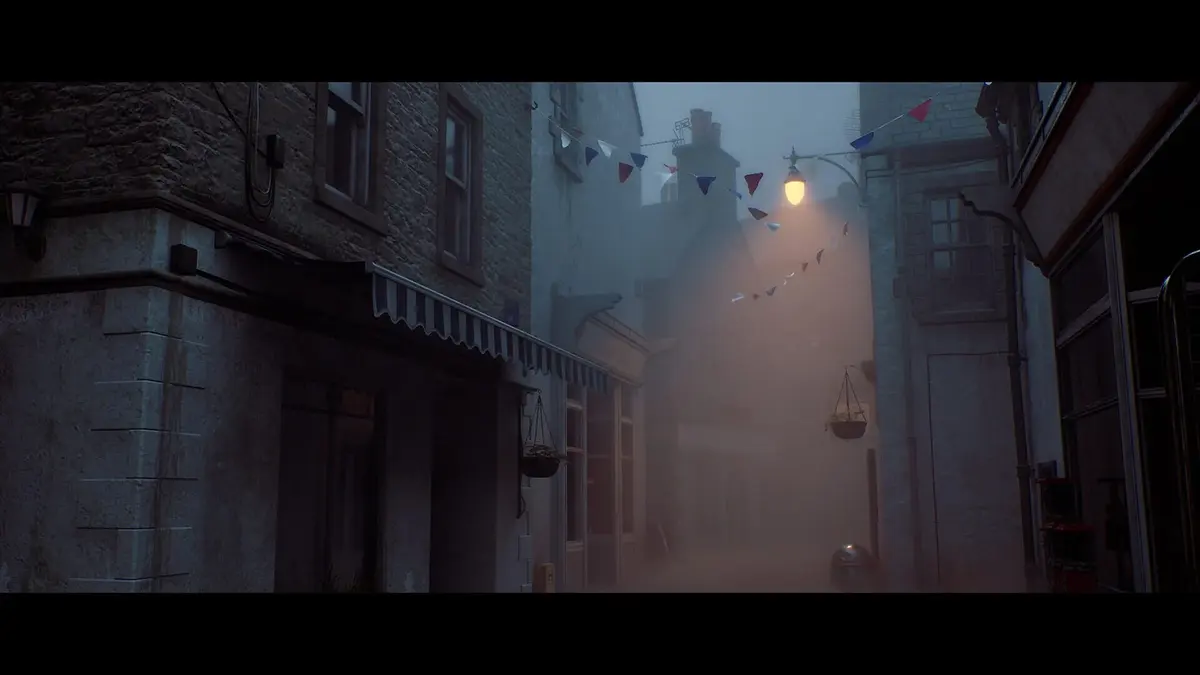
Townfall takes the Silent Hill franchise to St. Amelia, a remote Scottish island town in 1996, and that change of place pays off immediately. This is not a generic haunted settlement dressed in familiar fog. The coastal setting has a cold, isolated character: harbor mist rolling into narrow streets, wrecked or abandoned boats near the water, homes sealed behind boards, and public spaces marked by a disaster the game steadily circles without rushing to explain.
The town’s analog-era presentation gives every location more texture. Washed-out color, CRT distortion, aging infrastructure, and low-tech machinery make St. Amelia feel trapped in a bad transmission. Townfall uses that visual language with purpose. Static is not background noise. The screen is not a nostalgic prop. The entire game is built around the idea that damaged signals can expose damaged reality.
That is why the environmental storytelling lands so much harder than the protagonist’s personal material. St. Amelia communicates its tragedy through absence. A closed shop, a neglected memorial, or a route that no longer leads where it should can say more than a file full of exposition. Reality also shifts around Simon as hallucination and physical space blur together, making familiar paths unreliable without reducing the game to random nonsense. The town feels hostile because it has history, not because it has jump scares on standby.
Townfall certainly uses sudden shocks, and several are effective. Its real strength lies in sustained unease: the sense that visibility is a privilege St. Amelia can withdraw at any time. The fog turns every intersection into a risk calculation. A distant sound can be a clue, a threat, or an invitation to waste precious resources. Few horror settings use obscurity this confidently.
That oppressive lack of information is not merely aesthetic. It is the reason Townfall’s systems work. Because enemies are hard to read and streets can become mutable, Simon survives by listening, waiting, and reading signals rather than by charging ahead. St. Amelia creates the need; the CRTV answers it.
The CRTV Makes Fear Interactive
The CRTV is Townfall’s killer feature. This handheld television and radio device lets Simon scan for movement, tune into monster frequencies, interpret warped signals, and decode messages embedded in the island’s noise. It modernizes the franchise’s love of strange electronic warning systems by making the device central to both navigation and survival.
Every monster has its own frequency, so the CRTV creates a tense little ritual before progress: stop moving, read the screen, listen for distortion, and decide whether the next room is safe enough to enter. The game gets major mileage out of forcing attention away from the corridor itself and toward a flickering screen in Simon’s hands. That is exactly the kind of design decision horror needs. It turns information into another source of dread.
What makes the device more than a neat prop is how many jobs it performs without feeling overloaded. It can reveal enemy silhouettes through walls or around obstacles, function as a motion-tracker-style warning system, and push investigation forward through encoded broadcasts and visual clues. One early puzzle asks the player to study fuzzy CRTV footage closely enough to pull a code from it for a padlocked locker. Later puzzles ask for the same kind of attention in different forms, whether that means reading distortion patterns, identifying the right frequency at the right moment, or following clues to power infrastructure and locked containers.
Puzzle design benefits even more. The CRTV can surface passcodes, reveal visual clues, decode broadcasts, and help interpret distorted patterns connected to rooms, corridors, locks, and machinery. Signal matching and channel switching are not revolutionary concepts, but Townfall embeds them in its world so well that they feel like part of the investigation. Solving a puzzle rarely feels like stepping outside the horror. It feels like digging deeper into it.
The best CRTV moments understand that a puzzle in a horror game should not feel like an isolated brainteaser. It should feel like a negotiation with the setting. Reading a screen full of snow while something may or may not be pacing nearby is much more effective than stopping the game cold for a clean logic box. Even smaller tasks, like tracing a clue for a fuse box or decoding numbers for a safe, gain weight because the tool delivering the answer also tells you that danger is already close.
That integration makes the game puzzle-first in the best sense. Progress comes from watching carefully, thinking through the town’s warped logic, and resisting the urge to charge ahead. Townfall asks for patience. When its clues are readable, that patience is richly rewarded. When the visual noise becomes too cryptic, the same mechanic can feel like it is withholding the answer for the sake of delay. Those weaker moments are frustrating precisely because the CRTV is otherwise so inspired.
Crucially, the CRTV also feeds directly into Townfall’s stealth loop. The same device that helps Simon solve a lock or decipher a message is also the thing that tells him whether moving at all is a terrible idea. That overlap is what gives the game its identity. It is not a horror game with stealth sections and puzzle rooms bolted on. It is a horror game where one battered screen ties nearly everything together.
Scarcity Works; Stealth Sometimes Overstays Its Welcome
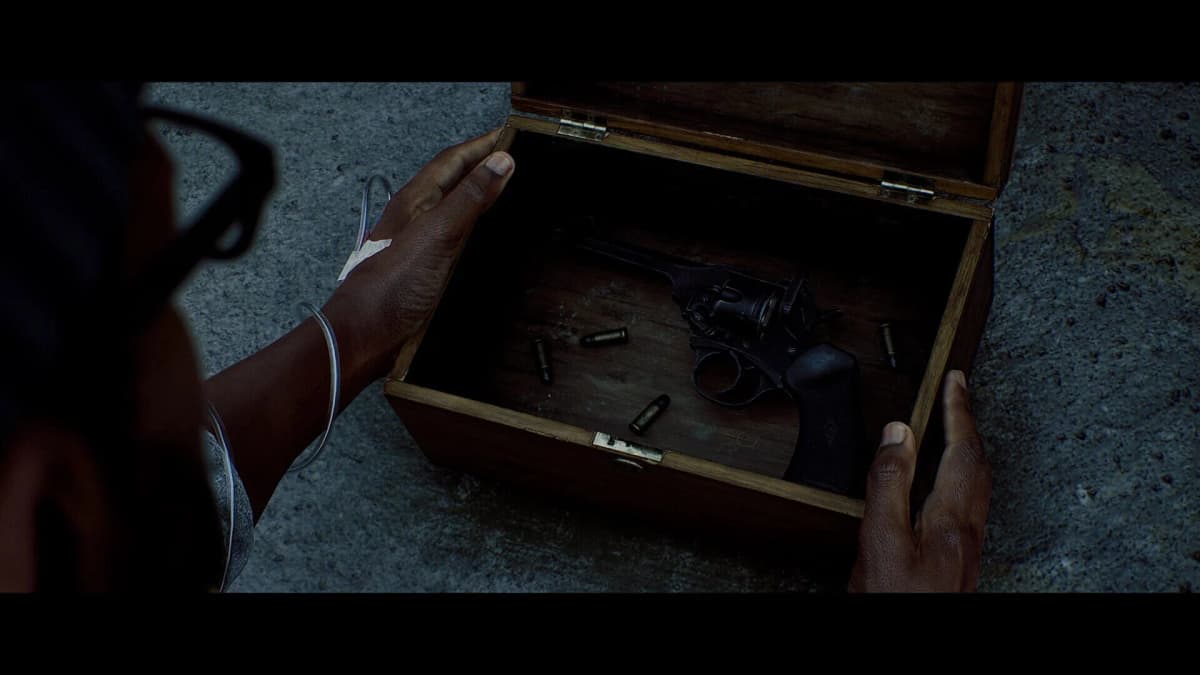
Combat is not where Townfall wants players to live. Simon has melee weapons, a revolver, a flare gun, and access to a shotgun later on, but the game makes violence costly. Melee weapons degrade or break. Simon can block and parry, yet a few hits can still put him down. Ammunition is scarce, gunfire attracts attention, and healing depends on limited gauze and medkits accessed through the pause screen.
That scarcity gives every confrontation a proper survival-horror edge. Fighting can save a bad situation, but it can also create the next one. Even the handling sells the idea that Simon is surviving, not dominating. Reloads are deliberate, melee feels sluggish by design, and every loud decision threatens to wake up a worse one. Simon’s IV bags add a welcome tactical wrinkle: with one equipped, being knocked unconscious can trigger a second wind rather than a full game-over. It is a useful lifeline without turning him into an action hero.
Because combat is so punishing, Townfall spends most of its time teaching you to avoid it. The basic stealth loop is straightforward and effective at first: crouch-walk, lean from cover, watch patrol routes, read the CRTV, and slip between safe spaces when the signal gives you a window. Hiding in lockers and wardrobes works exactly the way a survival-horror veteran expects, but the first-person perspective and the island’s cramped interiors give those hiding spots a nasty intimacy. Waiting for a creature to pass while staring through a cracked door never becomes comfortable.
The trouble is that this loop is stronger in short bursts than in long stretches. Too many encounters rely on waiting for a patrol pattern, inching between cover points, and hoping a monster’s sound detection reads the situation the same way the player does. This can be intensely tense early on, when every frequency is new and every hallway feels like an argument with the unknown. Later, it can become robotic and punishing, especially in dimly lit labyrinths where uncertainty stops feeling atmospheric and starts feeling procedural.
Townfall does try to keep the stealth from flattening out completely. Later enemies introduce better wrinkles. Some encounters ask you to account for creatures with distinct behaviors rather than standard route-walking. Others use threats that play dead or force a nastier hide-and-seek rhythm, making routine route planning less reliable. The most memorable escalation is the Weight, also known as a tower of buboes, an unkillable creature that can kill Simon instantly. Once that thing enters the picture, stealth stops being a careful optimization problem and becomes raw panic management. These sequences work because they change your relationship to space. You are no longer studying patrols so much as trying to escape a place that has turned against you.
Perspective changes help for the same reason. Zoe’s sections use an LCD pager to track enemies instead of Simon’s CRTV, and she can throw bottles or rocks to distract and lure threats. That slightly more active toolkit does not turn her chapters into an action game, but it does add texture. Her stealth feels more improvisational, less like obediently waiting for a route to open. Richard’s playable portion, that said, swings hard in the opposite direction by handing over an unusually generous supply of resources. That imbalance undercuts the careful economy built elsewhere. A survival-horror game lives and dies by resource pressure, and Townfall briefly loosens its grip at the wrong time.
Still, even when the stealth begins to repeat itself, the broader pacing usually understands what kind of game this is. Combat is a pressure valve, not the core fantasy. A revolver or shotgun can rescue a collapsing situation, but the game never forgets that its best weapon is hesitation. If you come in wanting something closer to Resident Evil, with frequent cathartic unloading and cleaner action rhythms, Townfall can feel intentionally hostile. If you want survival horror that makes every door feel like a bad idea, its refusal to become slick is part of the appeal.
Simon Needed More Than Mystery
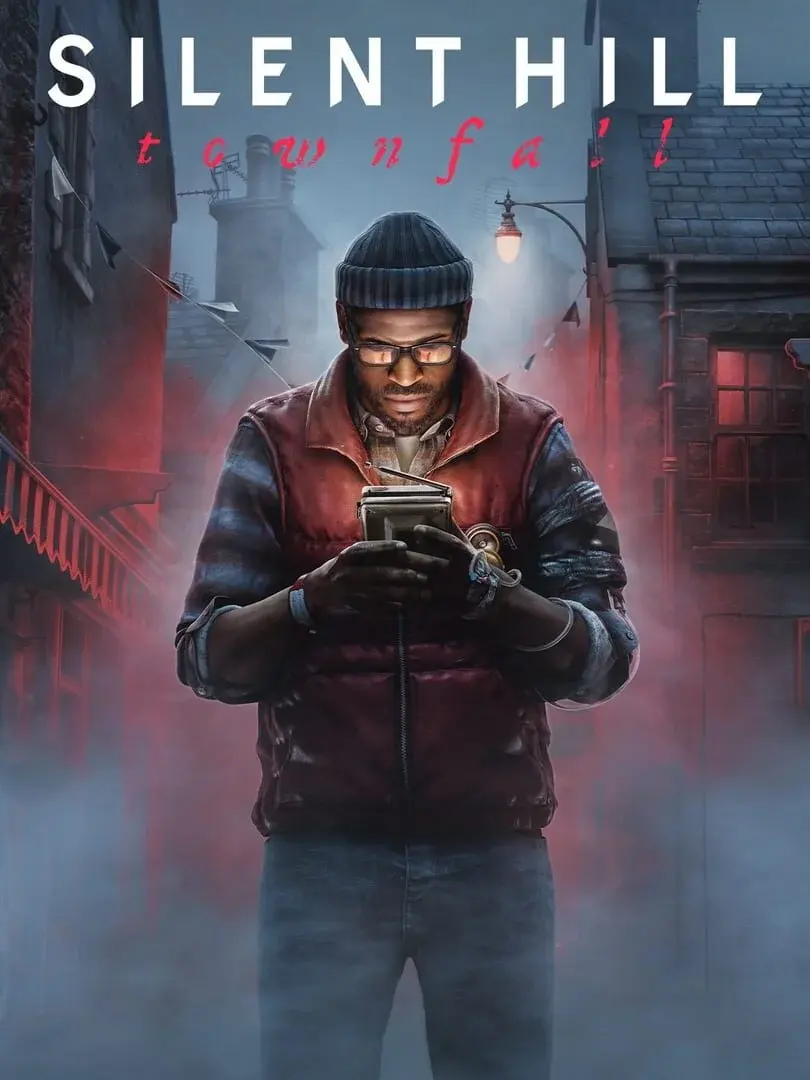
Simon Ordell has a strong opening image: an American man washed onto St. Amelia’s shore with no memory of his arrival, an IV drip still in his arm, a hospital bracelet on his wrist, and an instruction to put things right. That is potent material. It promises a story about guilt, bodily vulnerability, and an identity coming apart under pressure.
Townfall follows through on the mystery but shortchanges the man. Richard and Zoe are tied to Simon’s past, and the game uses notes, flashbacks, monstrous encounters, and reality rifts to expose pieces of what brought him here. Yet Simon’s history remains too lightly drawn. His relationships are functional plot ingredients rather than fully felt emotional foundations.
That becomes more noticeable as the story gains confidence elsewhere. The game knows how to make St. Amelia feel wounded. It knows how to use analog technology, static, and repetition as expressions of psychological damage. It knows how to stage revelations so that a room, a recording, or a returning face gains a nasty second meaning. By the time Richard and Zoe take on clearer significance, and by the time Simon’s mandate to put things right starts carrying real narrative weight, the character himself still feels frustratingly under-authored. The plot has bones; the central man needed more flesh.
The consequence is a lopsided payoff. St. Amelia’s suffering feels specific. Simon’s suffering often feels symbolic. Horror thrives on ambiguity, but ambiguity is not a substitute for character detail. The game has five endings, including two lighter detours, and the broader structure gives the player plenty to unpack. More conclusions do not fix the central issue: Townfall knows the island’s wounds better than it knows Simon’s.
That gap keeps Townfall below the level of a true genre landmark. Its themes of guilt and punishment are present, and several late-game moments clearly want Simon’s past to hit with the force of personal ruin rather than abstract dread. The setting, the devices, and the nightmare logic do their part. Simon himself never quite earns the same conviction. When the game reaches for tragedy, the handoff from mystery to emotion is solid instead of devastating.
PC and PlayStation 5 Buyers Should Know the Cost of Entry
Silent Hill: Townfall is scheduled for PlayStation 5 and PC through Steam and the Epic Games Store. Release listings conflict between September 23 and September 24, 2026, so the specific storefront page is the one to trust before purchasing.
PC players should also take the requirements seriously. The minimum specification targets 1080p at 30 frames per second on Low settings with Windows 11, 16 GB of RAM, a Ryzen 5 3600 or Core i7-8700K, and an RTX 2060 Super or Radeon RX 6600. The recommended target is 4K at 30 frames per second on High settings, requiring 32 GB of RAM, a Ryzen 7 5700X or Core i7-9700K, and an RTX 3080 or Radeon RX 7800 XT. DirectX 12 and 75 GB of storage are also required.
Those are steep demands for a game whose biggest flex is atmosphere rather than spectacle in the action sense, but Townfall’s fog, darkness, and dense environmental effects are doing a lot of heavy lifting. On paper, at least, this is not a lightweight nostalgia project. It is aiming for a thick, high-fidelity kind of ugliness.
Who Should Enter St. Amelia
Townfall is an easy recommendation for players who want survival horror built around atmosphere, puzzles, limited resources, and a deliberately oppressive pace. The CRTV alone makes it worth attention for anyone tired of horror games treating their central gimmick as a disposable novelty. St. Amelia is a memorable setting, and the first-person format gives its fog, tight interiors, and shifting spaces the closeness they need.
This recommendation comes with a very specific audience filter. Townfall is for people who want to stop, listen, tune frequencies, and creep through rooms like the building itself is listening back. It is for players who enjoy stealth as tension rather than empowerment, and puzzles as part of the fear rather than a timeout from it. If that sounds like a blessing, Townfall delivers.
Players who want fluid combat, forgiving stealth, or a deeply detailed protagonist should temper expectations. The slow movement, unclear enemy detection, repeated patrol patterns, and late-game stealth friction can wear down patience. Those chasing a character-led tragedy may also find that Simon’s thinly sketched past leaves the emotional resolution underpowered.
Bottom Line
Silent Hill: Townfall earns its place as a modern revival because it has the courage to be patient, hostile, and strange. St. Amelia’s foggy Scottish horror, the CRTV’s superb analog puzzle design, and the constant pressure of limited survival tools create a genuinely distinctive nightmare. Repetitive stealth and an underdeveloped Simon keep it from greatness, especially when the late game asks his backstory to carry emotional weight the script has not fully built. But the island is too compelling to ignore, and the systems are too cohesive to dismiss as a stylish experiment. 8/10.
FinalBoss // Gear
Level up your setup
01Top-rated gaming headsetson Amazon→02High-refresh gaming monitorson Amazon→03Gaming chairson Amazon→04Discounted game keyson Kinguin→
Affiliate links · As an Amazon Associate, FinalBoss earns from qualifying purchases.
Want to Level Up Your Gaming?
Get access to exclusive strategies, hidden tips, and pro-level insights that we don't share publicly.
Ultimate Reviews Strategy Guide + Weekly Pro Tips