
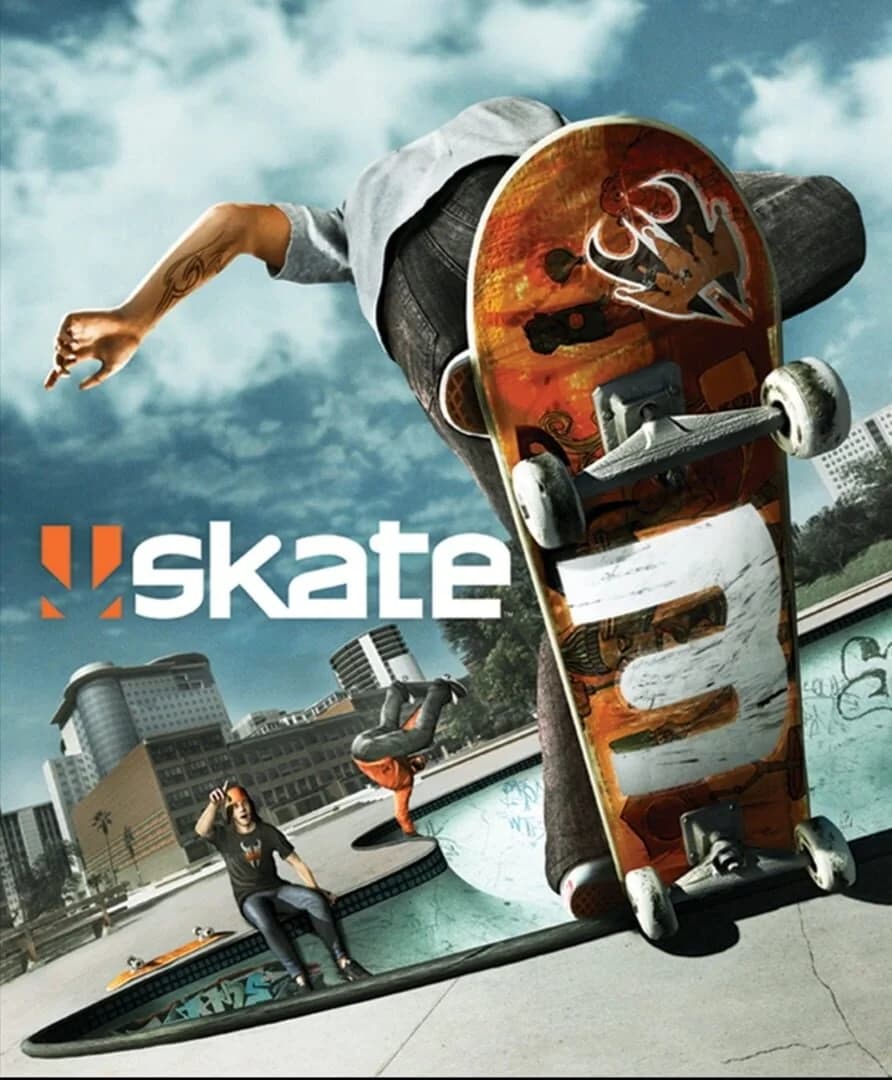
Skate Season 4 has given me two very different reasons to care about San Vansterdam. The new indoor skate park is a genuinely good addition, the finger-flip trick content has real appeal for players who want fresh ways to express themselves, and the San Van Open has the right loud, summer-event energy. It feels built to make players boot up Skate, find a line, eat pavement, and immediately try it again.
Then Full Circle puts new skateable areas behind the premium season pass for a stretch of time, and that good feeling curdles. I can enjoy the arena and still hate what its access model says about where Electronic Arts is willing to take the game. Those two reactions are not difficult to hold at once. Skate Season 4 is fun. It also makes a worrying case study for EA’s expanding interest in advertising built directly into games.
EA’s pitch is that advertising can be considered from day one of development, including through technology such as Frostbite, rather than crudely bolted on after a game is already built. That sounds clean in a presentation. In a game about flow, speed, experimentation, and personal style, it raises a much uglier design question: how much of the player’s attention is EA prepared to sell before Skate stops feeling like a space made for skating?
Table of Contents (5)
Season 4 Understands Why Skate Is Worth Playing
I do not want to flatten Season 4 into a complaint, because there is actual craft here. An indoor park gives Skate a different rhythm from outdoor San Vansterdam. Indoor spaces encourage repeat runs, tighter lines, weird trick experiments, and that intensely specific compulsion to land one clean sequence after failing it ten times. The new finger-flip content feeds directly into that urge. It gives committed players another tool for turning a familiar space into their own clip factory.
The San Van Open theme also fits. Skateboarding events thrive on noise, spectacle, impossible-looking attempts, and a little bit of chaos. A Summer X Games-style presentation can make an in-game event feel bigger without getting in the way of the actual skating. When the theme supports the act of playing, it earns its place.
That is why the premium access issue bothers me so much. Full Circle has built an appealing place to skate, then temporarily limited who gets to skate there. A new playable area carries more weight than a cosmetic item or an optional flourish. It affects routes, clips, challenges, social sessions, and the basic feeling that San Vansterdam is a shared space. When the newest terrain is fenced off behind a premium season pass, the message becomes painfully clear: access itself is becoming part of the product ladder.
Temporary Gating Still Changes Player Trust
The word “temporary” does not rescue this decision. Players who jump into Skate during that window still face a split world. One group gets the fresh park and the newest lines immediately. The other group gets to watch clips, see event talk, and wait for an area that should be part of the season’s communal excitement. That creates a hierarchy inside a game that lives or dies on players sharing spaces and ideas.
Early Access already asks players for patience. It asks them to accept that the game is still changing, that systems will evolve, and that some parts of the experience are unfinished. In return, the studio needs to protect a basic sense of good faith. Repeatedly making fresh skateable terrain a premium-first perk burns that good faith fast. Rip Chips and premium passes can exist without becoming the gatekeeper for the part of Skate that matters most: the places where players actually skate.
This is the part EA needs to understand before it starts treating ad placement as another elegant design system. “Better integrated” can easily become corporate shorthand for “harder to ignore.” A billboard that once sat naturally at the edge of a park becomes a takeover in a menu. A branded event theme becomes a requirement. A harmless sponsor sign becomes a prompt that interrupts a run, covers a HUD element, or delays the next session until the player acknowledges it.
Players do not judge ads by whether they were technically placed with care. We judge them by whether they interrupt the thing we launched the game to do.
Frostbite Cannot Design Around Friction
There is a version of advertising that could fit a skateboarding game. Skate culture has always had room for posters, event branding, sponsor imagery, and loud visual identity. A branded sign at the edge of a San Van Open arena can add texture if it belongs in the environment. I do not need every fictional city wall scrubbed into blank, sterile nothingness.
But that only works when the branding remains part of the scenery rather than becoming a toll booth for attention. The moment an ad changes the layout of a menu, pushes a prompt into a player’s face, blocks access to a key activity, or appears during a run, it has failed the basic player-experience test. No amount of Frostbite planning makes an interruption feel respectful.
Skate makes that especially obvious because its best moments depend on concentration. A player is reading a rail, a landing angle, a transition, the momentum coming off a grind, and the timing for the next trick. The game asks for a loose kind of focus that can snap instantly when an intrusive screen appears. Ads have no place during a live event, a competitive session, an attempt at a difficult line, or any moment where the player is actively skating.
Between matches, in clearly separated menus, or on environmental signage that does not hijack the interface, the argument changes. Those locations at least respect the rhythm of play. The difference may sound small to an executive charting engagement, but it is massive to the person holding the controller.
EA Needs Rules Players Can Actually Feel
If Electronic Arts wants its ad strategy to avoid becoming another reason players distrust premium access in Skate, it needs firm player protections from the start. Vague promises about enhancing the experience are useless. The guardrails have to be visible in the game itself.
- Every branded placement needs a clear label. If an event, challenge, menu space, or in-world promotion is paid for, say so plainly. “Sponsored by Mountain Dew” is honest. Blurring the line between game content and advertising is not.
- Targeting must be disclosed in plain language. If an ad is shown because a player is in a certain region or plays a certain kind of game, EA should explain that directly. Players deserve to know why a particular promotion reached their screen.
- Frequency caps must be strict. An ad that appears once in an appropriate menu is very different from one that follows a player through every session. Repetition turns background branding into friction.
- Players need meaningful opt-outs. A player should be able to reduce or disable personalized advertising without being punished through worse access, slower progression, or a deliberately uglier interface.
- Placement must respect the audience and the activity. No branded challenges required for progression. No ads in competitive play. No ads during live events. No interruptions while a player is actively skating.
Those rules would not make every player happy, and they are not supposed to. Their purpose is to establish a line EA cannot casually cross when a quarter’s targets get more demanding. The company’s current direction becomes dangerous when every part of a game is treated as available surface area: the map, the hub, the event, the menu, the reward screen, the next season, and eventually the moment between setting up a trick and landing it.
Skate Cannot Become a Storefront With Good Physics
Skate Season 4 proves Full Circle still understands the creative side of this game. The indoor park, the trick additions, and the San Van Open energy all point toward a Skate worth sticking with. I want that version of San Vansterdam to grow. I want more places to skate, more reasons to learn difficult lines, and more events that make the city feel alive.
But the temporary premium gating undercuts that ambition because it teaches players to look at every new area and ask what access condition comes attached. That is exactly the poisoned mindset EA should avoid as it builds advertising deeper into its games. Once players expect every season, menu, and event to ask for something before it gives them something, the joy drains out of the relationship.
EA can build ad spaces into Frostbite from the first day of development. It still has to build player trust first. Skate Season 4 has earned some of that trust with its actual skating. The premium-first access model puts it at risk, and no ad strategy deserves more room in the game until that problem is fixed.
FinalBoss // Gear
Level up your setup
01Top-rated gaming headsetson Amazon→02High-refresh gaming monitorson Amazon→03Gaming chairson Amazon→04Discounted game keyson Kinguin→Affiliate links · As an Amazon Associate, FinalBoss earns from qualifying purchases.
Want to Level Up Your Gaming?
Get access to exclusive strategies, hidden tips, and pro-level insights that we don't share publicly.
Ultimate Gaming Strategy Guide + Weekly Pro Tips