

Will Skate’s Early Access Find Its Flow?
Game intel
skate.
Compete in one of skateboarding’s biggest annual contests. For the first time ever, the Maloof Money Cup travels east to New York where you'll skate the course…
Why This Launch Actually Matters
This one hit me right in the nostalgia. I grew up wiping out through Hall of Meat and battling friends in S.K.A.T.E. matches in Skate 2 and 3. When EA and Full Circle finally unleashed the new Skate on Steam Early Access, I was ready for that heart-pounding first trick. Instead, we got a wobbly drop-in that sits at just 46% positive reviews from nearly 8,000 players.
The gripes aren’t subtle: live-service grind, server instability, a Fortnite-adjacent art style, missing staple modes, and no offline option. Those aren’t just rough edges—they strike at the core loop and compromise the soul of Skate culture.
Key Takeaways
- Mixed reception (46% positive) with server crashes and login issues plaguing launch.
- Free-to-play monetization buries the coolest cosmetic options behind paywalls.
- Fan-favorite modes like Hall of Meat, S.K.A.T.E., and story campaign are absent.
- No offline free-skate denies players a solo chill session when servers wobble.
Breaking Down the Launch
Let’s start with the bright side: interest is off the charts. Steam concurrency spiked above 80,000 users on day one, proving the franchise’s enduring appeal. But that surge slammed the servers like a heavy-footed skater on a new deck. The result? Repeated crashes, login timeouts, and error messages that froze the core experience.
Early Access is supposed to be messy—bugs and balance tweaks are expected. But when the game’s central premise is “drop in anywhere, anytime,” forcing always-online just to free-skate turns a feature into a blockade. Reports from Steam forums detail players sitting in queue screens for 10+ minutes, while auto-disconnects kill spontaneous runs with friends. For a series built on flow, this friction is unforgivable.
Live-Service Meets Skate Culture
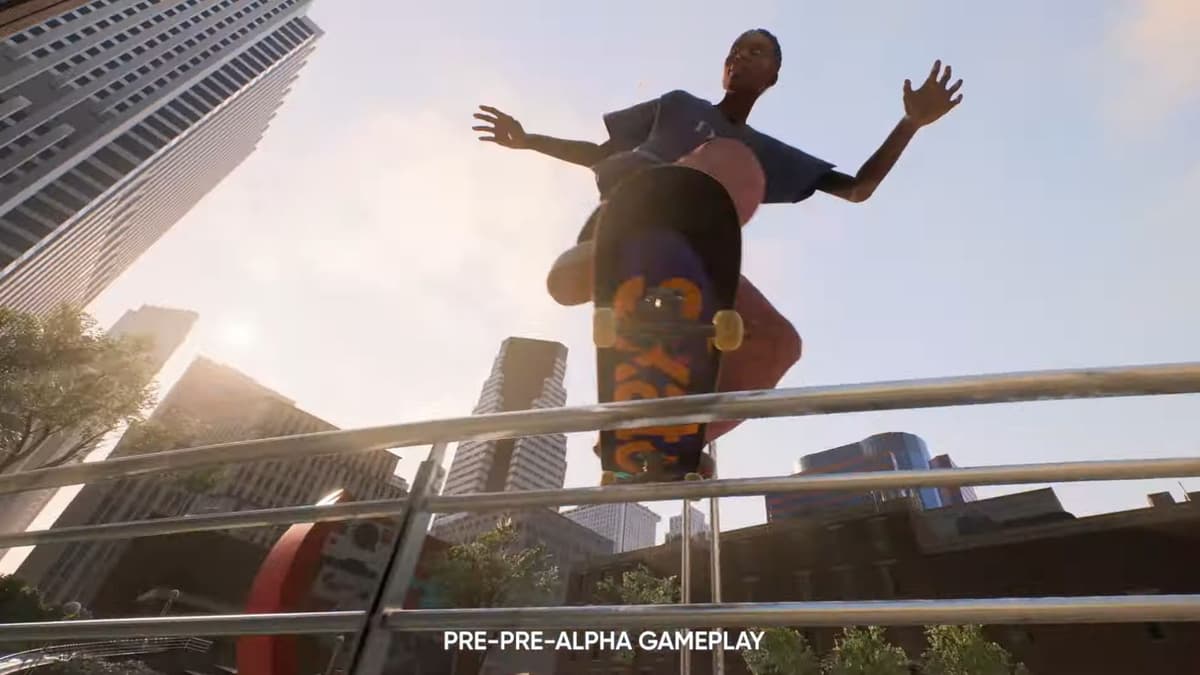
Skate’s DNA was always an earthy counterpoint to Tony Hawk’s neon power fantasy. The original titles leaned into physics-driven realism: board flex, weight shifts, and world-shaping trick lines. The new art style, by contrast, feels brighter, more cartoonish, and frankly reminiscent of Fortnite. That visual pivot alone wouldn’t offend, but it arrives hand in hand with a design philosophy centered on seasonal content drops and an aggressive cosmetic economy.
Here’s the rub: skateboarding culture thrives on authenticity. It’s about self-expression—your board, your stance, your signature combo. But when everything from your helmet to your grip tape sits behind microtransactions, the game’s soul feels put up for rent. On Reddit, one user wrote: “It feels like I’m playing a mobile game disguised as Skate. I can’t rock my favorite graphic unless I pay real cash.”
The Monetization Model
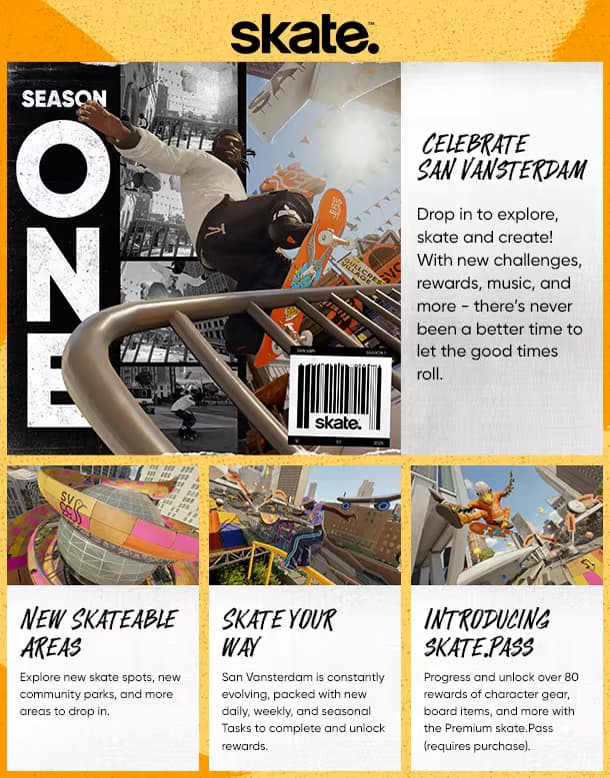
Full Circle chose a free-to-play foundation with microtransactions, battle passes, and randomized mega-packs. While F2P isn’t inherently evil (I’ve poured countless hours into Apex Legends without feeling sold out), its implementation here stings because customization equals identity. Players spend time perfecting trick lines and want their avatars to reflect that effort. Yet in Skate, the “earnable” pool of gear is shallow, while premium bundles promise the flashiest outfits.
Battle passes renew every six weeks with new “themes”—summer skate camps, futuristic neon, and so on. Each pass contains around 50 tiers, unlocking a mix of cosmetics and XP boosts. Skaters can climb tiers through daily and weekly challenges, but many tier rewards are XP multipliers rather than gear, artificially stretching the grind or pushing people toward the $10 premium pass.
Missing Pillars of the Franchise
The new Skate launched without three of its biggest selling points:
- Hall of Meat: No sequel to the satisfying slow-mo wipeout cinema where you rack up points for gnarly falls.
- S.K.A.T.E. Mode: No head-to-head trick duels where you call lines and answer challenges.
- Story/Narrative Track: No single-player arc to guide your career from rookie to legend.
None of these were mere side attractions. They anchored the franchise’s identity and gave players varied reasons to come back. Their absence leaves a void that free-skate and live events alone can’t fill—especially when those live events hinge on the servers staying online.
Data Points and Player Feedback
By launch week, Steam had accumulated nearly 8,000 user reviews, only 46% labeled positive. Crashes and login failures were the top complaints, with many players reporting an error rate as high as 30% per session. One player noted on the official Skate Discord:
“I spent more time staring at ‘reconnecting’ than actually skating. It’s soul-crushing when you finally nail a combo, only to get kicked mid-trick.”
On the monetization front, a common refrain across Steam and Reddit threads was that cosmetic progression is painfully slow unless you pay. The limited pool of unlockable gear through free play means many skaters feel their options are hollowed out, pushing them toward the in-game shop. The phrase “grind to shop” started trending as a shorthand for this frustration.
Want to Level Up Your Gaming?
Get access to exclusive strategies, hidden tips, and pro-level insights that we don't share publicly.
Ultimate Gaming Strategy Guide + Weekly Pro Tips
Three Concrete Fixes Players Crave
If Full Circle wants this ship to right itself, here’s what skaters actually need:
- Offline Free-Skate Mode: Even a limited offline mode that disables progression would let players session spots whenever they want. That solitude, free from server bottlenecks, is part of what made past Skate games meditation machines.
- Public, Dated Roadmap: Lay out exactly when Hall of Meat, S.K.A.T.E. Mode, and a story campaign will drop. Example:
- Q4 2025: Hall of Meat Mode
- Q1 2026: S.K.A.T.E. Trick Duels
- Q2 2026: Narrative Campaign and Hub Progression
- Q3 2026: Expanded Offline Free-Skate
- Rebalanced Cosmetic Economy: Increase the earnable pool of stylish gear by at least 200%. Reserve premium bundles for truly optional flair—signature limited-edition boards and rare skins—not the basic punk jacket or classic vans that define your skater.
Skate Games in 2025: A Competitive Landscape
We’re in a golden age for skateboarding titles. If you crave precision simulation, titles like Session and Skater XL offer offline sandbox freedom and deep custom controls. For a more arcade vibe, reboots of classics and indie experiments deliver slick combo systems with no skeleton of live service. Skate (2025) needed a killer live-service hook to justify the always-online requirement. Immunity to crashes, spontaneous crew runs, community-driven trick competitions—these could elevate it above the field. Right now, though, the shop feels louder than the skatepark.
Looking Ahead: A Call to Action
Early Access gives Full Circle a window to pivot. The community is still here—the launch concurrency spike proves that. But interest alone won’t carry a skeleton crew of features. If the studio commits publicly to server stability targets (sub-5% crash rate per session), dates for missing pillars, and a more generous cosmetics model, the narrative will shift from “soulless cash-grab” to “finally finding its flow.”
Here’s what success looks like by Q2 2026:
- 75%+ positive user reviews on Steam.
- Monthly active users stabilizing above 30,000.
- Average session length rising from 20 to 45 minutes.
- Drop in crash rate to below 5% of play sessions.
- Healthy cosmetics economy with 60% of gear earnable through gameplay.
Ignore these fan-driven priorities, and Skate risks becoming a cautionary tale of a beloved franchise stepping off the board and face-planting in the pursuit of live-service gold. But do it right—and Skate could redefine how social skating lives on in the digital age.
TL;DR
Skate’s Steam Early Access launch underwhelms with server instability, missing franchise modes, and an aggressive F2P shop. There’s still time for Full Circle to course-correct: stabilize servers, deliver a dated roadmap for Hall of Meat, S.K.A.T.E., and story mode, and rebalance cosmetics toward earnable style. Nail these fixes, and Skate can finally land that clean trick.