
In the current early-access build, Slay the Spire 2 uses a 10-rank Ascension ladder, from Ascension 1 through Ascension 10. Each rank is cumulative, which means Ascension 7 includes every modifier from Ascension 1 to 7, not just the newest penalty. The short version is simple: solo Ascension progress is tied to the character that gets the win, the early ranks mostly squeeze your economy and recovery, and the real difficulty jump starts when enemies themselves become tougher and more dangerous at Ascension 8 and 9.
If you have seen players mention 20 Ascension levels, that appears to be carryover from the original Slay the Spire or from less certain reporting. The strongest public early-access breakdowns currently stop at Ascension 10, and that is the practical cap you should plan around right now. Co-op progression is less clearly documented than solo progression, so it is safest to treat solo rules as confirmed and co-op rules as subject to change until the game’s official messaging is more explicit.
Table of Contents (15)
How Ascension works in Slay the Spire 2
The most important thing to understand before climbing is that Ascension does not work like a set of separate difficulty presets. It stacks. Every new level adds another permanent restriction or combat tax on top of the previous ones. That design matters because a run can feel manageable at Ascension 4, then suddenly much harsher at Ascension 8 even if the newest modifier looks small on paper. By that point, you are carrying eight separate penalties at once.
- Current early-access cap: Ascension 10
- Stacking rule: every Ascension includes all lower Ascensions
- Solo progression: character-specific, so each class climbs separately
- Co-op note: public reporting suggests unlocks may be shared more broadly, but this is less well corroborated than solo progression
That character-specific rule is easy to miss. If you clear Ascension 3 with one character, that does not automatically move your other characters to Ascension 4 in solo play. If you want to push multiple classes, you need wins on each of them. That also means your best class for learning Ascension is not automatically your best class for farming unlock progress on the rest of the roster.
All Ascension levels in Slay the Spire 2 explained
Ascension 1: Swarming Elites
Modifier: elites spawn more often. This is the first signal that your pathing has to get sharper. More elites means more relic opportunities, but it also means more early HP loss if your Act 1 deck is not ready. On low Ascension you can sometimes drift into greedier elite routes. At A1, you need to ask whether your deck can actually survive the second and third hard fights, not just the first one.
Ascension 2: Weary Traveler
Modifier: you heal only 80% of missing HP. This looks mild until a rough hallway fight leaves you in awkward range before an elite or boss. The punishment is subtle but constant: every bad turn now lingers longer. Rest sites stop being a full reset button, so blocking efficiently and ending fights cleanly become more important than squeezing out a little extra damage.
Ascension 3: Poverty
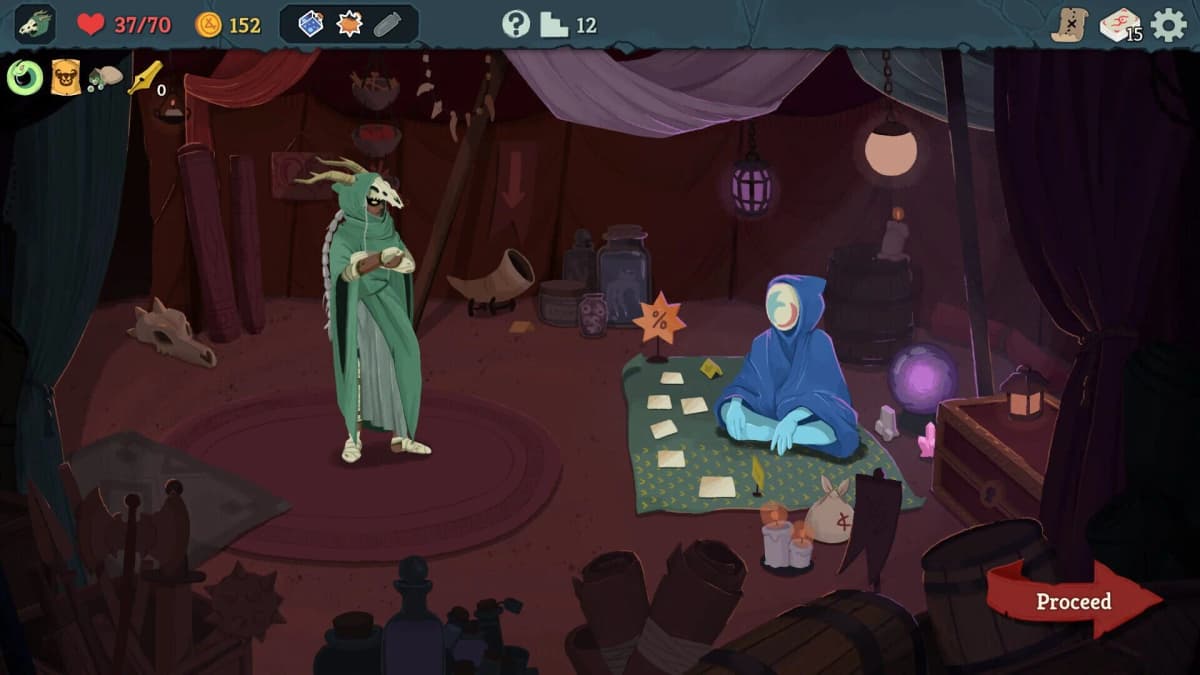
Modifier: 25% less gold. This is the first major economy tax. Fewer shop purchases means fewer chances to patch weaknesses with a premium card, relic, potion, or card removal. At A3, you should start valuing flexible cards a little higher, because your odds of buying your way out of a bad draft drop noticeably. It also makes wasteful early spending hurt more.
Ascension 4: Tight Belt
Modifier: one fewer potion slot. This is where emergency tools become less reliable. If you like holding a key defensive potion for a boss while keeping a second slot open for an elite bailout, A4 cuts that option down. The practical lesson is to stop building routes and combats as if potion storage will save a sloppy line. Use good potions when they secure value instead of hoarding them for a perfect future fight that may never happen.
Ascension 5: Ascender’s Bane
Modifier: start cursed. This is one of the first tiers that actively contaminates your deck quality. A curse is not just an annoyance; it is a dead draw that makes early fights less consistent and can force extra damage if it shows up on the wrong turn. Removal becomes more attractive here, but you should not auto-remove it at any cost. Sometimes the correct play is still buying a run-defining relic or card if your deck is otherwise functional.
Ascension 6: Gloom
Modifier: fewer rest sites. Now the map itself gets meaner. Fewer campfires means fewer upgrades, fewer rests, and fewer chances to correct a bad stretch of fights. This is a bigger spike than it first appears because it compounds A2’s weaker healing. You recover less when you do rest, and now you also get fewer places to do it. Route planning becomes much less forgiving from this point onward.

Ascension 7: Scarcity
Modifier: rare and upgraded cards appear less often. This is the deck-quality squeeze. High-roll reward screens show up less frequently, so weaker drafts stay weaker for longer. You cannot assume the run will eventually hand you a premium fix. At A7, consistent commons and strong synergies you can assemble reliably often outperform greedier lines that depend on rare cards arriving on time.
Ascension 8: Tough Enemies
Modifier: enemies are harder to kill. This is where the climb usually stops feeling like an economy puzzle and starts feeling like a combat check. Longer fights expose every weakness at once: bad draw smoothing, weak scaling, poor defense, and fragile sustain. Decks that were getting by on bursty starts or one strong relic can suddenly stall out because enemies live long enough to punish half-built game plans.
Ascension 9: Deadly Enemies
Modifier: enemies have deadlier attacks. Alongside A8, this is one of the nastiest spikes in the whole ladder. The problem is not just that fights hurt more; it is that many previously acceptable turns become losing turns. A hand that produces partial block and partial setup may have been fine before. At A9, that same hand can put you into unrecoverable HP range by the next room.
Ascension 10: Double Boss
Modifier: fight two bosses at the end of Act 3. This is the defining end-point of the current Slay the Spire 2 Ascension ladder. A deck that can barely scrape past one boss is not an A10 deck. You need sustained scaling, enough survivability to avoid arriving at boss two half-dead, and a plan for different boss patterns instead of a single narrow answer. Burst healing, transition value, and relics that stay relevant across multiple long fights become much more important here.
The hardest Ascension spikes to watch for
The biggest structural difference versus the first game is that Slay the Spire 2 compresses its difficulty into fewer ranks. That is why the sequel’s ladder can feel steeper even though the number cap is lower. The roughest breakpoints are usually A6, A8, A9, and A10.
- A6 is the first map-level punishment that really chokes your freedom. Fewer campfires means fewer upgrades and worse recovery at the same time.
- A8 is where shaky damage plans start collapsing. If your deck only wins short fights, enemy durability exposes that immediately.
- A9 is often the most brutal pre-final tier because incoming damage gets scary enough to punish average turns, not just obvious mistakes.
- A10 is a final exam for deck construction. You are no longer solving one boss fight; you are solving a boss sequence.
A5 to A7 can also be deceptively rough because they reduce deck quality and recovery rather than killing you outright. Those ranks create more “good enough” decks that quietly fail in late Act 2 or Act 3. If your climb feels smooth until then and suddenly falls apart, that is usually the reason.
How to climb Ascension efficiently
If you want to move up the slay the spire 2 ascension levels consistently, build for reliability first. Ascension punishes fragile high-roll decks harder with every step. That does not mean you should ignore strong synergy lines, but it does mean your deck needs to function on average draws, not only on the turns where all your best pieces line up together.
- Respect Act 1 elites early. A1 makes them more common, so your route should match your opening cards and relics. Take elite-heavy paths when your deck can actually convert them, not because relics are always correct.
- Value clean defense more after A2. Reduced healing turns every sloppy hallway fight into a long-term problem. Preventing 8 damage now is often stronger than squeezing 8 extra damage into the enemy.
- Spend gold like it matters at A3. Because it does. Card removal, efficient relics, and premium consistency pieces get more valuable when your shop economy tightens.
- Do not lean too hard on potion storage after A4. You have less room for panic buttons, so your deck itself has to carry more of the burden.
- Fix deck consistency around A5 to A7. Curses, fewer campfires, and worse reward quality all push you toward leaner, more coherent decks. Random filler hurts more here than on lower ranks.
- Prepare for long fights before A8 and beyond. You need scaling, repeatable block, or both. If your deck only wins by drawing one explosive opener, it usually runs out of road.
- Draft Act 3 with A10 in mind. A deck that beats one boss while spending all its resources is not ready. You want enough sustain and flexibility to survive two different boss patterns back-to-back.
Common mistakes that stall the climb
The most common Ascension mistake is treating each new rank like an isolated rule change. That is not how sts2 ascension explained properly works. A9 is hard partly because of A9 itself, but also because it arrives on top of weaker healing, less gold, fewer potion slots, a starting curse, fewer rest sites, and worse card quality. When a run dies, look at the stack of penalties, not just the newest one.
- Overvaluing greed in Act 1. More elites do not automatically mean you should take every elite route.
- Ignoring chip damage. A2 and A6 make small losses snowball into forced rests and missed upgrades.
- Waiting for rare cards to save the deck. A7 reduces how often that rescue arrives.
- Entering late-game without scaling. A8 and A9 punish decks that only spike early.
- Building only for one boss. A10 requires enough breadth to survive two of them in sequence.
If you are climbing solo, the cleanest way to improve is to keep notes by character on where runs start to fail: early elite damage, midgame economy, late-game scaling, or boss endurance. Because progress is character-specific, those patterns matter more than your global win rate. One class may cruise through A5 while another repeatedly dies at A3 for completely different reasons, and that is normal under the current early-access Ascension system.
FinalBoss // Gear
Level up your setup
01Top-rated gaming headsetson Amazon→02High-refresh gaming monitorson Amazon→03Gaming chairson Amazon→04Discounted game keyson Kinguin→
Affiliate links · As an Amazon Associate, FinalBoss earns from qualifying purchases.
Want to Level Up Your Gaming?
Get access to exclusive strategies, hidden tips, and pro-level insights that we don't share publicly.
Ultimate Guide Strategy Guide + Weekly Pro Tips