
Table of Contents (15)
How Slay the Spire 2 Multiplayer Actually Works
Multiplayer in Slay the Spire 2 is built around a single online save owned by one Host, up to four players connected via Steam friends, and fully separate decks and rewards for each player. You move on one shared map, fight the same enemies, but keep your own cards, relics, gold, and energy.
Once I understood that core idea-shared run, individual progression-the whole system finally clicked. This guide walks through exactly how to host and join, what the save rules do (and don’t) allow, how combat and loot change in co-op, and how Ascension works so you can start runs without wrecking a good save by accident.
Step 1: Setting Up a Co-op Lobby on Steam
All multiplayer is online-only through Steam. There’s no local co-op, matchmaking, or password lobbies right now, so every player has to be on your Steam friends list.
Here’s the exact setup flow I use:
- Launch the game and pick the profile you want to use (this controls your unlocks and multiplayer campaigns).
- From the main menu, select
Multiplayer. - One player chooses
Hostand creates the lobby. - Everyone else selects
Joinand connects via the Steam friends list popup. - Each player selects a character. You can duplicate characters (four Silents is totally allowed).
- When everyone is ready, the Host starts the run and your shared climb begins.
One thing I learned early: your chosen profile matters. New profiles only have Ironclad unlocked. If you want to play a different character, make sure you pick a profile where you’ve already unlocked them before you hit Multiplayer.
Step 2: Co-op Save Rules (Read This Before Committing)
This is the part that caused the most confusion in my group. Slay the Spire 2 treats multiplayer campaigns as tied to the Host’s profile, with some strict rules about who can play and when.
- Each player has three profiles.
- Each profile can host one multiplayer campaign at a time.
- The Host owns the save and it lives on their chosen profile.
- If the Host wants to start a fresh campaign with a different group on that same profile, they must abandon the existing multiplayer run.
- Everyone who will ever play that campaign must be present at the start. You cannot add new players mid-run to fill empty slots.
- You can quit a session at any time, but the game only continues if all original party members are present when you next load that campaign.
In practice, this means you should think of a multiplayer campaign as “this exact group’s long-term run.” On one of my early attempts, a friend dropped the game for a few weeks; because we couldn’t sub in anyone else, that whole campaign was effectively frozen unless we all got back together.
If you want flexibility, I recommend:
- Using different profiles for different friend groups.
- Telling everyone up front that this save is “for us four only.”
- Keeping one profile free if you plan to experiment with random groups later.
Step 3: Combat in Co-op – Energy, Turns, and Scaling
Once you’re in a fight, Slay the Spire 2 feels familiar, but multiplayer adds a few important twists that change how you build decks and how risky you can be.
Individual Energy, Shared Turn
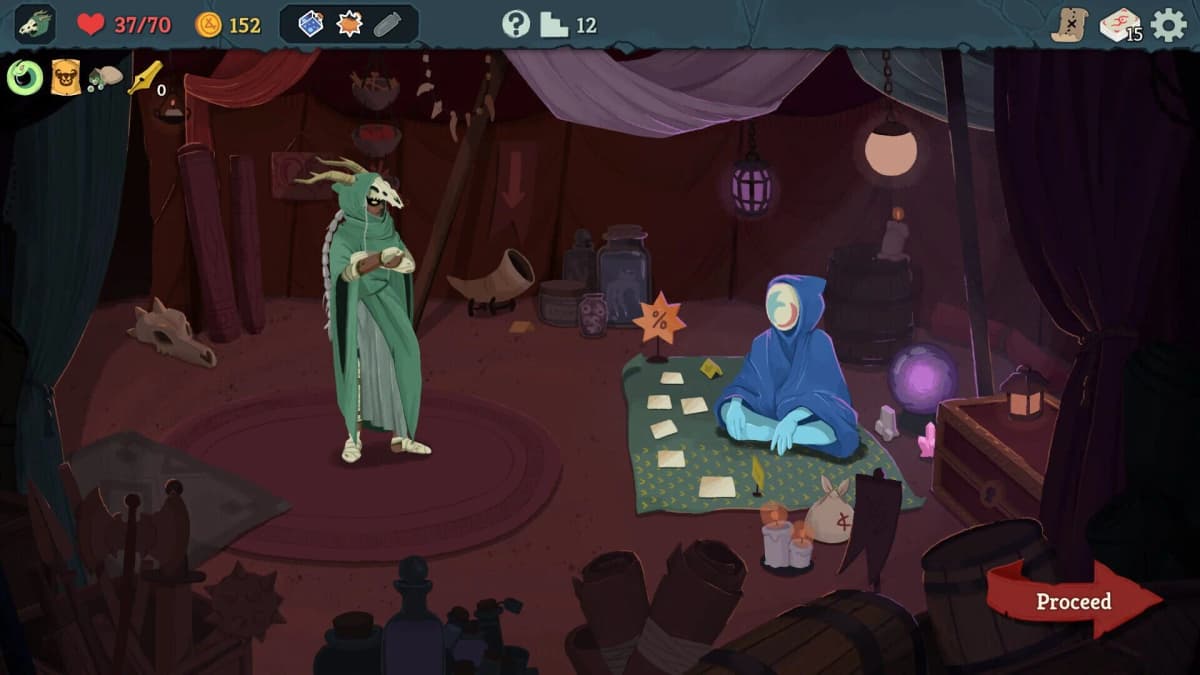
Every player has their own hand, draw pile, discard pile, and energy pool. Nothing about your cards or resources is shared directly.
- You all act during a single party turn.
- Players can play cards in any order; actions resolve as they’re played.
- The turn only ends when everybody clicks “End Turn”.
On our first runs we kept accidentally stalling turns because one person was still thinking while everyone else had ended. Now we always call out “I’m done” or “give me a second” in voice chat so no one rushes their plays or ends too early.
Enemy Difficulty Scales with Party Size
Co-op isn’t just four players stomping singleplayer encounters. The game scales enemies based on how many people you bring:
- Enemy HP and other stats scale up with party size.
- Enemy attacks generally hit the entire party, not just one hero.
- Boss defenses and special buffs are tougher to break in larger groups (for example, certain buffs can require more hits to remove).
The practical impact: if one person is under-defended, everyone feels it. In singleplayer you can tank a hit and recover later; in co-op, big AoE turns punish the whole team. I found we survived more consistently when at least one player leaned into block / mitigation instead of everyone going pure damage.
Death and Revives
If you hit 0 HP during a fight:
- You’re effectively downed for the rest of that battle.
- If the party wins, you’re automatically revived afterwards and continue with the run.
This creates a nice dynamic where the last surviving player can clutch out a win and save the run. We had multiple fights where three of us were down and one carefully blocked and chipped away to turn disaster into a victory.
- You’re effectively downed for the rest of that battle.
- If the party wins, you’re automatically revived afterwards and continue with the run.
This creates a nice dynamic where the last surviving player can clutch out a win and save the run. We had multiple fights where three of us were down and one carefully blocked and chipped away to turn disaster into a victory.
🎮 Get This Game at the Best Price
Compare prices instantly and save up to 80% on Steam keys with Kinguin — trusted by 15+ million gamers worldwide.
*Affiliate link — supports our independent coverage at no extra cost to you

Rewards, Inventories, and Co-op Cards
Even though you’re on one map, your loot and build are completely your own:
- Each player has their own relics, cards, consumable items, and gold.
- Battle rewards (cards, gold, relics) are offered individually to each player.
- Shops show different stock and prices for each person.
- Treasure chests contain one reward per player. If two people choose the same item, the game uses RNG to decide who gets what version.
On top of that, co-op introduces multiplayer-only support cards for each class. Examples I’ve seen include:
- Ironclad-style cards that give Block to the whole team.
- Silent-style cards that share a portion of your Block with your allies.
- Utility cards that send energy or redirect damage between players.
The most important detail is that debuffs like Vulnerable or Weak are party-wide. If one player sticks Vulnerable on an enemy, everyone’s physical damage benefits. That pushed our group into clear roles: one dedicated debuffer, one tank, one heavy damage, one flexible hybrid.
Step 4: Map, Events, and Campfires as a Party
Outside of combat, you share a single map and node progression, but decisions inside those nodes are often personal.
Path Voting
When you move between nodes:
- Everyone chooses where they want to go next on the map.
- If you all agree, you go to that node.
- If you disagree, the game uses RNG to break the tie and picks between the suggested options.
This is where communication really matters. In one disastrous run, half of us wanted elites for relics, the other half wanted safe fights to heal. RNG kept siding with the greedy path and we wiped. Now we talk through the next 2-3 nodes together instead of spam-clicking a direction.
Ancients, Events, Shops, and Chests
Most node types respect your individuality:
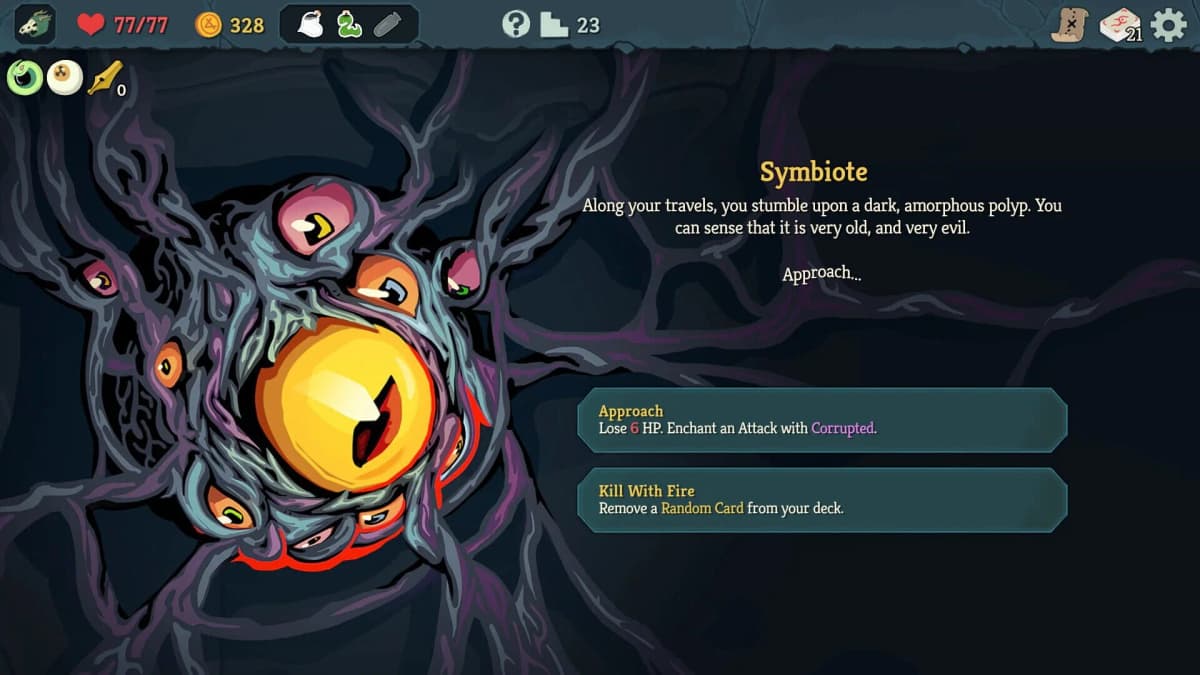
- Ancients and random events give separate options and outcomes to each player. You might sacrifice HP while someone else gains a relic at the same node.
- The Shopkeeper has a different inventory and prices for every player, all funded from your personal gold stash.
- Treasure chests provide one reward per player; overlapping picks are resolved by RNG, but everyone walks away with something.
This keeps the co-op flow close to singleplayer in terms of “my deck, my decisions”, even though the path itself is shared.
Campfires, Mend, and Revive
Campfires add a few extra tools for team survival:
- Each player chooses their own action (Rest, Upgrade, etc.) just like solo.
- There’s a co-op-specific Mend option that heals around 30% of one ally’s HP.
- There are also options related to reviving or supporting allies, depending on who is down and what the game offers at that point in the run.
Our early mistake was everyone resting all the time “just to be safe,” which left us under-upgraded and weak. What’s worked better is assigning roles at fires: one player Mend-heals the squishiest ally, someone upgrades a key scaling card, and only the person in real danger uses a full Rest.
Step 5: Ascension and Progression in Multiplayer
Multiplayer uses its own Ascension ladder, separate from your singleplayer progress. Unlocks don’t carry over between the two modes.
- Singleplayer and multiplayer Ascension levels are independent.
- Co-op Ascension is unlocked by beating all three acts in multiplayer, just like solo.
- When you unlock a multiplayer Ascension level, it becomes available for all characters in co-op.
- The active Ascension for a run is based on the lowest Ascension level in the party.
That last point is crucial: if one friend has multiplayer Ascension 5 and another only has Ascension 2, the run can only be set to 2. In my group we solved this by doing a few “catch-up” runs with our least progressed player so everyone could climb the ladder together.
Practically, if you want to run something like Ascension 4 co-op:
- Make sure everyone has completed at least one full multiplayer run up to that level.
- Host sets the Ascension level when starting the campaign, within the cap of the lowest player.
Hard-Learned Co-op Tips to Keep Runs Alive
Once my friends and I stopped treating co-op like four parallel solo runs and more like a coordinated party, our success rate shot up. These are the habits that made the biggest difference:
- Agree on roles early. Decide who leans into block, who focuses on debuffs (Vulnerable/Weak), and who chases raw damage. The shared debuff system makes specialization incredibly powerful.
- Talk through big enemy turns. When you see a huge AoE incoming, pause and plan everyone’s blocks and mitigation before anyone slams damage cards.
- Don’t rush “End Turn.” Get into the habit of saying out loud when you’re done playing cards so nobody ends the turn while someone is still mid-combo.
- Plan campfires as a group. Decide how many Upgrades you need to scale, who desperately needs Mend, and who can afford to stay low for a bit.
- Respect the save limitations. Treat each campaign as a semi-committed project with that exact party. If someone can never make sessions, start a different run on another profile.
- Use early acts to test synergy cards. When you see multiplayer-only support cards, pick a few and actively build around them instead of ignoring them as “cute extras.” They’re balanced around co-op, and they swing fights hard in your favor when used well.
- Be realistic about Ascension. If one player is clearly less experienced, keep the Ascension lower while they learn co-op pacing. Higher levels punish party-wide mistakes a lot more than solo.
Once your group internalizes these systems-host-owned saves, scaled enemies, shared map decisions but separate loot—multiplayer starts to feel like a natural extension of singleplayer rather than a bolt-on mode. The game stays true to its deckbuilding core, it just forces you to think about how your build fits into a team instead of only your own survival.
FinalBoss // Gear
Level up your setup
01Graphics cardson Amazon→02Gaming laptopson Amazon→03High-refresh gaming monitorson Amazon→04Discounted game keyson Kinguin→
Affiliate links · As an Amazon Associate, FinalBoss earns from qualifying purchases.
Want to Level Up Your Gaming?
Get access to exclusive strategies, hidden tips, and pro-level insights that we don't share publicly.
Ultimate Guide Strategy Guide + Weekly Pro Tips