
Table of Contents (10)
Climbing a Familiar New Spire
I went into Slay the Spire 2 with the worst possible baggage: around 200 hours in the first game spread over years of “just one more run” at 2 a.m. That kind of obsession is hard to follow up. Sequels to this sort of lightning-in-a-bottle design almost never hit the same way; they’re usually either too safe or so desperate to be “new” that they forget what worked.
My first 30 minutes with Slay the Spire 2’s Early Access felt almost suspiciously familiar. The map screen, the energy system, the intent icons floating over enemy heads – it’s all immediately readable if you’ve climbed this tower before. I picked a starter character, grabbed a relic, and bashed some cultists with basic attack and block cards, thinking, “Okay, this is Slay the Spire again. Cool, but safe.”
Then the game started quietly twisting the knife.
By the end of my first night – about six runs deep – I’d already hit a brand-new character that bent my brain sideways, seen two completely different versions of the first act, and built a deck around a single enchanted Strike that I became unreasonably attached to. That’s when it clicked: Slay the Spire 2 isn’t trying to reinvent the formula, it’s trying to rewire how often and how dramatically that formula explodes in your hands.
Early Access chaos, record numbers, and why the launch matters
Before getting deeper into the design stuff, it’s worth talking about the sheer noise this launch made. Depending on which tracker and day you look at, Slay the Spire 2 hit over half a million concurrent players on Steam in its first days, with some reports pushing that figure north of 570,000. That’s an absurd number for a single-player-leaning roguelike card game, and way beyond what the first game ever pulled at its peak.
The rush was heavy enough that Steam’s payment system wobbled for a bit – roughly half an hour of checkout issues and storefront strain, according to multiple reports. It wasn’t a catastrophic meltdown, more like a reminder that a “small” indie follow-up just elbowed its way into the same statistical neighborhood as giant live-service releases.
Why does that matter for you holding the buy button? Because this isn’t some risky, half-baked Early Access experiment limping out the door. Mega Crit clearly spent years rebuilding the engine and layering systems before opening the gates, and the response – 96–97% positive reviews early on, massive player counts, almost no serious bug chatter – lines up with how polished it already feels.
That said, it is still Early Access. The “true” ending isn’t in yet, balance is very much in flux, and the studio’s openly talking about a one-to-two-year road to 1.0. I kept that in mind while I climbed – but I kept forgetting, because most of the time it already behaves like a complete sequel.
Runs finally feel different instead of “different-ish”
My biggest gripe with the original after a hundred hours was predictability. Even with random maps, a run through Act 1 almost always had the same rhythm in my head: some hallway fights to stabilize, maybe a risky elite or two, hit the campfire before the boss, then repeat with slightly spicier numbers.
Slay the Spire 2 attacks that rut at the structural level. Each act now has alternate versions – think parallel timelines of the same floor – with different environments, enemies, events and bosses. You don’t just chart a new route; you pick which flavour of nightmare you’re signing up for.
On my third run, I took what looked like the “safe” variant of the first act: enemies with lower visible attack numbers, more question marks, fewer elite icons. Halfway up, I realized the act’s gimmick leaned hard on damage-over-time effects and debuffs that my block-heavy deck didn’t care about. By the boss, my carefully curated wall of defense was useless against stacking poison and max HP reduction. I died in six turns with a hand full of unplayable nonsense, half laughing, half swearing.
The alternate-act system doesn’t just double content for the sake of a bullet point. It forces you to re-evaluate assumptions on the fly. The map choice isn’t “left path has more campfires”; it’s “do I want an act themed around attrition and chip damage or an act that hits like a truck but telegraphs hard?” After about ten hours, my runs felt noticeably less samey than in the first game at the same stage.
Events also lean into this variety. I’ve run into versions of the classic trade-offs – remove a card, take a curse, get a relic – with extra layers driven by the new systems. Sometimes you’re not just swapping one card for another, you’re messing with how your enchantments or keywords will show up for the rest of the climb. More on those in a second, because they’re the biggest twist.
New heroes that actually demand new habits
Mega Crit could have coasted by reskinning the original cast and calling it a day. Instead, the new faces – especially the Regent and the Necrobinder – feel like they’re aimed at players who already solved the first game’s puzzle and want something knottier.
The Regent was the first new character I clicked with. On the surface, this is your royalty-flavoured bruiser, but the kit quietly steers you away from straightforward “play attack, play block” patterns. Cards nudge you into staging turns: preparing effects, then cashing them out in bursts, juggling resources that determine how “royal” your actions are. My usual autopilot from the first game, where I could eyeball whether to block or bash in a second, suddenly wasn’t enough.
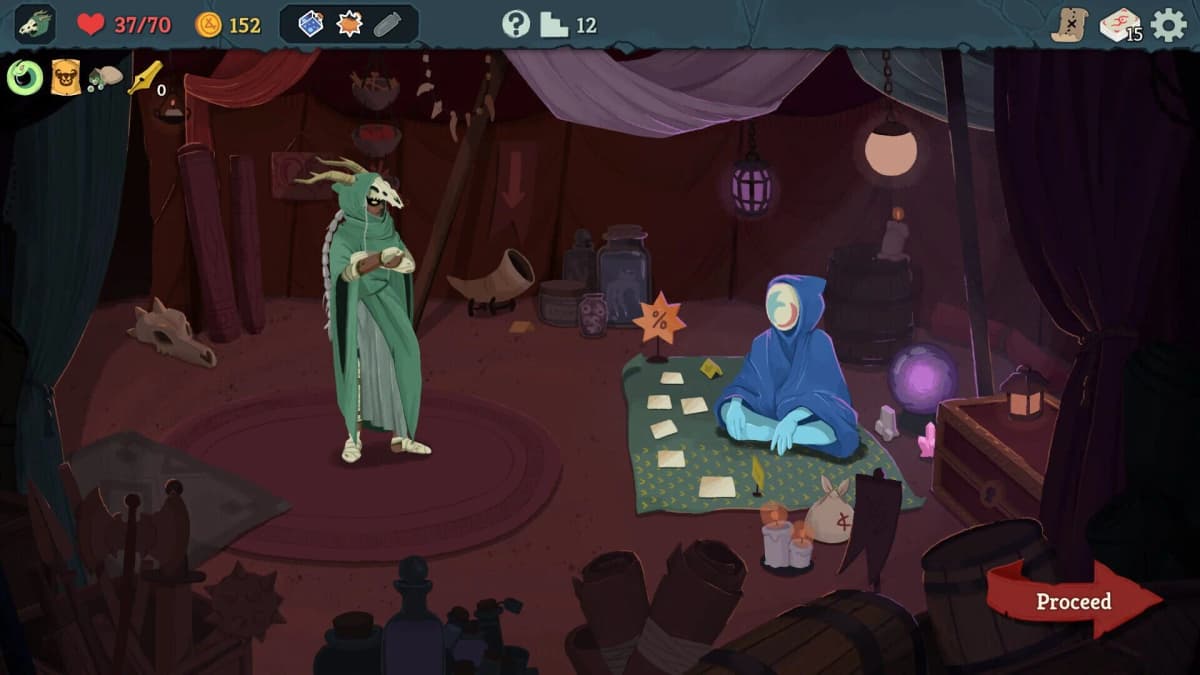
The Necrobinder, by contrast, is the one that made me stop and re-read cards five times before hitting end turn. The whole fantasy is right there in the name: you’re working with death and bound spirits, trading pieces of your life and deck stability for disgusting spikes in power. It’s not a beginner-friendly kit; you’re constantly weighing whether one more greedy ritual is worth the long-term decay it adds. But when it works, it really works. My first successful Necrobinder run turned the final boss into a three-turn demonstration of why delayed payoff strategies are dangerous in the right hands.
Both these heroes slot neatly into the same overall skeleton as the original roster – energy, card draw, relics, ascending difficulty – but they demand different instincts. They also help the “one more run” itch by giving you fresh skill ceilings to climb. I found myself switching heroes not because I was bored, but because I wanted a different mental workout.
Enchantments, keywords, and that one cursed Strike that carried my run
Here’s the secret sauce that really sets Slay the Spire 2 apart from its older sibling: run-long card modifications. In addition to the usual relics and upgrades, you now pick up enchantments – persistent modifiers that attach to specific cards – and new keywords that radically change how those cards behave.
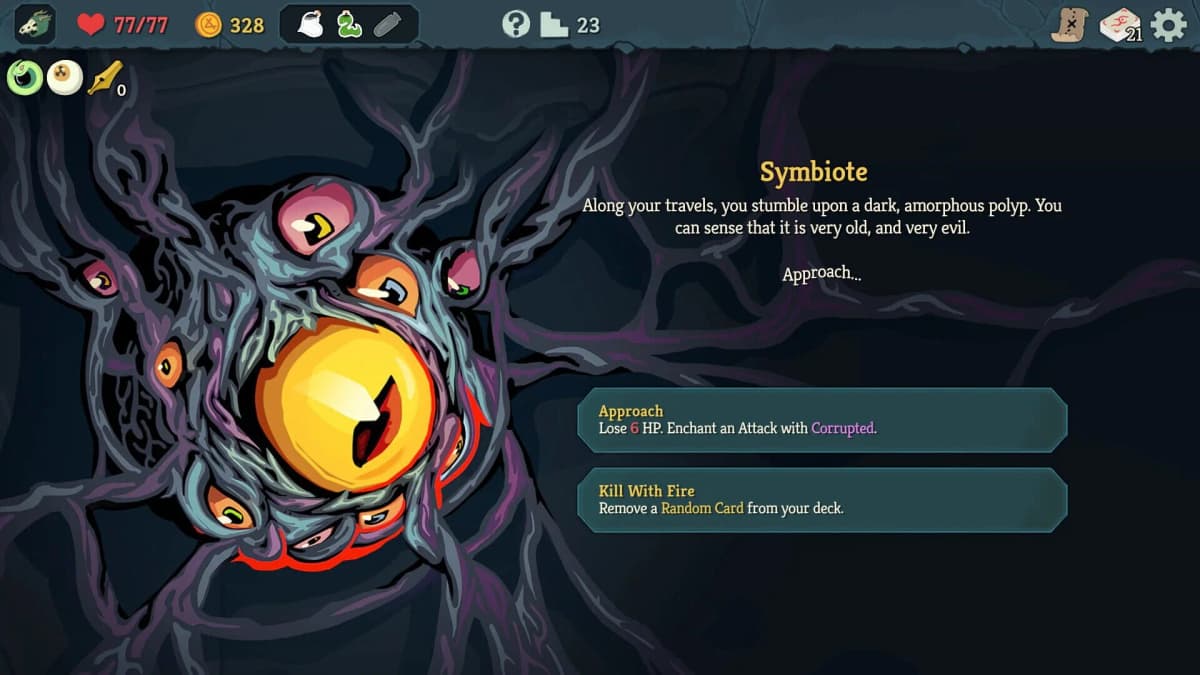
One of the standout examples is something like “Corrupted,” an enchantment that cranks a card’s damage by 50% but eats 3 of your HP every time you play it. The moment I picked it for a basic Strike just to survive a rough early elite, my run’s identity changed. That mundane, starting-deck Strike became the star of the show. Every decision after that – relic choices, card removals, healing, even which act variant to tackle next – had to account for the fact that my main damage button was also a slow self-destruct mechanism.
In the first game, relics gave you that kind of run-defining arc, but your actual cards stayed mostly static once upgraded. Here, the deck itself slowly mutates. A defensive card might start refunding energy under certain conditions; a draw spell might start applying a debuff; a vanilla attack might now pierce block or spread damage around the board. It scratches the same brain-itch as a good ARPG loot system, but without burying you under item management.
The catch is that runs feel tougher overall. That’s partly because the game expects you to lean into these risk-reward modifiers instead of playing safe. I had multiple runs where refusing a spicy enchantment or keyword left my deck underpowered by mid-Act 2, and the damage curves punished me hard. On the flip side, going all-in can make fights feel unfair in your favour, which is exactly the kind of broken nonsense I want in a single-player roguelike.
Card text is generally clear, and the new purple-text enchantments stand out visually, but I still had a few moments early on where I misread how an interaction would stack over several turns. That’s Early Access for you; there’s room to tighten phrasing and add more in-game examples or tips without dumbing things down.
Co-op turns analysis paralysis into a group activity
I honestly expected co-op to be a novelty mode I’d poke once and ignore. Slay the Spire has always been such a solitary, in-your-head experience for me. Instead, the official up-to-four-player mode already feels like a natural extension of the design rather than an afterthought.
In co-op runs, you and your friends climb together, planning fights and routes as a group instead of staring at your own map in silence. The moment someone floats, “We could probably take that elite if you draw your big AoE,” you realize how much of this game normally happens as internal monologue. Now it’s out loud, and you’re accountable for your terrible greed calls.
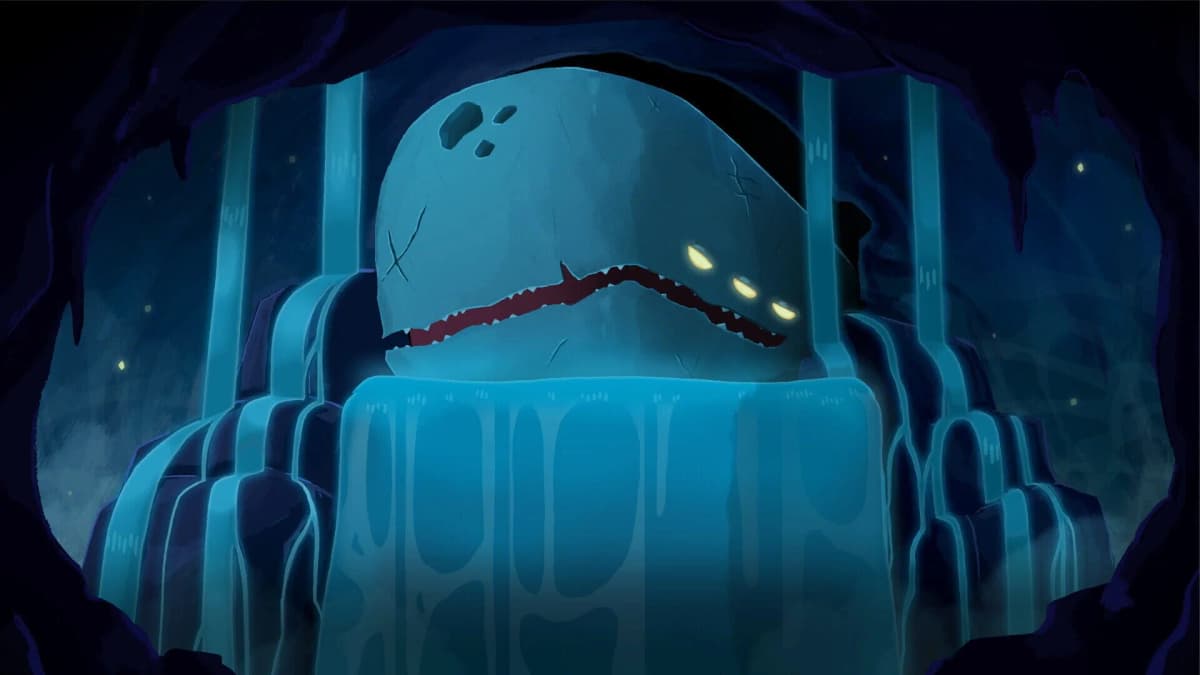
My favourite session so far was a three-player climb where we collectively decided to lean into the dumbest possible choices every time an enchantment showed up. By mid-Act 2, our decks looked like cursed fan fiction – cards bleeding HP, cards chaining into each other with ridiculous keywords, zero regard for long-term stability. It ended horribly, but the post-run debrief was pure comedy, and that’s where co-op shines: even failed experiments are a good story.
It’s still clearly a work in progress in terms of UI niceties and teaching players how shared systems work, but moment-to-moment it’s already much more than a checkbox feature. If you’ve ever watched a friend play the original and backseat-designed their deck, this is your chance to do it without hovering over their shoulder.
Meta progression, difficulty, and the urge to grind “just one more”
Structurally, the sequel keeps the spirit of the original’s progression: you unlock more cards, relics, and options simply by playing, and the game ramps up through its equivalent of ascension-style difficulty modifiers. The difference is that the systems surrounding this feel more interconnected now.
Quality-of-life unlocks smooth out rough edges without short-circuiting the challenge. Little things like better ways to preview effects, or extra information on enemy intent and future turns, make it easier to plan without giving you perfect knowledge. I appreciated that as someone who tends to overanalyze; the game respects that style rather than shoving you toward twitchy reactions.
Difficulty-wise, the current Early Access build leans a bit meaner than the first game did at launch. Elites hit hard, mis-built decks get exposed quickly in the second act, and certain enchantment or event combinations can soft-lock you into awkward positions if you’re not paying attention. But the deaths mostly feel earned. When I got bodied, I usually had a clear “I got greedy three rooms ago” or “I tuned this deck too narrowly around one combo” narrative in my head.
That’s the key for a roguelike: the urge to immediately queue up again comes from understanding how you could do better. Slay the Spire 2 nails that loop already. After a week with it, the number of times I said “this will be my last run” and then queued two more is… not healthy.
Presentation and performance on PC
I played on a mid-range PC at 1440p, and the new engine felt rock solid. The art style keeps the off-beat, almost scribbly charm of the first game, but it’s sharper and more cohesive now. Animations have more punch – enemy attacks land with clearer feedback, status effects read faster, and character personality comes through in little flourishes without slowing combat down.
Performance-wise, I didn’t run into crashes or major hitches. Load times between floors are snappy, and even busy turns with multiple chained effects resolve cleanly. For an Early Access launch build, that’s impressive. It’s also worth noting that despite the extra animation and visual spice, the game still respects the fact that you’ll be staring at it for dozens of hours; nothing is so flashy that it gets in the way of parsing the board.
The soundtrack leans into familiar motifs with new arrangements and themes. I caught myself humming more than once during longer play sessions, which is exactly what I want from a game I might spend hundreds of hours with: audio that supports focus rather than vying for attention.
Early Access caveats: balance swings and an unfinished top floor
For all the praise, it’s still important to underline: this is not the final form of Slay the Spire 2. Mega Crit has been upfront about a long Early Access road ahead, including a proper ending, more content, balance passes, and expanded mod support. The price is also likely to go up once 1.0 lands, if they follow the pattern of similar indie successes.
That shows in a few places. Some cards and enchantments currently feel overtuned, others too timid to ever justify taking up a slot. A couple of specific enemy combinations in my runs created difficulty spikes that felt more like tuning quirks than intentional tests. None of this broke the game, but you can tell the meta is going to look very different six months from now.
The narrative layer is also clearly incomplete. There are hints of a broader story, new bits of lore, and a sense that the tower itself is weirder this time, but you’re not getting a fully wrapped-up plot yet. Personally, I don’t come to this series for heavy storytelling, so that didn’t bother me, but if you’re hoping for a neat ending right now, you won’t find it.
If you’re allergic to balance changes, or you like to learn a game once and then live in that solved space, you might want to wait for 1.0. For everyone else, watching this particular meta evolve in real time is going to be half the fun.
Who should jump in now – and who should wait
If you loved the first Slay the Spire, the answer is simple: yes, it’s worth it already. The core feel is intact – plotting routes, curating decks, praying the next reward screen lines up with your half-formed idea – but the new systems, characters, and act variants make it feel like a true second album rather than a DLC pack.
If you bounced off the original because card games aren’t your thing at all, this won’t magically convert you. It’s still dense, still turn-based, still driven by reading small numbers and planning several turns ahead. The Early Access state doesn’t change that fundamental DNA.
For newcomers to the genre, this is a slightly trickier call. On one hand, this sequel already offers more variety and better onboarding quality-of-life than its predecessor, and you’ll be learning fresh alongside veterans as the meta shifts. On the other, the game currently assumes a bit of familiarity with deckbuilding concepts and isn’t afraid to hit you with punishing choices early.
My honest recommendation: if you’re even mildly curious about roguelike deckbuilders, and you don’t mind systems getting buffed and nerfed under your feet, Slay the Spire 2 is a fantastic starting point already. If you’re ultra-patient and want a nailed-down, fully balanced “final” experience, mark your calendar for a year or two out and circle back when the true ending arrives.
FinalBoss // Gear
Level up your setup
01Top-rated gaming headsetson Amazon→02High-refresh gaming monitorson Amazon→03Gaming chairson Amazon→04Discounted game keyson Kinguin→
Affiliate links · As an Amazon Associate, FinalBoss earns from qualifying purchases.
Want to Level Up Your Gaming?
Get access to exclusive strategies, hidden tips, and pro-level insights that we don't share publicly.
Ultimate Reviews Strategy Guide + Weekly Pro Tips