
Table of Contents (8)
Why the Regent changes the Spire’s rhythm – and why I care
When Mega Crit finally peeled back the curtain on the Regent, it wasn’t another paint-by-numbers roguelike class-it’s a design that asks you to think across turns, not just within them. This matters because Slay the Spire’s original magic came from tight, meaningful choices; the Regent promises to rewire that by introducing persistent resources, disposable minions created mid-fight, and a weapon you can forge over time. That combination could make for some of the most surgical decision-making we’ve seen in the series.
- The Regent uses Stars: a persistent, uncapped secondary resource that survives turns.
- He can transform cards into disposable minions-single-use helpers that are created mid-battle.
- Sovereign Blade is a retainable, forgeable weapon you can power up across turns for one big strike.
Key takeaways
- Stars let you bank power for later plays instead of burning resources every turn — think “save up for the big payoff.”
- Minion-creation is disposable, which avoids long-term deck bloat but raises balance questions about tempo and single-turn spikes.
- Forge + Retain weapons invite deliberate, slow-burn strategies; they’re exciting but risky in a roguelike where runs can end suddenly.
Breaking down the Regent
This caught my attention because Mega Crit isn’t just reskinning old mechanics. The Regent’s core loop is explicitly multi-turn: some cards build Stars, some consume them, and others scale their effect based on how many Stars you’ve hoarded. One example, Hidden Cache, hands you a little now and more next turn—an obvious invitation to plan a follow-up combo. Unlike energy, Stars don’t dissipate at the end of the turn and there’s no cap mentioned, which could let you set up spectacular late-fight plays that feel earned.
Stars: a persistent resource that rewrites tempo
Persistent resources are risky design moves in roguelikes: they reward forward planning but can break pacing if not tuned. No cap on Stars is intriguing and a bit worrying—what stops a player from amassing an absurd stockpile and trivializing bosses? The likely answer will be card design that taxes Stars heavily or enemies that punish hoarding. Still, Stars encourage play patterns closer to deckbuilding strategy games than the immediate Tetris puzzle of the original Spire.
Disposable minions: transform, sacrifice, repeat
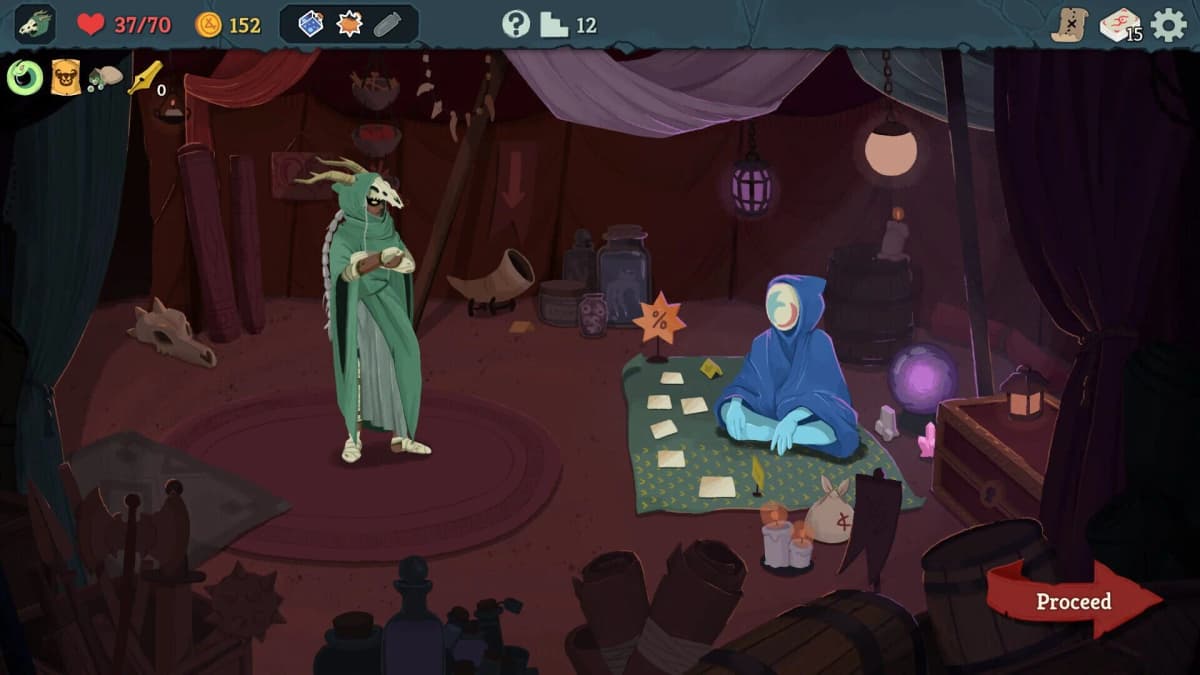
Instead of a permanent summon system like “bring a pet forever,” the Regent turns cards in your hand into one-shot minions. Guards, shown in Mega Crit’s reveal, can convert cards into zero-cost Minion Sacrifice that grants heavy block and is then exhausted from the fight. I like this approach: you get the tactical benefit of minions without bloating your deck for future encounters. Mega Crit also teases attacking minions, which opens up hybrid builds—defensive turns where you convert for block, offensive turns where converted cards become damage sources.
Sovereign Blade: forgeable, retainable, and very deliberate
The Sovereign Blade is the Regent’s headline trick. On its face it’s a two-energy, ten-damage weapon—meh. The twist is Forge: cards that either place the Blade in your hand or increase its power if already held. Because the Blade has Retain, you can stack Forge buffs across turns and then cash out with a single, massive hit. That design feeds satisfying “build, then unleash” moments but also introduces tension: do you spend turns buffing the Blade and risk dying, or play safe and miss out?
There are other toys too—colorless synergies like Spectrum Shift and scaling cards such as Supermassive (which punishes flood-of-creation strategies by turning created cards into extra damage). The Regent looks engineered to reward careful sequencing and creative deck construction.
The Obscura and what’s next
Mega Crit’s Neowsletter also teases a new monster, The Obscura: a lamp-headed, reality-warping creature that apparently interferes with photo equipment. It’s weird, unsettling, and exactly the kind of eccentric enemy design that keeps the Spire feeling alive. Mega Crit also confirmed early access for March 2026 and hinted at a February surprise—so expect a trailer or playable tease that could show these systems in action.
My skepticism? A few notes: uncapped persistent resources can snowball, forge-charging requires you survive multiple turns, and disposable minions need careful balance to avoid feeling like cheap tricks. But these are fixable with tuning, and the conceptual payoff is huge: a class that makes you plan not just your next hand, but your next several turns.
TL;DR
The Regent looks like the first Slay the Spire 2 class built around long-form decision-making: bank Stars, make one-use minions, and forge a blade to explode for a payoff. It could be brilliant—or brittle—depending on balance, but either way it gives players a fresh way to think about runs. Early access in March 2026 is close enough to start getting excited, and Mega Crit’s February hint is now officially circled on my calendar.
FinalBoss // Gear
Level up your setup
01Top-rated gaming headsetson Amazon→02High-refresh gaming monitorson Amazon→03Gaming chairson Amazon→04Discounted game keyson Kinguin→Affiliate links · As an Amazon Associate, FinalBoss earns from qualifying purchases.
Want to Level Up Your Gaming?
Get access to exclusive strategies, hidden tips, and pro-level insights that we don't share publicly.
Ultimate Gaming Strategy Guide + Weekly Pro Tips