
Table of Contents (10)
Why Co-op in Slay the Spire II Feels Wild (In a Good Way)
After my first four-player run in Slay the Spire II, we wiped on Act 1 elites I’d normally farm in my sleep. Not because we were bad, but because we treated co-op like four solo runs stapled together. The breakthrough came when we finally understood how the host system, shared turn, and scaling really worked – and started playing like a single team instead of four people spamming cards.
This guide breaks down exactly how Slay the Spire 2 co-op works: how to host and join, what’s shared and what isn’t, how enemies scale with more players, and how progression and Ascension work in multiplayer. I’ll walk through the systems the way I wish someone had explained them before my group fed three campaigns to the first boss.
Step 1 – Hosting a Co-op Run (Who Owns What)
The most important thing to understand: the host owns the run. Every co-op campaign is tied to the host’s profile and save slot. If you host, it’s your file, your map, your progress. Everyone else is effectively “visiting” that run.
Here’s how I reliably set up a lobby on PC (Steam):
- From the main menu, go to
Multiplayer. - Create a new co-op run from one of your profiles (each account can have up to three profiles, and each profile can host one campaign).
- Once you’re in the lobby, use the Steam friends overlay to invite up to three friends (for a total of four players).
- Everyone selects a character. On a fresh profile, only Ironclad is available – the rest need to be unlocked first.
- After everyone locks in their character, the host starts the run.
There’s no in-game matchmaking, public lobbies, or passwords right now. Co-op is Steam-friends-only in early access. That means:
- If you’re not friends on Steam, you can’t play together.
- There’s no local co-op or couch play – everyone needs their own Steam account and copy of the game.
Host tip from experience: decide in advance which profile will be your “co-op profile.” I accidentally started a co-op run on my main solo profile and now that save slot is permanently “that run with the guys” unless I delete it. Each profile only gets one active campaign, so plan around that.
Joining a Friend’s Run
Joining is simpler, but has one hidden catch that burned a friend of mine.
- The host sends a Steam invite (through the overlay or friends list).
- You accept the invite from the Steam notification.
- Slay the Spire II opens the lobby; you pick your character (duplicates are allowed – yes, you can run four Silents).
- You wait for the host to start the campaign.
The catch: you can only actively participate in one co-op run at a time per profile. If you’re already deep in a different friend’s campaign, joining somebody else’s hosted run effectively means you’re starting new progress with them. The host’s save is what persists; you’re signing on to help build their run, not bring your in-progress co-op map along.
My rule now is: one dedicated “friends group” per profile. If I know I’ll be playing with multiple groups regularly, I put each group on its own profile to avoid save conflicts.
What Each Player Actually Owns: Decks, Relics, Resources
Even though the map and campaign belong to the host, each player completely owns their character’s build and resources. This is where the magic of co-op really kicks in.
In every run I’ve played, these things are per-player, not shared:
- Deck – you draw from your own cards, build your own synergies.
- Relics – each player has their own relic list; your relics only affect you unless a particular effect says otherwise.
- Potions – you hold and use your potions; nobody can drink them for you.
- Gold – your money is your money; no global gold pool.
- Energy – you get your own energy each turn, independent of teammates.
Rewards after fights work the same way. Everyone gets their own card rewards, gold, and so on. In practice, that means a single hallway fight can produce four different decks’ worth of growth.
Don’t make my early mistake of assuming relics and potions are “team property” you need to hoard until a perfect moment. Because everything is per-character, it’s usually better to be a little greedy and build a powerful, coherent deck than to over-save for hypothetical team scenarios that never come.
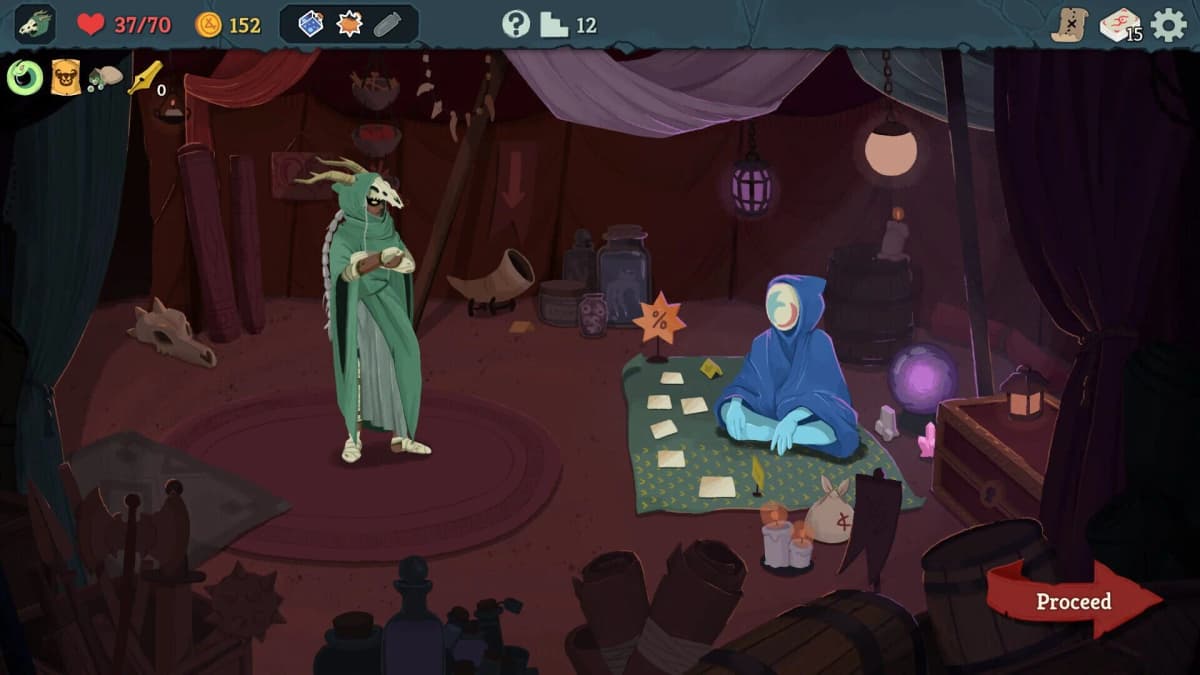
Where the team aspect really shines is in build complementarity. One of our best runs had:
- One player focusing almost entirely on block and damage mitigation.
- One going full single-target burst for elites and bosses.
- One leaning into AoE to keep hallway fights manageable.
- One running more support cards and utility.
Because we weren’t fighting over a shared pool of relics or cards, everybody could specialize hard. The game still gives each of you your own tools, but you can coordinate who leans into what archetype so the party covers all the bases.
How Shared Combat Works: One Battlefield, Many Hands
Combat is where co-op feels the most alien if you’re used to the original game. You’re all fighting the same enemy group together on a single battlefield, but each of you is playing your own cards in real time during a shared turn.
Here’s what it actually feels like in the moment:
- At the start of the turn, each player draws from their own deck and gets their own energy.
- You can play your cards in any order, whenever you want, as long as you have energy.
- Enemies show intents that apply to the entire party – if a slime is attacking for 12, it’s 12 to each player unless mitigated.
- The game shows “ghost” representations of your teammates’ plays, so you can see what they’re doing without losing track of your own hand.
- The turn only ends when every player hits “End Turn.”
That last bullet point is the one we tripped over constantly at first. Somebody would finish playing their cards, mash End Turn out of habit, then watch helplessly while another player burned all their defensive tools before the group was properly set up.
The key realization for us was: a co-op turn is a group puzzle, not four separate turns. All your actions are happening in the same shared state. That means sequencing matters a lot:
- Let the “block specialist” go early so you know how much defense the party already has.
- If someone has strong debuffs or crowd control, have them act before big damage turns.
- Coordinate finishing blows so you don’t overkill a nearly-dead enemy with four separate big attacks.
Once we started calling out things like “I’ve got block covered this turn” or “Don’t hit the front enemy, I’m about to execute it,” our survivability shot up.
Enemy Scaling with More Players
If four players could just dogpile a normal solo encounter, the game would be trivial. To compensate, enemies scale with party size. As you add more players, health pools and incoming damage climb to match the extra firepower and extra decks.

The first time we added a fourth player, we walked into a hallway fight we’d faced dozens of times in solo runs and got flattened. Same enemies, much fatter numbers. The game expects you to use your extra tools – layered block, debuffs from multiple characters, cross-synergy – rather than just playing four mini-solos side by side.
Against elites and bosses this scaling is even more noticeable. In my experience:
- Single-target bosses become long endurance fights where efficient block and scaling damage really matter.
- Multi-enemy elites punish unfocused parties – if everyone’s half-committing to different roles, you can’t clean up the board fast enough.
Don’t be surprised if your early four-player runs feel harder than solo at the same nominal difficulty. Once your group leans into synergy and sequencing, the scaling feels fair instead of oppressive.
The Map: Shared Pathing, Voting, and Annotations
Outside of combat, co-op turns Slay the Spire’s map into a mini negotiation game. Everyone sees the same branching path, but you vote on which node to take next.
The basic flow is:
- At each fork, everyone clicks the node they want (fight, ? room, shop, rest, etc.).
- The game tallies votes and highlights the winning choice.
- If there’s a tie, it picks between the tied options at random.
On top of that, you can draw on the map to suggest routes – circles around elites you want to hit, crosses on events you’d like to avoid, arrows showing an ideal path. We started out ignoring this, then realized how helpful it was once our decks diverged and our needs stopped lining up.
Example: in one run, our “tank” was at low HP with no good sustain, while the rest of us were healthy and powering up. They spammed “rest site” nodes with circles, while we drew around elites for relic hunting. Seeing that tension on the map made it obvious we needed to detour for a campfire or we’d lose our defensive backbone in the next elite.
Practically, my advice is:
- Let the weakest or lowest-HP player have extra weight in route decisions.
- Use map drawings to plan 3–4 nodes ahead, not just the next step.
- Agree early on how aggressive you want to be with elites and shops.
Most of our failed runs had at least one moment of “yeah, we all saw that bad decision coming and did it anyway.” The map tools exist precisely to avoid that.
Multiplayer Ascension and Long-Term Progression
Slay the Spire II treats co-op difficulty as its own lane. There’s a separate multiplayer Ascension track, and it’s limited by the lowest progression in the group.
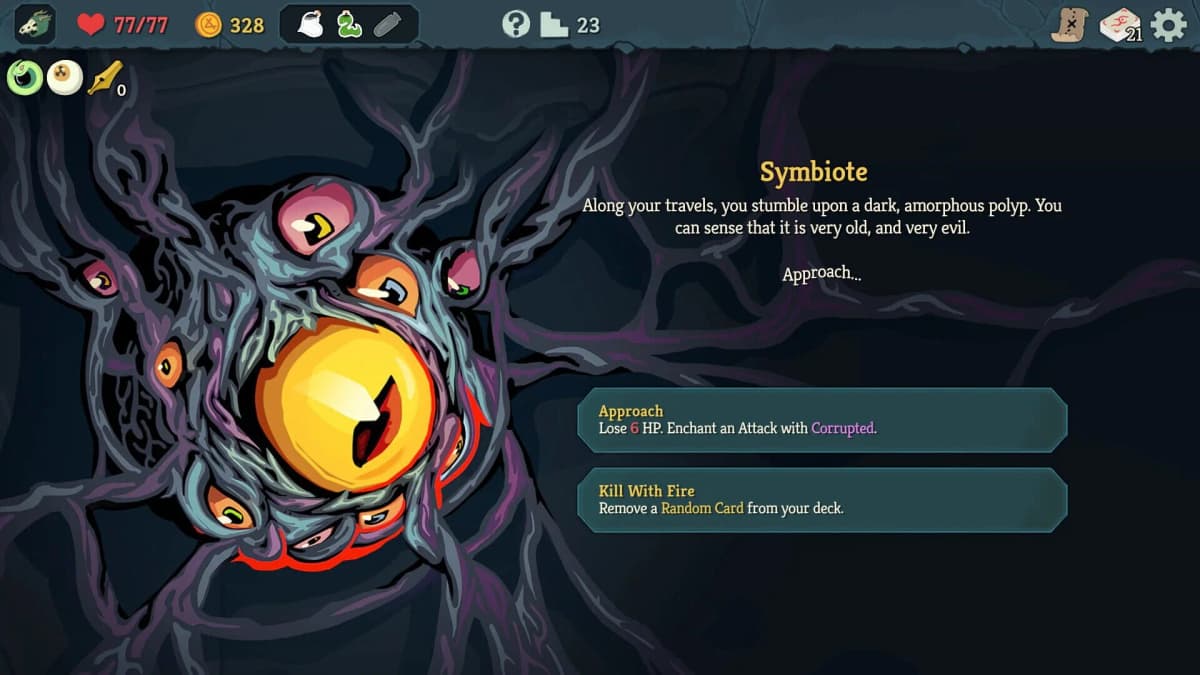
From the runs I’ve played and testing with friends at different levels, the rules shake out like this:
- Each profile has its own multiplayer Ascension rank, distinct from solo.
- When you start a co-op run, the available Ascension level is capped by the lowest-ranked player in the party.
- Wins and losses in co-op push that multiplayer Ascension progression forward.
So if you’re a grinder at high Ascension but you invite a new friend with zero multiplayer progress, you’re playing at their cap until they catch up. That’s actually a blessing – it gives you room to experiment with weird builds and support roles instead of instantly face-planting at max difficulty with someone who’s still learning the ropes.
On the flip side, if your group is serious about climbing multiplayer Ascension together, try to stick with the same roster of players on a given profile so everyone’s rank rises in sync. Mix-and-match groups can end up “pulling down” your available difficulty if you jump between friends with very different progress.
Common Co-op Mistakes (That Ruined My Early Runs)
Learning the systems is half the battle; the other half is unlearning solo habits. Here are the big mistakes I watched our group make over and over – and how we fixed them.
- Playing too fast. In solo you can slam cards by muscle memory. In co-op, that just desyncs you from the team. We started forcing ourselves to take a breath at the start of each tough fight and say out loud who’s handling block, debuffs, or burst.
- Ignoring weakest-link HP. Your run ends when the party falls apart, not when the “carry” dies. We lost multiple campaigns because we took greedy elite routes while one player was constantly at death’s door. Now, if one person is in trouble, the whole route shifts more conservative until they stabilize.
- Overlapping roles. Four half-baked damage dealers will get steamrolled by scaled enemies. As soon as we started letting one person lean into full defense, or one into full scaling damage, fights became much more controllable.
- Forgetting everyone has separate economies. People would skip shops “for the team” even when they personally had plenty of gold. Once we remembered there’s no shared wallet, we started using shops aggressively and saw a big power spike.
- Not respecting scaling. The game does not care that you’re used to farming certain enemies in solo. In four-player, even trivial-looking fights can chunk you hard if you don’t block properly on turn one.
So, How Should You Approach Slay the Spire II Co-op?
Co-op in Slay the Spire II isn’t just “solo but with friends watching.” It’s closer to a tactical board game where everyone’s playing their own deck into a shared puzzle that hits all of you at once. The systems – host-owned saves, per-player decks and relics, shared combat turns, enemy scaling, and multiplayer Ascension – all push you toward thinking like a party.
If you’re just starting out, I’d recommend:
- Pick a dedicated profile for your main co-op group so your saves stay clean.
- Play your first few runs on lower Ascension until you internalize how scaling and shared turns work.
- Give each player a loose “role” (defense, AoE, single-target, support) so your builds naturally complement each other.
- Use map voting and annotations aggressively – they exist to prevent silent disasters.
- Take an extra five seconds at the start of every tough fight to coordinate before cards start flying.
Once those habits click, the mode stops feeling chaotic and starts feeling like a proper co-op strategy game wrapped around Slay the Spire’s core. And when your whole group survives a brutal, scaled-up elite because you sequenced perfectly, it’s a different kind of high from solo clears.
If you’re willing to treat the run as a shared project instead of four parallel grinds, Slay the Spire II’s co-op is absolutely worth the time – and now you know exactly how the systems under the hood are working for (or against) you.
FinalBoss // Gear
Level up your setup
01Top-rated gaming headsetson Amazon→02High-refresh gaming monitorson Amazon→03Gaming chairson Amazon→04Discounted game keyson Kinguin→Affiliate links · As an Amazon Associate, FinalBoss earns from qualifying purchases.
Want to Level Up Your Gaming?
Get access to exclusive strategies, hidden tips, and pro-level insights that we don't share publicly.
Ultimate Guide Strategy Guide + Weekly Pro Tips