
The updated Sol Mates Steam Next Fest demo expands the co-op structure with a second mission, additional playable characters carrying distinct abilities, and roguelike runs that resolve into branching narrative outcomes. In four-player ship combat, uncoordinated input creates overlap: multiple players attempt to steer, shields stay down during telegraphed enemy phases, and weapon systems sit idle while crew members fix non-critical fixtures. Assigning rigid pilot, weapons, defense, and flex roles before launch removes this friction. The result is lower downtime between runs and a higher rate of branching path discovery per hour.
Table of Contents (9)
Role Definitions and System Mapping
Sol Mates operates on distributed interaction points across a single ship. Each station competes for player attention during high-stress events. The following four-role breakdown aligns crew behavior with the demo’s core movement, offensive, and defensive systems.
Pilot / Steering
The pilot retains exclusive authority over movement decisions. This role handles course correction, evasion routing, and positional alignment for weapon arcs. Centralizing steering prevents the input conflicts that occur when multiple players adjust trajectory simultaneously. The pilot should communicate intended direction changes before executing them, giving the defense role time to pre-raise shields if the maneuver exposes the ship to incoming fire.
Weapons
The weapons operator maintains offensive pressure by loading and firing ship guns. This is a full-time station; abandoning it to perform ad-hoc repairs drops damage output and extends encounter duration. In the updated demo, distinct character abilities may augment reload speed or shot patterns. The weapons role should select a character whose ability profile supports sustained fire rather than utility.
Defense
The defense role manages shield timing and reactive countermeasures. This player monitors enemy attack tells, incoming projectile patterns, and event-based hazards, raising shields only when necessary to avoid cooldown waste. Shield discipline is critical: premature deployment leaves the ship exposed during the actual damage phase, while late activation results in hull damage that forces the party into repair loops instead of progressing the mission.
Flex / Support
The flex role moves to whichever system is currently under-crewed. Responsibilities include repairing hull breaches, extinguishing fires, handling secondary client requests, and temporarily backfilling stations when a specialist is incapacitated or out of position. A flex player should maintain mobility and avoid committing to long interactions unless the pilot confirms the ship is not entering a hazard zone.
Pre-Run Setup Protocol
A coordinated party requires approximately five to ten minutes of setup before launching a run. During this window, assign roles explicitly rather than letting players self-select mid-mission. Next, match each role to a character whose distinct abilities reinforce that station. If a character ability grants shield regeneration or damage mitigation, assign that character to defense. If an ability enhances reload or projectile behavior, assign it to weapons.
Establish a communication hierarchy. The pilot and defense roles require override priority on voice or text channels because movement and shield calls are time-sensitive. Weapons and flex can operate on secondary callouts. Finally, confirm that all players understand the second mission is now available; decide before launch whether this run targets the original mission path or the new mission branch, as this influences pilot routing and flex preparation.
Mission Execution and Branching Path Efficiency
Once the run begins, strict role adherence prevents the cascading failures that truncate roguelike attempts. The pilot should not micro-manage repairs; the weapons operator should not touch shields unless explicitly covering for a downed defense player. This separation of duties preserves station uptime and reduces the total encounter time per mission.
Faster, cleaner clears translate directly into more branching content observed per hour. Sol Mates structures its narrative outcomes around roguelike run completion and mission selection. A party that wipes repeatedly due to role overlap will not reach the decision points that trigger alternate endings. A disciplined crew can complete successive runs, rotate between the original and second mission, and encounter the new enemies, events, and challenges at a rate that trial-and-error compositions cannot match.
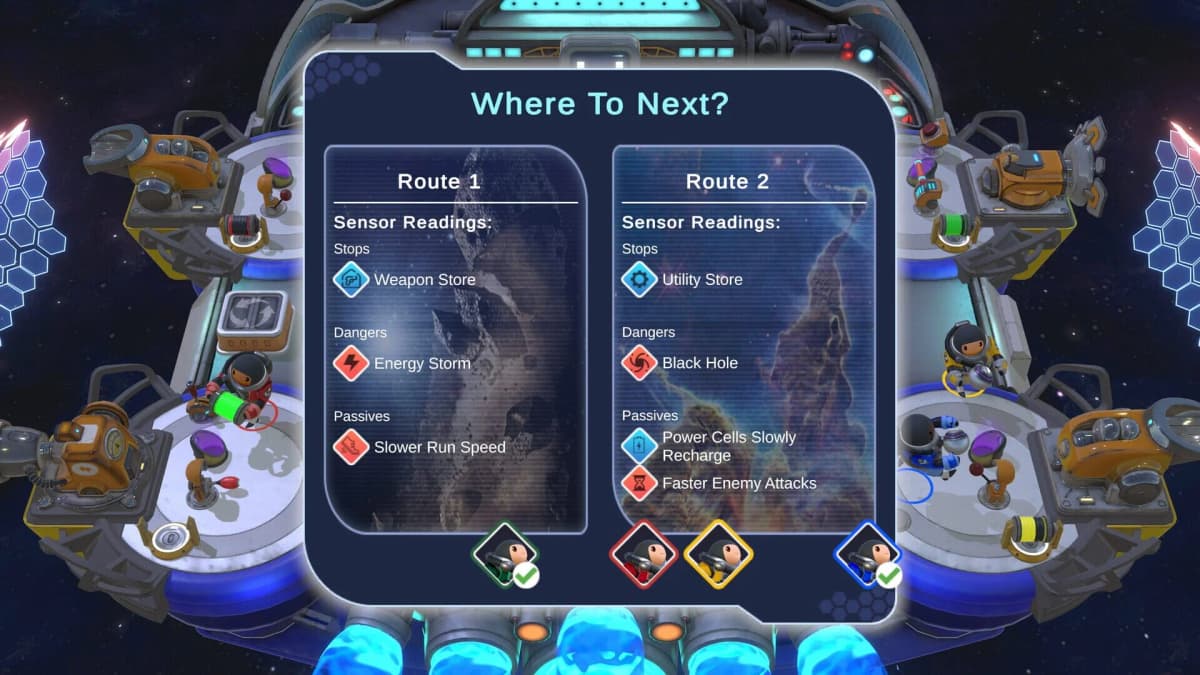
When the mission interface presents a branch, the pilot and flex should make the selection based on pre-established party goals. If the objective is to see the maximum number of narrative outcomes before the demo window closes, alternate the starting mission or mid-run choices rather than repeating identical paths. Weapons and defense continue their standard functions regardless of which branch is active, maintaining consistent pressure while the narrative layer diverges.
Common Failure Modes
- Role overlap on steering: When multiple players adjust course, the ship often over-corrects into collision hazards or out of weapon range. Assign one pilot per run and treat steering as read-only for all other players.
- Weapons abandoning station: Dropping guns to repair a minor hull breach because no flex is available extends the fight and increases total damage taken. If the flex is occupied, weapons should call for help rather than leave the station.
- Shield panic: Raising shields too early against new enemies or events wastes the defensive window. Defense must learn attack cadences and hold for the actual damage spike.
- Flex without mobility: A support player who locks into a long repair animation during a movement phase cannot respond to the next crisis. Flex should prioritize short-cycle interactions.
- No branch rotation: Running the same mission path repeatedly because the party forgot to alternate selections at the mission hub reduces narrative outcomes observed. Confirm the target branch during the setup protocol.
Advanced Coordination Notes
Experienced groups can optimize further by pre-assigning flex fallback positions. If the defense player is knocked away from the shield station, flex should know whether to cover shields or continue repairs based on incoming attack timing. Similarly, weapons should know the reload cycle well enough to call out downtime windows, allowing flex to perform quick fixes without interrupting the damage pipeline.
Character ability synergy matters in the updated demo. If two abilities share a cooldown category or trigger condition, avoid stacking them on the same role. Spread powerful actives across pilot, weapons, and defense so that no single station monopolizes the ship’s temporary power budget. This distribution ensures that when new enemy formations or events appear, the party has multiple tools available rather than one overloaded station and two under-equipped stations.
Finally, treat client request interactions as secondary objectives that flex handles during weapon reload or shield cooldown windows, not as activities that pull a primary specialist off-station. Quirky client demands in Sol Mates often gate narrative flags; missing them locks out branching outcomes regardless of combat performance. Integrating these requests into flex downtime preserves role integrity while maximizing content unlocks.
FinalBoss // Gear
Level up your setup
01Top-rated gaming headsetson Amazon→02High-refresh gaming monitorson Amazon→03Gaming chairson Amazon→04Discounted game keyson Kinguin→
Affiliate links · As an Amazon Associate, FinalBoss earns from qualifying purchases.
Want to Level Up Your Gaming?
Get access to exclusive strategies, hidden tips, and pro-level insights that we don't share publicly.
Ultimate Guide Strategy Guide + Weekly Pro Tips