

Bungie didn’t stride into Sony’s offices in 2022 with swagger and a five-year plan. They limped in with a live-service ecosystem that was hemorrhaging momentum, a project portfolio stretched past the breaking point, and a bank account that had apparently dipped below the red line. The $3.6 billion acquisition wasn’t a coronation of an indie powerhouse. It was emergency triage on a studio that was already flatlining, and the past three years have been the slow, ugly reveal of just how dire the prognosis was.
When a former community lead admits the studio was “below the red line” before the Sony deal, that isn’t casual water-cooler gossip. In business terms, crossing that threshold means you’re out of safe operating capital. It means payroll becomes a prayer, contractors get anxious, and your runway is measured in weeks rather than fiscal years. A studio that genuinely believes its live-service model is sustainable doesn’t voluntarily surrender the independence it spent decades fighting to keep. Bungie broke its back-and burned plenty of bridges-to escape Microsoft’s orbit, then did the dance again with Activision. The fact that it willingly walked into Sony’s embrace should have been the first, loudest clue that the house was on fire and the fire department was already out of water.
Table of Contents (6)
Three Kinds of Dying
We aren’t talking about one flavor of failure here. The collapse was threefold, and each layer validates the others like dominos falling in slow motion. There was the cash collapse: the studio was simply running out of money, burning through reserves to keep the lights on. There was the business collapse: the live-service model had stopped supporting development at scale, leaving Bungie unable to fund the massive teams needed to ship expansions, seasons, and whatever else was supposed to justify the perpetual-content treadmill. And finally, there was the creative collapse: the roadmap lost so much forward momentum that the studio had to be restructured around a drastically smaller vision of the future, one where Destiny 2 maintenance mode is the best-case scenario.
These collapses don’t happen in isolation. Cash starvation forces cuts. Cuts slow production. Slow production bleeds player trust. Bleeding trust cratered revenue. It is a death spiral, and the only thing that interrupts it is an external cash infusion. Enter Sony, stage left, with a check big enough to pause the spiral but not reverse it.
The Pipeline Doesn’t Lie
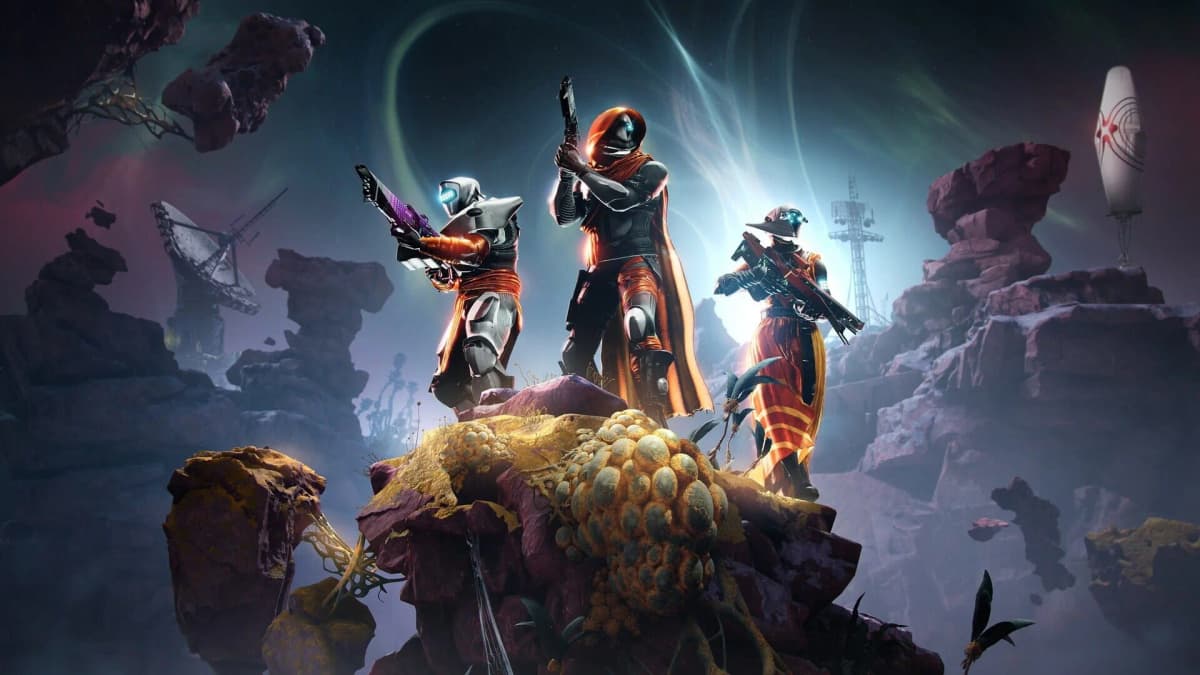
Look at what Bungie actually shipped and what it cancelled. The Final Shape was positioned as a climactic reset, a capstone to the saga that would pivot Destiny 2 into its next evolution. Instead, it became a finale. Monument of Triumph, scheduled for June 9, 2026, is the final content update. The name alone sounds like a eulogy. After that date, Destiny 2 will remain playable, but active development ends. No new expansions. No new seasons. Just maintenance mode and the long, cold wait for whatever Bungie claims it is incubating next.
A healthy studio does not sunset its flagship product four years after a supposed rescue. A healthy studio has a project mix that doesn’t cannibalize itself, where incubating new games doesn’t require sacrificing the golden goose. But Bungie was juggling Destiny 2’s relentless seasonal obligations, The Final Shape, Pale Heart, Lawless Frontier, and the early work on its next titles all at once. Something had to give, and it gave everywhere at once. The roadmap didn’t lose momentum because the developers stopped caring or because the community turned toxic. It lost momentum because the business underneath it could no longer support the weight. That’s creative collapse by way of business collapse, and it leaves a trail of dead expansions and “pivots” in its wake.
Sony’s $560 Million Reality Check
If anyone still believes Bungie was a healthy acquisition, let the numbers argue. Sony recorded a $560 million loss on the Bungie purchase. Revenue expectations were too high, and Bungie’s performance under Sony was materially weaker than anticipated. You don’t write down half a billion dollars on an asset that was thriving when you bought it. You write it down when the due diligence misses the rot in the floorboards, or when the seller was so desperate that the books looked better than the operations actually were.
The layoffs and restructuring that followed weren’t the growing pains of a studio leveling up. They were the predictable outcome of buying a company whose headcount runway was artificially extended by acquisition cash. Sony’s money bought time, but it couldn’t buy a sustainable business model for Destiny 2, and it certainly couldn’t conjure a hit out of a pipeline that was already choking. The live-service staffing changes, the content cadence slowdown, the cancellation of future expansions-these are not the moves of a studio that was “saved” and is now finding its footing. They are the moves of a studio that was kept alive long enough to manage its own hospice care, to give Destiny 2 a dignified death rather than an abrupt server shutdown.
The Gunplay Trap
Here is the cruel twist that makes the whole tragedy sting: Destiny 2 is still phenomenal to play. The gunplay is immaculate. The audio-visual feedback of a precision headshot, the perk-driven sandbox experimentation, the kinetic rhythm of ability-and-weapon combos—it remains one of the best-feeling shooters on the market. The game is not dying because the developers lost their touch. It is dying because the infrastructure around the talent collapsed.
This is what separates Bungie’s situation from a simple “bad game” narrative that armchair analysts love to peddle. Players keep returning because the moment-to-moment loop is genuinely satisfying, then bouncing off because the UI is cluttered with overlapping monetization schemes, the seasonal narrative feels threadbare, and the looming end of live-service support makes every new purchase feel like a donation to a sinking ship. You log in for the crack of a Hand Cannon, then log out when you realize the team behind it is being dismantled. The gunplay proves the team had the juice. The maintenance mode announcement proves management ran out of gas years ago, probably before they ever shook hands with Sony.
The contradiction is almost literary. A game that feels this good to play shouldn’t be getting a memorial update. But here we are, because feel doesn’t pay server bills and gunplay doesn’t negotiate publishing contracts. The talent at Bungie built a shooter for the ages. The leadership built a financial house of cards. Guess which one collapsed first?
A Testable Narrative
Treat the “near collapse” claim like a hypothesis that the past four years have tested in real time. What evidence would validate it? You would expect to see unsustainable headcount leading to layoffs, a project mix that strained beyond capacity, and a flagship pipeline that eventually required a hard stop rather than a graceful transition. What evidence would contradict it? A flourishing content cadence post-acquisition, stable staffing, a roadmap that extended confidently beyond 2026, and a studio culture that felt empowered rather than endangered.
We got the former. Headcount was slashed. New projects were delayed. Destiny 2’s future was compressed into a single monument. The perception that Bungie was healthy before Sony is retrospective myth-making from people who confuse a big price tag with corporate vitality. A $3.6 billion check doesn’t mean the patient was strong. It means the disease was expensive to treat.
Even the language Bungie uses is telling. “Incubating” new games is what you say when you don’t have anything concrete to show. It’s the corporate equivalent of a writer telling you they’re “working on a novel” while they stare at a blank page. If the project mix was healthy, if the creative pipeline was flowing, they’d be teasing titles, not incubating them.
And the player-facing signals are unambiguous. When a live-service game announces its final update years in advance, that is not a pivot. That is an admission. When a studio follows that announcement with layoffs and restructuring, that is not streamlining. That is the final stage of a collapse that began long before the press releases and the carefully worded blog posts about exciting new chapters.
The Monument Says It All
Bungie’s defenders want to frame the Sony acquisition as a rescue mission that simply went sideways after landing. The truth is simpler and uglier: there was nothing left to rescue by the time the deal closed. The cash was gone. The business model was broken. The creative roadmap had disintegrated under the weight of impossible expectations and unsustainable production costs. Sony bought a studio in multi-system failure and spent the next three years discovering that money alone can’t restore momentum that has already bled out on the operating table.
Destiny 2 deserves better than to be the proof-of-concept for Bungie’s insolvency. But that is exactly what it has become. On June 9, 2026, Bungie will lay down its final update, step back from active development, and pretend that incubating new projects from the ashes counts as a strategic victory. It doesn’t. The Monument of Triumph is a headstone, not a milestone. And the cracks in the foundation didn’t start when Sony showed up with a checkbook. They started when Bungie ran out of road, out of money, and out of time—and decided to call it a billion-dollar sale instead of what it really was: a surrender.
FinalBoss // Gear
Level up your setup
01Top-rated gaming headsetson Amazon→02High-refresh gaming monitorson Amazon→03Gaming chairson Amazon→04Discounted game keyson Kinguin→
Affiliate links · As an Amazon Associate, FinalBoss earns from qualifying purchases.
Want to Level Up Your Gaming?
Get access to exclusive strategies, hidden tips, and pro-level insights that we don't share publicly.
Ultimate Gaming Strategy Guide + Weekly Pro Tips