
A $30, outsourced, 2D God of War spin-off with mixed reviews should have quietly disappeared into the PS Store churn. Instead, Sons of Sparta just proved there’s real money – and real demand – in smaller first-party experiments Sony keeps treating like side projects.
Table of Contents (8)
Key takeaways
- God of War: Sons of Sparta ranked 14th in Circana’s February 2026 US revenue chart and 6th on PlayStation, despite costing just $29.99.
- Because Circana ranks by dollars, not units, a $30 game charting this high means it likely outsold several $60-70 titles in raw copies.
- The game was shadow-dropped during a State of Play and developed by external studio Mega Cat Studios, making it a relatively low-risk experiment for Sony.
- Reception has been divisive, but the revenue performance sends a clear message: there’s an appetite for smaller-scale, cheaper first-party spin-offs on PS5.
Cheap, 2D, outsourced – and it still sold
Circana’s February 2026 report, as shared by analyst Mat Piscatella and picked up across outlets, puts God of War: Sons of Sparta at #14 in overall US game revenue for the month, and #6 specifically on PlayStation. That’s in a list topped by Resident Evil: Requiem and still dominated by long-term monsters like Minecraft, GTA V, and the latest Call of Duty.
Here’s the part the spreadsheets make interesting: those charts are ranked by dollar revenue, not copies sold. Sons of Sparta launched at $29.99. Some of the games around it on the chart sit at $59.99 or $69.99.
To land 14th in dollar sales at half the price, the Metroidvania had to move a lot of units. As Push Square pointed out, it likely sold around double the copies of some full-priced titles it finished above, like fellow new release My Hero Academia: All’s Justice. Vandal notes it also out-earned heavy-hitting catalog titles such as Marvel’s Spider-Man 2 and Ghost of Yotei in that February window.
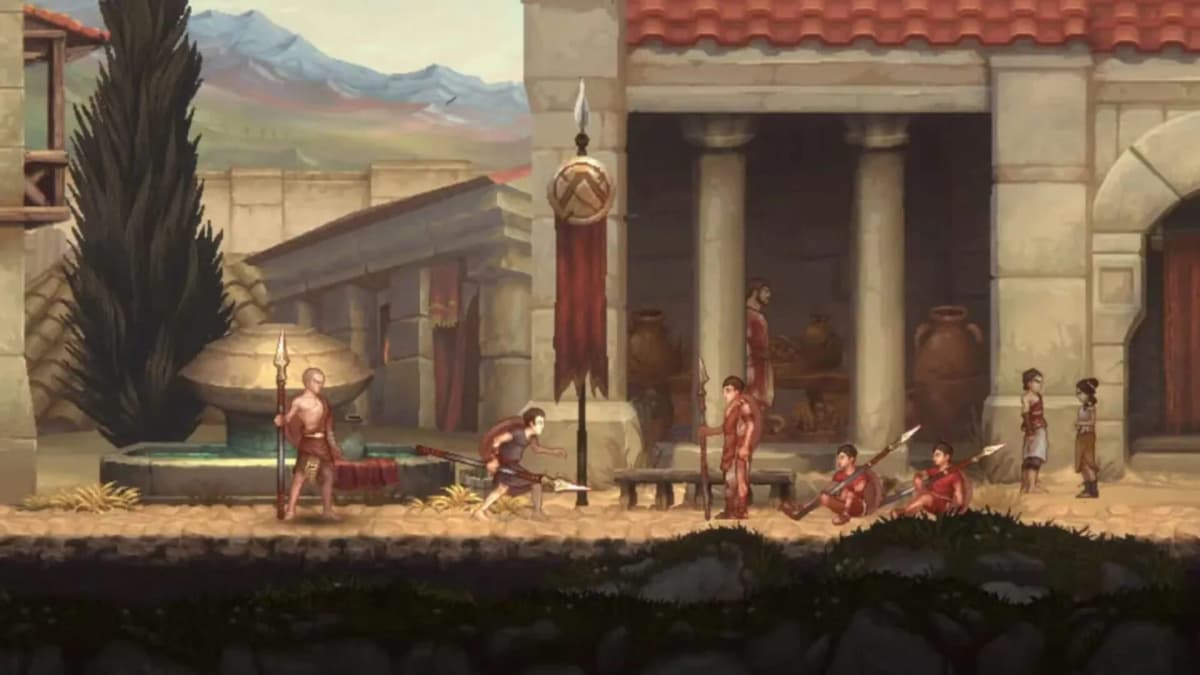
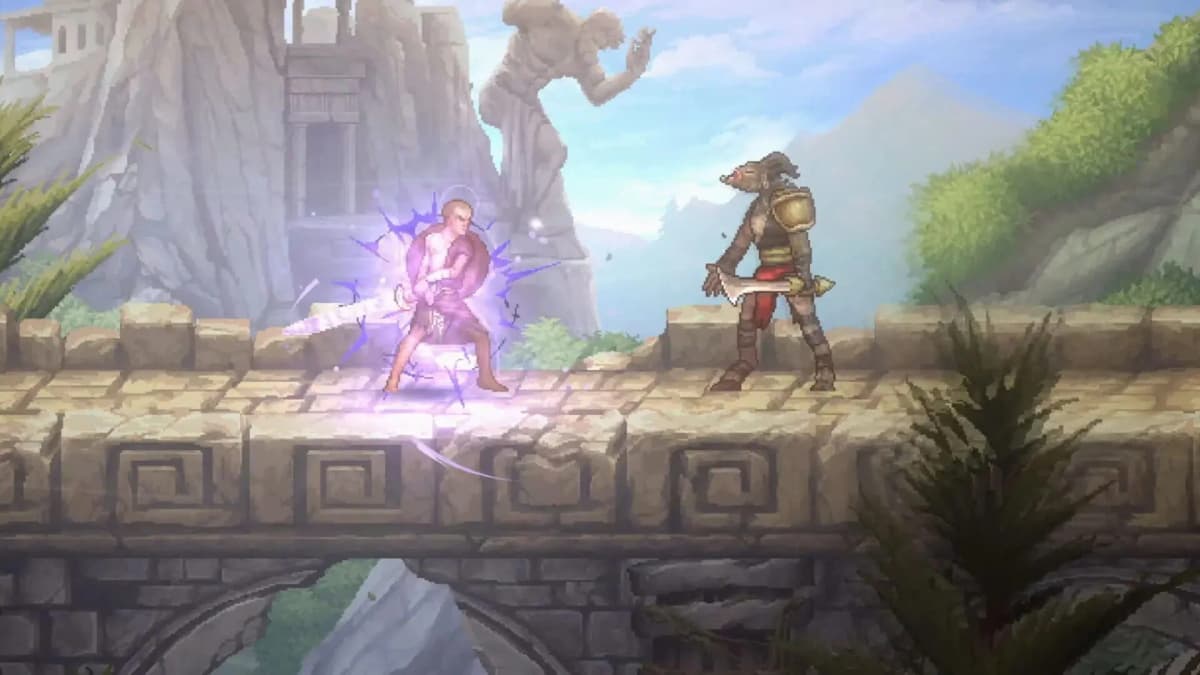
And this isn’t a lavish Santa Monica Studio showpiece. Sons of Sparta is a 2D Metroidvania spin-off about young Kratos and his brother Deimos, handed to Mega Cat Studios, a smaller external team, as part of what Vandal describes as an “expanded God of War universe” plan. Lower budget. Lower price. Lower expectations. Strong revenue anyway.
That’s the story: a game Sony clearly treated as an experiment just proved the experiment can pay its own way.
Shadow drops and the power of a logo
Sons of Sparta wasn’t teased for years, it didn’t get the full E3-to-launch trailer roadshow, and there was no months-long pre-order campaign. After a long run of leaks and rumors, Sony simply shadow-dropped it during a State of Play on 12 February.
Normally, that’s a kiss of death if you’re not a megabrand. Surprise launches burn bright on social feeds for 48 hours, then vanish. But when the logo says God of War, the rules bend.
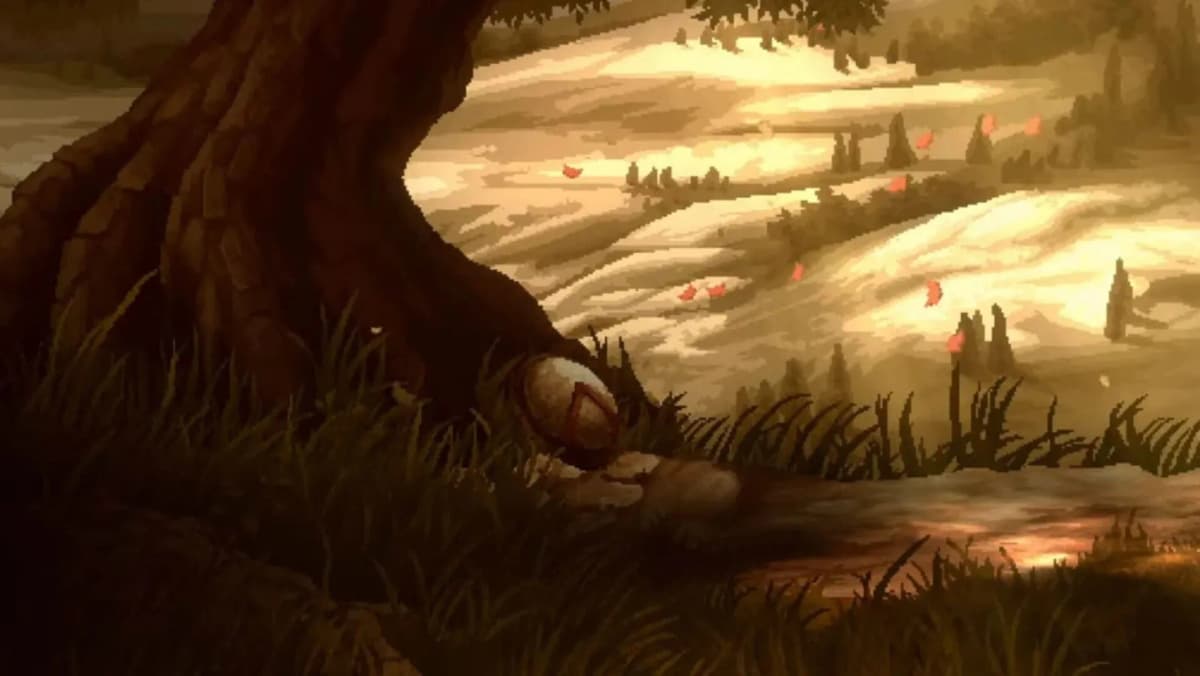
Across Spanish-language coverage, there’s a consistent theme: fans hammered the game, but still bought it. Areajugones calls it “one of the most criticised titles of the year” by both God of War fans and Metroidvania purists, citing complaints about:
- Slower, less frenetic gameplay than genre standouts.
- A visual style that “didn’t fit” what players associate with the series.
- Values “below what’s usual for the saga” – Vandal’s polite way of saying it doesn’t look or feel like a $200 million Sony blockbuster.
But negative discourse doesn’t automatically equal financial failure. The brand gravity did a ton of work here. A new God of War appears out of nowhere, it’s cheaper than usual, and it’s on hardware (PS5) that just led US console spending again in February. Curiosity alone converts a frightening percentage of the fanbase.
If you’re trying to model Sony’s thinking, this is gold: a known IP, a fresh genre, low marketing spend, and still a top-20 revenue placement in a flat market where total US game content spending sat at about $4.02 billion, roughly unchanged year-on-year. That tells executives you don’t always need a prestige TV trailer budget to make a first-party game show up on the balance sheet.
Fans might be mad, but the spreadsheet isn’t
There are two realities living side by side with Sons of Sparta.
Reality one: critically and among core fans, this is not a new high-water mark for the franchise. Reviews and community threads lean heavily on “disappointing,” “off-brand,” and “budget spin-off energy.” For a flagship IP that just came off Ragnarök, that’s a comedown.
Reality two: commercially, the game “has not done as badly as many expected,” as Areajugones sums it up. In a month where established juggernauts and a new Resident Evil entry are hoovering up wallets, it still translated a controversial pitch into top-20 dollars.
There’s a wrinkle: Sons of Sparta did not crack Circana’s top 20 year-to-date list through February. January’s launches – including yet another chart-topping Call of Duty: Black Ops – kept those spots locked. That suggests the game’s success is solid, not spectacular. It had a strong launch month, but it isn’t rewriting the annual revenue tables.
For Sony, that’s probably fine. This was never built to carry a fiscal year. It was built to test whether:
- God of War can survive outside the big-budget 3D action template.
- Players will show up for $30 first-party titles that look more “AA” than “prestige blockbuster.”
- External partners like Mega Cat can handle canon-adjacent stories in major IP.
On those metrics, the game is closer to a win than a miss. You don’t hit 14th in a US revenue chart at half-price unless the audience you were testing is very much there.
Why this matters for Sony’s first-party strategy
The real implication isn’t “this specific game is secretly amazing.” It’s that Sony has proof that cheaper, smaller first-party projects can pull their weight if they’re attached to the right brand.
For the last few years, PlayStation’s identity has been welded to $70 cinematic epics and risky live-service bets. Great when it works. Brutal when it doesn’t. The middle ground – what people sometimes call AA – has mostly been left to third parties and indies.
Sons of Sparta is that missing middle: a side-scrolling Metroidvania with focused scope, outsourced development, and a lower price that still feels like it “counts” because it wears a first-party logo. Push Square hits the nail on the head: this is proof that “not everything Sony publishes needs to have a nine-figure budget.”
Vandal goes a step further, arguing that the game “probably gives rise to more collaborations with external studios.” It lines up with other rumors around an expanded God of War universe – including talk of a future Faye-led action game under Cory Barlog. Whether that specific rumor pans out or not, the pattern is obvious: spin-offs as ecosystem builders.
If Sony is smart, this becomes a template:
- Use spin-offs to keep big IP present between tentpole releases.
- Experiment with different genres and camera perspectives without risking the mainline series.
- Price them at $20–$40 to lower expectations and encourage impulse buys.
- Outsource to specialized studios while keeping core creative direction inside PlayStation Studios.
The uncomfortable question – and the one I’d put to a Sony PR rep – is whether this will actually change the greenlight process, or if it will be treated as a one-off curiosity. Because right now, this data screams “do more of this,” especially in a market where subscription growth is masking softer à la carte spending.
The one number we don’t have (and why it matters)
There’s an important caveat buried in all of this: we don’t have unit sales. Circana’s rankings tell us how much money a game pulled in, not how many people bought it.
That means a couple of things:
- We can infer relative strength – a $30 game near the top 10 clearly sold a lot of copies.
- We can’t say whether it sold 1 million or 5 million – only Sony knows that, and Sony hasn’t shared.
- Some platforms and digital sales (especially Nintendo’s) are underrepresented in Circana data, though in this case we’re looking at a PS5-focused release.
It also matters that Sons of Sparta is currently a February-only highlight. It didn’t make the year-to-date top 20, which suggests front-loaded launch interest rather than long-tail dominance. That’s normal for spin-offs, but if it falls off hard in March’s report, Sony might treat this more as “cool launch trick” than “sustainable new pillar.”
Still, from the outside, the rough outline is clear enough. This was not a mega-budget production. It was priced aggressively. It charted anyway. Unless Mega Cat somehow spent Ragnarök-tier money on a 2D Metroidvania (they didn’t), this experiment should be comfortably profitable.
What to watch next
If you’re trying to gauge whether Sons of Sparta actually nudges Sony’s strategy, a few milestones matter more than any review score:
- March 2026 Circana data (due around April): Does the game hold in the top 20, or was February a one-and-done spike?
- Any official sales milestone from Sony: If they brag about copies sold or revenue, that’s a sign they’re happy with the experiment.
- Future State of Play lineups: Look for more AA-priced spin-offs attached to big IP – not just God of War, but maybe Horizon, Ghost of Tsushima, or Spider-Man.
- Mega Cat’s next move: A second collaboration would all but confirm Sony sees value in outsourcing side stories to proven partners.
- How Santa Monica positions the franchise: If the rumored God of War Trilogy Remake or a Faye-led project arrive alongside more side projects like this, you’re looking at a deliberate “God of War universe” era, not just a mainline sequel treadmill.
For now, God of War: Sons of Sparta is exactly what it looks like on Circana’s charts: a relatively small bet that paid off. Not a revolution. Not a disaster. Just a quietly successful reminder that not every PlayStation first-party game needs to be a $70, ten-year-in-the-making epic to earn its place.
TL;DR
God of War: Sons of Sparta, a $29.99 2D Metroidvania spin-off developed by Mega Cat Studios and shadow-dropped during a State of Play, hit #14 on Circana’s February 2026 US revenue chart and #6 on PlayStation. Because the rankings are based on dollars, that position implies strong unit sales relative to full-priced games and shows clear demand for smaller, cheaper first-party projects. The real test now is whether Sony follows this up with more AA-priced spin-offs – or files it away as a one-off curiosity while it goes back to chasing the next $200 million epic.
FinalBoss // Gear
Level up your setup
01Best-selling PS5 gameson Amazon→02DualSense controllerson Amazon→03PS5 SSD upgrades (M.2 NVMe)on Amazon→04Discounted game keyson Kinguin→Affiliate links · As an Amazon Associate, FinalBoss earns from qualifying purchases.
Want to Level Up Your Gaming?
Get access to exclusive strategies, hidden tips, and pro-level insights that we don't share publicly.
Ultimate Gaming Strategy Guide + Weekly Pro Tips