
Table of Contents (8)
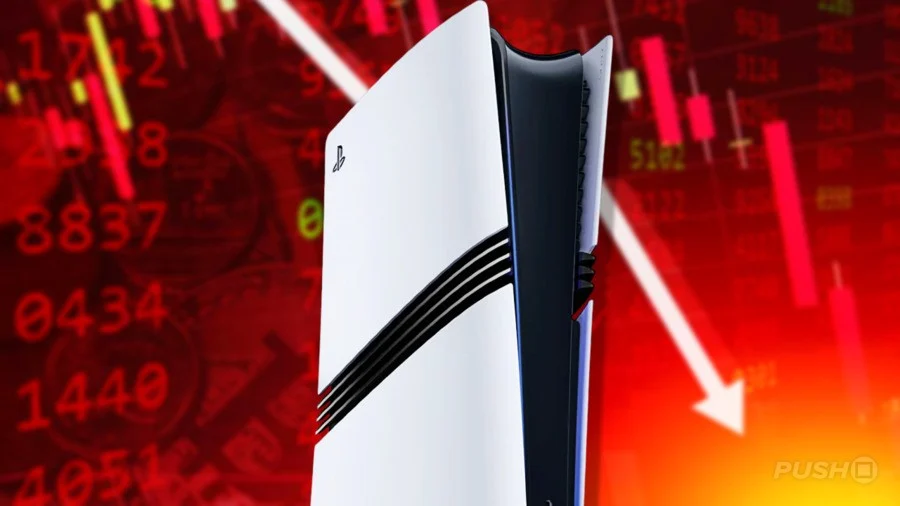
The $650 PS5 Headline That Made My Jaw Drop
Seeing “PS5: $649.99” in 2026 feels like some cursed mash-up of timelines. It’s like Kaz Hirai’s infamous “599 US dollars” PS3 meme crawled out of a 2006 time capsule, slapped on a new logo, and decided to haunt this generation instead.
I’ve been buying PlayStations since the grey lunchbox in the mid-90s. I bought a PS2 with money from a part-time job, I winced but still grabbed a PS3 when it got its first proper price cut, and I snagged a PS4 the moment Bloodborne dropped. With PS5? I held out through the scalper hellscape, waited until stock normalized, and still paid more than I thought I would. Now, five years into the generation, we’re at the point where the disc PS5 is $649.99 in the US and the Digital Edition that launched at $399.99 is climbing to $599.99.
My gut reaction is the same as everyone else’s: are you kidding me? A console getting more expensive five years in is backwards. Historically, hardware gets cheaper as it ages. That’s the whole model. You sell early to diehards, then you lower the barrier and pull everyone else in.
But the more I dig into it, the less this looks like a simple “Sony bad, greed moment” story and more like the culmination of a series of cascading disasters: pandemic launch, semiconductor chaos, runaway inflation after Russia invaded Ukraine, US tariffs, AI companies guzzling RAM like it’s an energy drink, and fuel-price spikes courtesy of yet more geopolitical tension.
I’m still not defending a $650 console. I think it’s terrible for players and bad for the long-term health of the industry. But pretending this is just one boardroom exec twirling a moustache is equally dishonest. We’re looking at a chain reaction that’s been building since 2020.
We Launched a “Next-Gen” Console in the Middle of a Global Crisis
It’s easy to forget how cursed the PS5’s starting point really was. November 2020: COVID-19 was still ripping through the world, factories were on rolling shutdowns, global logistics were a mess, and the semiconductor shortage was just starting to show its fangs.
Sony launched PS5 into that storm. The headline prices felt aggressive but not insane at the time: $499.99 for the disc model, $399.99 for the Digital Edition. On paper, that’s actually solid value for the hardware inside. In practice, those numbers were barely theoretical. Most players didn’t have a “$399 console”; they had a browser-tab war with bots and scalpers, or they just gave up and stuck with PS4.
The global chip shortage meant Sony couldn’t make enough units, full stop. Supply couldn’t meet demand until around 2023. For years, getting a PS5 at all was the problem, not what it cost at retail. That matters, because console pricing historically relies on scale. You eat some loss on hardware early, then make it back on software and subscriptions over a larger and larger install base. Instead, Sony spent the first half of this generation just trying to get boxes onto shelves.
Then the world economy caught fire in a different way.
Inflation, War, and the First Wave of PS5 Price Hikes
In February 2022, Russia invaded Ukraine. That wasn’t “just another news story” for electronics; it helped light the fuse on global inflation spikes. Energy prices shot up, raw material costs climbed, and consumer electronics suddenly became more expensive to make and ship. Analysts were talking about 10-20% cost increases in key categories.
Sony’s response came fast: late 2022 saw the first PS5 price hike across Europe and several other markets. The US was spared, which at the time felt like “American market privilege” and, realistically, cold strategy. Xbox still mattered more in the US, and Sony clearly didn’t want to give Microsoft any extra room to breathe.
By 2025, the dam finally broke. Sony rolled out another round of increases in Europe and its first official US PS5 price hike. From my perspective as a buyer, that was already weird enough. Five years in, a console should be getting close to mainstream-friendly territory. Instead, it went the other way: roughly a $50 jump in the States for both disc and Digital models.
Sony blamed a “challenging economic environment, including high inflation and fluctuating exchange rates”. That wasn’t just PR fluff. Shipping, insurance, warehousing, and basic components had all become more expensive. At the same time, the US had re-upped tariffs on Chinese imports, slapping 25% duties on key electronics and semiconductors. A huge chunk of the PS5’s guts either come directly from China or pass through Chinese supply chains.
If you’re building a console on razor-thin margins, a 25% tax on something as expensive as memory or logic boards is brutal. You either eat it and tank your profit, or you push it onto the sticker price. Sony did a mix of both, but the price tag was always going to move eventually.
The AI Gold Rush: When OpenAI and Friends Ate Our RAM
The real kicker, though, is the one casual players don’t see: RAM and storage. Gaming hardware doesn’t exist in a vacuum. Consoles compete for the same DRAM and high-bandwidth memory that data centers, cloud providers, and AI labs need. And right now, the AI arms race is hoovering up silicon at a scale console makers simply cannot match.
From 2025 onward, companies like OpenAI, Microsoft, Google, and others ramped up orders for high-end memory to feed enormous server farms. Reports surfaced of outfits like OpenAI locking down gigantic chunks of global production capacity for RAM and related components. Some estimates put it at around a third of the available supply, and I’ve seen claims go as high as 40%.
That’s catastrophic for anyone who depends on those same suppliers. If you’re Sony, you don’t get to stroll into Samsung or SK Hynix and say, “Actually, can we get a better rate?” when hyperscalers are waving blank cheques to power AI models. You either sign premium long-term contracts to secure what you can, or you risk being completely locked out and not being able to ship consoles at all.
Sony’s own CFO was talking, not long ago, about securing memory supply into 2027 to avoid exactly this kind of crunch. The intent was to prevent more price hikes. Yet here we are, with the disc PS5 at $649.99 and the Digital at $599.99. That tells you how hard the cost structure has been smashed by external forces. Even with forward contracts, the baseline price of that memory has clearly gone up sharply.
And it’s not just PlayStation. Nintendo is reportedly feeling the pressure as it tries to keep the Switch successor at a sane launch price while still modernizing the hardware. Valve, which once happily pumped out reasonably priced handhelds, now has to look at the same BOM spreadsheets and wonder if its margins still make sense.
When AI data centers are eating the world’s DRAM, traditional console economics start to fall apart.
Tariffs, Fuel Shocks, and the Hidden Costs Behind the Box
Memory is just one part of the mess. Add in two more delightful ingredients: tariffs and fuel prices.
The revived and expanded US tariffs on Chinese electronics in 2025-2026 directly hit the kind of components you find inside a PS5. We’re talking 25% duties on semiconductors and related hardware. Even if final assembly happens in, say, Southeast Asia, your supply chain is still funneling through tariffed parts somewhere along the line. That doesn’t just affect Sony; it affects almost every console manufacturer.

Then you layer in geopolitical fuel shocks. Tensions and outright conflict in the Middle East pushed oil back over $100 a barrel in late 2025, sending shipping costs up by 15-25% on some Asia–US and Asia–Europe routes. You know those container ships and cargo planes that quietly move millions of consoles around the planet? They don’t run on good vibes.
Every extra dollar it costs to move a PS5 from factory to warehouse to store shelf eats into margin. If you were already barely breaking even, those line items suddenly matter a lot. And unlike digital games-which, infuriatingly, Sony is now experimenting with dynamic pricing on across regions-hardware isn’t something you can stealth-adjust on a per-user basis. You either bump the MSRP or you don’t.
All of this is the boring, unsexy reality behind that “$649.99” headline. I hate the number, but I can at least see how we got there.
So Is Sony Just Being Greedy? Yes… and No.
This is where I land in a messy middle ground. On one hand, Sony is absolutely a profit-driven corporation. It recorded record operating profits recently, with PlayStation contributing hundreds of millions in a single quarter and growing year-on-year. This is not a struggling indie studio barely keeping the lights on.
Sony also hasn’t exactly built up a ton of goodwill lately. We’ve watched PS Plus creep up in price. We’ve seen half-baked live-service bets, weird PC port strategies, and that recent investigation into “personalized” digital game pricing that made it look like Sony was testing how much it could squeeze out of different users. None of that screams “we’re doing everything we can to ease the burden on players”.
On the other hand, you can tell the company isn’t thrilled about this hardware situation either. Console business logic still depends on install base. You want tens of millions of people in your ecosystem buying $70 games, DLC, subs, and cosmetics. You do not want the platform itself to be so expensive it chokes off growth.
At $649.99 for disc and $599.99 for Digital, Sony is absolutely going to slow its own momentum. The PS5 was already sitting around the mid-60 million mark by late 2025; crossing 100 million is still likely, but chasing PS4’s ~117 million now looks like a fantasy, even with Grand Theft Auto 6 looming. A higher entry price means fewer new players, and fewer new players mean less upside for all those ballooning AAA budgets.
So yes, there’s an element of “we’re not willing to sell hardware at a significant loss anymore” in these hikes. That’s greed, if you want to call it that. But it’s layered on top of a situation where external costs have genuinely gone berserk. When DRAM, tariffs, and shipping all spike at once, you either let profits crater or you pass pain down the chain. Sony has very clearly decided it’s not the one that’s going to eat it.
The Collateral Damage: Players, Devs, and the PS6 Question
The real victims here aren’t Sony accountants; it’s everyone who actually interacts with games. You, me, and the studios trying to ship something that doesn’t bankrupt them.
We’re already in an era where a big AAA game routinely costs over $200–300 million to make once you factor in marketing. Those budgets only make sense if there’s a wide, active, spending install base. If new consoles are priced into the stratosphere, fewer people buy them, upgrades slow, and the potential audience for cutting-edge games shrinks right when budgets are peaking.
PC isn’t really the escape hatch it used to be either. GPU prices have whipsawed thanks to crypto, AI, and the same supply issues consoles are facing. Building a decent rig that outperforms a PS5 is not some cheap alternative at this point. And Nintendo’s next machine, whatever form the “Switch 2” takes, is staring down many of the same component and shipping realities.
That bleeds straight into the PS6 conversation. Most rumours and roadmaps point to Sony targeting a 2027-ish launch. Manufacturing slots have been booked years in advance; contracts with vendors are reportedly in place. The whole production pipeline is already angled toward “next-gen” whether the market is ready or not.
But if the PS5 Pro is about to cost $899.99 and the base PS5 is uncomfortably close to high-end GPU money, what exactly does a PS6 launch price look like? It’s hard to imagine anything under that Pro price unless Sony radically changes its approach or the global situation calms down in record time. And unlike the jump from PS3 to PS4, a lot of players are already pretty happy with what PS5 can do. Ray tracing, 60fps modes, fast SSD loading – for the average person, it’s “next-gen enough.”
If PS6 lands at some obscene sticker price while millions still feel their PS5 isn’t remotely obsolete, adoption will be slow. That forces longer cross-gen periods, more games having to scale all the way back to older hardware, and even more financial risk for anyone trying to actually innovate with new tech.
Where This Leaves Me as a Player
On a personal level, this is the first PlayStation generation where I’ve genuinely stopped recommending the hardware at full price. When friends ask if they should “finally grab a PS5,” my answer now comes with a massive asterisk: only if you get a serious discount, a good bundle, or a solid used unit. At $649.99 for disc and $599.99 for Digital, I just can’t tell anyone that’s a sensible purchase unless they’re obsessed with a specific exclusive.
I’m also bracing for Sony to squeeze the existing 90+ million PS5 owners harder. CFO talk has already hinted at “further monetising the install base” to offset rising hardware costs. That probably means more pressure on subscriptions, more aggressive DLC and cosmetic strategies, and less room for real price drops on first-party games.
And that’s the vicious loop this entire situation risks creating. Hardware is expensive, so platform holders lean harder on software and services to compensate. Players feel nickel-and-dimed and become more selective. Sales expectations for $300 million blockbusters get harder to hit. Publishers pull back, cancel risky projects, and double down on safe, live-service sludge. The result? Less interesting games on more expensive machines.
The PS5 price hike is a symptom of that deeper sickness. It’s not the root cause, and it’s not the whole story, but it’s a very loud, very visible sign that the old console playbook is breaking down under the weight of real-world economics and an AI-fuelled silicon landgrab.
I’m furious that “$399 Digital at launch” has turned into “$599 in 2026”. I think Sony could absolutely choose to absorb a bit more of the pain instead of preserving margins at every turn. But I also know that even if Sony magically grew a conscience tomorrow, the underlying problems – tariffs, fuel, RAM demand, insane AAA budgets – would still be there.
We’re used to thinking of “next-gen” as shinier graphics and faster load times. Right now, the actual defining feature of this generation might be something a lot uglier: the moment when the economic fantasy that sustained console gaming for decades finally smashes into the real world, and nobody has a clean way out.
FinalBoss // Gear
Level up your setup
01Best-selling PS5 gameson Amazon→02DualSense controllerson Amazon→03PS5 SSD upgrades (M.2 NVMe)on Amazon→04Discounted game keyson Kinguin→Affiliate links · As an Amazon Associate, FinalBoss earns from qualifying purchases.
Want to Level Up Your Gaming?
Get access to exclusive strategies, hidden tips, and pro-level insights that we don't share publicly.
Ultimate Gaming Strategy Guide + Weekly Pro Tips