
Sony ending production of physical discs for new PlayStation releases in January 2028 is a bigger betrayal than the usual “physical versus digital” culture-war shouting match makes it sound. This is about a player paying full price for access to a game, then being asked to trust that access will survive every future store decision, hardware transition, delisting, account problem, and corporate reshuffle.
That trust does not exist by default. Sony has to earn it, in writing, with policies that say exactly how long purchased games remain downloadable and what players keep when a storefront changes or shuts down. Until then, every new digital-only product comes with a question Sony would rather leave blurry: what, precisely, did I buy?
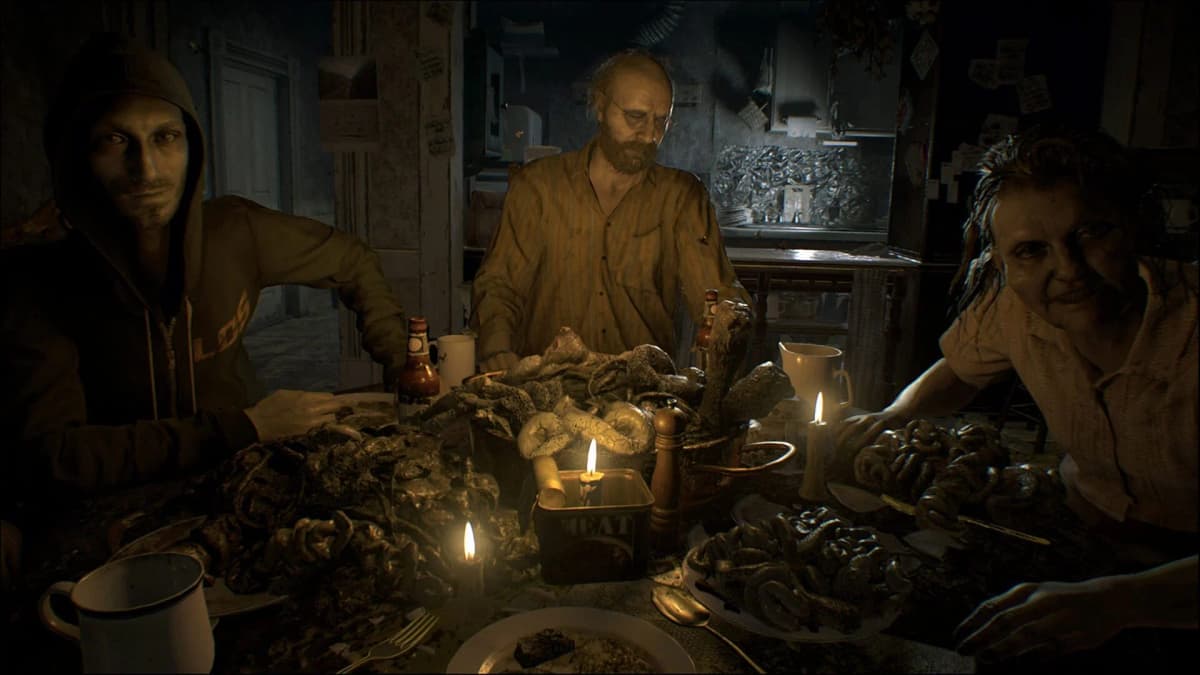
The Resident Evil Generation Pack is the kind of release that makes the answer matter. A collection carrying the word “Generation” is selling more than a weekend download. It is selling continuity. It is asking players to spend money on a franchise they expect to revisit, archive, lend, replay, and keep attached to their own gaming history. Turning that relationship into a permanent dependence on a single storefront is not progress. It is Sony asking players to accept less control while calling it convenience.
Table of Contents (6)
A “Generation Pack” Should Mean Something You Can Keep
I do not buy a Resident Evil package because I expect to finish it once, delete it, and never think about it again. Resident Evil is built for returns. You go back for the cleaner route through a familiar location, the weapon you skipped, the puzzle solution you forgot, the stupidly satisfying moment when old muscle memory comes back. You revisit it after a sequel changes how you see an earlier entry. You put it on when a friend wants to understand why the series has lasted this long.
That is the practical value of ownership. A physical copy can be handed to someone else. It can be sold when money is tight. It can sit on a shelf until the urge to replay finally hits. It can survive a publisher deciding that a product no longer fits its current strategy. Digital storefront access cannot offer every one of those freedoms, and Sony should stop pretending that a download button is an equal replacement for all of them.
Players understand that digital games are convenient. I use digital libraries too. Fast downloads, no shelf space, no swapping discs, immediate access after a purchase: those are real benefits. But convenience is a benefit, not a substitute for basic consumer control. Sony’s digital-only future removes choices from players, then demands faith that the company will be a responsible long-term custodian of everyone’s libraries.
Faith is not a policy. “You can access your games” is not a policy either, unless Sony defines how long, under what conditions, and what happens when that promise becomes inconvenient for the platform holder.
Shinji Mikami’s Point About Streaming Cuts Straight to the Problem
Shinji Mikami recently put a sharp idea on the table in his discussion with YouTuber Eiko Kano about gameplay videos on YouTube and Twitch. His argument was simple: if a viewer can watch a game all the way through and feel completely satisfied without ever wanting to play it, the game failed to make playing compelling enough.
I think Mikami is mostly right, and the reason matters here. A game should create a hunger to participate. Puzzles should make players want to solve them with their own hands. A tense encounter should make people want to feel the pressure of surviving it themselves. A plot twist should land differently when the player fought through the path that led there. Watching can be entertaining, useful, funny, educational, even inspiring. It should not be the superior replacement for actually playing a game designed around player agency.
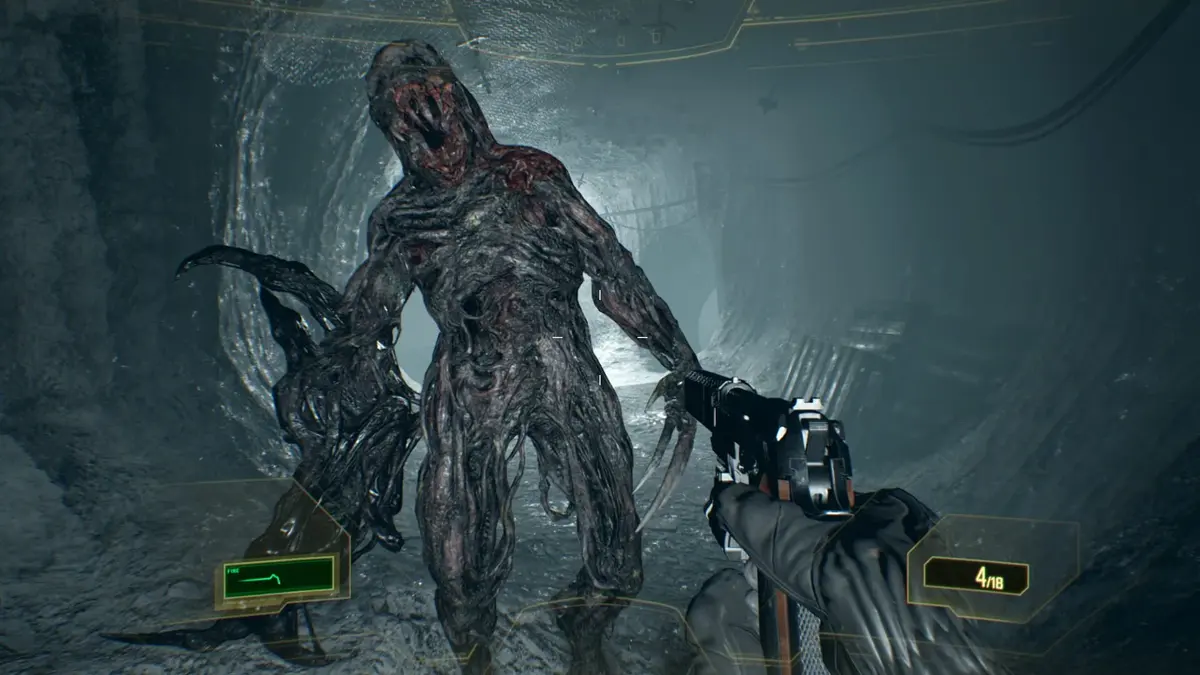
Resident Evil has always understood that difference better than most. The series has built its identity around the gap between seeing danger and managing it. Watching someone else enter a room is passive. Being the person who has to decide whether to spend the last few rounds of ammunition, turn around, or push forward is the experience. Spoilers can flatten that tension, especially when puzzles and reveals are a major part of the appeal, but a strong game still gives players a reason to take control.
Mikami’s standard puts responsibility on developers: make games that people want to complete themselves. Fair enough. But platform holders have a responsibility too. Sony cannot celebrate games as active, personal experiences while steadily stripping away the player’s ability to keep a purchase on personal terms. Agency inside the game loses some of its shine when ownership outside the game is entirely conditional.
There is an important difference between watching a Resident Evil story and playing one. Zach Cregger’s upcoming Resident Evil film, due in theaters on September 18, 2026, is built for watching. Austin Abrams’ Bryan is a medical courier moving through Raccoon City; the audience is meant to sit back and follow the ride. That is the deal cinema offers. A game offers something else: the player makes the decisions, bears the mistakes, and owns the experience in a more direct sense.
Sony’s physical-disc exit muddies that deal. The company is not taking away the controller, obviously. It is taking away one of the clearest forms of player independence around the game itself.
The Backlash Is Spilling Everywhere Because Players Have Lost Confidence
The most revealing part of the disc backlash is how it keeps spilling into places that have nothing to do with the original announcement. A mainstream trailer goes up, a new project gets discussed, and suddenly the conversation turns into anger about digital ownership, disappearing physical releases, and whether PlayStation can still be trusted with a long-term library.
That reaction can look excessive when you isolate it from the bigger picture. It is not random. It is what happens when players feel that every new announcement arrives with another tiny reduction in their choices. They are no longer reacting only to one missing box on a store shelf. They are reacting to a future where lending, resale, gifting, collecting, and archival access keep getting treated as obsolete habits instead of ordinary ways people engage with games.
And Sony has made the situation worse by letting its digital future sound frictionless when the real questions are full of friction. A player who buys a digital game is entitled to know whether it can be re-downloaded years later. That player deserves to know what happens if a game is delisted. They deserve to know what happens if an older storefront closes. They deserve an answer before the purchase, not a vague reassurance after the outrage starts.
The PS5 era and whatever follows it cannot run on implied goodwill. Sony needs rules that survive beyond a marketing cycle.
Sony Needs to Put Real Guarantees on the Table
If Sony wants players to accept a future without new PlayStation discs, the company needs to publish a consumer-rights framework with actual commitments. Not soothing language. Not a support page buried behind account menus. A clear, public policy that players can read before they decide whether to buy digital-only.
- A long-term re-download commitment: Sony should state how long purchased PS5-era and future PlayStation games will remain available for re-download, then update that commitment publicly as platforms evolve.
- Clear delisting rules: When a game leaves the PlayStation Store, players need to know how long owners can still download it and whether any exceptions exist.
- Clear storefront shutdown rules: If Sony ever winds down a digital storefront, the company should explain the timeline for downloads, the support window, and the player protections available before that process begins.
- Preservation-friendly fallback access: Offline entitlements, downloadable patch archives, or time-limited offline installers would give buyers something more durable than a permanent dependency on a live storefront.
- An honest explanation of what replaces physical ownership: Physical copies support resale, lending, gifting, and collecting. Sony cannot replace all of that with a download, but it can at least say plainly what consumer rights digital buyers retain and what they lose.
These are not radical demands. They are the minimum standard for asking players to abandon an ownership model that has existed for decades. Sony has the resources to create this framework. The only obstacle is whether it wants to make promises that limit its own future flexibility.
Vague Access Is a Bad Deal, Even When the Game Is Great
This is where the usual defense of digital-only collapses. People say the games will still be there. Fine. For how long? Under what conditions? What happens when the licensing changes, the store changes, the hardware changes, or Sony decides the old ecosystem is no longer worth maintaining? Those questions have to be answered in advance because they are the entire risk of buying into a digital-only future.
Players are not demanding that Sony freeze technology in place. Nobody expects gaming to stop moving forward. The anger comes from Sony moving forward while trying to leave the terms of ownership behind in a fog. That is corporate convenience dressed up as modernisation.
A strong Resident Evil release should make a player want to pick up the controller, as Mikami argues. A strong PlayStation platform should make a player confident that buying the game was a decision they can live with years later. Those ideas belong together. Play is about agency. Ownership should be too.
Sony Is Asking for Trust It Has Not Yet Defined
The Resident Evil Generation Pack should be a celebration of a series players want to return to. Instead, Sony’s disc decision hangs over every future PlayStation purchase like an asterisk: enjoy this now, and trust us with the rest.
I am not willing to accept that bargain on a handshake. Sony can still make a digital-first future less hostile by committing to re-download access, transparent shutdown rules, offline preservation options, and an honest accounting of the rights physical buyers are losing. Until it does, the backlash will keep showing up under unrelated trailers, franchise announcements, and every conversation about a game people hoped to own for the long haul.
The unresolved question is whether Sony sees that anger as noise to outlast, or as the warning that players will not keep funding a digital future built on undefined access.
FinalBoss // Gear
Level up your setup
01Top-rated gaming headsetson Amazon→02High-refresh gaming monitorson Amazon→03Gaming chairson Amazon→04Discounted game keyson Kinguin→
Affiliate links · As an Amazon Associate, FinalBoss earns from qualifying purchases.
Want to Level Up Your Gaming?
Get access to exclusive strategies, hidden tips, and pro-level insights that we don't share publicly.
Ultimate Gaming Strategy Guide + Weekly Pro Tips