
Table of Contents (7)
PS5 just got more expensive in year six. That’s not normal.
Sony has increased the global price of every PS5 model and even the PlayStation Portal, six years into the console’s lifecycle. In the US, the standard PS5 now sits at $649.99, the Digital Edition at $599.99, and the PS5 Pro at $899.99. In Europe and other regions, we’re seeing roughly €100 / £90 hikes across the board. This is the second significant increase in under a year for hardware that, historically, should be getting cheaper by now.
The official line is familiar: “global economic pressures”, inflation, component costs, geopolitical tension. Analysts have pointed in particular to DRAM and storage, where prices have surged-some estimates put memory cost increases at up to 30%, driven partly by AI data-center demand. On a cost-sheet level, that’s all real. Building cutting-edge consoles is more expensive than it was in 2020.
But there are two other facts that sit uncomfortably beside that explanation:
- The PS5 is already in the back half of its life. Historically, this is when prices drop, not climb.
- Sony’s gaming division just reported a double-digit increase in net profit year-on-year, helped by a weaker yen and a 65M+ install base generating subscription and digital sales.
Put bluntly: this is not a company struggling to keep the lights on. This is a company looking at its dominant position, looking at what’s about to happen with Grand Theft Auto VI, and deciding now is the perfect moment to squeeze harder.
This smells a lot like the PS3-era arrogance Sony swore it learned from
Anyone who lived through the PS3 launch remembers the infamous “$599 US dollars” era. Sony walked into that generation convinced the PlayStation brand and a handful of blockbuster games could justify a brutally high price tag. It didn’t work. Xbox 360 and Nintendo Wii undercut them and ate a massive chunk of market share while Sony spent years clawing its way back.
Back then, the lesson seemed obvious: you cannot treat your console like a luxury status object and expect the broader market to just fall in line. For a while, it looked like Sony internalised that. PS4 was priced aggressively, pitched as “for the players”, and won the generation on the back of consumer good will as much as exclusives.
Now, with PS5, they’re breaking the mid-cycle rulebook again-but in the opposite direction. Six years in, instead of a slimmer, cheaper revision, we’re looking at a more expensive family of machines, including a “Pro” model that just leaped another $150 in some territories. Analysts like TrendForce are already warning that higher console prices could cut global shipments by more than 4% in 2026.
From where I sit, Sony is making a very familiar bet: that the PlayStation name, plus a couple of era-defining hits, is strong enough to override basic affordability. Last time they tried that, the PS3 generation happened.
The GTA 6 factor: this looks like a “Grand Theft Auto tax”
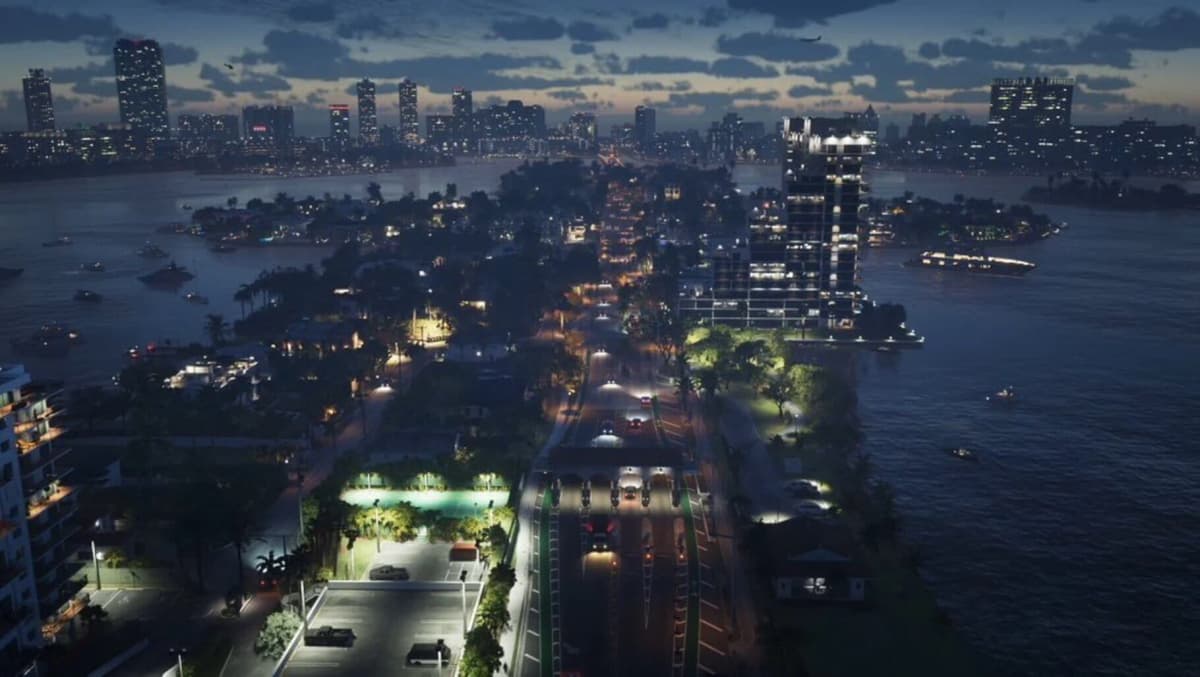
The timing here is impossible to ignore. Grand Theft Auto VI is bearing down on us, and for its launch window it’s essentially a console-exclusive experience. There’s no PC version announced for day one, and nothing for Nintendo’s next machine. That means if you want to play GTA 6 at launch, you’re choosing between PS5 and Xbox Series.
On paper, that’s competition. In reality, Xbox’s hardware strategy is a mess. Microsoft has already pivoted toward services and multi-platform publishing, and their console sales have slumped as a result. In many territories, Series X sits at a similar price point to PS5 Digital-around €599.99 in Europe—without the same mindshare or exclusive library.
That’s the backdrop for this price hike: a dominant console, an ecosystem with a deep exclusive catalog, and the most anticipated game of the decade landing as a de facto PlayStation showcase. Sony knows exactly how many people will buy a PS5 primarily for GTA 6, and they know those people have been waiting twelve years since GTA V. They are banking on hundreds of dollars being “just part of the cost” at that point.

There’s also the brand memory nobody at Sony is going to say out loud, but they absolutely count on. The GTA franchise truly exploded in the PS2 era. GTA III, Vice City, San Andreas—those weren’t just games, they were PlayStation cultural events. Microsoft famously passed on early GTA 3 pitches; Sony didn’t. If you’re a casual player vaguely aware that “the new GTA” is coming, what machine do you instinctively associate it with? It isn’t a trick question.
Now layer in the PS5 Pro. A chunk of players had mentally budgeted for that upgrade explicitly to experience GTA 6 at the highest fidelity. Suddenly that upgrade path is significantly more expensive. The practical effect is simple: if you want the “best” GTA 6 experience at launch, you pay a premium that wasn’t there a year ago.
I don’t buy the idea that this is an unfortunate coincidence or that Sony’s hand was somehow forced in a vacuum. It looks, feels, and functions like a GTA 6 tax.
Follow the incentives: subscriptions and high-margin hardware
Strip away the PR framing, and the business logic actually isn’t hard to understand. Sony claims a PS5 install base north of 65 million. By year six, the bulk of the early adopters and higher-income “whales” are already in the ecosystem, buying big releases, subscribing to PS Plus, and spending in live-service titles.
For that cohort, a $50-$150 hardware price jump is annoying but not disqualifying, especially when it’s amortised across years of use. Meanwhile, every extra dollar of margin on each console sold drops straight into the bottom line when combined with ongoing digital revenue from that user.
What about the players still on PS4, Xbox One, or nothing at all? Realistically, many of them are lower-spend, lower-income, or more casual. Selling them a console at a razor-thin margin only makes sense if you can reliably convert them into subscription and digital customers. Sony’s implicit conclusion seems to be: that’s no longer worth it, not at current component prices and with better alternatives for budget-conscious players emerging.
The PS5 Pro being hit with the steepest relative increase sends a similar signal. Rather than pushing volume, Sony appears comfortable treating its highest-end console as a premium niche product. If you care enough about 4K ray tracing and 60 FPS modes to pay $899.99, you’re exactly the kind of customer they want: wealthy, dedicated, and likely to spend heavily on software and subscriptions over the next five years.

At the same time, they’re cutting internal studios and trimming risk everywhere else. The closure of teams like Bluepoint and Dark Outlaw landed uncomfortably close to this uplift in hardware pricing. That combination—higher prices for consumers, fewer internal creative bets, and a stronger tilt toward services—is not what you do when you’re being dragged into a decision by “economic pressures”. It’s what you do when you’re optimising for investor satisfaction.
Consoles are quietly becoming a rich person’s hobby
Matt Piscatella, an analyst at Circana who tracks US game spending, laid out the trend in blunt terms. Looking at late 2025 hardware data, he said:
“The rise in prices correlates with an increase in the percentage of buyers coming from wealthy households. 53% of hardware buyers in the last quarter of 2025 came from families with incomes above $100,000 a year. At the start of 2025, that figure was 40%. With hardware prices climbing rapidly, middle-class households will lose presence in the market and lower-income households may be eliminated completely. Players could move to more accessible options as prices push them out. If dedicated gaming devices become something only for the rich, that will be very bad for gaming as a whole.”
That’s not hyperbole. You don’t need to be a statistician to see what happens when a console crosses a certain psychological threshold. In some European countries, local estimates suggest that a new PS5 purchase now represents around 40-45% of a full-time minimum monthly wage. In large parts of Latin America, once you account for import taxes and distributor markup, the effective cost can be even worse.
If you’re a teenager or student who doesn’t earn much, the conversation with your parents about “I need a PS5 for GTA 6” just became significantly harder. Even for working adults, a device that eats nearly half a month’s pay before tax isn’t an impulse buy. It requires trade-offs—rent, bills, groceries, or a console.
This collides head-on with another part of Sony’s strategy: the push into live-service games designed to compete with the likes of Roblox and Fortnite. Those ecosystems thrive on volume and reach. They depend on kids and teenagers, on lower- and middle-income players whose time vastly outweighs their spending power. Yet by making the entry ticket more expensive, Sony is effectively handing those demographics even more reason to stay on their phones, tablets, and free-to-play platforms instead.
An extra €100 on a PS5 doesn’t just delay a purchase; for a lot of households, it flips the choice entirely. Instead of saving for a console, they put that money toward a mid-range PC that can handle homework, remote work, and games. Or they skip dedicated hardware altogether and lean into cloud, mobile, or shared devices.
The accidental winner: PC, handhelds, and anything not locked into console pricing
PC gaming has been on a steady upward trajectory for years. Reports from firms like Newzoo repeatedly point out that the PC segment’s growth is structurally different from the console cycle: it’s less tied to five-to-seven-year generations and more to ongoing hardware and platform innovation.
When console makers raise prices mid-cycle, that differential only gets starker. If you’re already facing higher DRAM and storage costs, at least the PC world allows you to shop around and upgrade piecemeal. You can buy a cheaper GPU this year, more RAM next year, wait for deals, or go second-hand. Console prices, on the other hand, are centrally managed by one or two platform holders who move in lockstep.
Devices like a hypothetical “Steam Deck 2” or other PC-based handhelds are in a particularly interesting spot here. They’re affected by the same component price rises, but they’re not tied to a single closed ecosystem or a single flagship title like GTA 6 to drive demand. Their pitch is flexibility: your Steam library, your subscriptions, your indie games, your choice of storefront.
Gabe Newell once joked that Valve’s strategy was basically to “do nothing while everyone else shoots themselves in the foot.” As much as it’s a meme, moves like Sony’s price hike make that sound less like a joke and more like an actual business philosophy they benefit from. Consoles get pricier, PC stays messy but ultimately more elastic and adaptable.
If analysts are right and console shipments shrink 4% or more in 2026 thanks partly to DRAM-driven price pressure, those players aren’t just vanishing. They’re landing somewhere else: a budget PC, a shared laptop, a cloud service, a generic Android tablet. Once they’re comfortable there, pulling them back into a walled garden that costs $650-$900 is a tall order.
Short-term profit, long-term brand erosion
Sony’s bet, as I read it, is that the short-term upside from higher margins and a GTA 6-fuelled sales spike outweighs the long-term risk of hollowing out the broader console audience. Hardcore fans, wealthier players, and entrenched PlayStation loyalists will pay more and grumble later. Shareholders will like the numbers. The pain gets externalised to everyone who was already on the fence.
The problem is that platform loyalty is built young and reinforced over decades. A lot of adults with a PS5 today own one because they had a PS1, PS2, or PS3 as kids. They grew up with the brand, with its controllers, with its catalog. That habit didn’t form because those machines were priced out of reach; it formed because those machines were aspirational but attainable.
By making PS5 more expensive just as GTA 6 arrives, Sony will absolutely squeeze more revenue out of people who are already committed to staying in the PlayStation ecosystem for the long haul. But they’re also making it much easier for a whole generation of potential new players to say, “You know what, I’ll just play something else on what I already have.”
And a decade from now, when those players have more disposable income and Sony wants them to care about PS6 or PS7, they may remember that the console that mattered most to them growing up wasn’t a PlayStation at all.
FinalBoss // Gear
Level up your setup
01Best-selling PS5 gameson Amazon→02DualSense controllerson Amazon→03PS5 SSD upgrades (M.2 NVMe)on Amazon→04Discounted game keyson Kinguin→Affiliate links · As an Amazon Associate, FinalBoss earns from qualifying purchases.
Want to Level Up Your Gaming?
Get access to exclusive strategies, hidden tips, and pro-level insights that we don't share publicly.
Ultimate Gaming Strategy Guide + Weekly Pro Tips