
Table of Contents (7)
Why Sony’s PC player share looks worse than it is – and why that matters
Sony’s recent headlines about underperforming PC ports have looked like a franchise problem. The reality, per Newzoo data reported by GamesIndustry.biz, is uglier and simpler: Sony has been giving the PC market the leftovers. When big PlayStation games arrive on PC years after their console debut, the PC version typically accounts for only about 13% of combined players in the first three months. When releases are simultaneous, PC takes roughly 44% – a difference that explains most of the “decline” people are noticing.
- Timing, not demand: Newzoo finds staggered PC ports hit ~13% PC share in the first three months versus ~44% for simultaneous launches.
- It’s publisher-wide, not just Sony: The pattern is similar for first-party and third-party PlayStation titles, which suggests the window drives the outcome.
- There are exceptions – and reasons: Helldivers 2’s near-simultaneous or early PC support boosted its off-console reach; Ghost of Tsushima performed better on PC than later-era ports, likely because it was the franchise’s first PC outing.
- Business risk vs. optics: If Sony reads low PC share as low demand, it risks cancelling ports that would have performed far better if released earlier.
The uncomfortable observation Sony hoped you’d miss
Ask any analyst: release timing creates demand. Games capture most attention in the first months after launch. Newzoo’s Manu Rosier puts it plainly — when PC versions land years after the console release “much of the early lifecycle demand has already been captured on the primary platform.” In other words, low PC share is often self-inflicted. That’s an uncomfortable fact if you’re trying to argue these franchises don’t translate — because the data suggest they would, if given a fair window.
Port quality and marketing matter — but timing is the largest lever
This isn’t a denial that other factors matter. Port quality, PC marketing budgets, pricing and when DLC or expansions land all shape uptake. Helldivers 2 is the standout: its PC-first or near-parity approach helped make Steam one of its biggest homes. Ghost of Tsushima also bucked the downward trend, likely because being a franchise’s first PC release generates fresh interest.
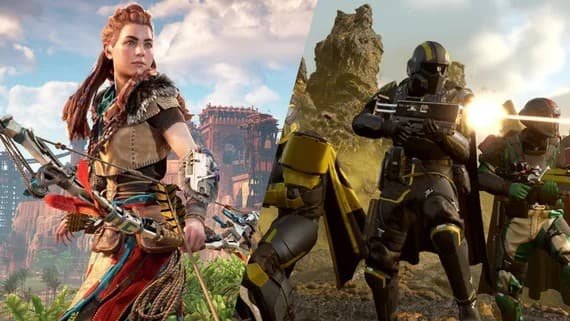
Still, Newzoo’s cross-title pattern is striking: early PlayStation PC ports like Horizon Zero Dawn and the original God of War found sizable PC audiences (22% and 14% PC share respectively in their measurement windows). Later ports — God of War Ragnarök, Marvel’s Spider-Man 2, Horizon Forbidden West — saw much smaller initial PC slices. That sequence screams “timing” louder than it whispers “franchise fatigue.”
So why would Sony step back from PC anyway?
Bloomberg and other outlets report Sony is reconsidering its aggressive PlayStation-to-PC push. The reasoning in those pieces is pragmatic: Sony gets the most strategic value from keeping marquee experiences tied to PlayStation hardware, and off-console revenue has been small compared to platform economics. If leadership views PC ports as a net risk to PS5 sales or platform brand, cancelling or stretching windows is a defensible — if short-term — business decision.
But there’s a distinction between “these games don’t perform on PC” and “we intentionally make them underperform by delaying them.” If the latter is true, Sony’s move would be less about consumer demand and more about controlling the narrative and the install base for its next console.
The question I’d put to Sony’s PR rep
“If PC ports are genuinely low-return, what change in sales forecasts makes cancelling a port better than launching it earlier and capturing a 40-50% PC share in the first months?” That’s the concrete metric they need to show. Otherwise the decision reads like a platform-protection play, not a market-response play.
What to watch next — specific signals that will tell us if this is strategy or reality
- Announcements or cancellations of highly anticipated PC ports (watch Death Stranding 2 and Kena, which have been cited as still slated for PC) — any change will be a clear signal.
- Future release windows: Are upcoming first-party titles announced with same-day PC and console launches? That will show whether Sony is changing the playbook.
- First-three-month PC-player-share figures for any new ports. A PC share north of 35-40% on a simultaneous launch will validate Newzoo’s claim; repeated low-teen shares for staggered windows will too.
- Sony’s next investor commentary or financials mentioning off-platform revenue strategy — that will reveal whether this is a revenue calculation or a platform-protection policy.
If you want the short version: low PC share doesn’t prove Sony’s franchises don’t work off-console. It proves Sony often waits too long to find out.
TL;DR
Newzoo’s numbers suggest staggered release windows — not a lack of PC interest — explain why PlayStation ports now account for a smaller share of players. Sony’s reported pullback may be a strategic choice to protect PS5, not an unavoidable market result. Watch release windows and early three-month PC-share figures to see whether Sony is responding to real demand or reshaping it by design.
FinalBoss // Gear
Level up your setup
01Graphics cardson Amazon→02Gaming laptopson Amazon→03High-refresh gaming monitorson Amazon→04Discounted game keyson Kinguin→Affiliate links · As an Amazon Associate, FinalBoss earns from qualifying purchases.
Want to Level Up Your Gaming?
Get access to exclusive strategies, hidden tips, and pro-level insights that we don't share publicly.
Ultimate Gaming Strategy Guide + Weekly Pro Tips