
Table of Contents (6)
Why this update actually matters for players
This caught my attention because VS2 is the first time Space Engineers 2 stops feeling like a sandbox tech demo and starts behaving like an actual game. The December 1 Vertical Slice 2 update drops planets, survival mechanics, progression hooks and the production bones that let creative projects become meaningful goals. For anyone who’s wanted to go beyond building pretty ships and actually carve out a colony in space, this is the moment.
- Almagest star system: new planets Verdure and Kemik, biomes, caves and destructible features.
- Survival & progression: basic storyline, base contracts, fast-travel station points and an initial economy loop.
- Projection-based building: holographic blueprints let you plan before committing limited resources.
- Big missing pieces: wheels, weapons, and mechanical blocks are delayed and slated for later patches.
Key takeaways
- VS2 is the sequel’s first real survival playtest – not full-featured, but it sets foundations.
- Projection building is the most notable UX change; it bridges creative freedom with survival constraints.
- Keen is pacing features; what’s playable now is meaningful but incomplete.
- It’s on sale (20% off) until December 8, which makes it a low-risk buy if you’re curious.
Breaking down the VS2 update
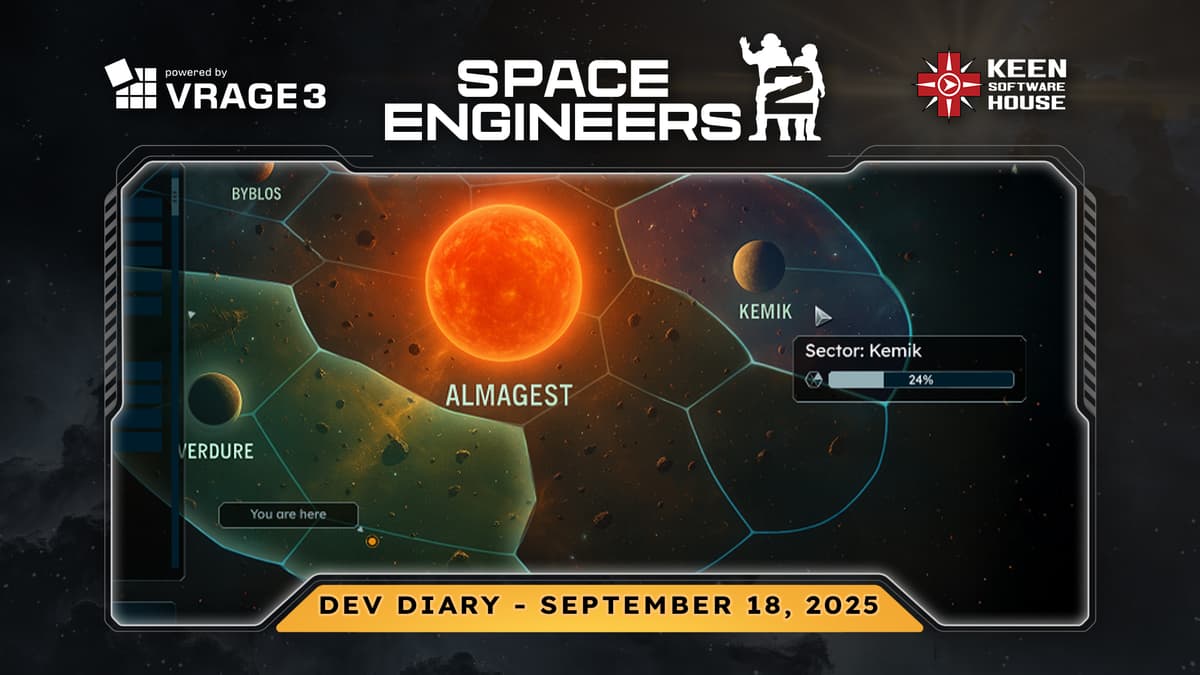
Vertical Slice 2 – that’s the full name – puts players into the Almagest star system, centered on a brown dwarf called Delfos with a distant light source named Almagest. Two planets, Verdure and Kemik, are the first surfaces you can actually step on. Expect multiple biomes, caves, overhangs, and flora — plus some destructible terrain elements. That’s a big deal: planetary surfaces were one of the most requested features after the original Space Engineers, and even here the scale feels like a proper sandbox frontier rather than a handful of scripted encounters.
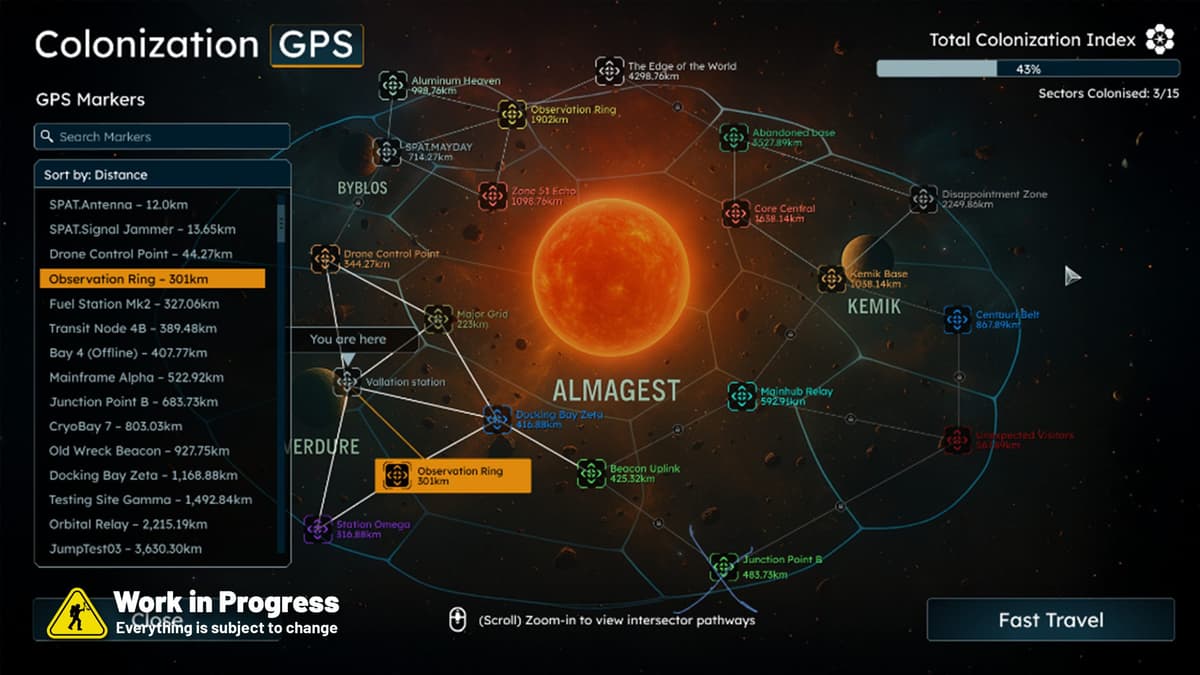
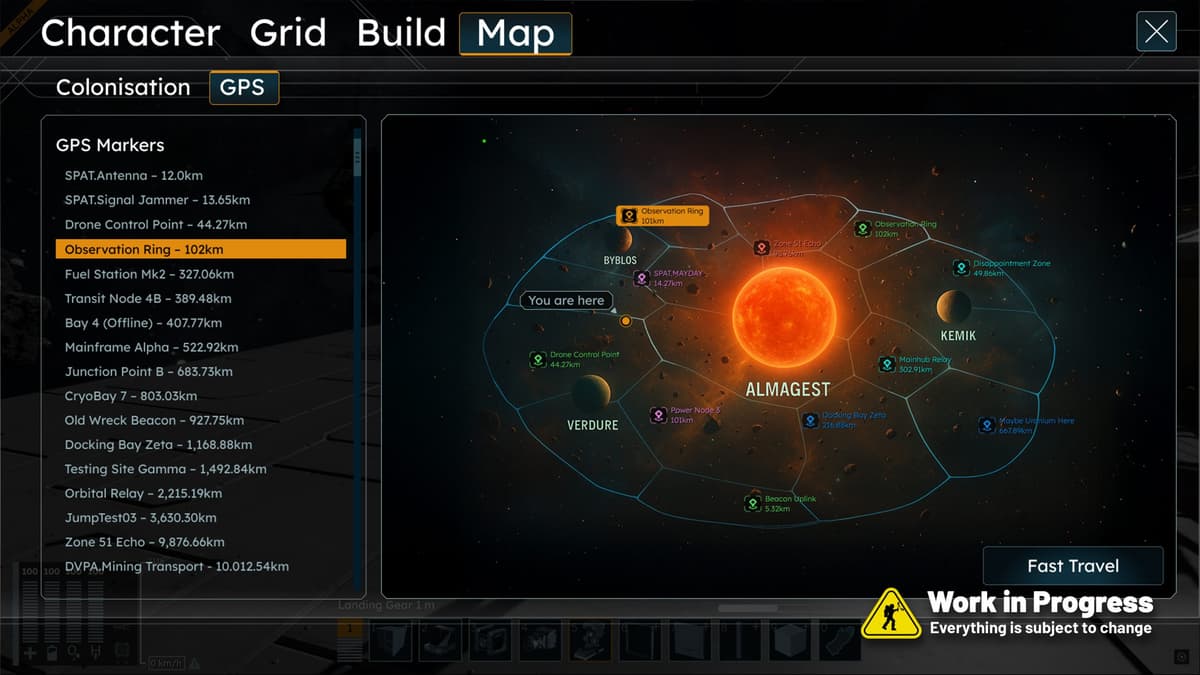
Survival now has a toe in the water: a short intro cutscene and voiceover, contract-style base objectives, an interactive star-map, and station points for fast travel. The progression loop is still primitive but present — you can harvest resources, craft basic components, set up production lines and manage grid power with swappable batteries. There are welders, grinders, drills, fabricators, smelters, gear forges, tanks, reactors, solar panels and a conveyor system. It’s a lot — but it’s also the scaffolding rather than the finished house.
Why the projection system is the real play-changer
Projection-based building is the update’s UX headline. Instead of spending precious ore and materials on a half-finished idea, you lay down a holographic design first. That design doesn’t consume resources until you commit, so you can iterate in survival much like you would in creative. That matters because Space Engineers historically punished experimentation in survival — a bad rivet could cost hours of gathering. Projection makes designing accessible without neutering scarcity, as long as resource sinks and production pacing are tuned properly.
What’s still missing — and why to be skeptical
Keen Software House is honest about gaps: wheels, weapons, and mechanical blocks “need more time and testing to reach the quality we aim for,” founder Marek Rosa said, and they’ll arrive later. That’s sensible, but it also means the current survival loop is fragile: without robust ground mobility and combat, colonization and defense feel like blueprints rather than full gameplay loops. The roadmap teases VS2.2 ‘Survival Extensions’ — GPS, new contract types, area welding and block wrappers — but those are future promises, not present features.
Should you buy it now?
If you loved the original Space Engineers and you’re curious about where the sequel is heading, VS2 is worth a look — especially at 20% off through December 8 (listed at $23.99 / £19.99 while discounted). It’s a playable slice of the eventual vision: planets, resource tech, production chains and a survival scaffold. But go in knowing this is early access evolution, not a finished survival sandbox. If you need full vehicle physics, weapons and polished multiplayer colonization, wait for later milestones.
FinalBoss // Gear
Level up your setup
01Top-rated gaming headsetson Amazon→02High-refresh gaming monitorson Amazon→03Gaming chairson Amazon→04Discounted game keyson Kinguin→Affiliate links · As an Amazon Associate, FinalBoss earns from qualifying purchases.
Want to Level Up Your Gaming?
Get access to exclusive strategies, hidden tips, and pro-level insights that we don't share publicly.
Ultimate Gaming Strategy Guide + Weekly Pro Tips