
SpeedRunners 2: King of Speed is doing three things right out of the gate: it has a broad July 2026 launch across PS5, Xbox Series X|S, Nintendo Switch, and Steam, it is landing on Xbox Game Pass day one, and it already has a public demo live. That is the good news. The more important news is what this setup signals: tinyBuild and Fair Play Labs understand that a sequel to a cult competitive platformer does not win on nostalgia alone. It wins on friction. How easy is it to get eight people in, keep matches smooth, and make the movement feel sharp enough that players stick around after the first weekend?
That is the real story here. Not “old indie favorite gets sequel,” but “a game that lived and died on couch-chaos energy is trying to survive in 2026 by removing every obvious barrier to entry.” Cross-platform launch. Crossplay support. Day-one Game Pass. A free demo. Improved netcode. Those are not bonus features. For a game like this, they are the business model.
Table of Contents (5)
The platform rollout is smarter than it looks
The official launch window is July 2026, with versions confirmed for PlayStation 5, Xbox Series X|S, Nintendo Switch, and PC via Steam. Multiple reports also point to simultaneous cross-platform release with crossplay, which is exactly what this game needs. The original SpeedRunners built its reputation as a brutally fun multiplayer platformer where one missed grapple or one bad jump meant getting swallowed by the screen. It was fast, mean, and excellent with the right group. The problem was always scale. Games like this live or die on finding people who want to play them right now.
That is why the platform list matters more than the trailer. Splitting a niche competitive community across storefronts is how you quietly kneecap a sequel before launch month ends. A cross-platform rollout gives SpeedRunners 2 a fighting chance to avoid the usual indie multiplayer trap: strong reveal, decent first weekend, empty lobbies by month two.
There is one wrinkle worth noting. Background reporting indicates a Nintendo Switch 2 version may arrive later, while the currently announced console version is for Switch. That is not a disaster, but it is the kind of detail publishers prefer to keep fuzzy while everyone is busy celebrating the launch window. If Nintendo’s next hardware becomes the default place for party games, a delayed version there could matter more than the press release tone suggests.
Day-one Game Pass is not just a perk-it is the population plan
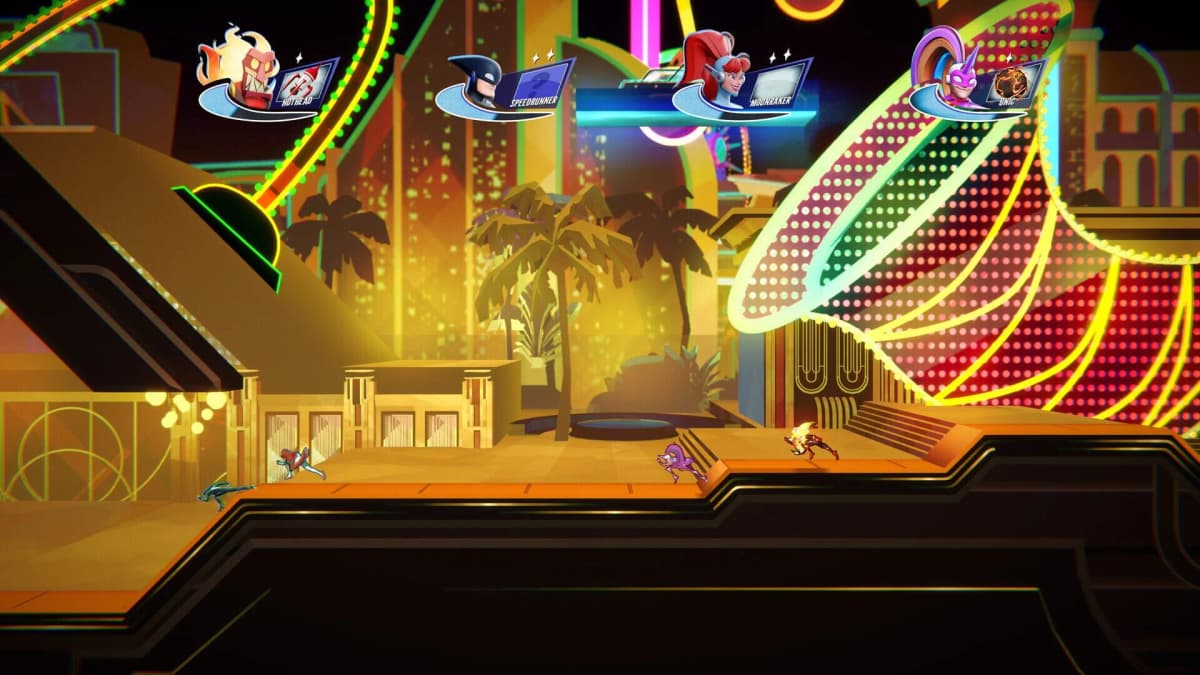
Putting SpeedRunners 2: King of Speed on Xbox Game Pass at launch is the most practical decision in this entire announcement. For single-player games, Game Pass can be a visibility boost. For a multiplayer-first game, it can be oxygen. A game built around up to eight-player local and online races needs bodies more than it needs prestige. You do not need every player to buy in at full price on day one; you need enough players jumping in immediately that queues stay healthy and friend groups start evangelizing the game for you.
That matters because SpeedRunners 2 is not chasing the modern live-service treadmill. It is selling a very specific kind of chaos: side-scrolling races, grappling hooks, wall jumps, slides, power-ups, and the series’ signature pressure mechanic where the trailing player gets erased as the camera keeps pushing forward. It is a fantastic format for clips, rivalries, and “one more round” sessions. It is also a format that needs a critical mass of active players if it wants to survive outside private lobbies.
The cynical read is obvious: Game Pass gets the install base up and lets the publisher call the launch a success. But cynicism only lands if the game cannot hold people. If the movement is crisp and the netcode is reliable, Game Pass becomes a smart funnel, not a crutch. If online play stutters, then day-one subscription access just means more people discovering the problem faster.
The demo is the part players should take most seriously
A playable demo has reportedly been live since February 20, 2026 across digital storefronts, initially tied to Steam Next Fest. It includes six maps, eight characters, and a 64-player tournament mode, which is a generous slice for a game of this type. More importantly, it gives players a way to test the one thing sequel marketing cannot fake for long: feel.
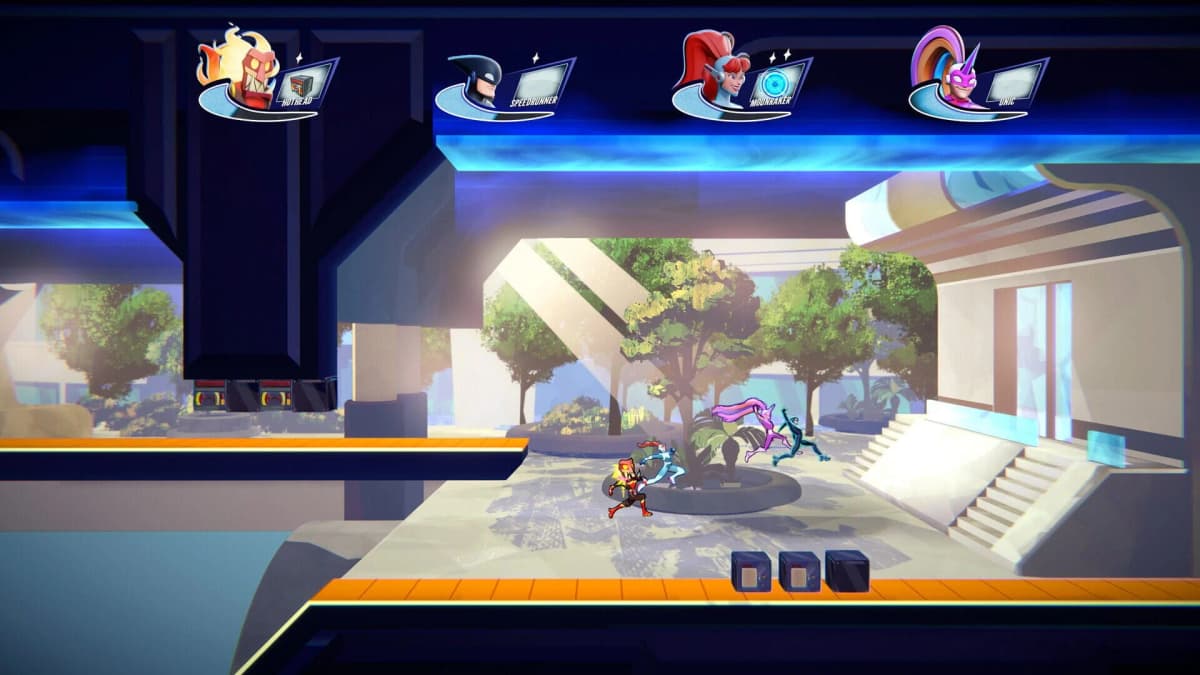
You can sell “HD visuals” and “modernized movement” in a bullet list. You cannot sell whether grappling feels immediate, whether sliding carries momentum properly, or whether wall-jumping has that slightly dangerous snap that separates a great competitive platformer from a merely functional one. SpeedRunners was never beloved because of lore or content volume. It was beloved because mastery felt stylish and failure was funny right up until it was your turn to lose by half a pixel.
That is also why the demo matters more than a polished reveal trailer at the ID@Xbox showcase. Players who remember the first game do not need to be convinced the concept works. They need proof that the sequel has not sanded off the edges that made the original special. “Modernized” is one of those words PR teams love because it can mean anything from genuinely improved readability to “we smoothed out the weirdness you actually liked.”
The available details suggest the core remains intact: movement-heavy races, a closing ring or screen-pressure mechanic, and pick-ups including missiles, traps, freeze rays, and a golden grappling hook. That sounds right. But for a skill-based party racer, sounding right is not enough. The demo is where players can find out whether the sequel understands the old rhythm or is just cosplaying it in cleaner resolution.
Improved netcode is the promise that actually counts
If there is one phrase in the current coverage that deserves a raised eyebrow, it is “improved netcode.” Good. It should be improved. That is table stakes for reviving a precision-heavy multiplayer game in 2026. But “improved” compared to what, exactly? The original launched in a different era of online expectations. Back then, people were more willing to forgive rough edges in indie multiplayer if the game itself was brilliant. That grace period is gone.
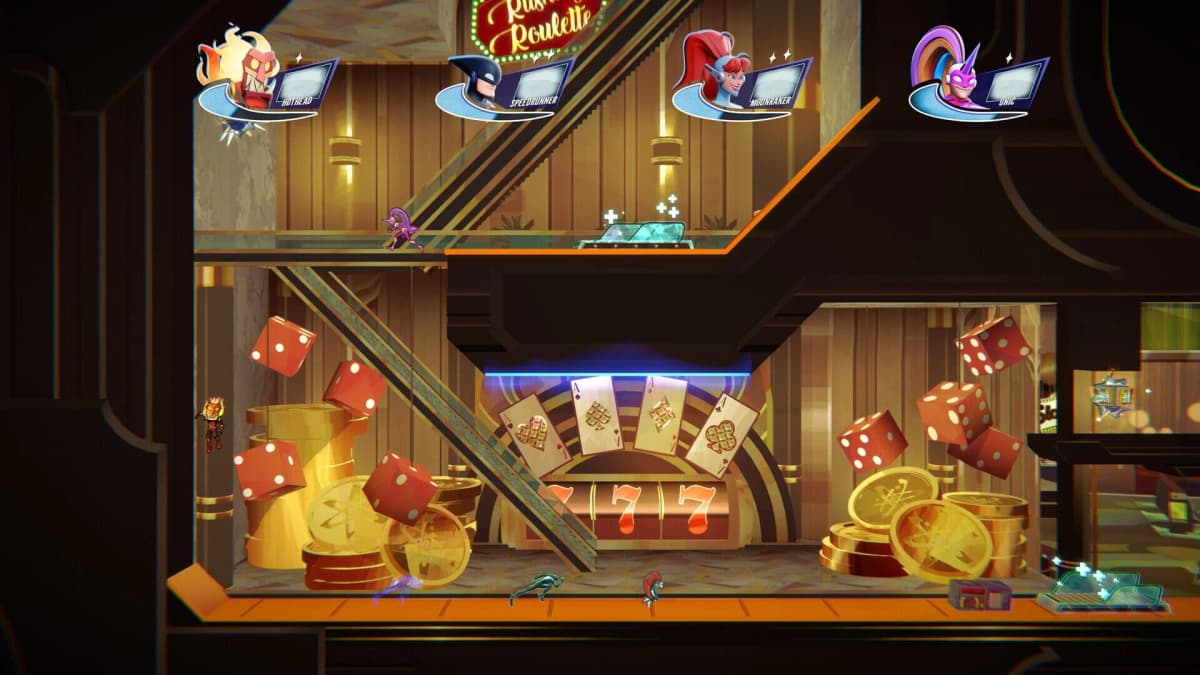
For SpeedRunners 2, netcode is not a tech footnote. It is the product. This genre does not tolerate mush. A race can flip on a single grapple, a perfectly timed boost, or a split-second recovery off a wall. If players start blaming losses on rollback hiccups, hit registration weirdness, or desync in the pressure zone, the social magic collapses fast. Suddenly the game is not “competitive chaos,” it is “that thing that felt unfair online.” Those are not the same sentence.
This is the uncomfortable question I would put to the publisher: what does “improved netcode” mean in measurable terms, and how is it performing across crossplay between console and PC? Not in a marketing paragraph. In real conditions. Wired, wireless, mixed regions, full lobbies. Because if Fair Play Labs solves that, SpeedRunners 2 has a real shot at becoming more than a nostalgia sequel. If not, all the smart distribution decisions in the world will not save it.
What to watch before July
There are four concrete signals worth watching between now and launch.
- First, whether the developers share more specifics on crossplay and matchmaking. “Supports crossplay” is nice. Region handling, party flow, and private lobby options are what actually matter.
- Second, whether the demo gets updated based on player feedback. A sequel that listens early usually shows its hand before launch.
- Third, whether we get deeper technical talk around online performance. If that conversation stays vague all the way into release, assume the usual reason.
- Fourth, pricing. Day-one Game Pass softens the blow on Xbox, but the sticker price on PlayStation, Switch, and Steam will shape how quickly the broader player base fills out.
The broad recommendation is simple. If you have any interest in SpeedRunners 2, do not wait for launch reviews alone. Play the demo. This is one of those games where your hands will tell you more in 20 minutes than a feature list will in 2,000 words. The launch setup is smart, arguably as smart as it could be for a sequel to a cult multiplayer game. July 2026 could give this series a real second life. But the victory condition is not getting announced on every major platform. It is proving that the old magic still works when eight players hit “ready” and nobody can blame the netcode for what happens next.
FinalBoss // Gear
Level up your setup
01Top-rated gaming headsetson Amazon→02High-refresh gaming monitorson Amazon→03Gaming chairson Amazon→04Discounted game keyson Kinguin→Affiliate links · As an Amazon Associate, FinalBoss earns from qualifying purchases.
Want to Level Up Your Gaming?
Get access to exclusive strategies, hidden tips, and pro-level insights that we don't share publicly.
Ultimate Gaming Strategy Guide + Weekly Pro Tips