
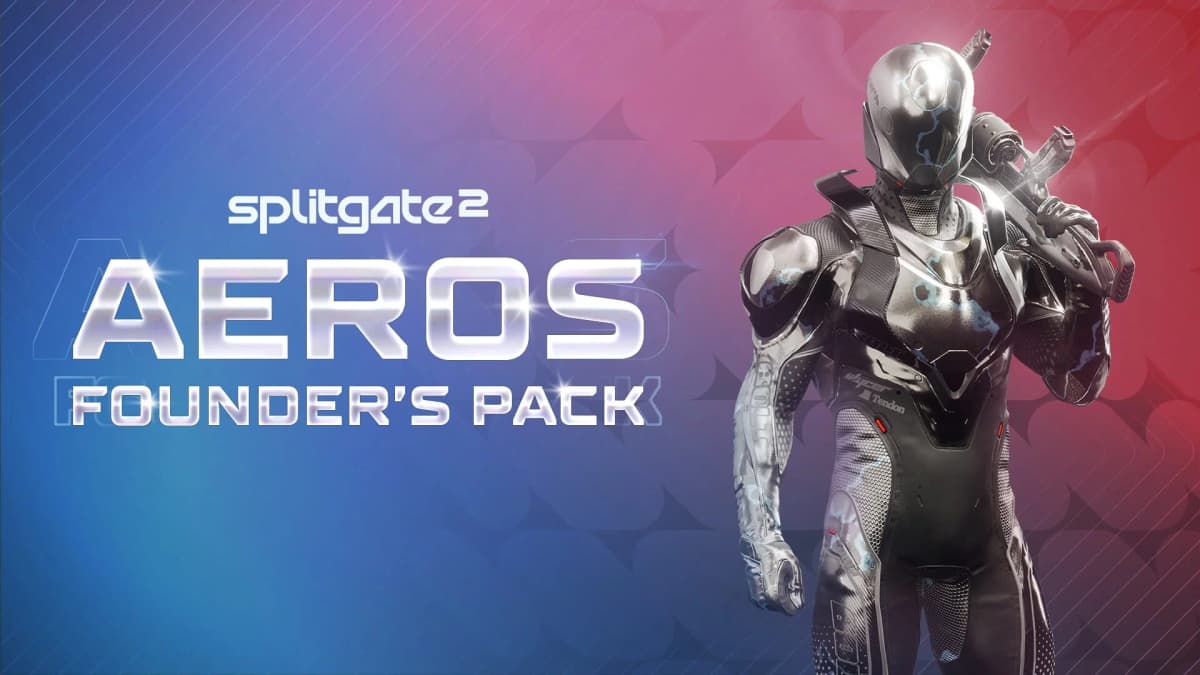
Splitgate’s relaunch is almost annoying because it’s THIS fun again
Game intel
Splitgate 2
Portal into the action as an elite Ace in Splitgate 2, the only free-to-play shooter where you can teleport across the map to outsmart your opponents. Team up,…
“It’s almost annoying how fun Splitgate 2 was”
I still remember the exact moment I realised Splitgate 2 had its hooks in me. It was one of those “I’ll just run a couple of matches before bed” nights. I queued up on PC, thinking I’d kill 20-30 minutes before crashing. Next thing I know, it’s 2:47 a.m., my eyes are fried, my K/D is in shambles, and I’m muttering to myself, “It’s almost annoying how fun Splitgate 2 was.”
That sentence has been stuck in my head all year. Because that is what makes Splitgate’s whole saga so infuriating: the game underneath all the bullshit is excellent.
Crunchy gunplay, thrilling portals. A slicker art style than the first game. Portals mapped to one button so your brain can finally keep up with your hands. And then, wrapped around all of that, the absolute clown show of 1047 Games’ decisions: overpriced cosmetics, a forced battle royale mode nobody asked for, Faction abilities that muddied the arena purity they promised, and “Hatgate” turning their own CEO into a meme at the exact moment they needed credibility.
I’ve been playing shooters since Halo 2 LAN parties and Quake Live in dingy internet cafés. I’m picky. There’s a reason most modern “live-service” FPS games bounce off me in a weekend. But Splitgate’s core idea-Halo gunplay plus Portal movement-hits the same part of my brain that fighting games do: that thrill of mastering a system with an absurdly high skill ceiling. Watching 1047 almost kill that with greed and trend-chasing was painful.
And yet here I am in 2025, back on Steam and PlayStation, sweating lobbies in Splitgate: Arena Reloaded. Against my better judgement. Because when this game is allowed to just be an arena shooter? It might be the most fun FPS you can boot up right now.
The tragedy of Splitgate 2: brilliant shooter, awful wrapper
On paper, Splitgate should’ve been the feel-good FPS story of the decade. An indie studio that blew up during the pandemic, got massive funding, and decided to double down with a sequel that ditched the “Halo clone with random cartoon skins” vibe for a cleaner, pastel-soaked art direction. Splitgate 2 actually looked like its own game instead of “Master Chief at home.”
And for the first few weeks, it played like a dream. Gunfights were tight. Time-to-kill felt just right. The portal system was simpler than in the original-one button instead of juggling two—and yet somehow opened up more room for outplays. New players could understand the basics instantly, while veterans were already hitting galaxy-brain rotations around maps like Pantheon and Olympus.
Then the other shoe dropped.
The in-game shop looked like it had wandered in from a dystopian mobile gacha. Prices were laughable for a game that was supposedly trying to win back goodwill. Battle royale, the most warmed-over, past-its-prime trend, got shoved in alongside the core Arena modes as if that’s what anyone booted Splitgate for. Factions added ability kits that—while not game-breaking—chipped away at the whole “pure arena shooter” pitch 1047 had been selling us since the first trailer.
And then there was the management circus. Dev layoffs. Public drama. The now-infamous “unlaunch,” where Splitgate 2 basically got yanked back into beta like someone had slammed the undo button on Steam and console storefronts. I honestly didn’t even know a studio could do that until 1047 actually did it. Layer on top of that a CEO turning up to a major event in that hat—cementing “Hatgate” as a shorthand for “we’re not ready for primetime”—and the whole thing became YouTube essay bait more than an actual living game.
That’s the part that stung: I was having real, honest-to-god fun. And every week it felt like management was throwing another grenade into the room.
Portals aren’t a gimmick — they’re the genius hook
Strip away the nonsense and Splitgate’s core design is still one of the smartest twists on the FPS formula in years. People love to dismiss it as “Halo with portals,” but that’s like calling Rocket League “football with cars” and leaving it there. It misses how fundamentally it rewires how you think about space, timing, and positioning.
Portals aren’t just a gimmick—they’re the genius hook.
On a basic level, you’ve got two surfaces you can portal: usually clearly marked walls or floor panels. In Splitgate 2 (and now Arena Reloaded), you hit one button to drop an entrance, aim somewhere else, hit it again, and boom—instant connection. But the real magic is that your momentum carries through.
That means a sprint into a slide, into a portal, can catapult you out the other side like a railgun shot made of flesh and stress. It means dropping a portal at your feet and another above a control point lets you rain death from above with zero announce time. It means every “safe” angle on a map is only safe until someone learns a new portal line that breaks it open.
The first time I really “got it” was on a three-lane map with a pit in the middle. I was trapped in my base, two enemies locking down the main choke. Old-school Halo instincts said, “Peek slower, throw a nade, maybe try the side tunnel.” Splitgate instincts said, “Nah, draw a door out of existence.”
I slapped one portal behind a pillar in spawn, chucked the second onto a wall behind the guys holding mid, dove through, and turned their defensive setup into a double kill before they even realised the minimap was lying to them. It wasn’t aim that won that fight. It was geometry.
That’s what separates Splitgate from the rest of the shooter pack right now. Games like Battlefield 6 and Arc Raiders are great at what they do, but their flow is predictable: push lanes, hold angles, rotate to objectives. Splitgate says, “What if every angle can be a flank, and every flank can be a deathtrap if you’re not thinking two portals ahead?”
Movement, Factions, and the slippery slope of “modernizing” arena FPS
I’m not going to pretend every “modern” layer they added was a disaster. I actually like some of the movement tweaks Splitgate 2 baked in. Slides, jetpacks, mantling—they’re all pretty standard in today’s shooters, but in Splitgate they create this sick interplay with portals.
The jetpack alone is a huge deal. A full tank lasts around four seconds and recharges in about three, which doesn’t sound like much until you realise how many fights are decided in the exact space where people assume they’re safe from vertical pressure. Slide off a ledge, tap jetpack, dive into a portal, and you’ll come screaming out a flank with just enough juice left to hover-strafe mid-air and throw off your opponent’s flick.
Then you add Factions. I was ready to hate them on principle. Abilities in a supposedly “pure” arena shooter? We’ve watched Call of Duty and Halo both dip their toes into hero-shooter nonsense with disastrous results. To Splitgate’s credit, most Faction kits are pretty low-impact—minor utility, not game-breaking ults—but there’s no denying they change the calculus.
Personally, after hundreds of matches, I’d still rather have a mode where Factions are switched off entirely and it’s just gun, map, portal, brain. Arena Reloaded is at least moving closer to that fantasy: the focus is clearly back on tight 4v4 and 5v5 play instead of chasing BR trends. If 1047 has any sense, Ranked will stay as close to stock as possible.
For what it’s worth, if you’re new, I actually recommend picking a simple, mobility-focused Faction—something that enhances your positioning rather than trying to win fights for you. Complement that with a reliable mid-range rifle plus a pistol, and ignore whatever shiny nonsense the loadout screen tries to sell you. The faster you internalise that portals, not perks, win games in Splitgate, the better off you’ll be.
Arena Reloaded: why this is the right time to give Splitgate another shot
Here’s the part I didn’t expect to be writing: the “unlaunch” might have actually been the best thing that could’ve happened to Splitgate 2.
Don’t get me wrong, it was embarrassing. It was chaotic. It shook a lot of people’s trust, mine included. But forcing the game back into a beta-style cocoon let 1047 do something studios almost never get: a do-over.
Splitgate: Arena Reloaded isn’t just a rebrand; it’s basically the management team putting their hands up and admitting, “Yeah, we screwed the landing.” Cosmetics are cheaper and less obnoxious. The battle royale nonsense has been pushed out of the spotlight so the portal arena gameplay can breathe. Ranked Arena is finally in a place where it feels like the “real” game—not some bolted-on afterthought—with access locked behind a sensible grind (you’ll need around 100,000 XP before it lets you in).
You can see the impact already. After the July update, I watched PC numbers across Steam and the Epic Games Store push back over 10,000 concurrent players. That’s not “top of Twitch” huge, but it’s more than enough for healthy queues on all platforms, especially with PlayStation and Xbox in the mix.
And those “20-30 minute sessions” the devs like to talk about? They’re still ballooning into multi-hour binges for me and pretty much everyone I know who gives the game an honest shake. That addictive loop is back: one more match, one more mastery challenge, one more shot at that stupid slide-kill requirement before bed.
Want to Level Up Your Gaming?
Get access to exclusive strategies, hidden tips, and pro-level insights that we don't share publicly.
Ultimate Gaming Strategy Guide + Weekly Pro Tips
How to actually enjoy Splitgate now: queues, loadouts, and portal plays
If you skipped Splitgate 2 after the drama—or bounced off at launch—Arena Reloaded is the version you should try. But you have to treat it like its own thing, not “that messy sequel.” Here’s how I’d jump in if I were starting fresh today.
1. Queue smart: protect your fun
First, queue into the modes that showcase what Splitgate actually does better than anyone else.
For your first few nights, I’d stick to:
- Quick Play Arena – Fast rotation of core modes like Team Deathmatch, King of the Hill, and Domination. This is where you learn maps, angles, and portal lines.
- SWAT / Precision modes – Headshot-focused variants where your positioning and map knowledge matter more than sheer DPS spam.
- Ranked Arena (once you hit ~100,000 XP) – The closest thing to “serious” Splitgate. This is where portal mastery really gets rewarded.
Arena Reloaded still offers the extra modes and experiments, but if you jump straight into the weird stuff or any lingering battle royale variants, you’re missing the point. Learn the arena first; everything else is garnish.
2. A simple newbie loadout that actually teaches you the game
Ignore the temptation to go full meme with shotguns and sniper rifles from minute one. You’ll learn faster with a loadout that keeps you in mid-range fights where portals and movement matter.
- Primary: A burst or battle rifle – forgiving enough for new players but with a high ceiling once your aim tightens up.
- Secondary: The default pistol – underrated, especially when you start mixing in slides. You’ll eventually want those 75 slide kills for a pistol mastery reward anyway.
- Faction: Pick something with mobility or mild utility, not damage bursts. Anything that helps you reposition or get information is more valuable than a cheesy extra kill.
Set your portal key to something you can comfortably hit under pressure. For me it’s on a mouse side button. The goal is to make dropping portals feel as natural as reloading.
3. Three portal plays that turn you from target to threat
Once you’re not fumbling the controls, start layering in specific portal plays. These three alone will win you games.
- The Escape Rope: Before you push any contested lane, drop a portal somewhere safe behind you—preferably around a corner or tucked behind cover. Then push up, take your shots, and if things go south, insta-portal back out. Congratulations, you just upgraded every bad peek into a reversible one.
- The High Ground Lie: On maps with vertical control points, plant one portal on a wall near objective height and another on a lower, unseen surface. Push from low ground, then mid-fight slip into your low portal and pop out onto the pseudo-high ground. It feels like teleporting behind someone in a fighting game and hitting a back-throw they never saw coming.
- The Double Kill Mastery Farm: If you’re chasing those 100 double kills for a Carbon skin, abuse chokepoints. Drop one portal just before the choke, the second behind it, then bait enemies to chase you. As they funnel through, you portal through to their backline and spray them down as they line up like bowling pins.
Once you start thinking in those patterns, the mastery challenges suddenly feel less like chores and more like excuses to push your creativity. 125 precision kills with the burst rifle? Totally doable when you’re the one dictating where and when fights happen via portals.
So… do 1047 Games actually deserve this second chance?
This is the part where some people expect a clean redemption arc: “They listened, they changed, all is forgiven.” I’m not there yet, and I don’t think anyone who watched 2025’s drama unfold should be.
1047 Games absolutely fumbled the original Splitgate 2 launch. The monetization was tone-deaf, the battle royale pivot was desperate, and the public-facing leadership choices were, at best, naive. Studios with less raw gameplay magic have been buried for far less.
But here’s where I land: the idea of Splitgate deserves a second chance, even if the studio has to earn back our trust the hard way.
When I play Arena Reloaded now, I’m not thinking about CEO hats or investor decks. I’m thinking about whether I can chain one more slide-jetpack-portal combo without whiffing my shots. I’m thinking about how this game, when it remembers what it’s supposed to be, gives me the same adrenaline high I got from my first Quake duel or that one perfect Shenmue QTE run where every input just clicked.
My line in the sand is simple: if 1047 starts drifting back into the old habits—absurd shop prices, forced trendy modes, bloated ability kits—I’m out. No amount of “crunchy gunplay, thrilling portals” can make up for feeling exploited or ignored again.
But right now? Arena Reloaded feels like a studio that’s been slapped in the face by reality and decided, at least for the moment, to let the game speak for itself.
Why I’m back in the arena — and why you should at least try a few matches
I’m not here to run PR cover for 1047. They built something special, nearly burned it down, and only just managed to drag it out of the fire. That doesn’t make them heroes. It makes them lucky.
But as a player, I can’t deny what’s right in front of me every time I boot up Splitgate: Arena Reloaded on Steam or PlayStation or Xbox. Portals reshaping fights in ways no other shooter touches. Fights won because I out-thought someone, not just out-aimed them. Sessions that are supposed to be half an hour turning into full evenings because “one more match” actually means it this time.
You don’t get many shooters like this. Most of them are content treadmills, designed to keep you grinding battle passes and FOMO events. Splitgate, when it’s at its best, feels like a competitive sandbox where your creativity is the content.
So yeah: it’s almost annoying how fun Splitgate is again. Annoying because I know how close we came to losing it. Annoying because now I have to rearrange my gaming time around “just a couple of arenas.” And annoying because the only thing standing between this game and long-term greatness is whether its own creators can resist the urge to sabotage it again.
But if you’ve ever loved an arena shooter, or you’re just bored of predictable firefights, do yourself a favour: download Splitgate: Arena Reloaded, queue into Arena, and give the portals an honest hour. If you’re anything like me, that “hour” is going to quietly turn into three—and you’ll understand exactly why this messy, mismanaged, almost-doomed FPS is still worth fighting for.