
The next MMO tutorial NPC that explains your build or your rotation might not be scripted at all – it might be a live AI watching your screen in real time. That’s the future Square Enix is quietly poking at in Dragon Quest X Online with “Chatty Slimey,” a Gemini-powered Slime that talks, listens, and reacts to what you’re doing moment to moment.
- Dragon Quest X Online is getting an AI buddy, Chatty Slimey, powered by Google’s Gemini and built to talk in both text and voice while watching your gameplay in real time.
- The feature is explicitly aimed at fixing a classic MMO problem: new players starting alone in a 13-year-old world where everyone else is already endgame.
- This isn’t a static questgiver – it’s a multimodal system using Gemini Live-style tech to parse on-screen events and proactively comment or guide.
- A closed beta is running in Japan through March 30, turning a domestically locked MMO into a low-risk testbed for Square Enix’s broader generative AI ambitions.
Table of Contents (7)
This is an onboarding experiment disguised as a cute Slime
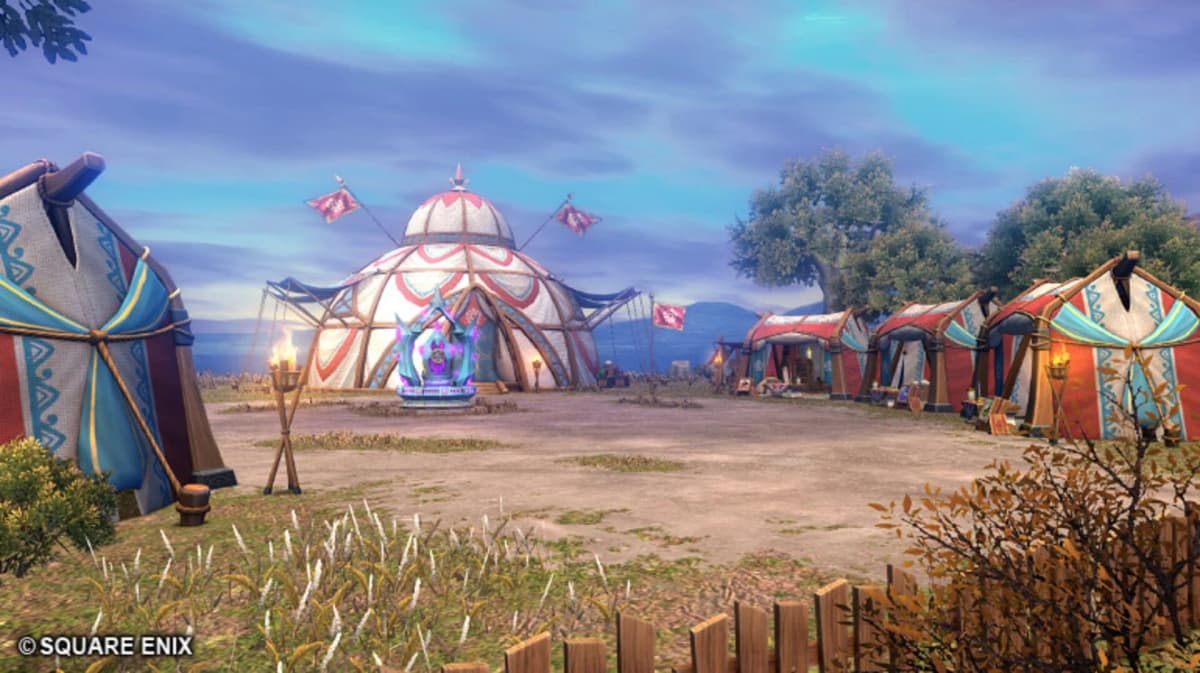
Dragon Quest X Online is a smart place to try this. The MMO launched back in 2012 on Wii and never officially left Japan, but it’s still running with years of content layered on. For anyone starting today, it’s the same problem every long-lived MMO has: a giant pile of systems, expansions, and social circles that all assume you were here ten years ago.
Executive producer Takashi Anzai was blunt about what Chatty Slimey is supposed to fix. New players, he said, “won’t feel alone wondering where to start playing; it will become their personal companion.” That’s the pitch: a permanent party member that doesn’t do DPS, but does context, explanation, and a bit of hand-holding when you’re dropped into Astoltia for the first time.
We’re not talking about a slightly fancier hint system. According to Japanese reports and Square Enix’s own briefing with Google Cloud, Chatty Slimey:
- Uses Google’s Gemini as its brain, via Google Cloud infrastructure.
- Can respond in both text and synthesized voice when you talk to it via the in-game chat.
- Analyzes what’s happening on your screen in real time – enemies defeated, rare drops, quest states – and can initiate dialogue off the back of that.
Beat a tough boss? It can comment. Pick up a rare item? It can explain what it is and why you should care. Stand around clearly lost? In theory, it nudges you toward what to do next.
That’s why this matters more than a novelty NPC. If it works, it gives publishers a way to patch over the worst early-game friction of aging MMOs without rebuilding their entire onboarding.

Gemini is turning NPCs from scripts into live systems
The tech side is where this goes from “cute Slime” to “serious infrastructure test.” Square Enix and Google showed this off as part of a broader pitch for “living games” built on generative AI, using Gemini Live-style multimodal models that can handle voice, text, and visual input with low latency.
In practical terms, that means Chatty Slimey isn’t just chewing on chat logs. It’s supposedly reading the game state – effectively “watching” the same screen you are – and using that as context. That’s a big step beyond the usual “AI NPC” demos that boil down to a lore-aware chatbot bolted onto an existing character.
Google Cloud’s global games director Jack Buser leaned all the way into the hype, saying AI will “fundamentally change every game in the next three to five years.” That’s marketing talk, but the architecture here is the important part: if you can reliably stream low-latency, real-time AI companions into a 2012 MMO, you can bolt the same thing onto anything from mobile gacha to next-gen live service titles.
For Square Enix, this lines up cleanly with what they’ve already said: generative AI is now a “central” technology for their internal workflows, including things like QA and content support. Chatty Slimey is the public-facing version of that strategy – a way to show off AI not as a dev tool, but as a visible part of the player experience.
For Square Enix, this lines up cleanly with what they’ve already said: generative AI is now a “central” technology for their internal workflows, including things like QA and content support. Chatty Slimey is the public-facing version of that strategy – a way to show off AI not as a dev tool, but as a visible part of the player experience.
🎮 Get This Game at the Best Price
Compare prices instantly and save up to 80% on Steam keys with Kinguin — trusted by 15+ million gamers worldwide.
*Affiliate link — supports our independent coverage at no extra cost to you

Every MMO wants better onboarding – this is the nuclear option
MMOs have been trying to fix early-game churn for years. You’ve seen the usual attempts: compressed questlines, “story skip” potions, level boosts, endless pop-up tutorials, NPCs that vomit tooltips. None of that actually solves the social part of the problem – logging in to a giant world where you don’t know anyone and everyone else is already raiding.
Chatty Slimey is one answer: if veteran players aren’t hanging around the newbie zones anymore, just synthesize a new friend who will. A companion that can react to what you’re doing and adapt explanations to your questions is miles more useful than yet another static journal entry explaining how aggro works.
And make no mistake, other studios are watching. We’ve already seen early stabs at conversational companions in projects like Where Winds Meet, and we’ve also seen how quickly it can go wrong – remember when an experimental AI in Fortnite took over Darth Vader and started saying things it absolutely shouldn’t, forcing Epic to yank it.
That’s the uncomfortable side of this. A fully generative companion has all the usual LLM risks: hallucinations, lore-breaking responses, unmoderated toxicity if guardrails slip. Square Enix and Google are stressing that conversations stay private and are wrapped in safety layers, but we won’t know how tight those are until players try to break them – and someone will.
The line between “helper” and “replacement” is thin
There’s one more angle the PR deck doesn’t dwell on. A system that can explain quests, builds, and game systems on demand is great for newcomers; it also happens to overlap with what community managers, support staff, and even some content creators already do.
When publishers talk about AI “enhancing” QA and support, they’re also talking about reducing how many humans they need on payroll for those roles. A Slime that keeps newbies from bouncing off the game is great for retention metrics. It’s also a way to automate some of the community scaffolding that MMOs used to rely on players and staff to provide.
For now, Dragon Quest X is a low-risk lab: Japan-only, long-running, and relatively insulated from Western backlash. If this lands well, don’t be surprised when the same tech shows up with a different mascot in a bigger, more global live service title.
What to watch next
- Beta feedback from Japan (through March 30) – Does Square Enix say anything concrete about player retention, engagement time, or how often newbies lean on Chatty Slimey?
- How “in-character” the AI stays – Clips and anecdotes will tell us quickly if the Slime feels like Dragon Quest, or like a generic chatbot wearing Toriyama’s face.
- Where Square Enix deploys this next – The moment this jumps from Dragon Quest X to a more visible title, you’ll know the test hit whatever internal KPIs they were chasing.
- How much control players get – Opt-in, opt-out, adjustable verbosity – the UI around this will show whether it’s a tool or a nag.
If you’re outside Japan, this is mostly a spectator sport for now. But it’s worth paying attention, because the lesson Square Enix takes from this experiment – “AI can save old MMOs” or “this is more trouble than it’s worth” – will shape how aggressively the rest of the industry tries to put a chatbot in your party.
TL;DR
Square Enix is testing Chatty Slimey, a Gemini-powered AI companion in Dragon Quest X Online that talks in text and voice while reacting to your gameplay in real time. It’s designed to fix the lonely, confusing early hours of a 13-year-old MMO by acting as a personal guide, and doubles as a low-risk lab for Square Enix’s wider generative AI strategy with Google Cloud. The key thing to watch is whether this stays a helpful onboarding tool or becomes the template for AI systems that quietly replace more and more of the human layer around live games.
FinalBoss // Gear
Level up your setup
01Top-rated gaming headsetson Amazon→02High-refresh gaming monitorson Amazon→03Gaming chairson Amazon→04Discounted game keyson Kinguin→Affiliate links · As an Amazon Associate, FinalBoss earns from qualifying purchases.
Want to Level Up Your Gaming?
Get access to exclusive strategies, hidden tips, and pro-level insights that we don't share publicly.
Ultimate Gaming Strategy Guide + Weekly Pro Tips