

Star Wars: Galactic Racer concentrates its customization in run-based Tours. Shorter Scenarios, Arcade podracing, and Multiplayer Tours extend the package, but each gives vehicle builds a different role. The missing standalone AI quick race and split-screen also matter when deciding what you want from it.
The garage is the wrong place to measure Star Wars: Galactic Racer’s depth. The important decisions happen across a run: which events to enter, which parts to fit, and how much speed to sacrifice so your craft survives the next planet.
That makes the mode mix unusually important. A shorter Tour can preserve meaningful customization; a separate driving challenge can put progression aside. These eight essentials are ordered by their importance to understanding the package, with buildcraft—the combination of upgrades and abilities that shapes your vehicle—first and buying caveats last. The yardstick is how each feature changes your racing decisions, rather than how many menu options it adds.
Table of Contents (8)
1. The main Tour contains the deepest buildcraft loop
The Campaign earns its central position. Its branching Tour brings together vehicle selection, racing styles, game-modifying Favors, earned parts, active abilities, pit stops, and environmental hazards. Choices accumulate toward the championship challenge against Kestar Bool.
Winning races supplies credits and upgrades. Between events, you revise your craft with acquired parts and abilities, so the next event becomes a reason to reconsider your setup. A route choice matters because it changes the conditions your developing build must handle: a cooling-oriented setup has a different purpose from one built around shields and surviving hazardous sections.
The main Tour gives those decisions room to develop. A starting trait affects the opening race; a newly fitted part can help in the next event; a combination assembled over several races can shape the championship attempt. That longer runway is what separates the Campaign from the more compressed side modes.
The crucial distinction is between temporary and persistent progression. Your current Tour’s parts, credits, abilities, and upgrades form the immediate build. Selected perks, unlocks, and permanent vehicle-stat improvements support later attempts after a failed run. Expect repeated assembly and adaptation rather than a garage where every carefully tuned vehicle remains intact forever.
Shade’s on-foot conversations give the racing some narrative structure, but the Campaign’s strongest reason to return is another combination of craft, route, and upgrades. Players who dislike rebuilding after failure will feel that friction at the heart of the game.
2. Vehicle classes change how you drive, not merely what you drive
Landspeeders deserve first consideration for learning the core handling. Their balance of acceleration, turning, and drifting makes them the versatile choice while you learn to manage boosts and read corners.
Speeder bikes ask for a more aggressive commitment: heavier braking into corners, deliberate leaning, and strong acceleration on exit. Their speed comes with a driving rhythm that rewards setting up the corner properly. An acceleration upgrade cannot substitute for getting that entry right.
Skim speeders bring lighter, more graceful movement than bulkier landspeeders. Their agile handling gives players another way to approach direction changes without adopting the bike’s braking-and-leaning profile.
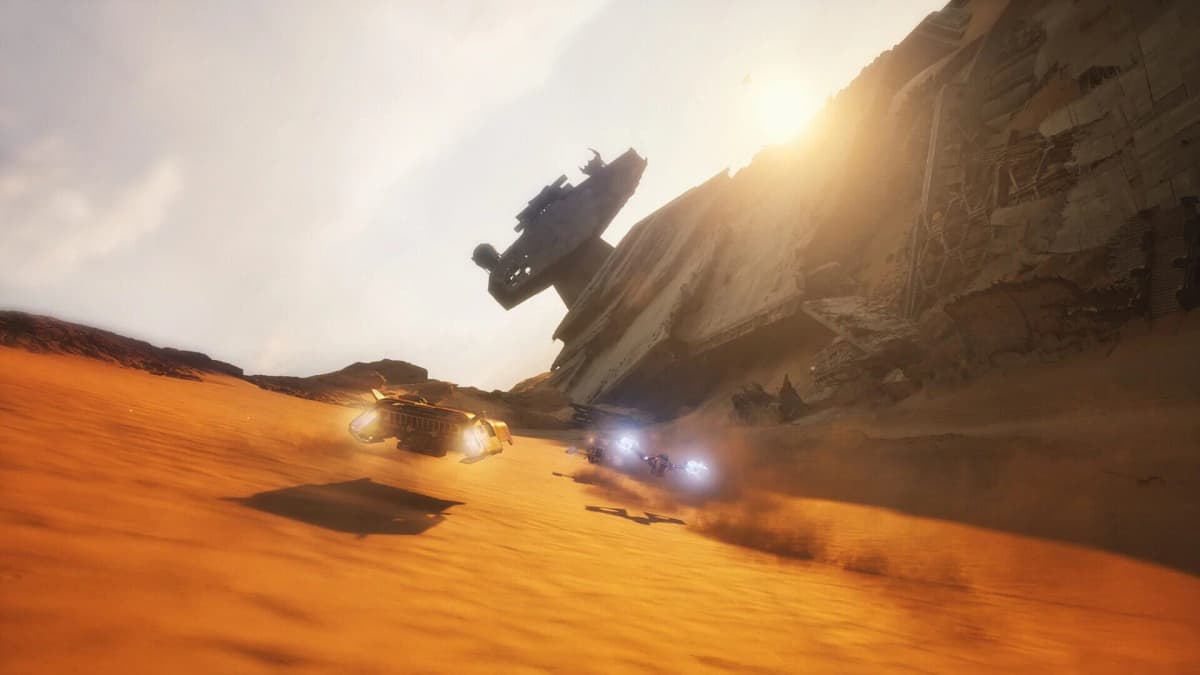
Podracers occupy a separate, exceptionally fast discipline and arrive later in the Campaign or through side content. They are not your starting vehicle choice. The roster’s value lies in these distinct physics and playstyles; counting chassis alone undersells it. Choose a handling model you can exploit, then build around its strengths rather than treating the classes as a simple speed ranking.
3. Racing styles, passive parts, and active abilities give builds their identity
A Tour begins with a vehicle class, a Racer Style that can provide a starting ability and passive trait, and game-modifying Favors. Before the first race, you are already choosing an approach to speed, defense, takedowns, cooling, or risk.
Stat upgrades, parts, and abilities do different jobs. Upgrades improve core attributes such as cornering, resilience, and boost performance. Parts supply passive or conditional effects. Active abilities spend vehicle energy for tactical advantages during a race, including effects such as shields, shockwaves, or mines. A passive supports your setup without a manual trigger; an active asks you to choose the moment to spend a resource.
Planetary conditions make those choices consequential. Heat and cold affect cooling, while track conditions influence cornering. Acid rivers can disable electrical systems on an insufficiently protected craft. Protection against that hazard can be more valuable than another speed increase on the wrong route.
The two boost systems sharpen the tradeoff. Afterburner is the safer option; Ramjet provides more power but can overheat and destroy the vehicle. A speed-heavy setup needs the cooling and survivability to use its advantage. On a heat-heavy track, supporting sustained boost use can matter more than chasing another raw performance increase. The best build is the one that reaches the finish with its strengths intact.
4. Multiplayer Tour is the strongest extension of the core formula
Multiplayer earns its place through a condensed Tour. It retains between-race build phases, earned upgrades, parts, active abilities, and a championship finish. That gives the competition an evolving shape rather than resetting everything after each race.
The shorter format puts pressure on build efficiency. There are fewer races in which to assemble a useful combination, so an upgrade has to contribute quickly. A passive effect that already complements your craft or an immediately useful defensive ability has a clearer short-term purpose than a combination that needs several more additions. Competitive betting on finishing positions and overall winners adds another use for credits—and another risk decision beyond the racing line.
This is the most substantial extra for players who enjoy the Campaign’s build-and-risk loop. It deserves more attention than its position as a multiplayer menu item might suggest. Players seeking a broad collection of conventional race playlists should set different expectations: the headline attraction is the compressed Tour.
5. Scenarios make alternate build identities easier to explore
Scenarios are shorter, curated Tours starring other racers, with preset characters, vehicles, or loadouts. Their strongest contribution is exposing playstyles and starting conditions that a single Campaign path might leave unexplored.
They sit between a full Campaign commitment and a pure driving exercise. You still get a structured sequence in which a build matters, but you are working within the Scenario’s setup rather than enjoying the same freedom to author a Campaign build. An autopilot-focused challenge, for example, puts that ability at the center of the experience instead of making you wait to assemble a suitable combination.
That earns them a clear role: use Scenarios when you want to understand another build archetype without taking it through the entire Campaign. Their prescribed starting point makes the identity apparent sooner. They add breadth to the existing systems rather than an equivalent second campaign.
6. Arcade is the direct route to practice and podracing
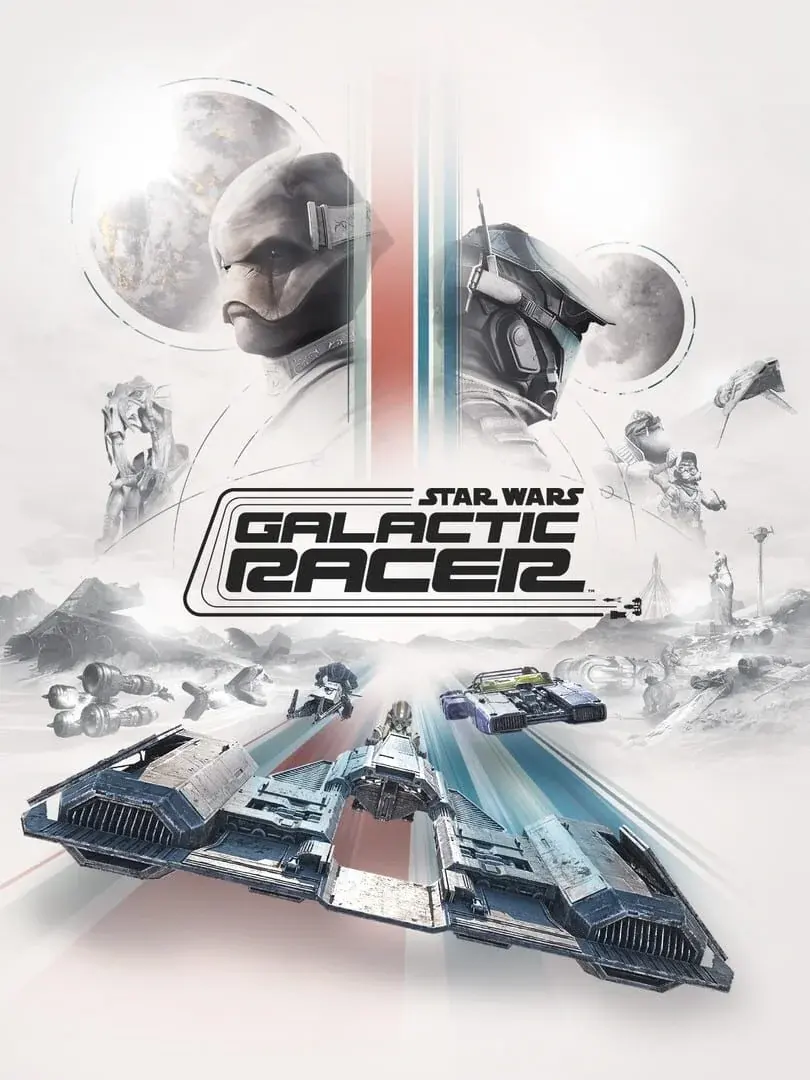
Podracing’s placement is the package’s strangest decision. It is a major attraction, yet the Campaign starts with other repulsorcraft and introduces pods later. Arcade provides a more direct route to that high-speed discipline.
Arcade emphasizes individual races and time trials: learning tracks, improving vehicle control, and chasing faster times. Long-form build construction takes a back seat to execution. Its immediate payoff is another attempt at a corner or a cleaner boost sequence, rather than a stronger loadout assembled over a Tour.
If podracing is your main reason to buy, expect it as one component of a multi-class racer, not the starting point for every mode. Treat its dedicated events as a separate discipline rather than assuming the standard repulsorcraft build loop carries over unchanged. If buildcraft is your priority, Arcade is supporting content; the Tour remains where parts, route choices, and accumulated risk interact most deeply.
The practical split between the four main formats is straightforward:
- Main Tour: Player-directed builds, earned stat upgrades, passive parts, active abilities, and between-event fitting. Best for developing combinations over a longer run.
- Multiplayer Tour: Compressed build progression with upgrades, parts, and abilities between races. Best for competitive adaptation, where additions need to pay off quickly.
- Scenarios: Curated racers and starting loadouts that demonstrate particular playstyles. Best for sampling a build identity without assembling it from scratch.
- Arcade: Individual races, time trials, and accessible podracing put driving execution first. Best for practice and faster attempts, rather than the Campaign’s accumulating upgrade loop.
7. Missing quick race and split-screen are meaningful limits
There is no standalone AI quick-race mode where you choose a track, set a difficulty, and race bots. That is a substantial omission in a game whose vehicle classes invite experimentation.
Arcade offers individual events and driving practice, but it does not replace a freely configured one-off race against opponents. Solo players wanting that specific experience must work within the provided modes instead.
There is also no split-screen. Multiplayer Tour’s build depth does not help players looking for local couch competition.
Repeated runs also revisit familiar planetary backdrops. Recombining routes and parts provides mechanical variety, but it cannot make those locations feel new indefinitely. The package favors repeated systems over a sprawling supply of locations and race formats.
8. Judge the mode package before choosing an edition
For a buyer prioritizing mechanics, the central question is whether run-based customization appeals. The Campaign offers the fullest build loop, Multiplayer compresses it into competition, Scenarios demonstrate curated setups, and Arcade puts handling and podracing ahead of long-form progression.
Keep that distinction separate from the appeal of an extra vehicle or livery when comparing editions. A different-looking craft is not, by itself, another layer of tuning, and a cosmetic bonus does not change how much freedom a Scenario gives you or turn Arcade into a Campaign-length build run.
The strongest reason to choose Galactic Racer is the interaction between craft, conditions, and upgrades—not the promise of a permanent garage. If that is what you want, the Tour and its multiplayer counterpart carry the package. If your priority is freely configured solo races, couch competition, or podracing from the first Campaign event, the mode limits matter more than edition extras.
FinalBoss // Gear
Level up your setup
01Racing wheels (PC & PS5)on Amazon→02High-refresh gaming monitorson Amazon→03Gaming chairson Amazon→04Discounted game keyson Kinguin→Affiliate links · As an Amazon Associate, FinalBoss earns from qualifying purchases.
Want to Level Up Your Gaming?
Get access to exclusive strategies, hidden tips, and pro-level insights that we don't share publicly.
Ultimate Top Strategy Guide + Weekly Pro Tips