
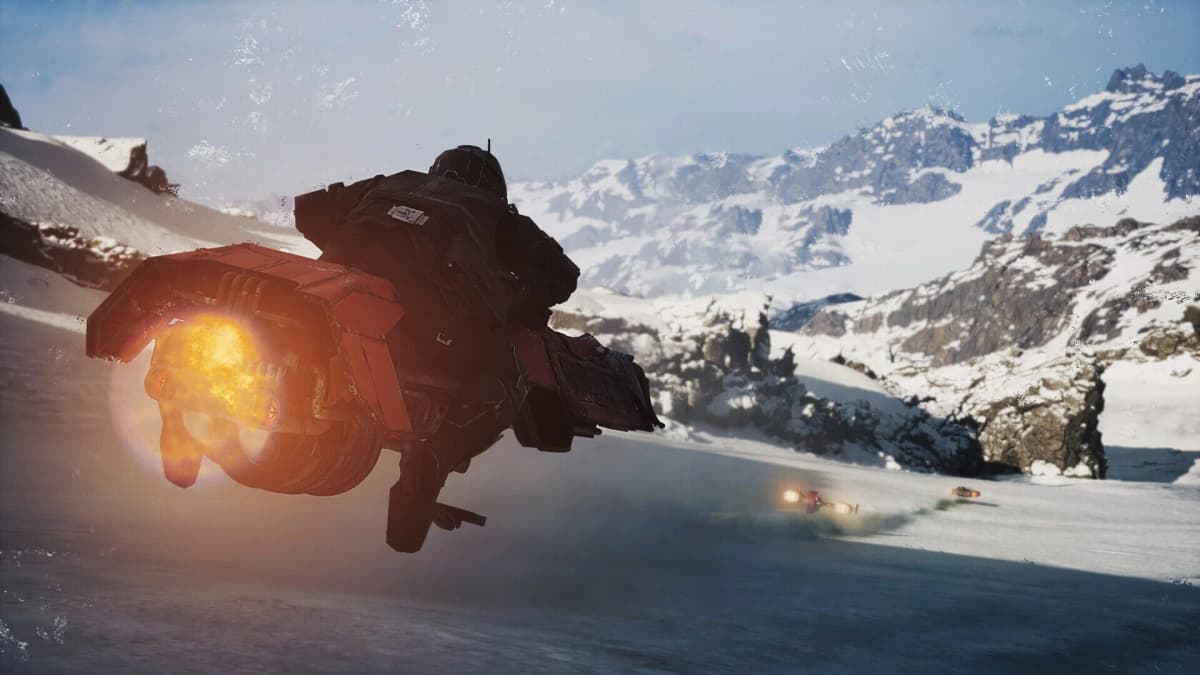
Star Wars: Galactic Racer turns high-speed anti-gravity racing into a run-based campaign with real build depth and excellent PlayStation 5 feedback. Its six-planet repetition, abrupt late difficulty spike, and lack of split-screen make it a selective buy rather than a universal one.
Burnout-style racing has always made speed meaningful by putting clean driving, destructive overtakes, and track danger in the same split-second decision. Star Wars: Galactic Racer carries that arcade philosophy into anti-gravity vehicles, then adds a roguelite structure: a run-based format where each tour asks you to survive a branching sequence of events instead of simply clearing a standard championship ladder.
Fuse Games, a studio associated with developers who worked on Criterion’s Burnout franchise, clearly knows what sensation it is chasing. That structure gives the game far more tension than a conventional sequence of isolated races. The handling, hazards, and collisions make the immediate action exceptional; the campaign’s repeated routes, harsh late-game pressure, and narrow planet pool keep it from becoming an uncomplicated recommendation.
Table of Contents (7)
Speed is the game’s strongest argument
Galactic Racer understands that an arcade racer lives or dies on the sensation of committing to a line at excessive speed. Its landspeeders, speeder bikes, and skim speeders occupy an anti-gravity world built for aggressive overtakes, hazards, impacts, and quick recoveries. The game’s best races create a constant push between holding position safely and attacking a rival before the next dangerous section takes that chance away.
The controls are responsive enough to support that intensity. Boosting is not passive spectacle: the afterburner uses a charge gauge that is easier to manage than Ramjet, while Ramjet is the more volatile acceleration tool. It can increase damage against opponents, but its usefulness changes with the environment. Cold conditions allow longer use, while heat and acid can force it into overheating much faster or shut it down entirely. On Jakku, temperature management directly matters because engine heat can become a problem and cooling offers relief.
That is why the game’s Star Wars identity feels functional rather than decorative. Planet conditions, vehicle abilities, hostile routes, and vehicular combat all feed into the driving. The PlayStation 5 feedback gives acceleration and contact more weight, reinforcing the physicality of a racer built around repulsorcraft rather than wheels.
The roguelite campaign creates its own kind of pressure
Shade, a delivery driver, is pulled into the racing conflict by league founder Darius Pax, who needs help against reigning champion Kestar Bool. The story gives the campaign a clear target, but the mode’s real identity comes from its three-act structure of tours, branching event paths, and escalating stakes.
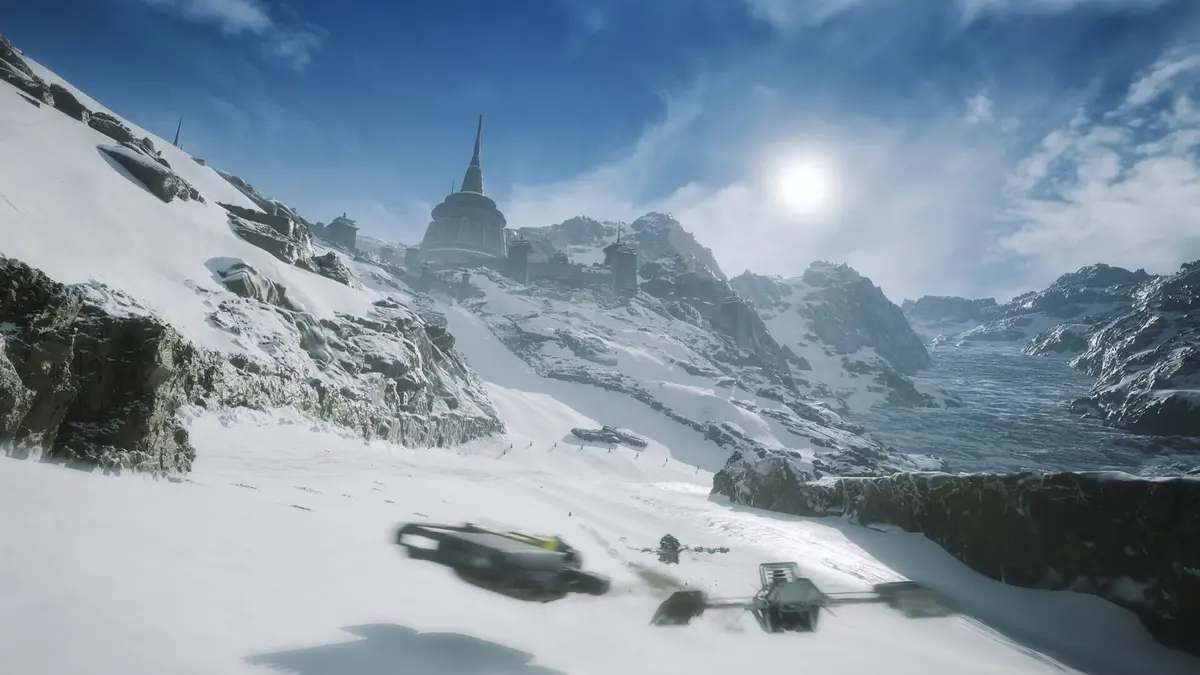
Each tour asks for more than winning one race. Players move through events, choose a route, collect parts and upgrades, then try to reach a Final or knockout event with a vehicle capable of surviving it. Failure before that endpoint can eliminate the run or force a restart of the tour or act. With no rewinds or guide lines to absorb mistakes, position management and track knowledge become central to a successful run.
This is the feature that separates Galactic Racer from a straightforward championship ladder. A conventional career would let strong handling carry the game on its own. The run-based format instead makes every event part of a longer calculation: spend a resource now, take a safer path, gamble on a difficult event, or shape a vehicle toward the hazards still ahead. The urgency works because a crash or bad finish has consequences beyond one disappointing result.
Buildcraft gives the runs real strategic value
The campaign’s vehicle progression is built around leveling base stats and spending credits or upgrade packs between attempts and tours. That system turns the vehicle into more than a cosmetic choice. A successful run accumulates tools for handling future conditions, while a failed run teaches which hazards, rivals, and environmental pressures need a different setup.
Ramjet is the clearest example of that design. It is powerful precisely because it carries environmental risk, encouraging players to think about where raw acceleration is worth the damage and overheating it can invite. The best decisions come from reading the next event as part of a whole tour rather than treating every race as a clean reset.
The campaign also includes an Auto-Pilot gadget that can be primed with pre-race button inputs. It can guide a vehicle through the opening moments, but it can also steer into hazards. That limitation fits the wider design: automated help may offer a safety net, yet the game still expects players to understand the road, the machinery, and the cost of a reckless decision.
Repetition is harder to ignore over a full campaign
The central flaw is not a lack of spectacle within the six available planets. Their hazards and visual identities support the racing well. The problem is structural: roguelite tours repeatedly send players back through the same planetary pool, so the limited variety becomes more visible with every new attempt. A standard racer can get away with familiar tracks because it asks players to choose what they want to replay; this campaign makes repetition part of its progression.
The final stretch adds a sharper problem. The third act has a demanding difficulty spike, and the campaign’s ending arrives abruptly. That late pressure suits players who want a run-based racer that asks for persistence and refined builds, but it makes the experience less welcoming for anyone drawn mainly to the arcade handling.
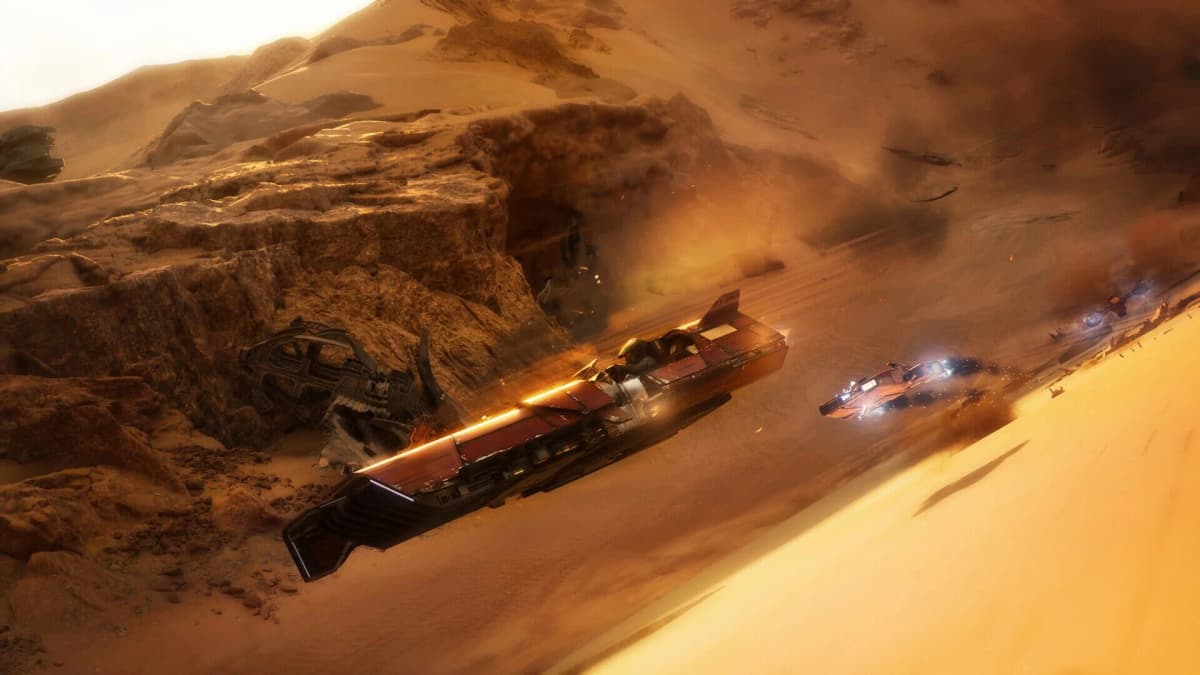
Podracing provides a welcome change of texture, framed through Sebulba’s memories, but it sits outside most of the main tour structure. Its separation is unfortunate because the core campaign would benefit from more of that variety before repetition takes hold.
Online racing helps, but couch multiplayer is missing
Star Wars: Galactic Racer releases on October 6, 2026 for PlayStation 5, Xbox Series X|S, and PC via Steam and Epic Games Store. The game includes a story-driven solo campaign and online multiplayer for 2 to 12 players, with PlayStation 5 supporting up to 12 online players.
Multiplayer Tour is the most interesting online mode because it compresses the campaign’s ideas into five races. Players enter build phases between events, gain upgrades and abilities, then carry those decisions into a final championship race. A betting system adds another strategic layer by letting players predict their own finishing position and the overall winner.
Outside those two main pillars, Arcade mode covers time trials and advanced races, while Scenario mode offers short six-race campaigns using other characters and vehicles. That extra structure helps, but the absence of split-screen remains a meaningful omission. The game’s aggressive arcade design is naturally suited to local competition, and online play does not replace the immediate rivalry of sharing a screen.
Who should play it
- Players who want fast anti-gravity racing built around hazards, takedowns, boosts, and aggressive overtaking.
- Racing fans who enjoy roguelite runs where a vehicle build, branching path, and knockout event matter as much as a single win.
- Online groups looking for 12-player races and the five-race Multiplayer Tour format.
- Players who value responsive arcade handling and are willing to replay planets while learning how to manage heat, upgrades, and tour risk.
Wait for a sale or more content if a broad launch track selection, a conventional championship career, a forgiving difficulty curve, or split-screen multiplayer is essential. Galactic Racer asks players to accept its run-based penalties and recurring environments in exchange for build depth and unusually intense racing.
Bottom line
Star Wars: Galactic Racer is a buy for players who want an arcade racer with real mechanical tension, not just flashy speed. Its anti-gravity handling, destructive energy, environmental systems, and strategic tour builds make it one of the more interesting racing games on the schedule. Repetitive planet runs, a punishing final act, an abrupt campaign finish, and no split-screen keep that recommendation targeted instead of universal.
FinalBoss // Gear
Level up your setup
01Racing wheels (PC & PS5)on Amazon→02High-refresh gaming monitorson Amazon→03Gaming chairson Amazon→04Discounted game keyson Kinguin→Affiliate links · As an Amazon Associate, FinalBoss earns from qualifying purchases.
Want to Level Up Your Gaming?
Get access to exclusive strategies, hidden tips, and pro-level insights that we don't share publicly.
Ultimate Reviews Strategy Guide + Weekly Pro Tips