
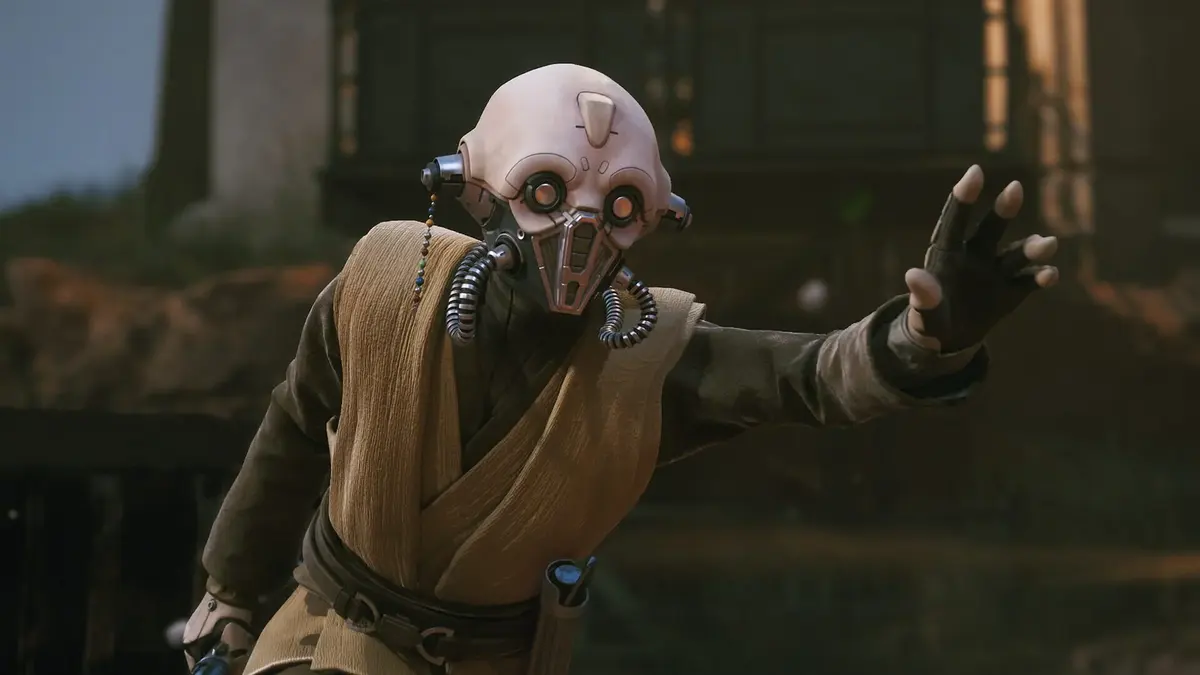
Four operatives enter a mission, each carrying three Action Points, limited health, a role in the team, and a future that can disappear because one turn went badly. That is the central promise of Star Wars Zero Company, and it is exactly why I am more interested in Bit Reactor’s Clone Wars tactics game than I am in another consequence-free tour through familiar Star Wars iconography.
I also have a real reservation. Permanent squad loss only works when the game earns the player’s trust. A tactics campaign that freezes between turns, mishandles an autosave, or leaves the camera fighting the player has no business demanding emotional maturity when an operator dies. Zero Company has the bones of a superb risk-first strategy game, but its launch-period technical roughness makes that ambition feel far more fragile than it should.
Still, I think the default permadeath setting is the right call. It gives the game a consequence that too many licensed games are scared to commit to. When Star Wars Zero Company launches on August 27, 2026 at 3:00 PM UTC for PC, PlayStation 5, and Xbox Series X|S, the version worth playing is the one where bad decisions remain bad decisions after the mission ends.
Table of Contents (5)
Permadeath Gives Zero Company Its Actual Stakes
Permadeath is enabled by default, and it applies to story squadmates as well as custom mercenaries. That matters enormously. Plenty of tactics games claim that every soldier counts, then quietly protect the characters with dialogue, cutscenes, and recognizable faces. Zero Company refuses to make that distinction. A carefully built custom operator can die. A squadmate whose bond perks have become essential can die. A Jedi Padawan or Mandalorian bounty hunter who has become part of the team’s identity can die.
On Standard difficulty, an operator who reaches zero health becomes Downed and receives an Injury. Three Injuries can lead to permanent death. Hawks, the former Republic officer leading Zero Company and voiced by Jonathan Freeman, gets special treatment: Hawks dying fails the mission and sends the player back rather than ending the campaign. Everyone else has a memorial waiting for them if the squad cannot bring them home.
That asymmetry is sensible. Hawks is the campaign’s anchor, the figure holding together a fight against the Coil and its Shadow Plague infection. The rest of the roster is where the game gets its teeth. Losing an operator should create a hole in the campaign, because the player made decisions around that person’s weapons, abilities, bond bonuses, and place in a four-person deployment. A dead teammate should leave more than an empty slot on a selection screen.
This is the difference between a mission failure and a campaign consequence. A failed mission costs time. A permanent loss changes the shape of every mission that follows. The squad has to be rebuilt. A favored composition may stop working. The next high-risk operation may become a problem before combat even begins. That is the kind of pressure a good turn-based tactics game needs.
Every Turn Has More Weight Than a Clean Damage Calculation
Star Wars Zero Company gives each operative three Action Points per turn, which sounds straightforward until the game starts forcing trade-offs. Movement, positioning, attacks, healing, defensive setup, and rescue attempts all compete for those points. Overwatch allows an operative to cover a designated area and fire when an enemy moves through it, but putting someone on Overwatch also means accepting that they are not spending that turn advancing, repositioning, or finishing a wounded target.
Then there is Advantage, the party-wide resource generated by dealing damage. Advantage powers stronger abilities without consuming Action Points, including rocket strikes and squad-wide buffs. That system is clever because it creates a second economy inside every encounter. Holding Advantage for a crisis feels smart until the enemy starts collapsing your formation. Spending it early to erase a threat feels smart until the next wave appears. Permadeath turns that routine resource management into a genuine question of preservation.
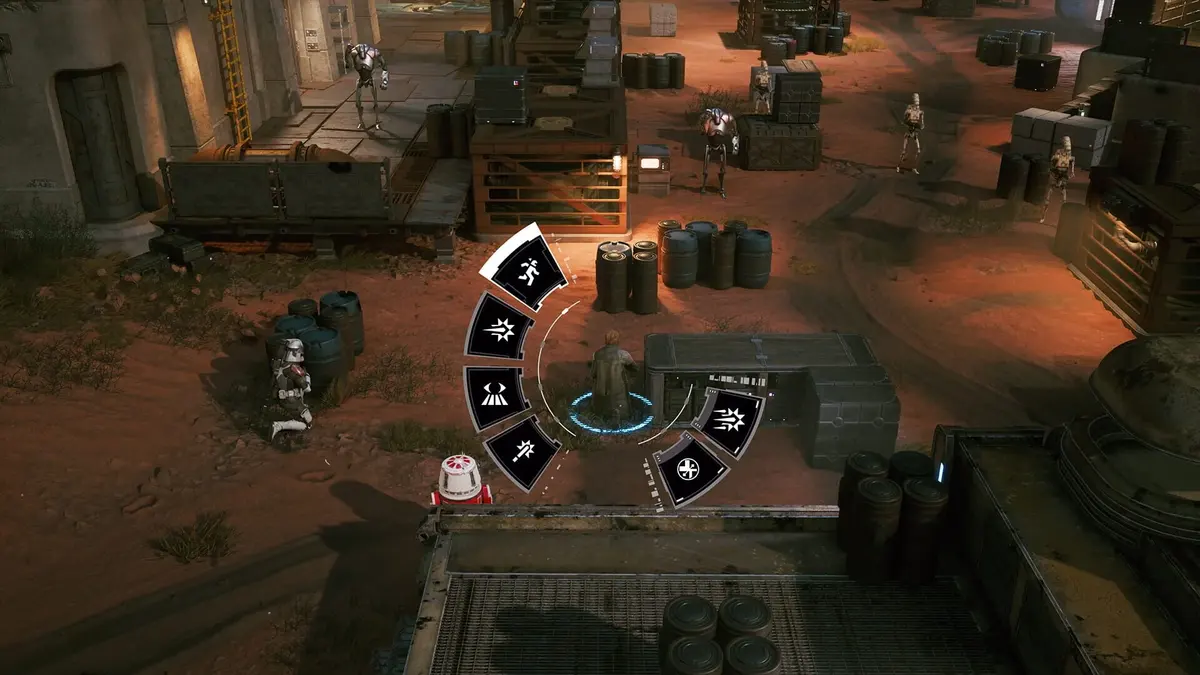
Rallying a Downed ally becomes more than a heroic animation when injuries persist. A player has to decide whether that rescue is worth exposing another operative, burning valuable actions, or letting a deteriorating battlefield get worse. The right answer will often be ugly. That is a compliment. Tactical games become memorable when they force the player to choose the least damaging option rather than handing over a clean victory.
I do not need every fight against the Infinite Coil to be brutal for the sake of being brutal. I need the game to make positioning, cover, initiative, and target priority matter before the emergency begins. The best encounters are the ones where an operator survives because the player recognized danger two turns earlier, not because the game handed out a miracle after a reckless push.
The Den Makes Squad Bonds More Than Flavor Text
The real test of the system sits between missions at The Den. This is where Zero Company’s squad management either becomes meaningful or collapses into menu busywork. Players can talk to squadmates, customize loadouts, recruit operators, heal injuries, and access the Black Market for weapon modifications and utility items. Those tasks have a purpose because the people being equipped and healed are vulnerable to permanent loss.
Bonds are the strongest example. Advancing a relationship unlocks cross-training choices and passive bonuses such as increased critical-hit chance and stronger blaster damage. That is useful, but it also creates attachment through play rather than cutscene manipulation. I will care more about an operator when their absence means losing a tactical synergy I relied on for ten hours than when the game merely tells me they are my friend.
There is a limit to that praise. Passive stat boosts are not a replacement for deep character writing. A crit-chance bonus cannot carry a relationship on its own, and the bond system needs stronger interpersonal texture than a set of efficient perks if Bit Reactor wants each casualty to land emotionally. The mechanical foundation is solid; the human side has to meet it halfway.
Timing-limited operations also fit this philosophy. A mission selection screen becomes a strategic commitment when injured operators need time, recruitment choices have consequences, and a squad’s best tools may be unavailable. The campaign does not need to pretend that every conversation sends the story down a radically different route. Its most credible branching happens through the roster: who survived, who was injured, who was replaced, and what the player had to sacrifice to keep moving.
Who Will Hate This System — and Why They Should Turn It Off
Players who want to experiment with every ability combination without campaign-wide consequences will hate default permadeath. So will players who enjoy treating a tactical mission as a puzzle to replay until every move looks perfect. There is nothing shameful about that preference. A permanent injury attached to one bad decision can feel exhausting when the player wants to see the story, explore loadouts, and keep a favorite character safe.
That is why the toggle exists, and it should remain there. Turning permadeath off makes sense for someone who wants a more relaxed Clone Wars campaign, someone attached to named squadmates, or someone unwilling to lose a custom operator over a bad damage roll. The setting offers an escape hatch without forcing every player through the same emotional grinder.

But I would leave it on. Disabling permanent loss removes the sharpest edge from Zero Company. The combat remains stylish, the Advantage system remains satisfying, and the squad-building still has value. Yet the campaign loses its ability to make a retreat feel mature, a rescue feel desperate, or a survivor feel earned. Every squad member becomes easier to replace, even when the game gives them a name, a voice, and a bond track.
The players who will get the most from Zero Company are the ones willing to accept an imperfect mission rather than reload until the galaxy behaves. They will make do with an injured operator. They will recruit someone they did not initially plan to use. They will remember the teammate who held an Overwatch lane long enough for the rest of the squad to escape. That is where replay value comes from: altered teams, altered builds, altered failures, and campaigns that develop scars.
A Permadeath Game Cannot Afford Technical Sloppiness
This is where my excitement runs into a wall. Turn-to-turn slowdown and freezes, autosave errors, awkward animation and camera behavior, loading hitches, crashes, and even visual bugs such as broken hairstyles are far more serious in a game built around permanent consequences. A stylish combat system does not excuse a save problem. An orchestral score does not make a lost operator acceptable if the game was the thing that failed.
The PC version supports DLSS, FSR, and frame generation, and it can run smoothly even on powerful hardware such as an RTX 4080 paired with a Ryzen 9 9950X3D. That is encouraging, but smooth average performance is only part of the job. A tactics game needs reliability at the exact moments when the player is weighing an irreversible choice. One freeze while setting Overwatch or one broken autosave after a casualty can poison the entire campaign’s trust.
EA and Bit Reactor need to treat stability as part of the permadeath feature, because it is. The game is asking players to live with the outcome. In return, the game has to prove that the outcome belonged to them.
FinalBoss // Gear
Level up your setup
01Top-rated gaming headsetson Amazon→02High-refresh gaming monitorson Amazon→03Gaming chairson Amazon→04Discounted game keyson Kinguin→
Affiliate links · As an Amazon Associate, FinalBoss earns from qualifying purchases.
Want to Level Up Your Gaming?
Get access to exclusive strategies, hidden tips, and pro-level insights that we don't share publicly.
Ultimate Gaming Strategy Guide + Weekly Pro Tips